 Nic Dunn, CEO, Charle Agency
What Makes Ecommerce Tips Work in 2026
The best ecommerce tips share one trait: they remove a specific obstacle between a shopper and a completed order. Generic advice to "post more on social" or "add a pop-up" rarely does that. Practical changes to checkout, mobile experience, range, marketing mix and email do. These ways of working suit businesses of any size, and they matter most to people who shop on a phone.
Shoppers no longer move down a tidy funnel. Google has estimated that the average shopper has around 130 mobile touchpoints a day, and Shopify's 2026 research suggests discovery now happens across search, social feeds, creators and AI assistants before anyone reaches your store. A store has to work whichever door a customer walks through.
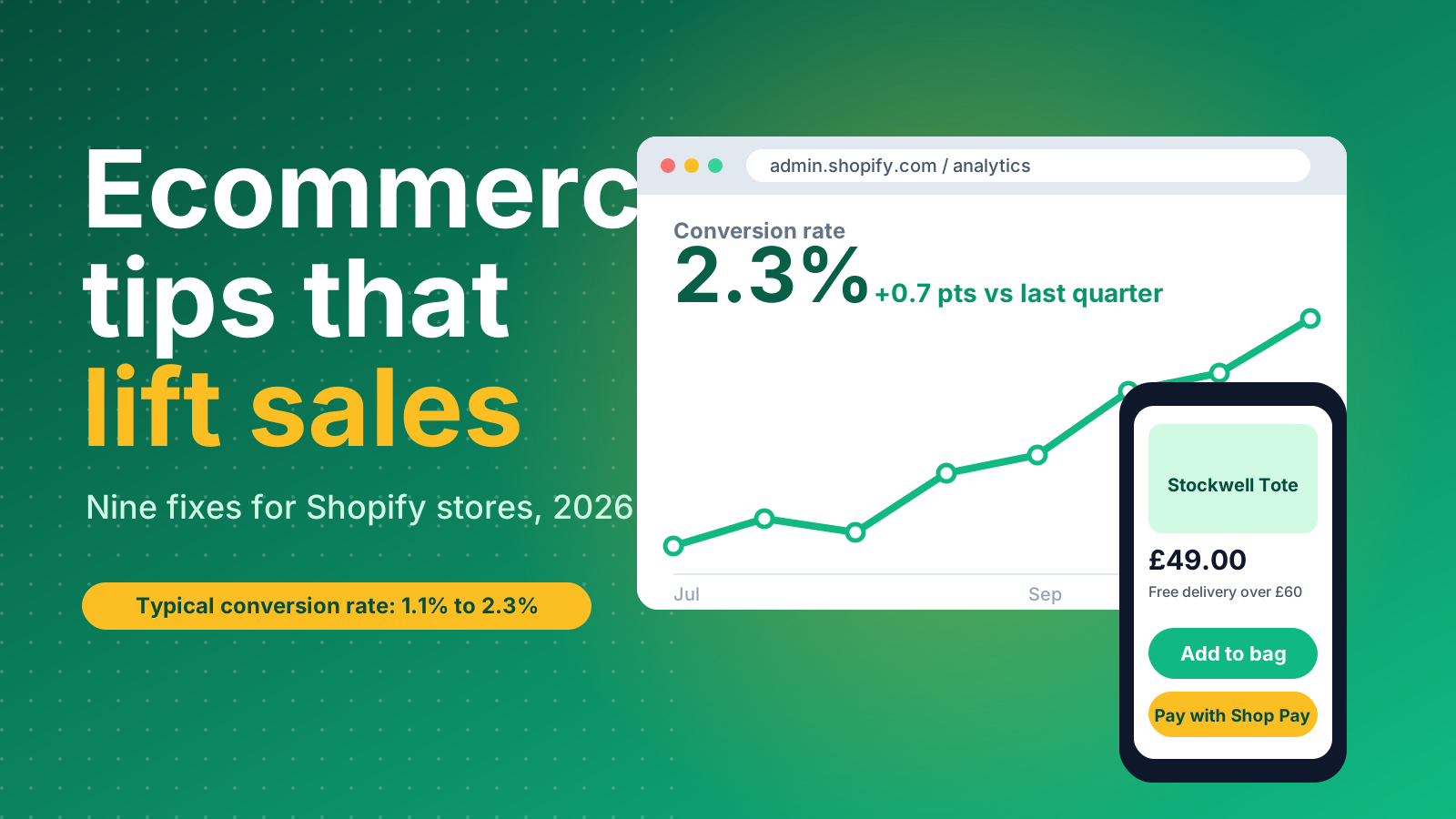
Conversion rates give you a reality check. Statista data for the first quarter of 2026 puts typical ecommerce conversion rates between 1.1% and 2.3%. If your store sits at the bottom of that range, buying more traffic simply pours more visitors into the same leaky bucket. Fix the bucket first, then add water. Our guide to good ecommerce conversion rate benchmarks shows how to judge where you stand by sector.
Each tip below follows the same logic. Find the constraint that is currently limiting growth, fix that one thing, measure the result, then move to the next.
Fix Checkout Friction Before You Buy More Traffic
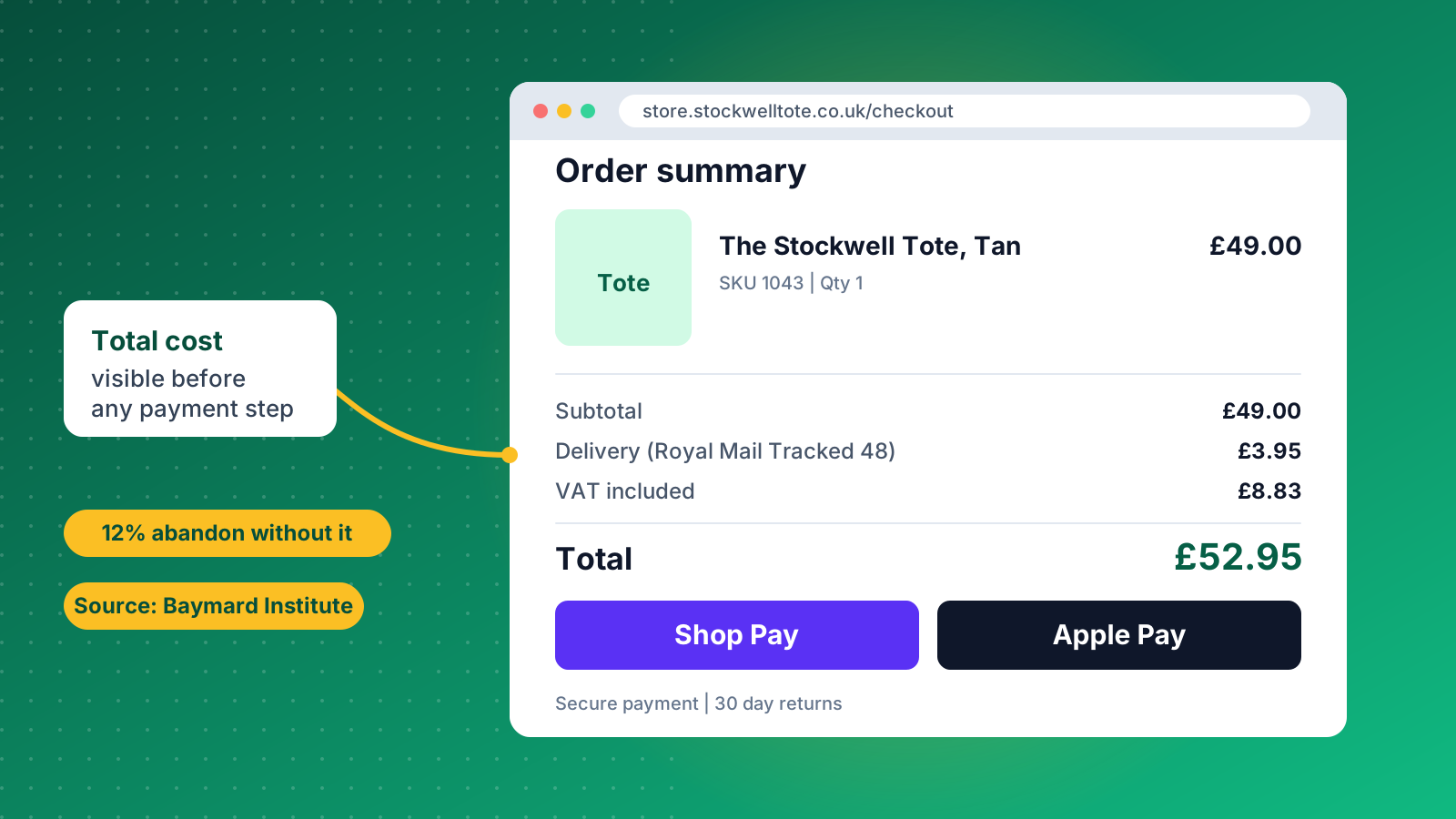
Checkout is where the money is won or lost, so it is the first place to look. Baymard Institute research, cited in Shopify's 2026 ecommerce guide, reports that 19% of shoppers who were ready to buy abandoned because they did not trust the site with their card details, and 12% abandoned because they could not see the total cost upfront.
Start with price transparency. Show delivery costs, taxes and any fees as early as possible, ideally on the product page or in the cart drawer. In the UK, the Digital Markets, Competition and Consumers Act 2024 has also restricted drip pricing since April 2025, so hiding costs until the final step is now a compliance risk as well as a conversion problem.
Next, cut the steps. A checkout that asks for an account before payment loses buyers. Offer guest checkout and fast wallets such as Shop Pay, Apple Pay and Google Pay, which let returning customers skip typing card and address details entirely. Virgin Media Business makes the same point in its e-commerce guide for small businesses: familiar payment options such as PayPal, Apple Pay and Google Pay reassure people and speed up checkout. Shopify reports that Shop Pay can lift conversion by up to 50% compared with guest checkout, though you should test that against your own data before relying on it.
Finally, set a sensible free delivery threshold. A Digital Commerce 360 survey reported that 82% of online shoppers consider free shipping an important factor when choosing where to buy. Work out your average order value, then set the threshold roughly 15% to 20% above it so the offer nudges baskets up instead of eroding margin. If you want a deeper walkthrough, see our guide to how to improve your ecommerce conversion rate.
Treat Mobile as Your Main Store
For most Shopify brands, the mobile site is the store. The VML Future Shopper 2025 report found that mobile carries 42% of online sales, yet two in five shoppers say the mobile experience falls short. That gap is an opening for any brand willing to fix it.
Navigation is the usual culprit. Baymard's 2025 benchmark of more than 180 sites found that 58% of desktop sites and 67% of mobile sites have "mediocre" or "poor" navigation, and 94% of mobile sites fail to show the shopper's current location in the main menu. A shopper who cannot tell where they are will leave rather than work it out.
Practical fixes are rarely glamorous:
- Thumb-friendly menus: keep primary categories within one tap and highlight the current page.
- Sticky add to cart: keep the buy button visible as shoppers scroll long product pages.
- Fast images: compress and size images properly, because slow pages lose shoppers before they see a product.
- Short forms: use address lookup and autofill so shoppers type as little as possible.
Test on a real mid-range phone over a normal mobile connection, not just a desktop browser resized to look small. You will find friction your analytics only hint at. A smooth mobile user experience also helps shoppers on slower connections. Session recordings in tools such as Microsoft Clarity make the problem points obvious within an afternoon.
Build Your Range Around Proven Demand
Good merchandising beats good advertising. Before you invest in new product lines, check which products already earn their place. Look at sell-through, margin after returns and repeat purchase rate by product, not just revenue.
Start with your bestsellers and ask why they sell. It might be price, a specific benefit or a gap in the market, and understanding the reason tells you what to build next. Search data helps here: Google Search Console shows the queries already sending shoppers to your store, and many of them point directly at products or variants you could add.
Returns deserve as much attention as sales. A product that sells well but comes back often can cost more than it earns, and fixing the product page with better sizing guidance, clearer photography or honest descriptions is usually cheaper than absorbing the returns. Our guide to the ecommerce returns process covers how to cut avoidable returns without making shoppers feel punished.
Finally, give every product page the information a cautious shopper wants: clear photography from several angles, accurate specifications, delivery and returns details, and answers to the questions your support team hears most. Detailed pages reduce returns and help search engines understand what you sell. Write original product descriptions rather than pasting supplier copy, and add customer reviews and photos so each page has its own content.
Build a Marketing Mix That Does Not Rely on One Channel
Brands that depend on a single channel are one algorithm change away from a bad quarter. A healthy mix spreads risk across search, email, paid media and creators, with each channel doing a different job.
Search captures demand that already exists. Paid social and creator partnerships create demand. Email turns both into repeat customers. Our own ecommerce SEO trends for 2026 report explains where organic search is heading, including the growing role of AI-generated answers.
Set a customer acquisition cost ceiling before you scale spend. Divide your gross margin per order by the number of orders you need from a customer to break even, and treat that figure as the most you will pay to win a first order. Without a ceiling, paid campaigns drift towards expensive audiences.
Social media deserves a defined job rather than a vague presence. Instagram and TikTok suit visual products, while Pinterest suits planning and gifting. Pick the one or two social media platforms where your target audience already spends time instead of posting everywhere. For example, a bag brand might use Instagram Reels to show how the product is used, then send people straight to the product page.
Creators and affiliates deserve a place in the mix, particularly for brands with a visual or lifestyle product. Smaller creators often convert better than large accounts because their audiences trust them. Track them with unique codes or links so you can tell which partnerships earn their fee.
Review the mix every quarter. If one channel produces more than half your revenue, treat that as a risk to be reduced rather than a success to be celebrated.
Show Trust Signals Where Buying Decisions Happen
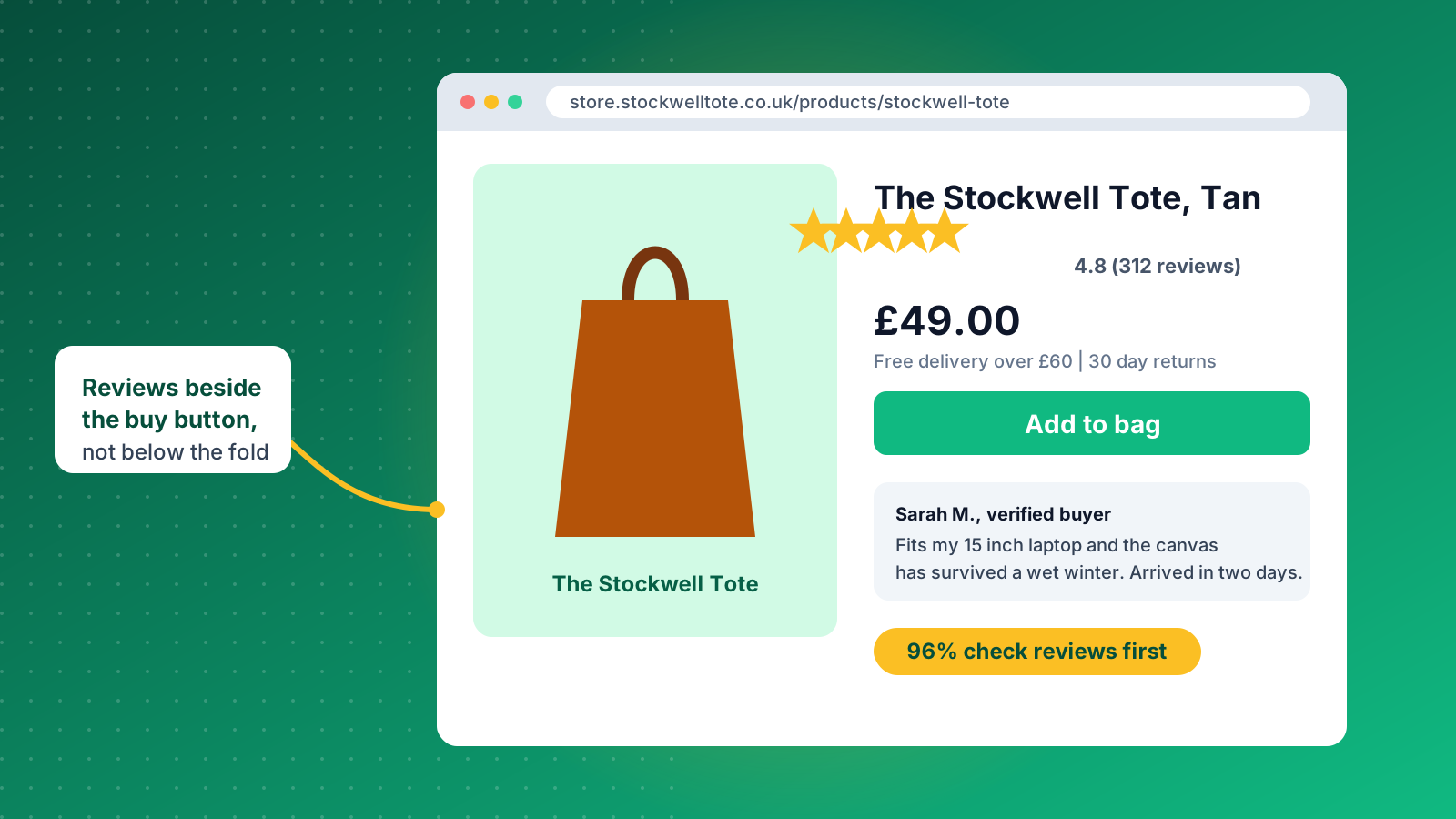
Trust is the quiet driver of conversion. A Clutch study reports that 96% of consumers check reviews before buying from a brand they do not know, so reviews belong close to the buy button, not buried at the bottom of the page.
Place star ratings near the product title and price, and show a few detailed reviews above the fold on mobile. Reviews that mention sizing, quality or delivery do more work than a generic "great product" line. Photo reviews are even stronger, because they show the item outside the studio.
Beyond reviews, make your business easy to verify. Show a real company name, registered address and contact details. Explain delivery and returns in plain English, link to them from the product page, and make them easy to find. Display payment logos and security badges at checkout, because the reported 19% of buyers who distrust a site with card details need reassurance at the exact moment they pay.
Customer service is a trust signal too. A visible phone number, live chat or a quick email reply tells people there is a real business behind the store, and it improves the overall user experience.
Be honest about what you cannot offer. A clear "orders placed before 2pm ship the same day" line, or an honest note about long lead times, builds more confidence than vague promises. Shoppers forgive slow delivery they were warned about far more readily than a surprise.
Use Email and Retention to Earn the Second Order
Acquiring a customer costs more every year, so the cheapest revenue comes from customers you already have. Email and SMS are the most controllable channels because you own the list.
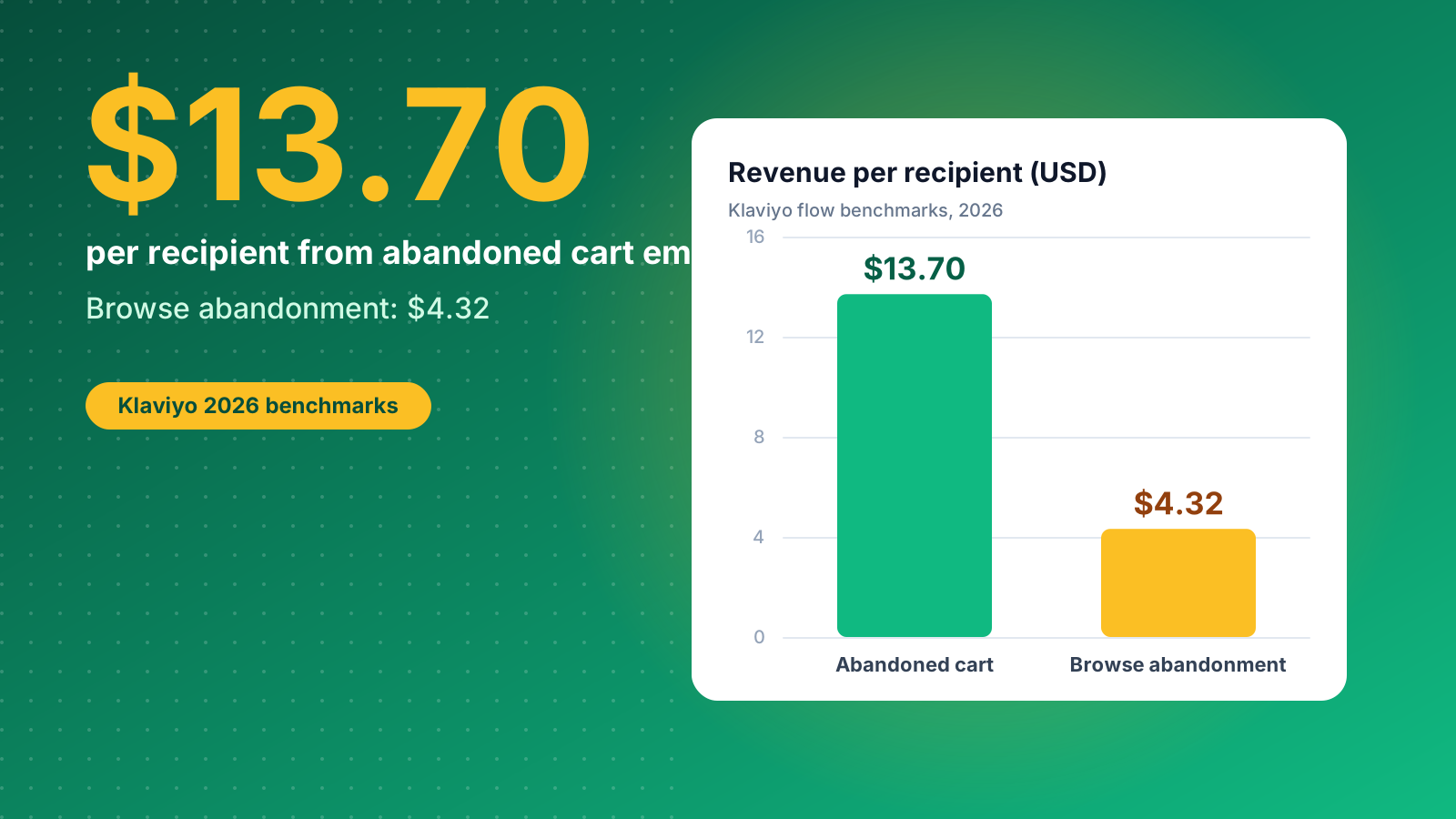
Begin with the flows that capture lost revenue. Klaviyo's 2026 benchmarks report that abandoned cart flows average $13.70 per recipient, compared with $4.32 for browse abandonment emails. If you only build one automation, build the abandoned cart sequence, then add a welcome series, a post-purchase flow and a win-back flow.
Post-purchase is where many brands leave money behind. Send useful order updates, care or usage tips, and a review request timed to when the product has arrived. Those messages protect your reputation and set up the second order. Our guide to customer retention strategies for ecommerce covers loyalty, subscriptions and winback in detail.
Segment where you can. A first-time buyer, a repeat buyer and a lapsed customer need different messages. Even simple segments by purchase count and product category beat a single weekly newsletter sent to everyone. If you want to automate more, our overview of ecommerce marketing automation explains where to start.
Make Your Store Easy for Google and AI Tools to Understand
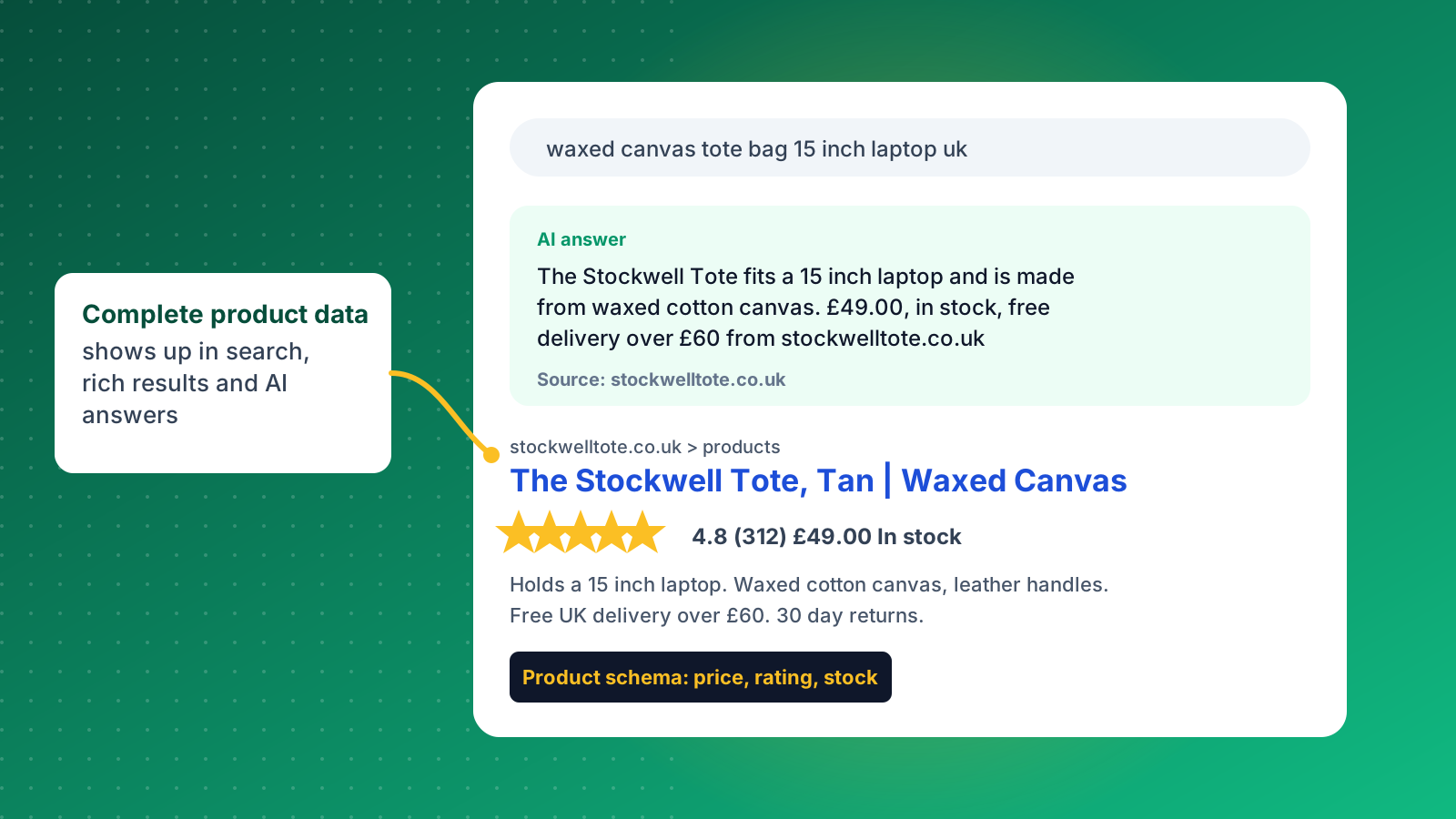
Discovery increasingly starts with a question typed into an AI assistant rather than a keyword typed into Google. Shopify reports that orders referred by AI search grew about 13 times year on year in the first quarter of 2026, from a small base. The practical lesson is that structured, accurate product information now earns visibility in more places.
Complete your product data. Fill in every attribute your theme and feed support: materials, sizes, colours, GTINs and availability. Complete data helps Google Shopping, rich results and AI assistants represent your products correctly.
Write product and collection copy that answers questions in plain sentences. A line such as "The Stockwell Tote holds a 15-inch laptop and is made from waxed cotton canvas" is easy for a person and an AI system to quote. Vague claims about quality are not.
Keep the technical basics in order too: clean URLs, fast pages, product schema and a sensible internal linking structure between collections, products and guides. Our guide to generative engine optimisation for ecommerce explains how to structure content for AI answers without sacrificing traditional rankings.
Measure What Matters and Repeat What Works
Every one of these ecommerce tips works better with measurement behind it. Shopify's built-in analytics, Google Analytics and Search Console already tell you a great deal, provided you ask the right questions.
Pick a small set of numbers and review them weekly: conversion rate, average order value, repeat purchase rate, customer acquisition cost and revenue per visitor. Break each one down by device, channel and new versus returning customers, because averages hide the problem. A healthy desktop conversion rate can mask a weak mobile one.
When something works, find out why before you copy it. If a free delivery threshold lifts average order value, test whether a slightly higher threshold does better still. If a creator partnership drives sales, check whether those customers come back. Run one test at a time and let it reach a meaningful sample size before declaring a winner.
Then keep going. Use the latest ecommerce statistics to benchmark yourself, revisit your plan each quarter, and tie your goals back to your ecommerce business plan. If you would like a specialist team to audit your store and prioritise the next changes, our ecommerce SEO services and team are happy to help.