 Nic Dunn, CEO, Charle Agency
What Is Ecommerce Marketing Automation?
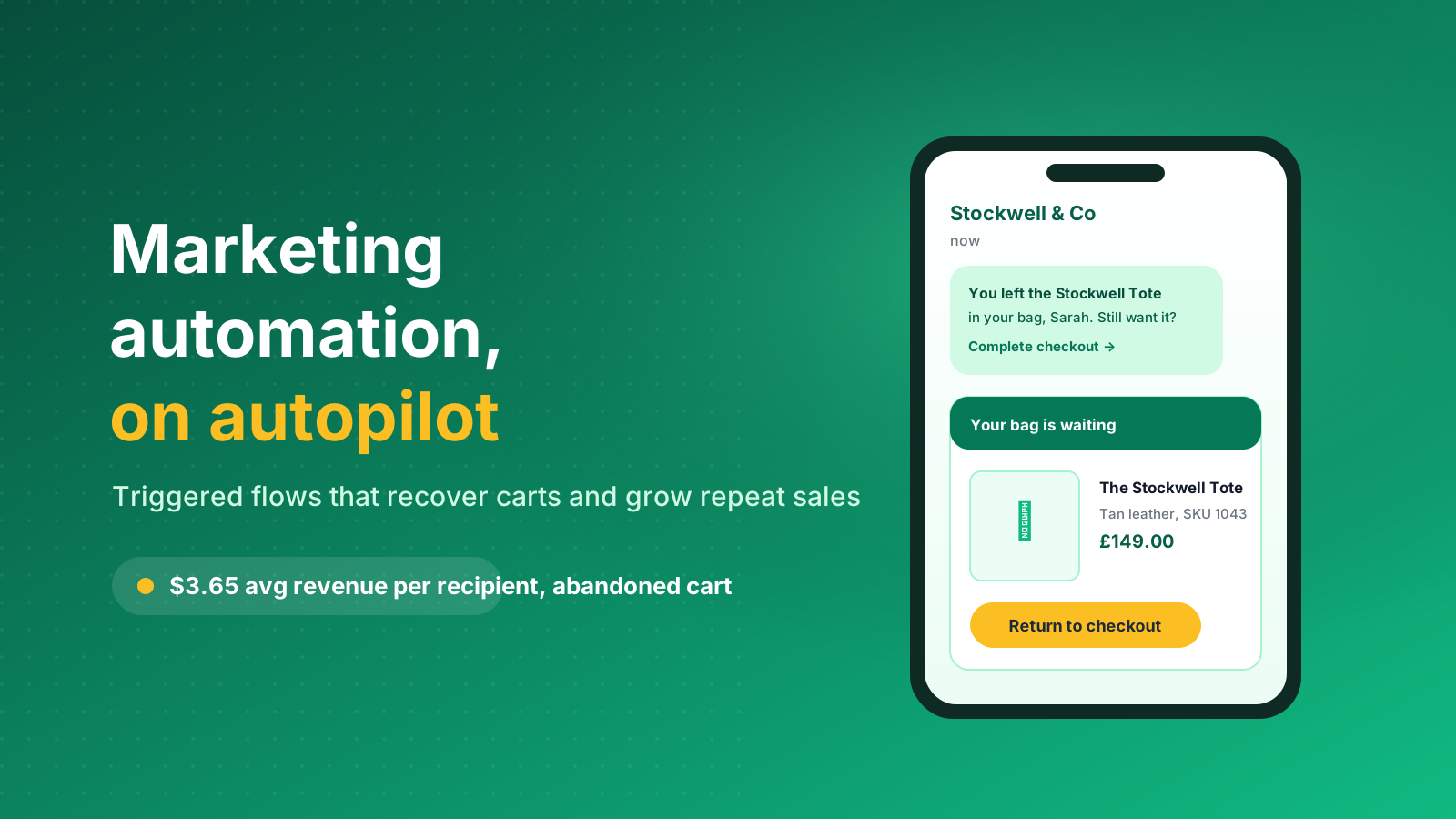
Ecommerce marketing automation is the practice of using software to send the right message to the right customer at the right moment, without a person pressing send each time. A shopper abandons their basket and a reminder goes out an hour later. A first order ships and a thank-you sequence begins. A loyal customer hits six months since their last purchase and a win-back offer lands in their inbox. Each of these is triggered automatically by something the customer does, or fails to do.
The principle is simple, but the value compounds. Instead of marketing to your whole audience at once, automation lets marketers respond to individual behaviour at scale. Every visitor, every browse, and every purchase becomes a signal that can launch a relevant, personalised message or trigger a wider campaign. The work happens once when you build the workflow, then it runs in the background for every customer who matches the trigger, handling the repetitive tasks that would otherwise eat a marketing team's week.
For Shopify brands specifically, this matters because the platform already captures the behavioural data automation depends on. Abandoned checkouts, product views, order history, and customer tags all live inside your Shopify admin. The job is to connect that data to a messaging tool and design flows and campaigns that move customers towards a purchase, then towards a second one. Every step is a chance to turn browsing into conversions.
Why It Matters for Shopify Brands in 2026
The case for automation rests on three numbers that every store owner recognises: lost carts, low repeat rates, and the cost of paid acquisition. Automation attacks all three.
Start with abandonment. The Baymard Institute puts the average cart abandonment rate at 70.22% in 2026, a figure that has barely moved in almost two decades. On mobile it climbs to 80.02%. Baymard estimates that around $260 billion in sales is recoverable across the US and EU through better checkout design and follow-up. A well-built abandoned checkout flow is the single most direct way to claw some of that back.
Retention is the second lever. Acquiring a new customer is expensive, and paid channels keep getting more so. Selling to someone who already trusts your brand is far cheaper, and automation is how you do it consistently. Post-purchase sequences, replenishment reminders, and loyalty messages all run automatically and quietly grow customer lifetime value while your team works on something else.
Then there is the efficiency dividend. Automating repetitive tasks frees marketers to work on strategy, creative, and testing rather than manually scheduling email campaigns. It also reduces human error in segmentation and timing, and it keeps your workflows consistent as volume grows. In our experience, the brands that scale cleanly are the ones that automated their core flows early, then spent their reclaimed time refining them.
The headline benefits are easy to summarise: more recovered revenue, higher average order value through cross-selling and upselling, better conversion rates on the campaigns you already run, stronger customer engagement and retention, and a clear return on investment from a marketing team that spends its hours on work that compounds rather than work that repeats.
The Core Flows Every Shopify Store Needs
You don't need fifty automations to see results. A handful of well-built flows will do most of the heavy lifting. These are the ones we set up first on almost every Shopify store we work with.
Welcome series. When someone joins your list, a sequence of two to four messages introduces the brand, sets expectations, and nudges the first purchase, often with a time-limited incentive. Welcome flows consistently earn some of the highest open rates of any automation because the subscriber has just shown intent.
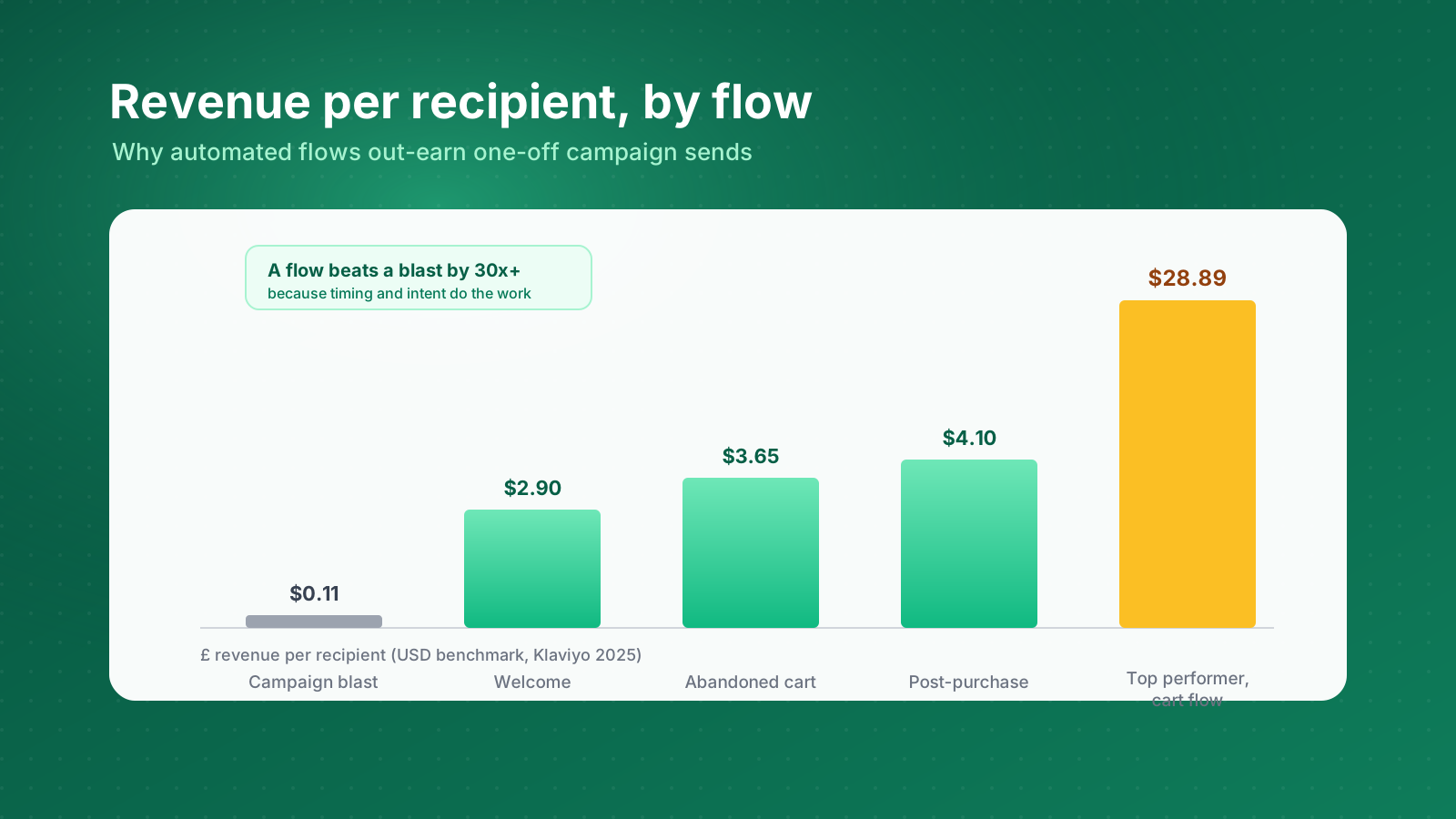
Abandoned checkout. Shopify distinguishes between an abandoned cart and an abandoned checkout, and the checkout flow is where the money is, because the shopper has already entered their details. Klaviyo's benchmark data shows abandoned cart flows average $3.65 in revenue per recipient against $0.11 for a standard campaign send, with top performers reaching $28.89. A three-email sequence has been shown to generate roughly 6.5 times the revenue of a single reminder, so don't stop at one message.
Browse abandonment. A step earlier than checkout, this flow targets shoppers who viewed a product but never added it to their basket. It works as a gentle nudge: "still thinking about this?" with the item shown and a clear path back to the page.
Post-purchase. The moment after someone buys is one of the most valuable and most wasted. A good post-purchase flow confirms the order, sets delivery expectations, then follows up to request a review, share how to use the product, and cross-sell complementary items. This is where you turn a buyer into a repeat buyer.
Win-back. When a customer lapses, an automated sequence reminds them what they're missing and sweetens the return with an offer. You define what "lapsed" means based on your typical purchase cycle, then let the flow re-engage dormant customers without manual effort.
Replenishment. For consumable products like supplements, skincare, or coffee, a replenishment reminder timed to when a customer is likely running low is one of the highest-converting messages you can send. It also opens a natural door to a subscription offer.
Email, SMS, and Beyond: Picking Your Channels
Marketing automation is often treated as a synonym for email. Email remains the workhorse, but it's no longer the only channel worth automating, and the best Shopify brands run flows across several at once.
Email carries the depth. It's where detailed welcome content, product education, and longer win-back stories belong. It's cheap to send and easy to personalise, which is why it still drives the bulk of automated revenue for most stores.
SMS carries the urgency. Open rates on SMS are far higher than email, which makes it ideal for time-sensitive moments like a final abandoned checkout reminder, a flash sale alert, or a back-in-stock notification. The trade-off is that customers tolerate far fewer messages, so reserve SMS for high-intent moments and keep the frequency low. UK senders also need to respect consent rules under PECR and UK GDPR, so only text customers who have explicitly opted in.
Push and on-site round things out. Web push notifications, in-app messages, and on-site personalisation let you reach customers who haven't given you an email or phone number yet. On-site automation, such as showing a returning visitor the products they viewed last time, often goes unbuilt despite being one of the simplest wins available. Paid channels can run on the same logic through automated retargeting, syncing audience segments to social and search ads so customers moving through your funnel see consistent messaging everywhere.
The goal is a coordinated set of channels, not a louder version of the same message everywhere. A high-value customer who abandons a checkout might get an email first, then an SMS if they still haven't returned. Each channel does what it's best at, and the customer experiences one coherent nudge rather than three competing ones.
Segmentation: The Engine Behind Good Automation
Automation without segmentation is just faster spam. The reason a flow feels personal is that it reaches people who share a meaningful trait, and the message speaks to that trait directly. Get segmentation right and every other part of your automation works harder.
The most useful segments for ecommerce are built from behaviour and value rather than demographics. Purchase history tells you who is a first-time buyer versus a loyal repeat customer. Browsing behaviour tells you what someone is interested in right now. Engagement level tells you who is active and who is drifting away. Order value and frequency tell you who your best customers are and deserve VIP treatment.
Shopify makes much of this straightforward through customer tags, purchase data, and segments you can build directly in the admin. Connected tools like Klaviyo act as a lightweight CRM, layering on richer behavioural segmentation, predicted lifetime value, and churn risk scoring, then feeding product recommendations back into your campaigns. The combination lets you send a new subscriber a different message from a third-time buyer, turn one-off purchases into repeat ones, and route warm leads to the right follow-up, automatically.
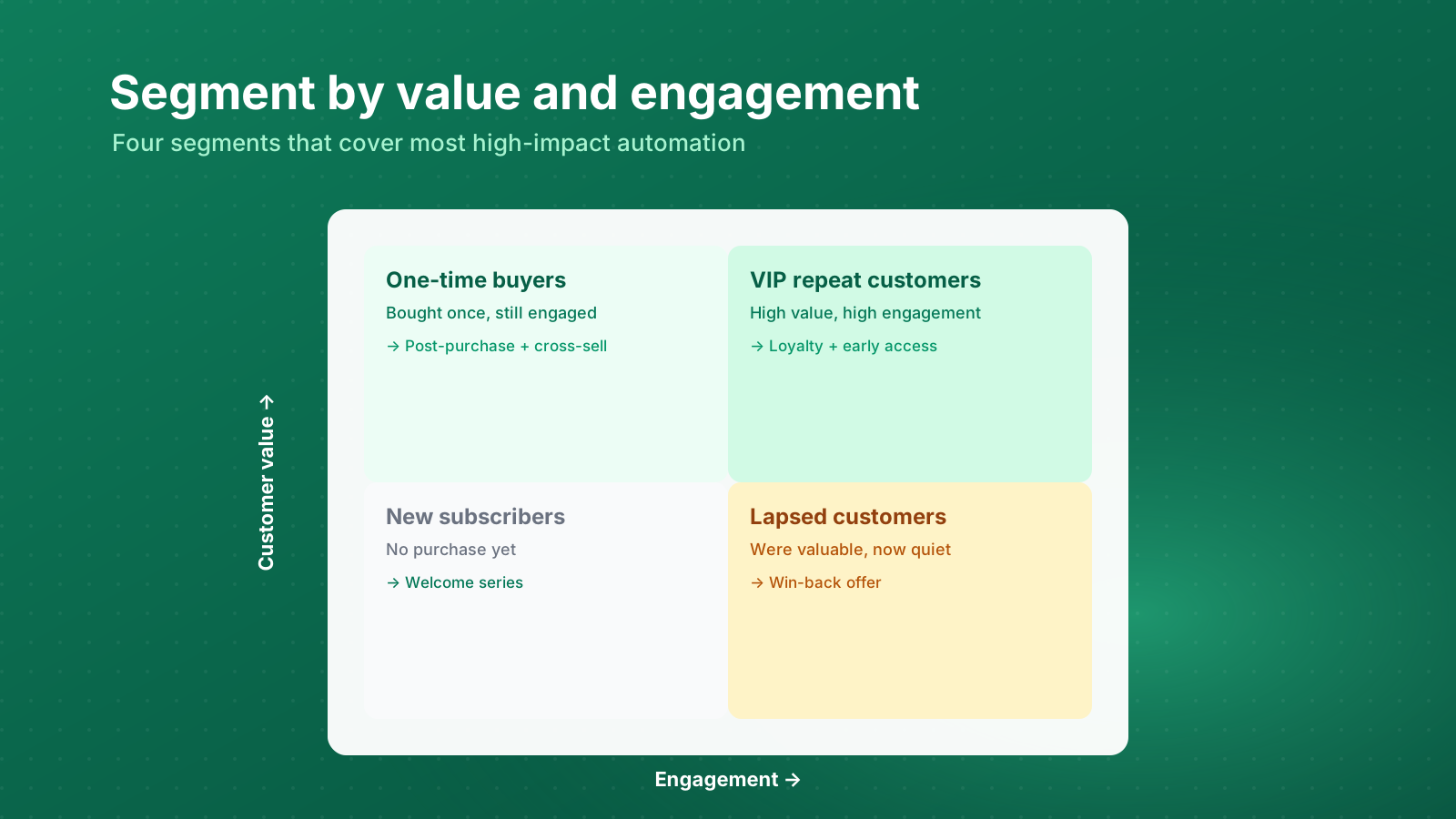
A practical rule we use with clients: start with three or four segments you can act on immediately, rather than building twenty that you never use. New subscribers, one-time buyers, repeat customers, and lapsed customers will cover most of your highest-impact automation before you ever need anything more granular.
The Best Ecommerce Marketing Automation Tools
The tool you choose matters less than how well you use it, but the Shopify ecosystem has a clear set of options worth knowing. Here's how the main ones fit together.
Shopify's native tools are the obvious starting point and they're free up to a point. As of March 2026, Shopify moved its built-in email and SMS automations into Shopify Messaging, its first-party messaging app, while Shopify Flow handles custom trigger-condition-action logic and third-party app actions. Shopify Messaging uses Sidekick AI to help build and personalise messages, supports segmentation, and includes 10,000 emails per month at no cost. For a new or growing store, this is enough to launch your first welcome, abandoned checkout, and post-purchase flows.
Klaviyo is the tool we reach for most often once a brand is serious about retention. Built for ecommerce and deeply integrated with Shopify, it combines email and SMS in one place, with powerful segmentation, predictive analytics, email marketing automation, and flow benchmarking. Its free plan covers up to 250 contacts, and it scales smoothly as your list grows.
Omnisend is a strong alternative for smaller stores wanting email and SMS in a single, approachable platform. Yotpo adds automated reviews and loyalty programmes. Recharge powers subscription and replenishment flows for consumable brands. Gorgias automates customer support responses and connects them to your marketing data. Postscript and Attentive specialise in SMS at scale for larger US-facing brands. When you compare these tools, weigh the features you'll actually use against their pricing tiers rather than the longest feature list, and check that each one can capture customer feedback and reviews to feed your next campaign.
The trap to avoid is stitching together too many disconnected tools. Customer data fragments across platforms, and your segmentation suffers. Wherever possible, keep email and SMS under one roof so behaviour and engagement live in a single place. For most Shopify brands, that means Shopify Messaging to start, then Klaviyo as retention becomes a priority.
How to Build Your First Automation on Shopify
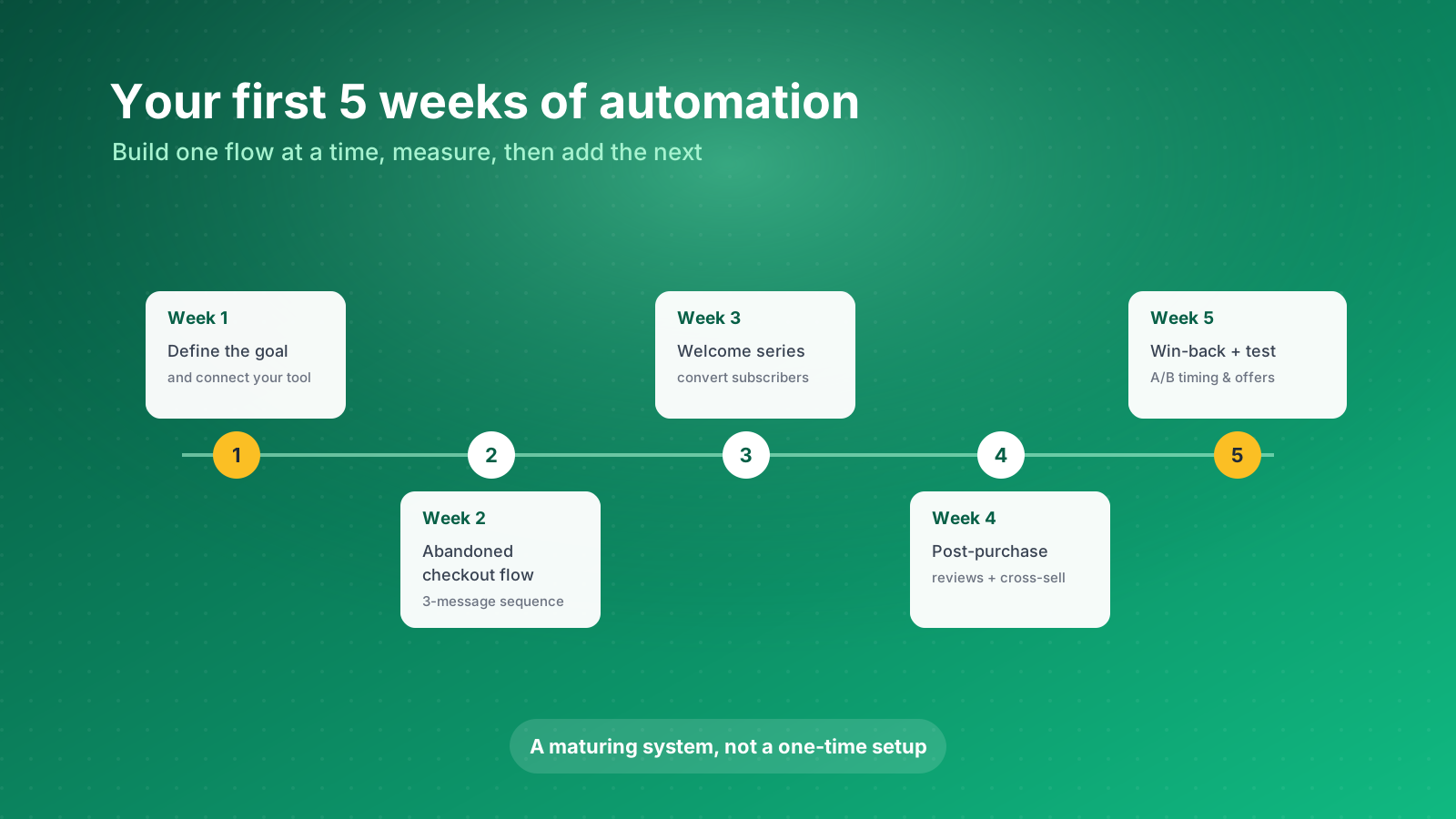
If you're starting from nothing, resist the urge to map out every possible flow. Build one, measure it, then add the next. Here's the sequence we recommend.
Define the goal. Pick a single objective, such as recovering more abandoned checkouts or converting more first-time buyers. A clear goal tells you which flow to build first and what success looks like.
Connect your platform. Decide whether you're starting with Shopify Messaging or a connected tool like Klaviyo, then make sure it's properly integrated with your store so it can read order and behaviour data.
Build the highest-impact flow first. For almost every store, that's the abandoned checkout sequence, because it captures shoppers with the clearest purchase intent. Set up three messages: a reminder a few hours after abandonment, a follow-up the next day, and a final nudge with a gentle incentive after 48 hours. Include the products left behind and a one-click path back to checkout.
Segment and personalise. Even your first flow should speak differently to a new subscriber than to a returning customer. Pull in the product name, the customer's first name where you have it, and a relevant recommendation.
Test and refine. Once it's live, A/B test the timing, the subject lines, and whether an incentive actually lifts conversion or just erodes margin. Then move on to the welcome series, then post-purchase, then win-back. Build your automation as a maturing system, not a one-time setup.
Measuring What Actually Works
Automation is only worth running if you can see what it earns. The brands that win are the ones that treat every flow as something to be measured and improved, not set and forgotten.
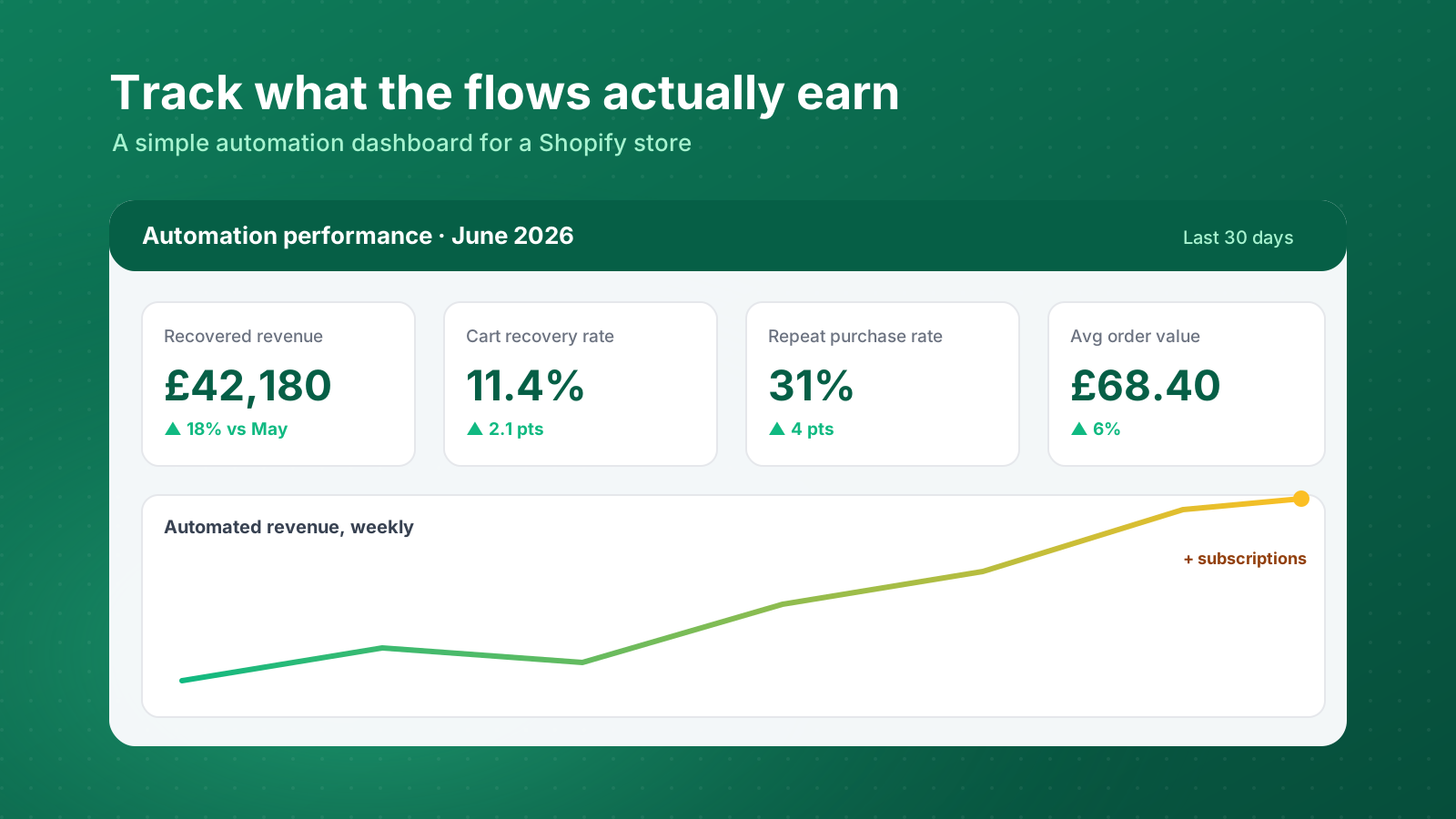
The most honest metric for an automated flow is revenue per recipient, because it accounts for both how many people convert and how much they spend. Open and click rates tell you whether your messaging lands, but revenue per recipient gives the clearest read on return on investment. Use it to compare flows and campaigns against each other and against industry benchmarks.
Beyond per-flow performance, watch the numbers that automation is meant to move: cart recovery rate, repeat purchase rate, conversion rate, average order value, and customer lifetime value. If your abandoned checkout flow is live but conversions haven't shifted, the problem is in the flow, not the concept. Attribution matters too, so make sure your tool credits revenue correctly and you're not double-counting sales that would have happened anyway.
Set a regular review rhythm. We audit client flows at least quarterly, checking that triggers still fire correctly, offers are still relevant, and the numbers are still moving in the right direction. Products change, seasons shift, and a flow that worked last year can quietly decay.
Common Mistakes to Avoid
Most automation problems come from the same handful of errors. Knowing them in advance saves you the lesson.
Automating before you've segmented. Sending the same automated message to your entire list defeats the purpose. Build even basic segments before you switch a flow on.
Over-messaging. More automation is not better automation. Stacking too many flows and campaigns means a single customer can receive several messages in a day, which drives unsubscribes and erodes trust. Map your workflows together and add suppression rules so a customer in one sequence isn't bombarded by another.
Leaning on discounts. An incentive in every flow trains customers to wait for the next code and quietly eats your margin. Use discounts deliberately, and test whether a flow actually needs one to convert.
Setting and forgetting. A flow built once and never reviewed will drift out of date. Broken triggers, dead product links, and stale offers are common in stores that treated automation as a project rather than a system.
Ignoring consent. Adding contacts to flows without proper opt-in is both a deliverability risk and, for UK brands, a compliance one under PECR and UK GDPR. Build your list cleanly and your automation performs better for it.
Marketing automation rewards brands that start small, measure honestly, and improve continuously. If you'd like expert help designing and building the flows that move the numbers, our Shopify Plus agency team works with ambitious DTC brands every day. Get in touch to talk through your store.