 Nic Dunn, CEO, Charle Agency
What an Ecommerce Business Plan Is For
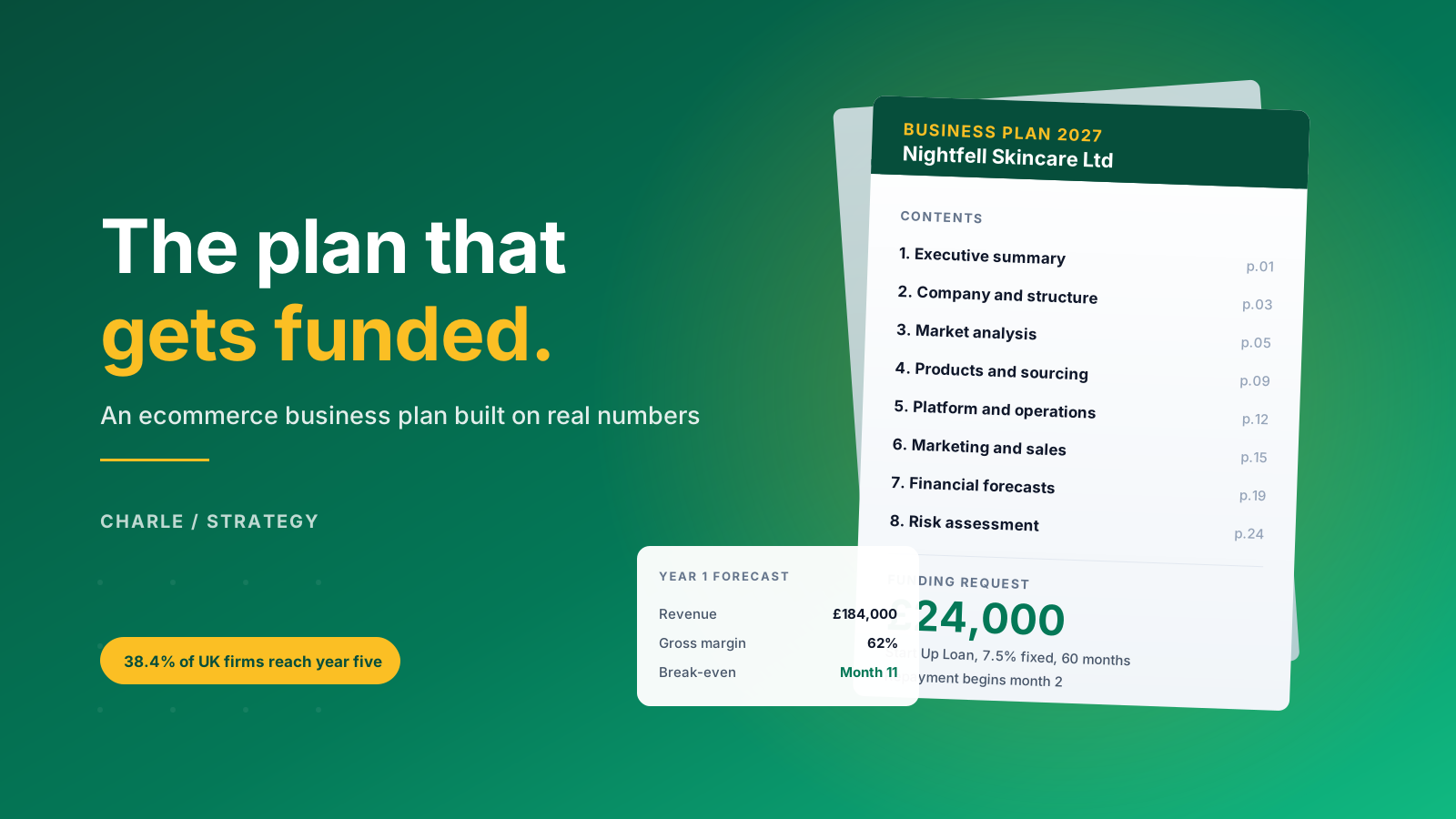
An ecommerce business plan is a written case for why your online store will make money, backed by the market research, operating detail and financial forecasts that prove it. It states which products you sell, which customers buy them, what each sale earns you after costs, and how much cash you need to get from launch to profitability.
Three audiences read it. You read it to stress-test your own assumptions before you commit money. Lenders and investors read it to judge whether the numbers hang together. And your future self reads it every quarter to check whether reality is tracking the forecast.
The discipline is worth more than the document. Harvard Business Review research found that people who write a formal business plan are 16% more likely to reach viability than those who never write one. Office for National Statistics data gives you the reason why that matters: of UK businesses born in 2019, only 38.4% were still trading five years later. Planning does not remove the risk, but it removes the avoidable version of it.
A plan for an online store is not a one-off exercise. Prices move, suppliers change terms, and ad costs climb. Treat the document as a living forecast that you revisit each quarter rather than a submission you file and forget.
The elements of an ecommerce business plan
Every credible business plan template covers the same nine elements. The steps rarely change order, and a reader will look for all of them:
- Executive summary: the one-page argument for the company, including the funding request
- Company overview: structure, ownership, mission, vision and the people involved
- Market research: market size, industry trends, target audience and customer demographics
- Competitor analysis: named competitors, their strengths and weaknesses, and your position against that competition
- Products and pricing: what you sell, your niche, unit costs and inventory management
- Operations plan: suppliers, fulfilment, technology and customer service
- Marketing plan: sales channels, marketing strategy, advertising, social media and email
- Financial plan: cash flow forecast, profit and loss, balance sheet and break-even
- Risks and roadmap: the main risks, their mitigations, and a dated milestone roadmap
Investors, lenders and your own team read those elements in a different order, but they all check the same thing: whether the goals stated in one section are supported by the numbers in another.
How an Ecommerce Business Plan Differs From a Standard One
A traditional retail plan is built around a location. An ecommerce business plan is built around traffic, conversion and cash conversion. Four differences change the shape of the whole document.
Traffic replaces footfall. Nobody walks past your store. Every visitor is bought, earned or borrowed, so customer acquisition cost sits in your plan as a hard operating number rather than a marketing footnote.
Stock ties up cash before revenue arrives. Most online stores pay suppliers months before customers pay them. The cash flow forecast, not the profit and loss, is where an ecommerce business plan lives or dies.
Your technology is an operating cost line. The platform, apps, payment fees and shipping software are recurring costs that scale with orders. Generic templates leave them out, and a plan without them understates cost per order.
Returns are a real number. Online return rates in fashion routinely reach 25% to 40%. A plan that forecasts gross revenue without a returns provision is forecasting money that will not stay in the bank. Our guide to the ecommerce returns process covers how to model and reduce that cost.
The upside is that success in an online business is measurable from day one. You can check your ecommerce business plan against live data within weeks, which is a luxury a physical retailer never has.
The Executive Summary
The executive summary is a one-page argument for the business, written last and read first. If a lender reads nothing else, this is the page that decides whether they carry on.
Keep it to a single page and cover six things: which products you sell, which customers buy them, what makes those products different from the alternatives, how you will reach customers, what the first three years look like financially, and how much capital you are asking for and what it buys. Treat it as an elevator pitch on paper, with your mission and your business goals stated in the first three sentences.
Write in plain numbers rather than adjectives. "A refill-first skincare brand selling a 30ml serum at £38, targeting UK women aged 28 to 45 who already buy from independent beauty retailers, forecasting £184,000 revenue in year one at a 62% gross margin" tells a reader more in one sentence than a page of positioning language.
Two mistakes recur. The first is writing the summary before the rest of the plan exists, which produces claims the later sections then contradict. The second is hiding the funding request at the end. State the amount, the term and the use of funds in the first paragraph, because investors and lenders decide whether to keep reading on this page.
Company Overview, Structure and UK Legal Detail
This section tells the reader who is behind the company and how it is legally set up. Cover the trading name, the domain, the registered structure, who owns what, and the relevant experience of the people running it. A short mission and vision statement belongs here too, along with the objectives you expect the team to hit in year one.
The structure choice comes first. A sole trader is quicker to set up and taxed through Self Assessment. A limited company registered at Companies House separates your personal finances from the business, is generally preferred by wholesale partners, and costs £50 to incorporate online. Most ecommerce businesses that intend to raise money or hold stock incorporate from the start.
VAT belongs here, and generic templates almost always miss it. The UK VAT registration threshold stayed at £90,000 of taxable turnover for 2026, measured on any rolling 12-month period. Cross it and you must register with HMRC within 30 days. If your plan forecasts more than £90,000 in year one, model the VAT-registered version of your margins now rather than discovering the 20% gap later. Non-UK sellers holding stock in UK warehouses have a threshold of zero and register from the first sale.
Add the practical admin a reader will check for: a business bank account, the trade mark position on your brand name, product compliance for your category, and UK GDPR obligations for the customer data your store will hold.
Market Analysis and Competitor Research
Market analysis is where most ecommerce business plans lose credibility, because they quote a global market size and stop. A reader wants to know how much of that market your products can realistically reach.
Start with the honest UK context. Internet sales have held at roughly 27% to 28% of total UK retail since mid-2024 according to ONS figures, on a market worth well over £280 billion. That is the total addressable market. Narrow it twice: to the category you actually sell in, then to the segment you can serve in year one with the budget you have. The third number is the one that belongs in your forecast.
Competitor research should name real businesses. List five to eight direct competitors with their price points, their positioning, their strengths and weaknesses, the sales channels they use, and the gap you intend to occupy. A simple SWOT grid is enough to summarise where the competition is strong and where it is exposed. Search your own category keywords and note which competitors rank, because organic visibility tells you who has been investing in the market for years, and industry trends usually show up in the search results before they show up in a report. Our ecommerce statistics report is a useful source for the market-level numbers.
Then define the target audience properly. Age and gender are demographics, not a target market. What problem do these consumers have, what do they buy instead today, what do they pay for it, and where do they already spend attention? Ten customer interviews will produce better information than any amount of secondary market research, and they surface the objections your product pages will need to answer.
Finish with your differentiation stated as one sentence. If you cannot explain why someone buys from you rather than the incumbent, the rest of the plan is describing a business that has no reason to exist.
Products, Sourcing and Operations
Your operations section proves you can actually deliver your products at the cost your financials assume. Start with the business model, because it sets your margin ceiling before anything else.
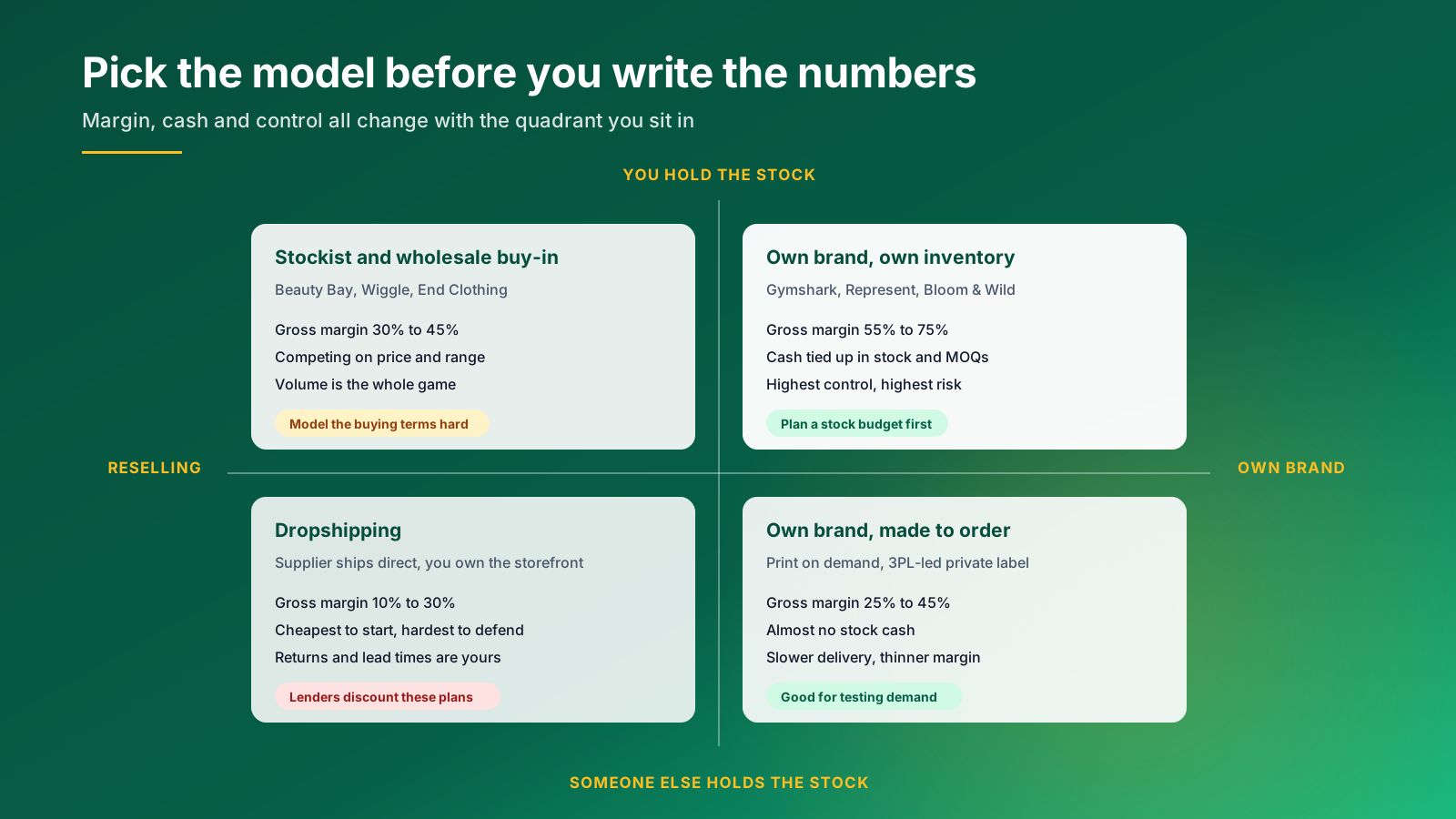
Holding your own inventory under your own brand gives the strongest margins, commonly 55% to 75% gross, and the heaviest cash requirement. Wholesale buy-in and reselling typically lands at 30% to 45% and competes on range and price. Print on demand and made-to-order models avoid stock cash but sit around 25% to 45%. Dropshipping is cheapest to start and hardest to defend, and lenders discount those plans heavily.
Whichever model you choose, the operations plan needs supplier details: who they are, where they are, their minimum order quantities, lead times, payment terms and what happens if they fail. Set out how many products you launch with, how you will handle inventory management as the range grows, and what customer service looks like when an order goes wrong. A named backup supplier is a small paragraph that materially improves how a risk-aware reader views the company.
Fulfilment comes next. Self-fulfilment is cheap at low volume and becomes the constraint fast. A third-party logistics provider costs more per order but scales, and typically charges a pick fee, a storage fee and a packaging cost you should model separately. Our guide to choosing a fulfilment house covers the questions to ask before signing.
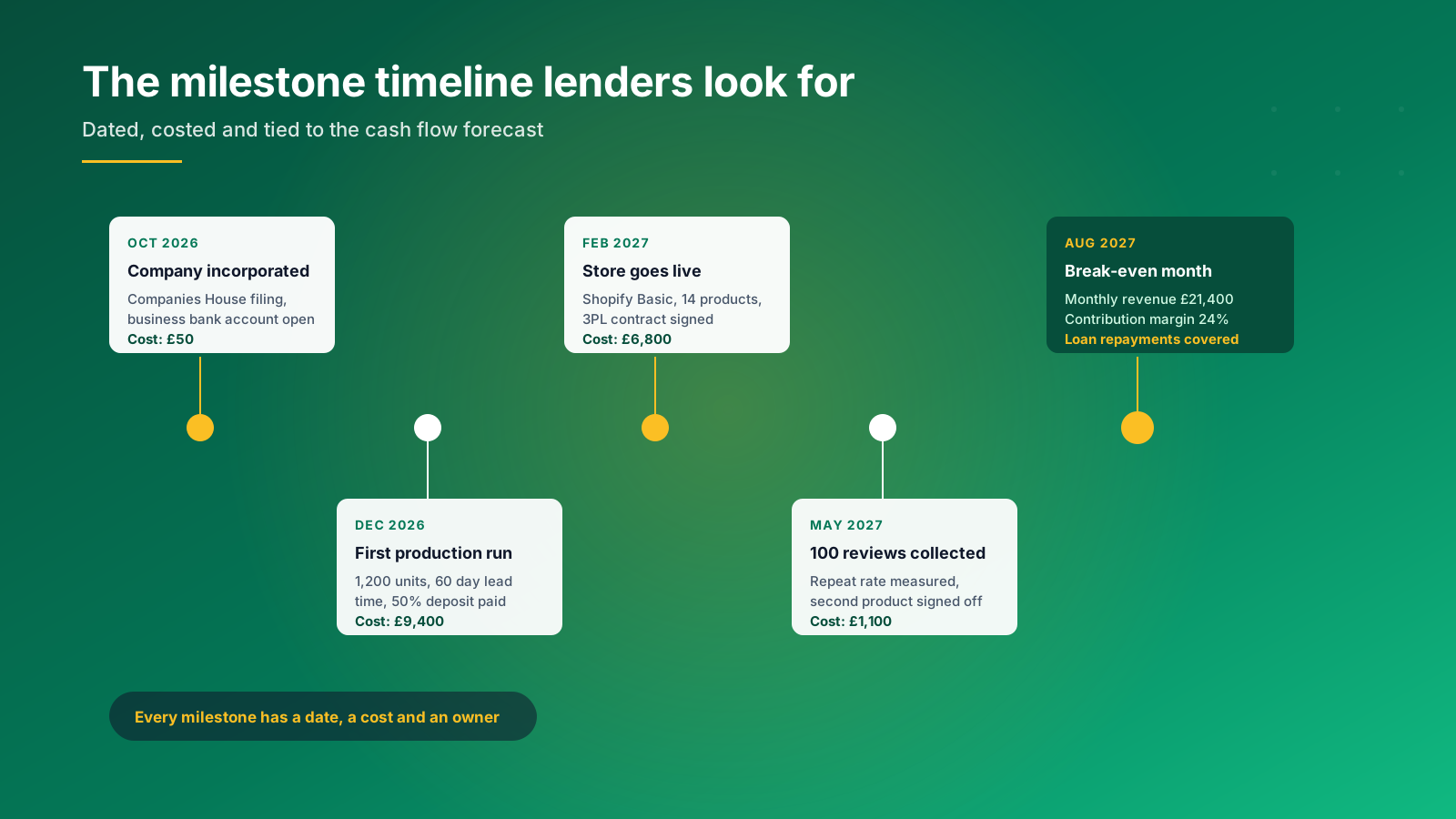
Close the section with a costed timeline. Every milestone should carry a date, a cost and an owner, and every cost should appear in the cash flow forecast in the same month.
Platform and Technology Costs
The ecommerce platform is a recurring operating cost, not a one-off setup line, and leaving it vague is the fastest way to understate your cost per order. Your payment gateway, your shipping software and the rest of your digital stack all scale with volume, so they belong in the financial model rather than in a footnote.
Shopify's UK plans in 2026 run from Basic at £25 per month billed monthly, through Grow at £65 and Advanced at £344, with roughly 25% off for annual billing. Shopify Plus starts from around £1,800 per month and is aimed at established merchants rather than launches. Our full breakdown of Shopify pricing in the UK sets out what each tier includes.
Payment processing is the bigger number in most forecasts because it scales with revenue. Shopify Payments charges UK online transactions at 2.0% plus 25p on Basic, 1.7% plus 25p on Grow and 1.5% plus 25p on Advanced. On £184,000 of annual revenue at an average order value of £54, that is roughly 3,400 orders and around £4,500 in card fees on Basic. That belongs in your plan as a line, not a footnote.
Budget realistically for the rest of the stack. Most launch stores run a theme, an email platform, a reviews app, a returns tool and a subscription or bundling app, which commonly totals £100 to £300 per month. Add design and build costs separately, and be explicit about whether that is a template setup or agency work. If you are still deciding, our comparison of Shopify versus other ecommerce platforms covers the trade-offs.
The Marketing and Sales Plan
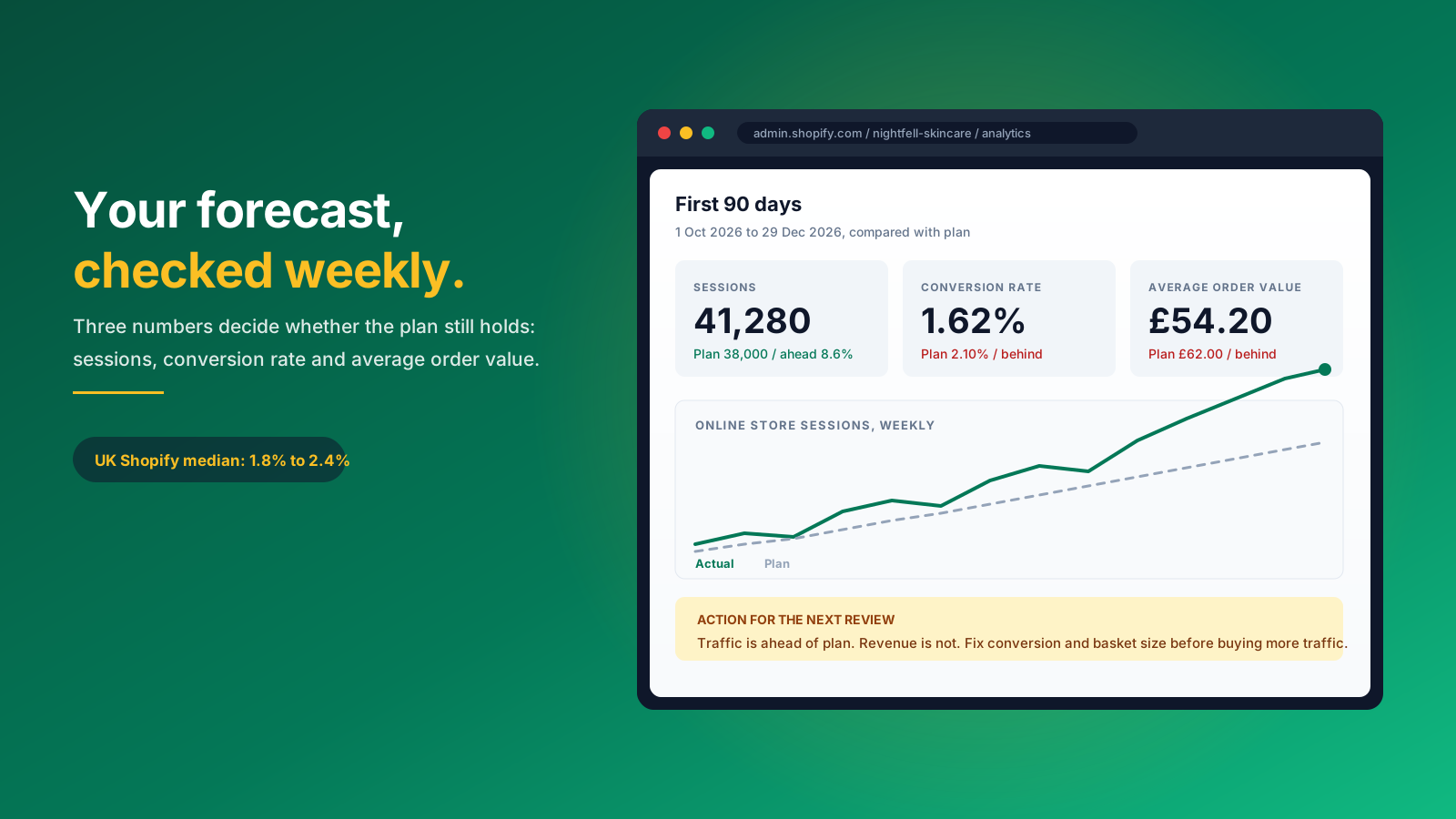
The marketing section should read as a revenue model, not a list of channels. Revenue equals sessions multiplied by conversion rate multiplied by average order value, so every marketing claim you make needs to resolve into one of those three numbers.
Use real benchmarks rather than optimism. Littledata puts the average Shopify conversion rate at 1.4%, and a realistic UK median for growing stores sits between 1.8% and 2.4%. UK all-industry average order value was £122.02 in March 2026, though Shopify stores specifically average closer to £62. If your plan assumes a 5% conversion rate in month one, a lender will discount everything else in the document. Our ecommerce conversion rate benchmarks give you the by-vertical detail.
Customer acquisition cost is the number that decides whether growth is affordable. Average ecommerce CAC now sits around £50 to £65 depending on category, and acquisition costs have risen 40% to 60% since 2021. Model the ratio of lifetime value to CAC and target at least 3:1, with payback inside six months, because anything slower means growth eats cash faster than it creates it.
Split the marketing strategy across acquisition and retention. Paid advertising on social media and search buys immediate traffic and stops when the budget stops. Organic search and content compound over years and cost nothing per click once they rank, which is why a search plan belongs in the document from day one. Branding sits underneath all of it, because a brand your audience recognises converts better on every digital channel it appears on. Email and SMS are where margin is recovered, and well-built Klaviyo flows commonly drive 20% to 30% of revenue for established stores.
State a monthly marketing budget, the split across sales channels, the expected cost per acquisition for each, and how you will decide to move money between them. For example, a plan that commits 60% of spend to paid social in month one should say what evidence would move that to search by month six.
The Financial Plan and Unit Economics
The financial plan is the part of an ecommerce business plan that gets read most carefully and written most carelessly. Build it from the bottom up, starting with a single order.
For example, take a hypothetical £38 serum selling to repeat skincare customers. Cost of goods is £9.50. Fulfilment and packaging cost £3.20, shipping costs £3.90 of which the customer pays £2.95, and card fees take £1.01. Gross profit lands near £23.30, a 61% margin. Now subtract acquisition. At a £16 cost per new customer, contribution margin falls to roughly £7.30 per order, or 19%. That is the number that pays your salaries, rent and repayments.
Benchmark it. Healthy ecommerce gross margins run 55% to 70% before ad spend, and contribution margin after ad spend should reach at least 20%, with strong operators at 25% to 35%. If your model needs perfect execution to reach 12%, the plan needs changing before the business launches, not after.
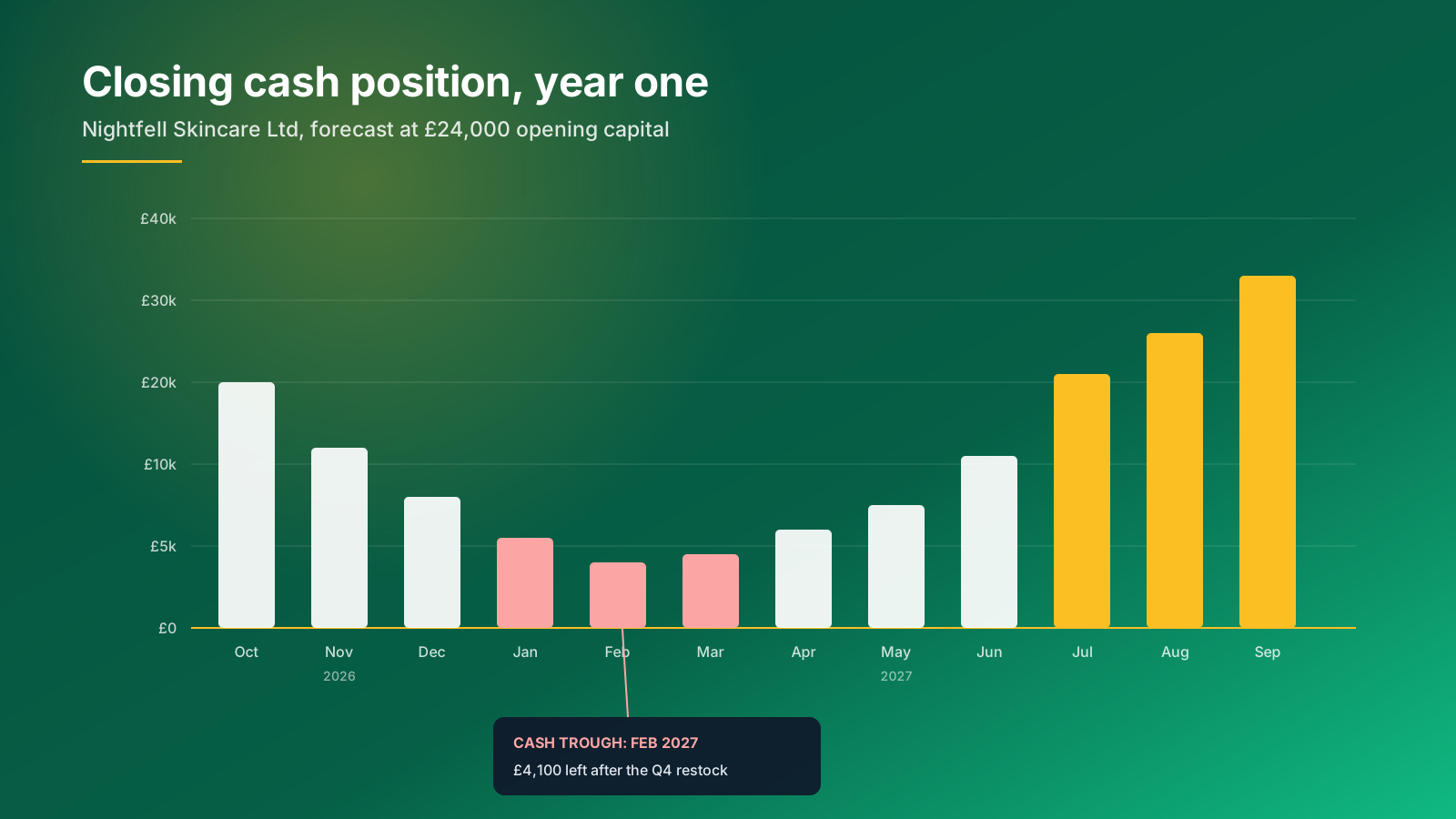
Build three statements: a 12-month cash flow forecast by month, a three-year profit and loss, and a balance sheet, alongside a break-even calculation showing the monthly revenue that covers fixed costs. The cash flow forecast is the one lenders scrutinise, because it exposes the month where stock payments and marketing spend collide. Show your cash trough explicitly and explain how you survive it, whether that is working capital, a facility or a slower launch.
Present best, expected and worst case scenarios. A plan with only an optimistic case reads as inexperience. A plan that shows what happens if conversion lands 30% below forecast, and still survives, reads as competence.
Risk Assessment and Presenting the Plan
A risk section improves your credibility rather than damaging it, provided each entry carries a mitigation. Cover the risks that actually threaten an online business: supplier failure, stock obsolescence, rising acquisition costs, platform dependency, currency movement on imported goods, and key person risk. One line each on likelihood, impact and what you would do is enough. Entrepreneurs who name their risks read as prepared, not pessimistic.
If you are applying for funding, match the plan to the process. The UK government-backed Start Up Loans scheme lends £500 to £25,000 at a fixed 7.5% to businesses trading for under five years, and the application requires three documents: a business plan, a 12-month cash flow forecast and a personal survival budget. Free templates and mentoring come with it. Bank and investor processes ask for the same underlying evidence in a different order.
Presentation matters more than length. Aim for 15 to 25 pages for a funding submission, with a contents page, consistent numbers across every section, an appendix for the financial details, and no unexplained figures or information a reader has to hunt for. Have someone outside the business read it and mark anything they do not believe.
Then keep it alive. Review the plan monthly against actual sessions, conversion rate and average order value, and rewrite the forecast properly once a quarter. Update the roadmap as milestones land or slip. A plan that is three months stale is a historical document, and it stops being useful exactly when you need it most. Success in ecommerce is rarely a single decision; it is a strategy that gets corrected often enough to stay true.
If you want help turning the plan into a store that performs, our Shopify Plus agency and ecommerce SEO teams work with brands at every stage. Get in touch to talk it through.