 Nic Dunn, CEO, Charle Agency

What Conversion Rate Means on Shopify
Your ecommerce conversion rate is the percentage of sessions that end in an order. Divide orders by sessions over the same period and multiply by 100: 20 orders from 1,000 sessions is a 2% conversion rate. That formula, orders divided by sessions, is the foundation of every decision that follows. Shopify reports this as your online store conversion rate under Analytics, calculated on sessions rather than users, which is the industry norm. Conversion rate optimisation, known internationally as conversion rate optimization or CRO, is the ongoing practice of lifting that percentage by removing friction and increasing clarity. The goal of optimization is simple: earn more revenue from the traffic you already pay to acquire.
It is the highest-leverage metric most Shopify merchants have, because a small lift compounds across every channel. Raise conversion and you improve return on ad spend, lower customer acquisition cost, and make SEO, email and paid all more efficient at once. That is why CRO sits ahead of buying more traffic: the visitors are already arriving, and the question is how many you convert. A low conversion rate is money left on the table, and the reasons behind it are usually fixable rather than mysterious.
Good Shopify Conversion Rate Benchmarks for 2026
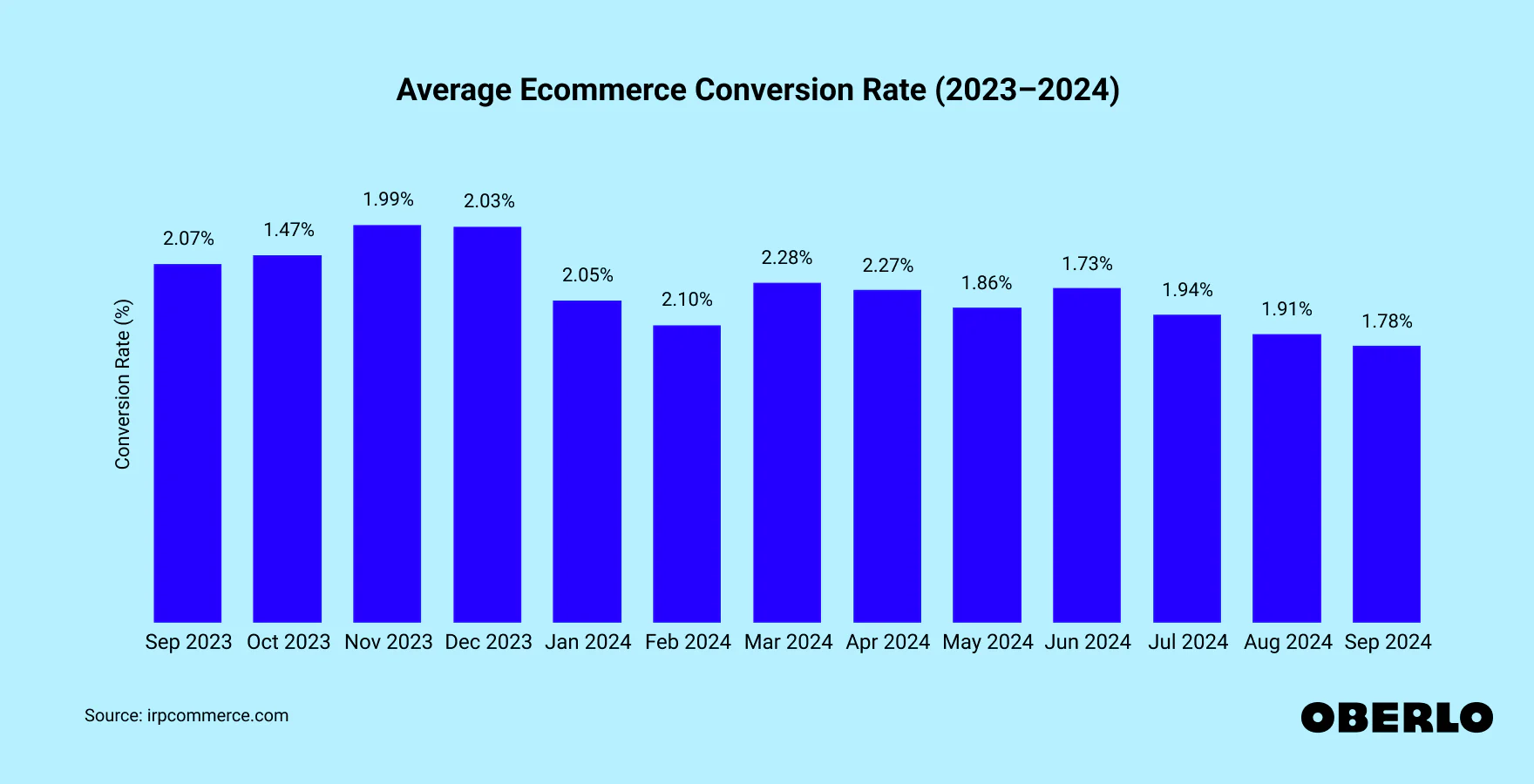
There is no universal "good" number, but benchmarks give you orientation. The average Shopify store converts at roughly 1.4% (Littledata). Clear 3.2% and you are ahead of 80% of Shopify stores; pass 4.7% and you are in the top 10%. Device splits the picture sharply: desktop averages about 1.9% (top stores 6.5%+) while mobile averages 1.2% (top stores 3.9%+), because smaller screens and checkout friction cost conversions even though mobile drives the majority of visits.
Category matters just as much. Global 2025 conversion rates ran highest for food and beverage (around 6.2%) and beauty and personal care (around 4.9%), and lowest for home and furniture (around 1.4%) and luxury and jewellery (around 0.9%), because considered, high-value purchases involve longer research and more hesitation. So the question is not "is 2% good?" but "is my rate strong for my category, price point and device mix, and is it improving?" Benchmark against your own trend, broken down by device, traffic source and funnel stage, rather than a single global average.
Analyse Your Conversion Funnel First
Before changing anything, find where shoppers drop off and where people abandon their carts. A single blended conversion rate hides the problem; the insight comes from the funnel. Track product page conversion, add-to-cart rate, and checkout conversion separately, and compare mobile against desktop and new against returning visitors. A healthy add-to-cart rate with a weak checkout conversion points at friction or cost surprises; a weak add-to-cart rate points at product pages, pricing or trust.
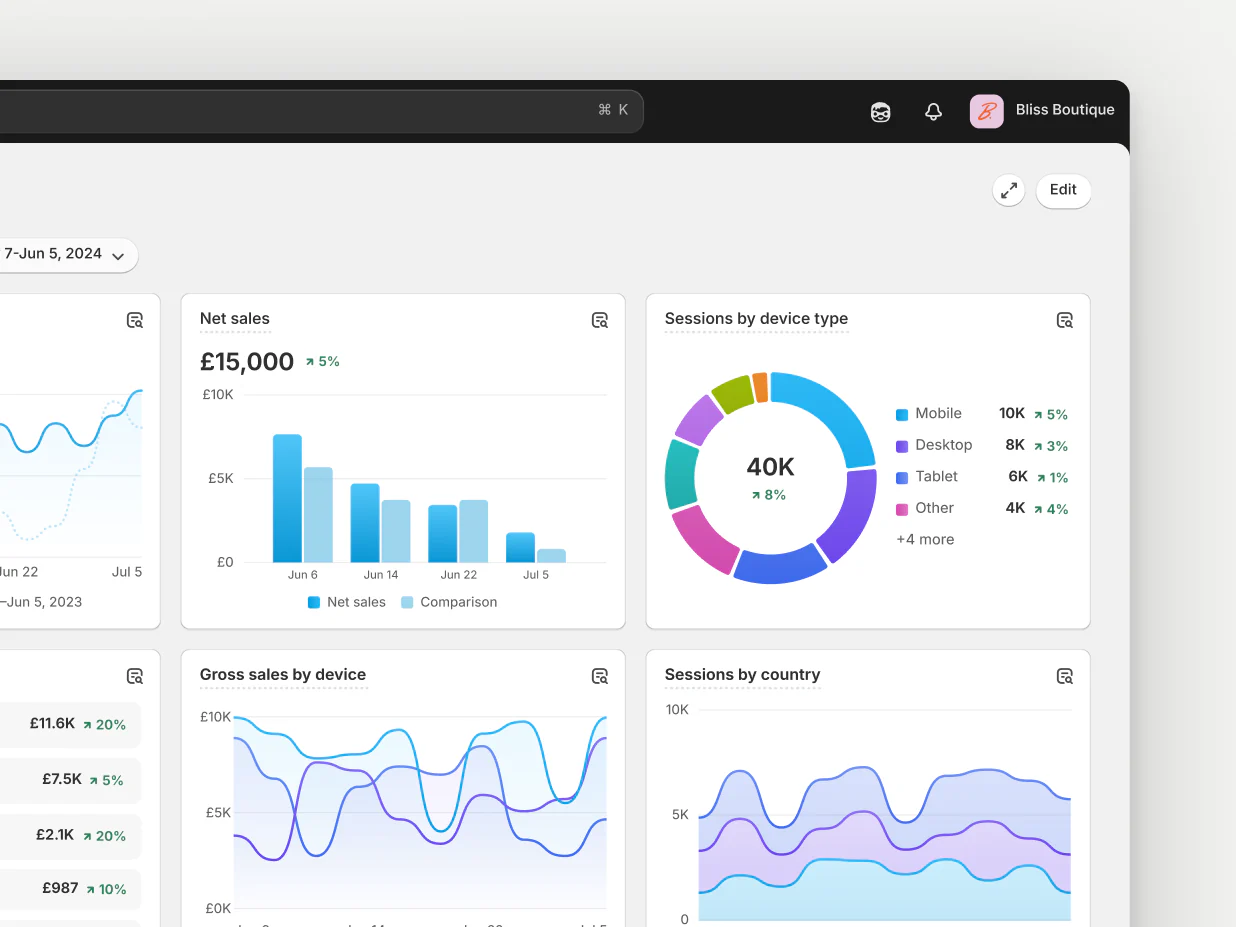
Shopify Analytics is the starting point, and Google Analytics 4 adds funnel and segment depth. For the "why" behind the numbers, behavioural tools such as Hotjar, Microsoft Clarity and Lucky Orange give heatmaps and session recordings that expose rage clicks, dead zones and the exact step where hesitation creeps in. Track micro conversions too, like email signups, wishlist saves and filter use, using Shopify pixels or Google Tag Manager, since fixing friction in these early actions usually lifts completed purchases without any extra traffic.
Build Trust and Reduce Buyer Anxiety
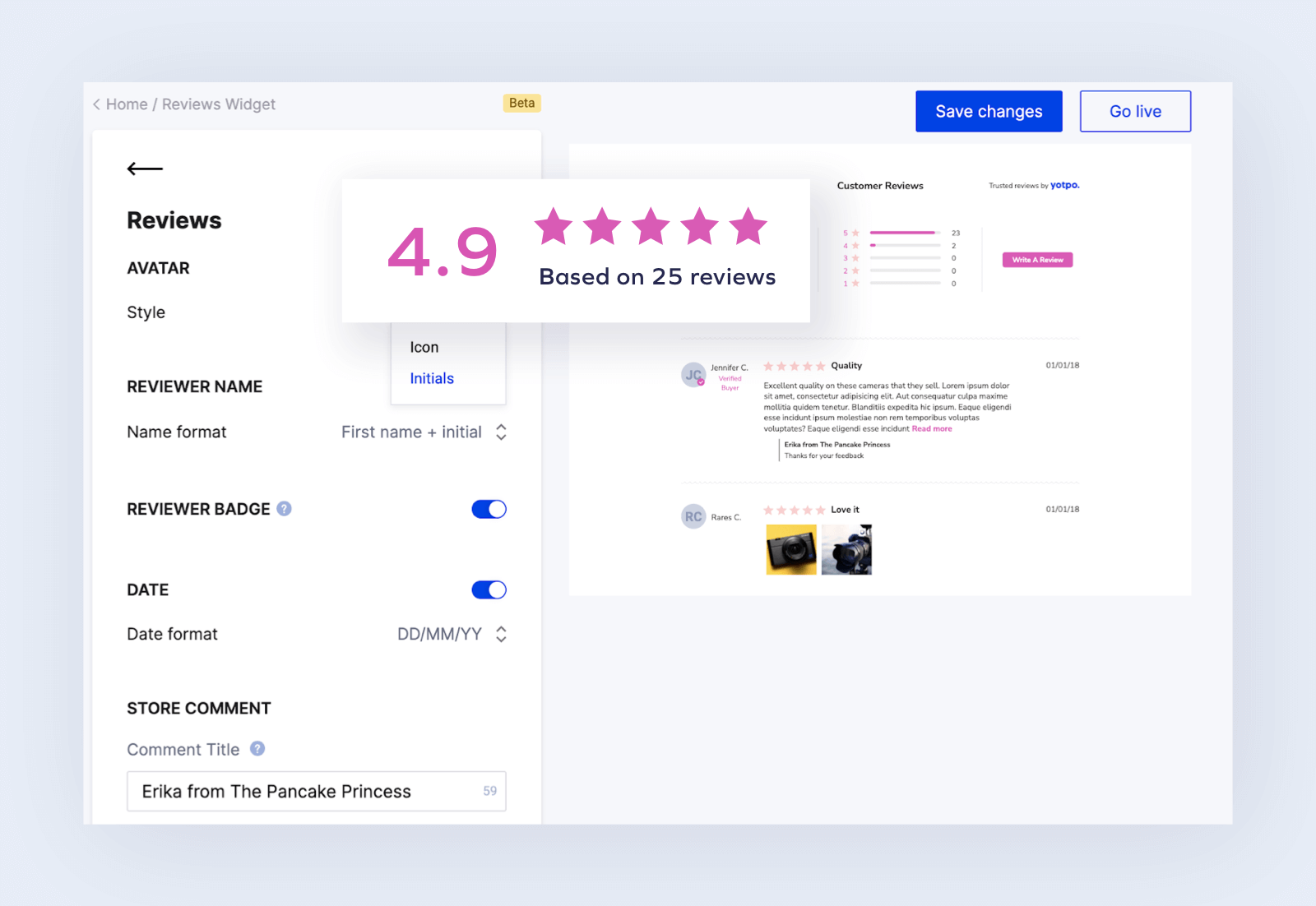
Shoppers cannot touch your product, so trust does the persuading. Reviews are the strongest lever: Baymard's research finds up to 95% of users rely on ratings to evaluate a product, looking for both the average score and the number of reviews it is based on. Show authentic reviews with photos on product, cart and checkout pages, near the price and the call to action where decisions actually happen.
Trust signals work when they are concrete and placed at the moment of doubt. Secure-checkout and SSL cues, recognisable payment logos, clear shipping and return policies, and external validation like press mentions all reduce hesitation. Return policy is load-bearing: Baymard reports 11% of shoppers have abandoned an order in the last quarter because they were unhappy with the return policy, and many look for it in the footer, so make it easy to find. Reassurance about returns, support and delivery is most powerful exactly where buyers hesitate.
Reduce Checkout Friction
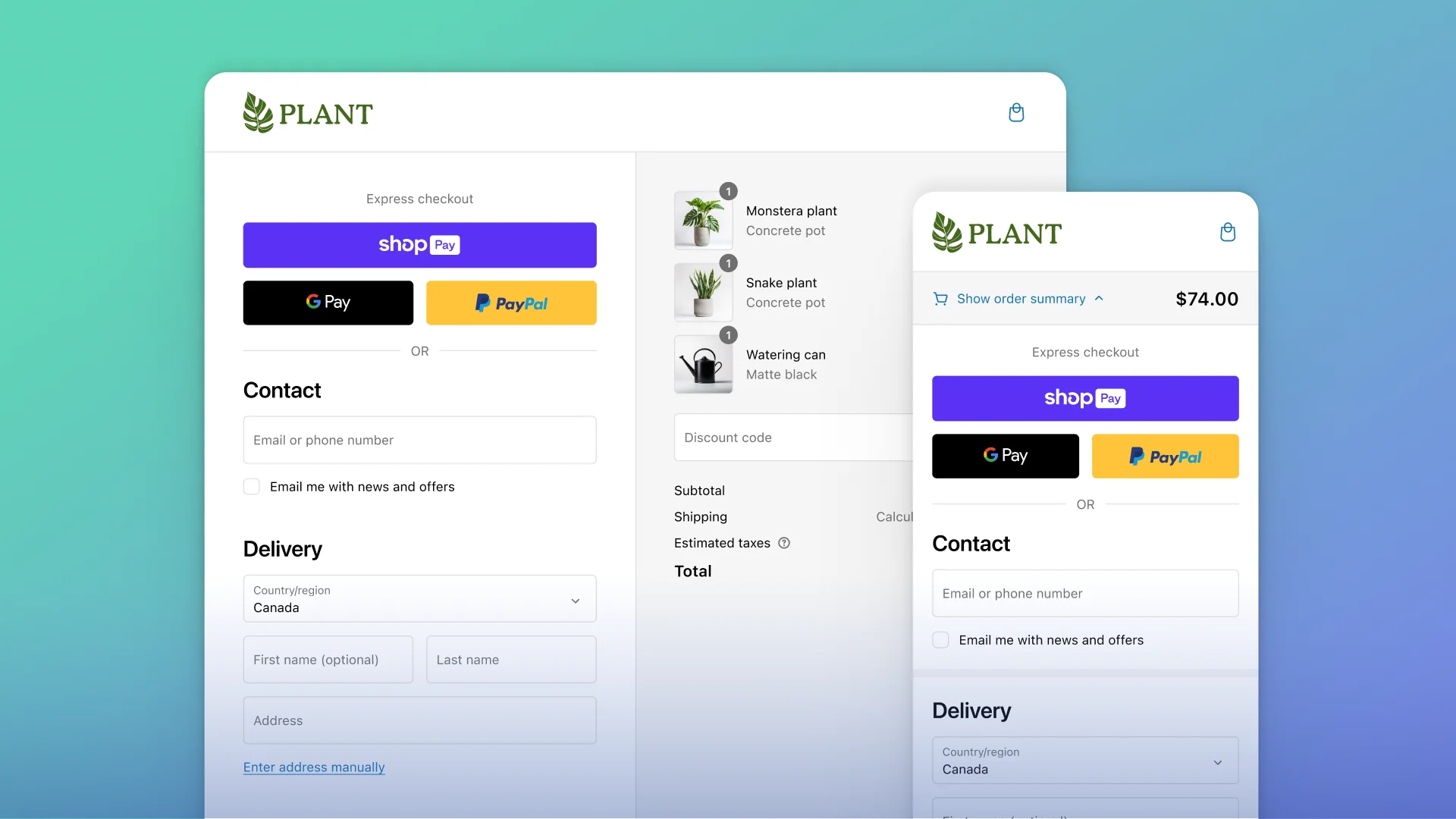
Checkout is where the most sales are won or lost, and a clumsy checkout process is the most common reason people abandon full carts. Baymard finds 18% of shoppers abandon because checkout is too long or complicated, and the average checkout shows 11.8 form fields when most need only about eight. Forced account creation is a known driver of abandonment, so trim every unnecessary field, enable guest checkout so buyers are not pushed into account creation before they are ready, label both required and optional fields, and collapse coupon-code fields behind a link so shoppers do not leave to hunt for a code they feel they should have.
Payment is the decisive moment. Shop Pay can lift conversion by up to 50% over guest checkout for returning shoppers through one-tap checkout and pre-filled details, and it outperforms other express methods. Pair it with Apple Pay and Google Pay to cut form fatigue, and offer buy now, pay later options such as Klarna or Clearpay to lower upfront cost anxiety on higher-priced orders. Be transparent about shipping, taxes and delivery timelines early, since unexpected costs at the final step are a leading driver of cart abandonment. Shopify's built-in abandoned-checkout emails recover a meaningful share of those lost orders automatically.
Optimise Product Pages
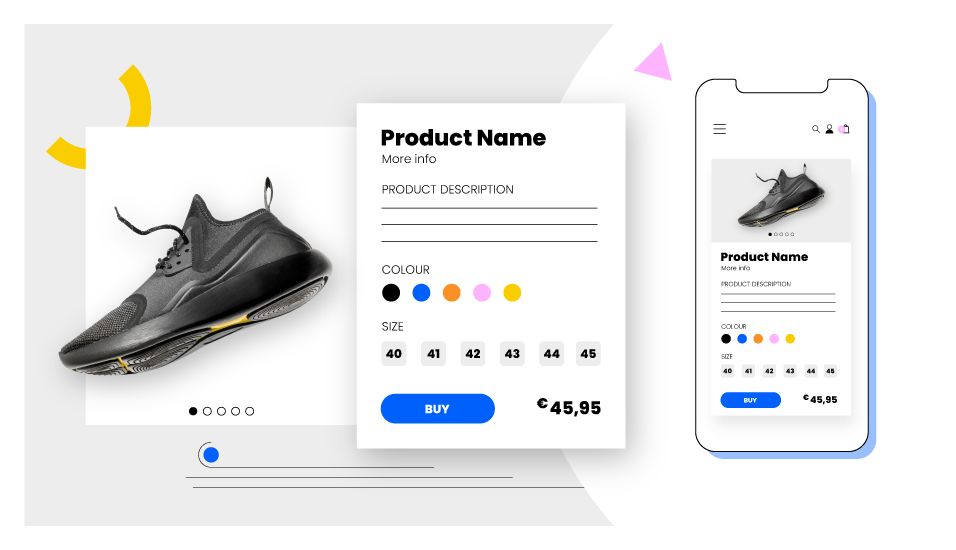
The product page is where buying decisions are made, so keep the key elements, the title, price, reviews, main image and call to action, above the fold and avoid burying them under oversized banners. Strong visuals carry disproportionate weight: Baymard found 56% of users start by exploring product images, yet only 25% of sites provide enough high-quality, zoomable photos to evaluate a product properly, so strong photography is one of the most overlooked conversion levers.
Answer buying questions on the page so shoppers never leave to find them. Use tabs or accordions for sizing, materials, delivery and setup, add video where it clarifies use, and write clear, specific descriptions rather than vague marketing copy. Reinforce with reviews that speak to the questions buyers actually have, such as fit, quality and durability, and let shoppers filter reviews to find what is relevant to their decision.
Speed and Mobile Experience
Mobile now accounts for roughly 78% of retail site visits and about 70% of orders, yet it converts lower than desktop, which makes the mobile experience the biggest single opportunity for most stores. Speed is the foundation: a bloated theme heavy with animations, unused apps, heavy JavaScript and oversized images can push load times past four or five seconds and send bounce rates climbing. The fastest Shopify themes, such as Dawn built on Online Store 2.0, ship clean code and minimal JavaScript, load in under two to three seconds, and can lift conversion by 8% to 25% within the first month while still supporting the features shoppers expect.
Design for thumbs, not just smaller screens. Keep primary calls to action and navigation within easy reach, use sticky menus and breadcrumb trails so shoppers move forward rather than reaching for the back button, and keep filters accessible. Clear, logical navigation alone can lift conversion by around 18.5% while reducing bounce, because shoppers who can find what they want are shoppers who buy.

Discovery, Search and Recommendations
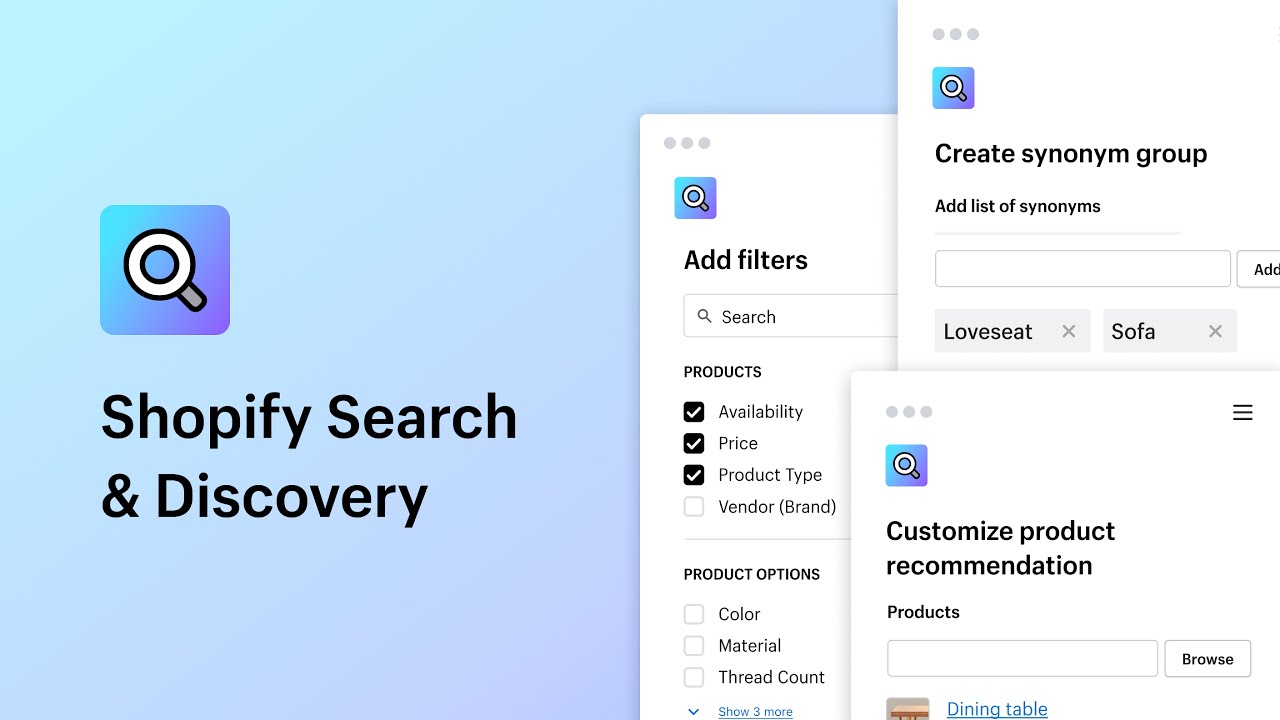
Help shoppers find products faster and they convert more often. Predictive search that surfaces product images, prices and categories as users type supports high-intent visitors, and strong filters for size, colour, availability and price are essential on product-heavy collections, especially on mobile. Shopify Smart Collections keep best-sellers and new arrivals fresh automatically, and stores that use them well see higher add-to-cart rates from pre-filtered, high-intent pages.
Personalisation compounds this. AI-powered product recommendations driven by browsing and purchase history, placed on product pages, in the cart and after purchase, guide shoppers to items they would not otherwise find and lift both conversion and order value. Use upsells and cross-sells as genuinely helpful suggestions ("complete the look", "frequently bought together") rather than a hard sell, and avoid aggressive full-screen pop-ups that spike bounce; delay email-capture prompts and segment them by behaviour so they feel helpful instead of interruptive.
Incentives and Value Proposition
Your value proposition is one of the strongest drivers of conversion. If a first-time visitor cannot tell within seconds what you sell, who it is for and why it beats the alternatives, conversion suffers no matter how polished the rest of the site is. Review your homepage and product pages as if you knew nothing about the brand, and make the answer obvious.
Incentives then reduce the final hesitation. A visible free-shipping threshold with a cart progress bar nudges larger orders and reassures on cost, free gifts or early access can outperform blunt percentage discounts, and genuine urgency and scarcity, such as honest low-stock indicators, encourage action, provided they are used sparingly and honestly. These nudges raise both conversion and average order value, and pair naturally with the tactics in our guide to increasing average order value on Shopify.
A/B Testing and Tools
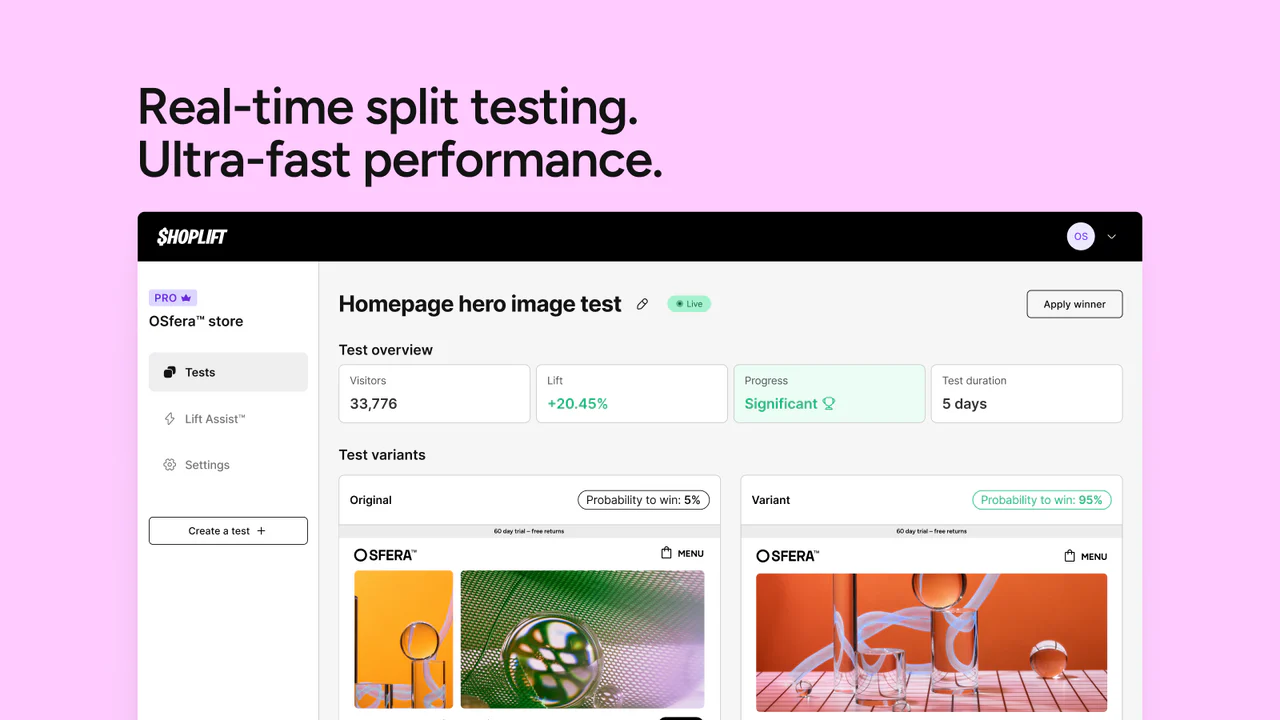
CRO is validated by testing, not opinion. Start every experiment with a clear hypothesis, change one element at a time, whether that is a headline, a button or a page layout, and let the test run until it reaches statistical significance across enough sessions, usually two to four weeks, accounting for sample size and seasonality. Lower-traffic stores need longer windows, and testing several layouts or elements at once makes it impossible to know which change had the impact.
The right tools make this practical. Shoplift runs A/B tests on Shopify without editing theme code; see our guide to the best A/B testing tools for Shopify. Hotjar and Microsoft Clarity reveal where users struggle with heatmaps and session recordings, Google Tag Manager captures micro-conversion events, and Google Analytics 4 ties it together into a funnel view. Used together with Shopify Analytics, they turn guesswork into evidence.
Common CRO Mistakes
A few predictable mistakes quietly cost conversions. Guessing without data, where changes are launched on opinion rather than heatmaps, user experience research and real behaviour, is the most common. Following trends over testing is next: a tactic that works on another store may fail on yours, so test before you scale. Crowding the page with too much information, especially on mobile, slows shoppers down, so keep one clear call to action per screen. Running several changes at once makes results unreadable, so isolate variables. And ignoring the journey into checkout, where confusing delivery options or unclear returns do the damage long before the payment field, leaves easy wins on the table. Always read results in context rather than reacting to a single day's conversion rate.
Our View After 100+ Builds
After optimising more than a hundred Shopify and Shopify Plus stores, the pattern we see is that merchants reach for clever tactics, exit-intent pop-ups, urgency timers, discount spinners, before they have fixed the boring fundamentals. Almost every store we audit has a faster theme, a shorter checkout, and a clearer mobile product page available to it, and those three changes nearly always beat the gimmicks. We start by watching session recordings on mobile, because that is where most traffic and most lost revenue sit, and the friction is usually obvious within ten sessions.
The second thing we would change is how stores treat testing. Too many run three changes at once, call a winner after a weekend, and bank a result that was noise. Conversion rate is easy to move in a deck and hard to move in reality, and the difference is disciplined testing against a clear hypothesis. Fix the fundamentals, test one thing at a time, and judge every change by revenue per visitor rather than conversion rate alone, because a higher conversion rate at a lower order value is not always a win.