 Nic Dunn, CEO, Charle Agency
What Is Customer Retention?
Customer retention is the practice of keeping the customers you already have so they buy from you again. For an ecommerce brand, that means turning a single purchase into repeat business, and eventually into a loyal customer who chooses you by default. The term covers everything you do to build long-term customer relationships once the first order has shipped. It is the opposite side of the coin to customer acquisition, which is about winning people who have never bought from you before.
Retention matters because a returning customer is cheaper to sell to, spends more over time, and refers others to your store. The benefits compound: a strong customer retention strategy builds predictable revenue on top of the orders you have already paid to acquire, and it turns repeat buyers into genuine customer loyalty rather than one-off transactions. Understanding the importance of retention, and how your product fits into your customers' lives, is the foundation everything else in this article builds on. Instead of starting from zero every month, you build on the value of customers you have already won.
The distinction sounds obvious, yet most stores are still built almost entirely around acquisition. The homepage, the paid ads, the discount codes are all aimed at the first order. The work that turns that first order into a second is where the profit usually hides, and it is the work most brands skip.
The Benefits of Customer Retention
Before getting into tactics, it helps to be clear on why retention is worth the effort. The benefits go well beyond a single repeat order; they compound into the kind of business growth that paid acquisition alone cannot deliver.
Predictable revenue and higher profitability. Retained customers buy again and again, which smooths out the peaks and troughs of relying on new customers every month. Because they already trust your brand, they convert more easily and need less marketing spend to reach, so each repeat order carries more profit. Over time this predictability is what turns a fragile store into a stable, fundable business.
Higher customer lifetime value. Every extra purchase raises the value of a customer, and small improvements in retention multiply across your whole customer base. A brand that lifts its repeat rate by a few points sees lifetime value climb without spending a penny more on acquisition.
Word-of-mouth and advocacy. Loyal customers do your marketing for you. They leave reviews, refer friends, and create the user-generated content that builds trust with new buyers. The strongest brands turn customers into active advocates who share positive experiences, recommend you to people who trust them, and defend you when something goes wrong. These emotional connections are the cheapest and most credible growth channel there is, and they only come from customers who genuinely value the relationship and the experiences your brand delivers. Strong customer engagement between orders is what keeps those connections alive.
A competitive advantage that compounds. Retention is hard for competitors to copy. Anyone can outbid you on ads, but a brand that has earned real customer loyalty and brand loyalty owns a moat that widens with every order. The best retail and ecommerce brands around the world treat this as their core advantage. While rivals fight over the same expensive new customers, you are building on the ones you already have. That is the difference between renting growth and owning it.
Why Retention Beats Acquisition in 2026
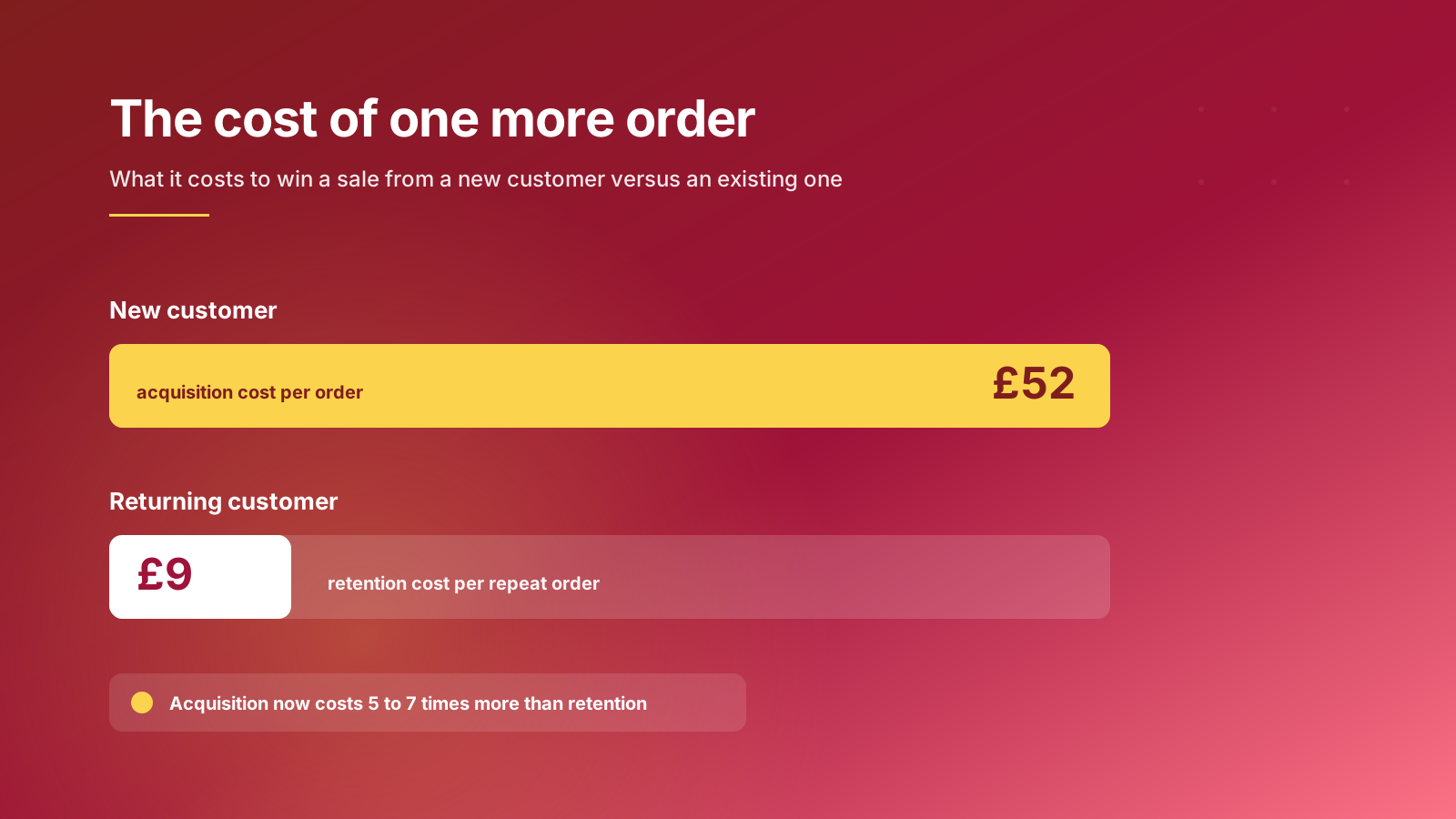
The economics have shifted hard in favour of retention, and the trends all point the same way. Acquiring a new customer now costs roughly five to seven times more than keeping an existing one, and that gap is widening. Average ecommerce acquisition costs have climbed around 40% over the past two years, driven by ad auction inflation, privacy changes that blunt targeting, and a lot more competition for the same attention. UK consumers, like shoppers everywhere, have more choice than ever, so the amount you can profitably spend winning each new customer keeps falling. Many brands now lose money on the first order and only reach profit on the second or third.
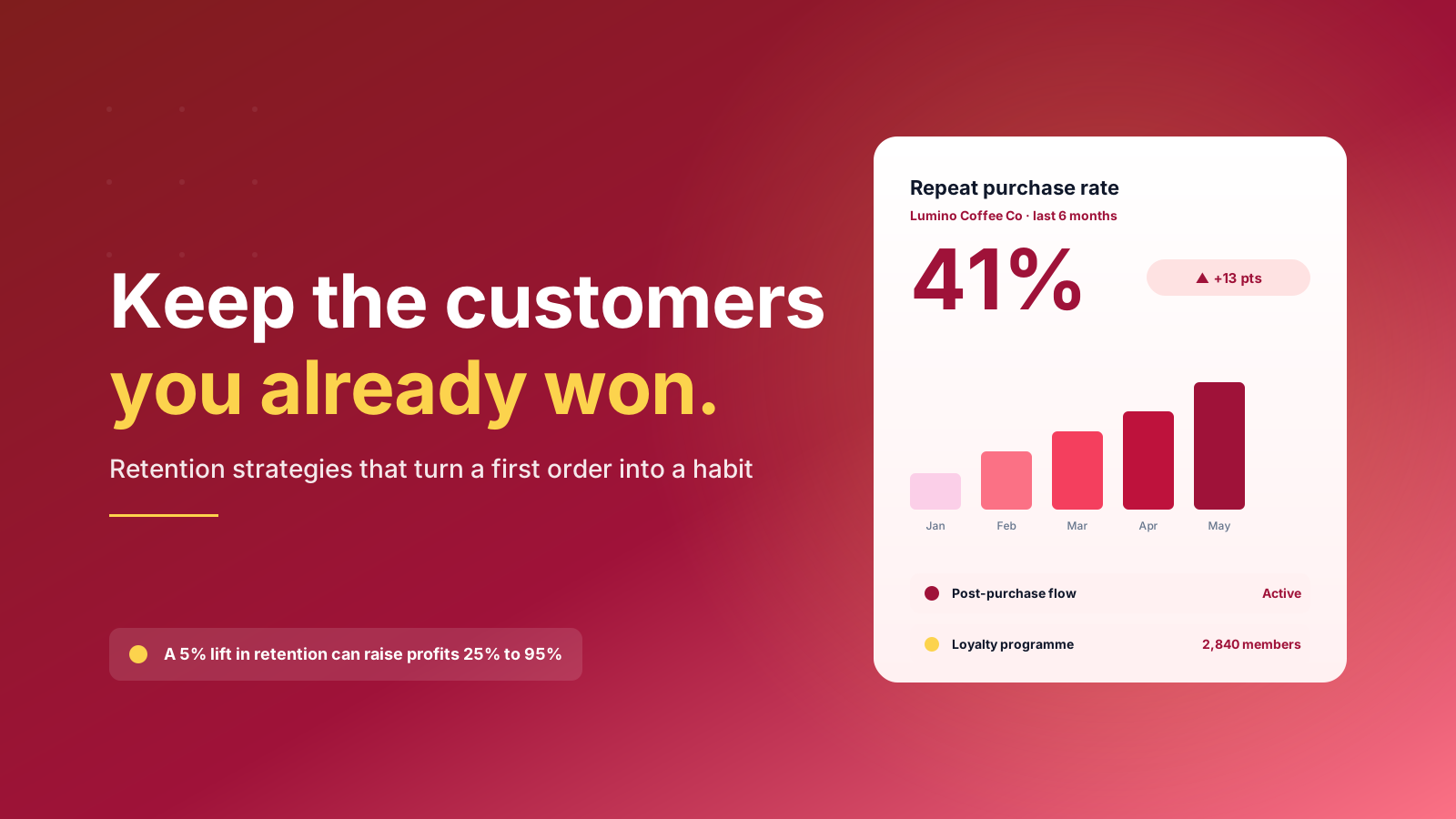
The payoff from getting retention right is large and well documented. Research by Fred Reichheld at Bain & Company found that increasing customer retention rates by just 5% can lift profits by anywhere from 25% to 95%. Repeat customers also carry far more weight than their numbers suggest. Industry data shows that repeat buyers often make up around a fifth of a store's customer base while generating close to 44% of its revenue and 46% of its orders. Returning customers also lift profitability directly, spending more per order as trust builds and raising your average order value (AOV) over time.
Put simply, the cheapest growth you can buy is the customer you already have. Paid acquisition still has its place, but a brand that leans only on new customers is renting its revenue. A brand that retains is building an asset. This is why the smartest DTC operators have moved retention from a nice-to-have to the centre of their growth plan, and why your customer lifetime value is the number that decides how much you can afford to spend acquiring in the first place.
The Retention Metrics That Matter
You cannot improve what you do not measure. Before changing anything, get clear on the handful of numbers that tell you whether retention is working. For an ecommerce brand, these five matter most.
Customer retention rate. This is the percentage of customers you keep over a given period. The formula is straightforward: take the number of customers at the end of the period, subtract any new customers acquired during it, divide by the number you started with, then multiply by 100. If you began a quarter with 1,000 customers, ended with 1,100, and acquired 300 along the way, your retention rate is ((1,100 - 300) / 1,000) x 100, which is 80%.
Repeat purchase rate. The share of customers who have made more than one order. For ecommerce this is often the single most useful retention metric because it maps directly to buying behaviour rather than account status. A healthy Shopify store sits somewhere around 28%, and the best performers push well past 40%.
Customer lifetime value. The total profit you expect from a customer across the whole relationship. Lifetime value, often written CLV or LTV, is what justifies your acquisition spend. A simple calculation gets you most of the way there: multiply average order value by purchase frequency by the average customer lifespan. If a customer is worth £180 over two years, you can afford a very different acquisition cost than if they are worth £40. The ratio that matters is LTV to CAC; a healthy ecommerce business aims for at least 3 to 1. Raising retention raises lifetime value almost mechanically, which is why increasing customer lifetime value and improving retention are really the same project.
Churn indicators and early-warning signals. The most useful retention work happens before a customer has gone. Watch the indicators that predict churn: a lengthening gap since the last order, falling email engagement, a drop in average order value, or a support issue that was never properly resolved. Treating these signals as triggers, rather than waiting for the churn rate to confirm the loss, is what separates reactive brands from proactive ones.
Churn rate. The flip side of retention, churn is the percentage of customers who stop buying within a period. Reducing customer churn is one of the highest-value steps a store can take, because for subscription and replenishment models churn is the metric that keeps founders up at night, where small monthly improvements compound enormously over a year. Several factors feed into it, and studies consistently show that even a small reduction in churn drives an outsized lift in profit.
Purchase frequency and recency. How often customers buy and how recently they last bought. These two feed directly into segmentation. Grouping customers by recency, frequency and monetary value, often called RFM analysis, lets you treat a lapsed one-time buyer very differently from a loyal monthly customer. Our guide to customer segmentation for ecommerce goes deeper on how to build these segments.
Net Promoter Score and satisfaction. Hard sales data tells you what happened; how customers feel tells you what is about to happen. Net Promoter Score (NPS) measures how likely customers are to recommend you, and customer satisfaction scores flag friction before it shows up as churn. Falling engagement or satisfaction usually appears before a customer stops buying, which gives you a window to act. Pair these with the sales metrics above so you are watching both behaviour and sentiment.
Ecommerce Retention Benchmarks: What Good Looks Like
Retention benchmarks vary widely by category, so a number that looks strong for furniture would be weak for coffee. Used carefully, benchmarks give you a sense of whether your store is leaving repeat revenue on the table.
Across ecommerce as a whole, the average customer retention rate sits at roughly 30%, while top performers reach around 62%. That gap is the opportunity. On repeat purchase rate specifically, the average Shopify store runs near 28%, and stores with mature email and loyalty programmes commonly hit 40% to 60%.
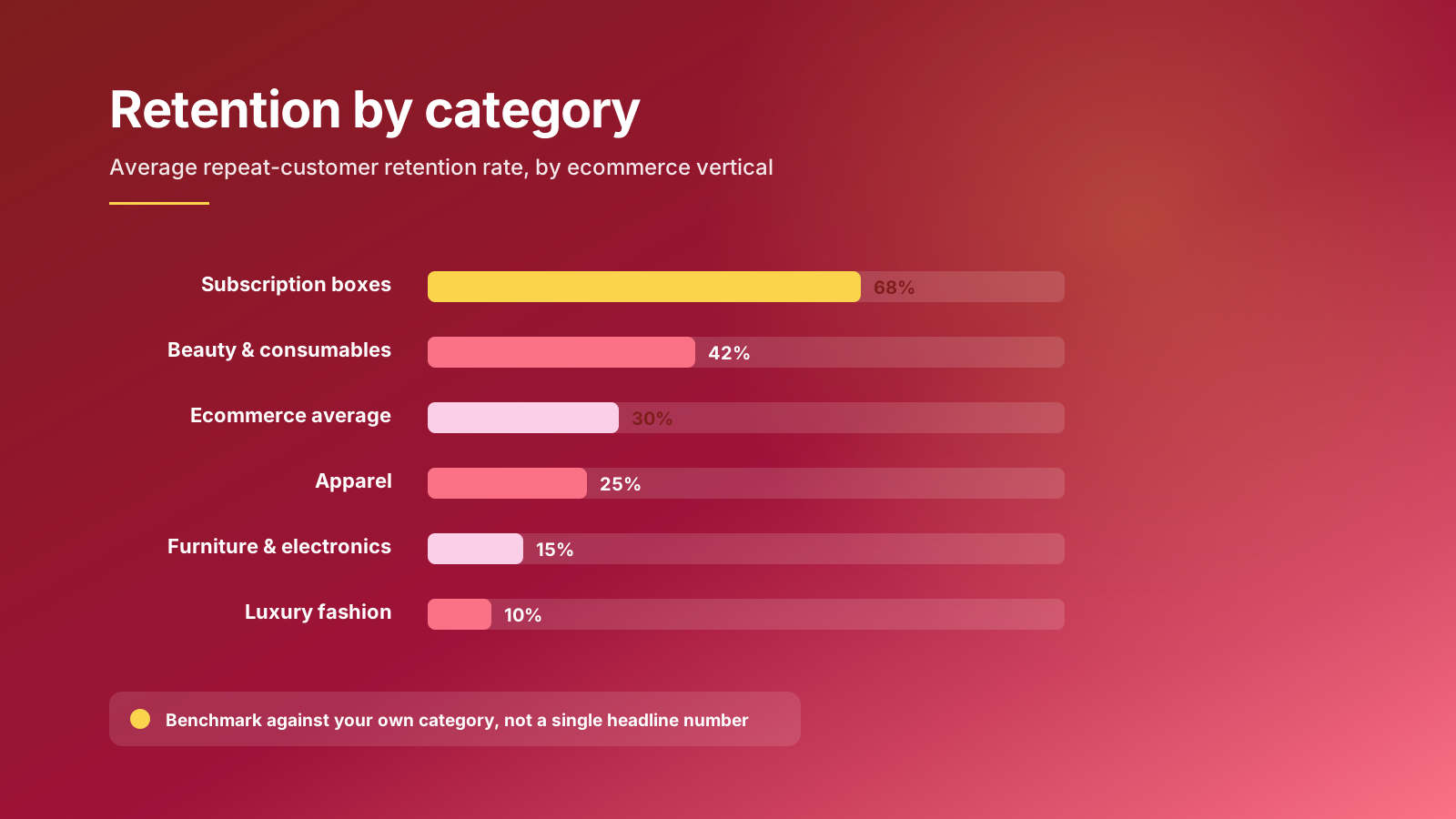
Category matters enormously, and different types of business see very different numbers. Consumable and replenishable products such as beauty, supplements and food retain far better than considered, infrequent purchases. Subscription boxes often retain 60% to 70% of customers, while luxury fashion, where a purchase might happen once a year, can sit closer to 10%. Beauty and consumables typically land somewhere in the 38% to 45% range, with furniture and electronics much lower because people simply do not buy a sofa every quarter. The same pattern holds in adjacent sectors: industries built on renewals, from insurance to software, live or die on retention, while one-off retail purchases naturally lean harder on acquisition.
Geography matters too. Retention benchmarks shift across markets, so a global brand selling into the UK, the US, India and Australia will see different repeat rates in each, shaped by local competition, shipping economics and how developed ecommerce is in that market. A recent study of cross-market data showed the gap between top performers and the average widening fastest in mature markets, which is exactly where retention development pays off most.
The practical takeaway is to benchmark against your own category and your own past performance, not against a headline figure. If your brand sells coffee and your repeat purchase rate is 20%, you have a clear and valuable problem to solve. If you sell mattresses, repeat purchase will never be your main lever and you should focus on referrals and lifetime value instead.
Why Customers Leave: Understanding Churn
You cannot fix retention without understanding churn. Before adding loyalty points or win-back emails, it pays to understand the real reasons customers stop buying, because most churn comes down to a short list of avoidable problems.
The first reason is a poor customer experience. A slow website, a confusing checkout, a late delivery or a product that did not match its description all leave customers reluctant to return. The second is unresolved support issues; a single bad customer service interaction can undo months of trust, while a fast resolution can save the relationship entirely. Poor service and slow support are among the quickest ways to lose a customer for good. The third is price and perceived value, where customers feel a competitor offers more for less. The fourth is simple neglect: brands that go quiet between orders are easy to forget, and a customer who feels no connection and gets no meaningful interactions has no reason to come back.
The fifth reason is the one brands miss most often: a better alternative. Competitors are one search away, and if a rival delivers faster, communicates better or simply feels more relevant, your customer will drift. None of these reasons are mysterious, but you only learn which ones apply to your store by listening to the voice of the customer. A short exit survey, the responses it gathers, a careful read of customer support tickets and reviews, and an honest look at where customers drop off in the data will surface the specific concerns, customer issues and pain points hurting your retention. Treat those challenges as a to-do list, not a verdict.
Treat churn as information, not just a number. Every lapsed customer is telling you something about your product, your service or your experience. Brands that listen to that signal and act on it turn a leaking funnel into a loyal customer base; brands that ignore it keep paying to refill a bucket with a hole in the bottom.
Map the Customer Lifecycle and Its Touchpoints
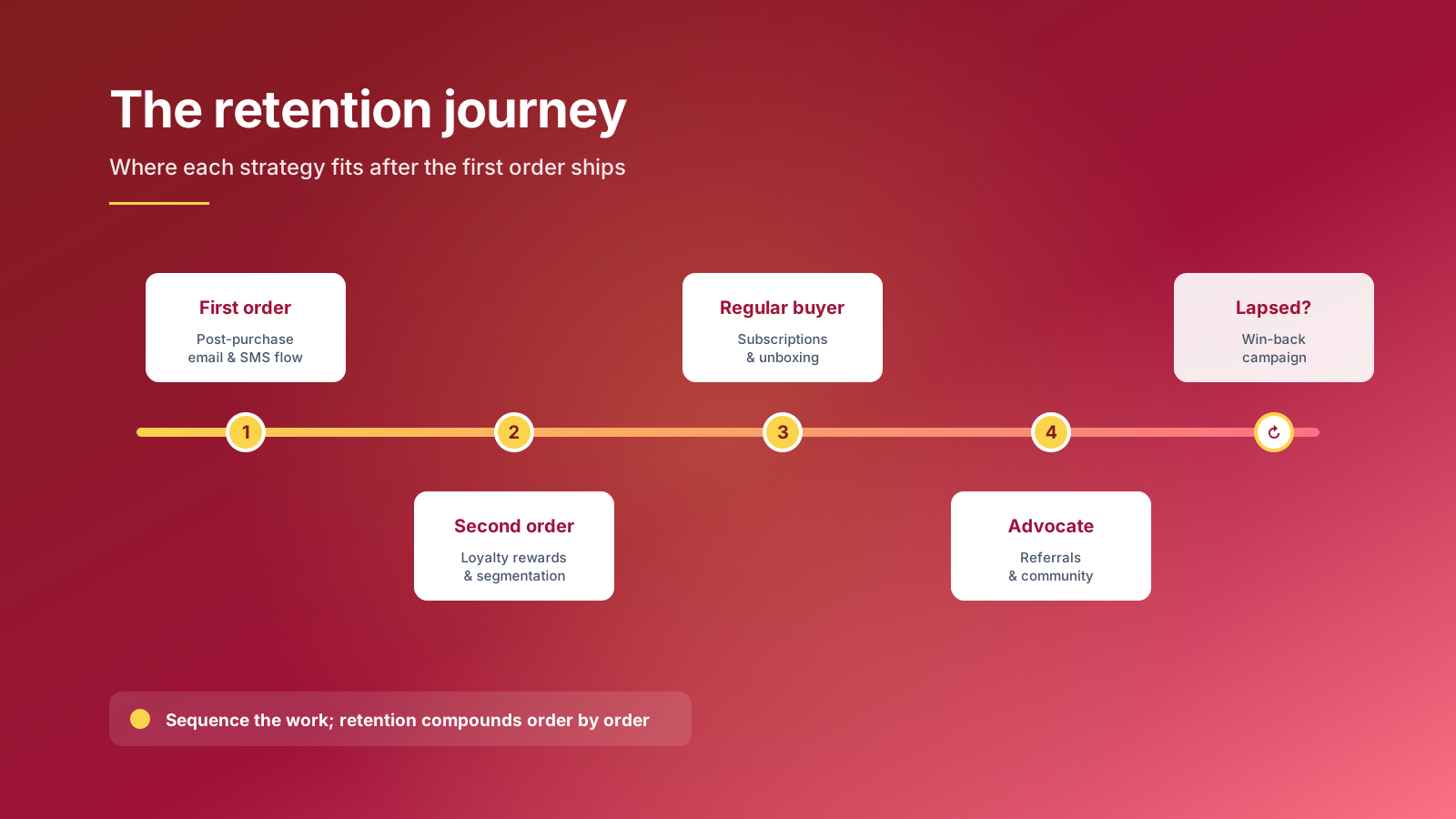
Retention is not a single tactic; it is what happens across the whole customer lifecycle. Before you choose strategies, map the journey your customers actually take, from the first order through onboarding, repeat purchases, advocacy and, sometimes, churn. Each stage has its own touchpoints, and each touchpoint is a chance to either deepen the relationship or lose it.
For most ecommerce brands the lifecycle runs through five stages. The first is the new customer, where a strong onboarding experience sets expectations and teaches people how to get value from what they bought. The second is the repeat buyer, where loyalty rewards and well-timed emails turn a one-off into a habit. The third is the regular customer, where subscriptions and consistent service make buying from you the default. The fourth is the advocate, where happy customers refer friends and leave reviews. The fifth is the at-risk or lapsed customer, where early-warning indicators should trigger a win-back response.
Mapping these touchpoints does two things. It shows you where customers drop off, so you can fix the specific stage that leaks, and it tells you which strategy belongs where. A win-back email aimed at a brand-new customer is wasted; an onboarding series sent to a loyal regular is noise. The brands with the strongest retention treat the lifecycle as the plan and the individual tactics as tools that serve it. If you want to understand the wider funnel feeding into this, our guide to the marketing funnel stages connects acquisition to the retention work that follows.
Nine Customer Retention Strategies for Ecommerce Brands
Generic advice about being customer-centric does not move numbers. These nine strategies are specific to ecommerce and DTC brands, and most of them are practical to set up on Shopify within a quarter. Treat them as a menu of options rather than a fixed checklist: pick the initiatives that fit your customers, follow the steps that make sense for your stage, and use the tips in each to make better choices about where to start.
1. Build a post-purchase email and SMS flow
The moment after someone buys is the highest-intent window you will ever get with them, and most brands waste it on a bare order confirmation. A proper post-purchase flow thanks the customer, sets expectations on delivery, shares how to get the most from the product, and then, at the right moment, invites a second order. Email and SMS automation through a platform like Klaviyo turns this into a system that runs without manual effort. Stores with mature automated flows consistently land in the highest repeat-purchase brackets. Our ecommerce email marketing strategy guide breaks down the flows worth building first.
2. Launch a loyalty and rewards programme
A well-run loyalty programme gives customers a concrete reason to come back to you rather than a competitor and drives reliable repeat business. Points for purchases, tiered perks and offerings for your best customers, and early access to launches all increase the chances of another order. There are several types to choose from, and loyalty programs broadly fall into points-based, tiered, paid-membership and referral models. The data backs this up: around 68% of Shopify stores now run some form of loyalty programme, and these programs deliver strong returns, with reported average ROI close to 4.8 times and roughly 2.5 times higher repeat rates for members. The key is to reward behaviour you actually want, such as a second purchase or a referral, rather than simply discounting. We have rounded up the best loyalty apps for Shopify if you are choosing a platform.
3. Turn one-off purchases into subscriptions
For any product people buy repeatedly, a subscription removes the decision to reorder entirely. Replenishable categories such as coffee, skincare, pet food and supplements are perfect candidates. A subscribe-and-save option, powered by a Shopify subscription app, converts an occasional buyer into recurring revenue and pushes retention into the 60% to 70% band that subscription models enjoy. Look at how the top subscription brands on Shopify structure their offers for inspiration.
4. Personalise with segmentation
Blasting the same email to every customer trains people to ignore you. Segmenting your audience by behaviour lets you send the right message to the right person, with personalisation that reflects what each customer has actually bought. A first-time buyer needs a welcome and an education series; a loyal monthly customer needs early access and recognition; a lapsed customer needs a reason to return. RFM segmentation, grouping by recency, frequency and spend, is the backbone of this approach and one of the highest-impact projects a growing store can run.
Customer feedback sharpens segmentation further. Short post-purchase surveys tell you why people buy again or drift away, capture their preferences, and feed those answers back into your segments so every message stays relevant rather than generic. The brands with the strongest retention treat feedback as fuel for personalisation and deeper customer engagement, not a box-ticking exercise.
5. Win back lapsed customers
Some of your easiest revenue is sitting in customers who bought once and drifted away. A win-back campaign targets people who have not purchased in a set window, say 90 or 120 days, with a tailored message and often an incentive. Because these customers already know and trust your brand, win-back flows routinely outperform cold acquisition on cost per order. The trick is timing the trigger to each category's natural reorder cycle.
Before you offer an incentive, it pays to understand why people left. A short survey on the win-back email, or a quick look at support tickets and reviews, surfaces the real reasons and pain points: a delivery that ran late, a product that did not fit, a price that felt high. Listening to those answers lets you fix the underlying issue rather than papering over it with a discount, and it tells you which lapsed customers are worth winning back at all.
6. Make customer service fast and genuinely human
Customer service is retention. A slow or frustrating support experience is one of the fastest ways to lose a customer for good, while a fast, empathetic response can turn a complaint into loyalty. Every support interaction is a chance to build trust or break it. Quick replies across the channels your customers actually use, whether that is email, live chat or social, protect the relationships you have worked to build and keep the wider customer experience consistent. Great customer service is not a cost centre; it is one of the strongest retention tools you have. A helpdesk built for Shopify keeps order context in front of your service team so every reply is informed and meets customer expectations.
Service is also a feedback channel. The questions and complaints that reach your support team are honest signals about where the customer experience breaks down. Logging them, and acting on the patterns, lifts customer satisfaction and removes the friction that quietly drives churn.
Speed matters as much as tone. AI chatbots and a good knowledge base can resolve common questions instantly, freeing your customer support staff for the conversations that genuinely need a human. The goal is fast resolution without the customer feeling handed off to a machine. When a chatbot handles the order-tracking query and a person handles the sensitive complaint, customers get quick assistance and your team keeps capacity for the customer issues that genuinely threaten the relationship.
7. Build a referral programme
Your happiest customers are your cheapest acquisition channel and a powerful retention signal. A referral programme rewards existing customers for introducing friends, which both brings in pre-qualified leads and deepens the loyalty of the referrer. It turns satisfied buyers into active advocates and builds personal connections that paid ads cannot buy. Referrals work especially well for considered or infrequent purchases where repeat buying is naturally low, because they let you grow lifetime value sideways through advocacy rather than reorders.
8. Use packaging and unboxing as a retention touchpoint
The delivery is the one physical moment a customer has with your brand, and it is far too valuable to treat as logistics. Thoughtful packaging, a handwritten note, or a small unexpected extra turns a transaction into an experience worth repeating and sharing. For DTC brands competing on brand rather than price, the unboxing moment is a retention lever that paid channels cannot replicate.
9. Create a community around the brand
Customers who feel part of something stay longer. Whether that is a members area, a private group, a content programme or user-generated campaigns, a customer community gives people a reason to engage with your brand between purchases. Active users in that community become your most valuable customers, driving customer engagement that pure marketing cannot manufacture. The strongest DTC brands sell an identity as much as a product, and community is how that identity is maintained once the order has shipped.
Retention Across Every Channel and Touchpoint
The strategies above work best when they reach customers on the channels they actually use. Retention is not one conversation; it is a series of well-timed touchpoints across email, SMS, social media, your app and the unboxing on the doorstep. The brands that win treat every channel as part of one joined-up relationship rather than a set of separate broadcasts.
Email and SMS remain the backbone of ecommerce retention and your most direct line of communication with customers. Automated flows carry the heavy lifting: welcome series, post-purchase education, replenishment reminders, win-back campaigns, invitations to events such as launches and sales, and VIP rewards and incentives. SMS adds urgency for time-sensitive messages such as restocks or early access, while email carries the depth. Consistent, well-timed communication keeps the relationship warm between orders. Used together, and triggered by behaviour rather than sent on a blanket schedule, they keep your brand present without becoming noise.
Social media and community keep customers engaged between purchases. A strong presence, genuine conversations in comments and DMs, and a community where customers talk to each other all deepen the connection. Your marketing communications here should cover the topics customers actually care about, from product news to behind-the-scenes stories, in the brand's own voice. User-generated content and short-form video, including the kind that performs on YouTube and social feeds, give customers a reason to stay close to the brand when they are not actively shopping.
App and on-site touchpoints close the loop. Push notifications, a logged-in account area showing rewards and order history, and personalised recommendations on the storefront all turn a passive visit into an active relationship. The goal across every channel is consistency: a customer should feel like they are dealing with one brand that knows them, whether they are reading an email, scrolling social or opening your app.
Real Customer Retention Examples Worth Learning From
The clearest way to understand these strategies is to see how well-known brands apply them. None of these companies are Charle clients; they are public examples and widely documented case studies that show the principles working at scale. Plenty of formal studies cover each in depth if you want to dig further.
Amazon Prime is the textbook example of retention through membership. By bundling fast delivery, video and other perks into a single subscription, Amazon raises the cost of shopping elsewhere and lifts purchase frequency across the board. The lesson for ecommerce brands is that a paid membership, used well, can lock in loyalty far more effectively than one-off discounts.
Starbucks Rewards shows the power of a gamified loyalty programme tied to an app. Points, tiers and personalised offers turn an everyday purchase into a habit, and the app gives Starbucks first-party customer data to personalise with. A Shopify brand can borrow the same playbook with a loyalty app and a connected email programme.
Sephora's Beauty Insider is a tiered programme that makes higher-spending customers feel genuinely recognised, with rewards, early access and experiences that scale with status. It is a strong template for any brand whose best customers deserve more than the same offer everyone else gets.
Gymshark built retention on community and brand identity rather than discounting, using content, ambassadors and a sense of belonging to keep customers engaged between purchases. For DTC brands competing on brand, it shows that advocacy and community can be as powerful as any incentive. The common thread across all four examples is consistency: each brand picks a retention model that fits its customers and commits to it.
The Shopify Retention Tech Stack
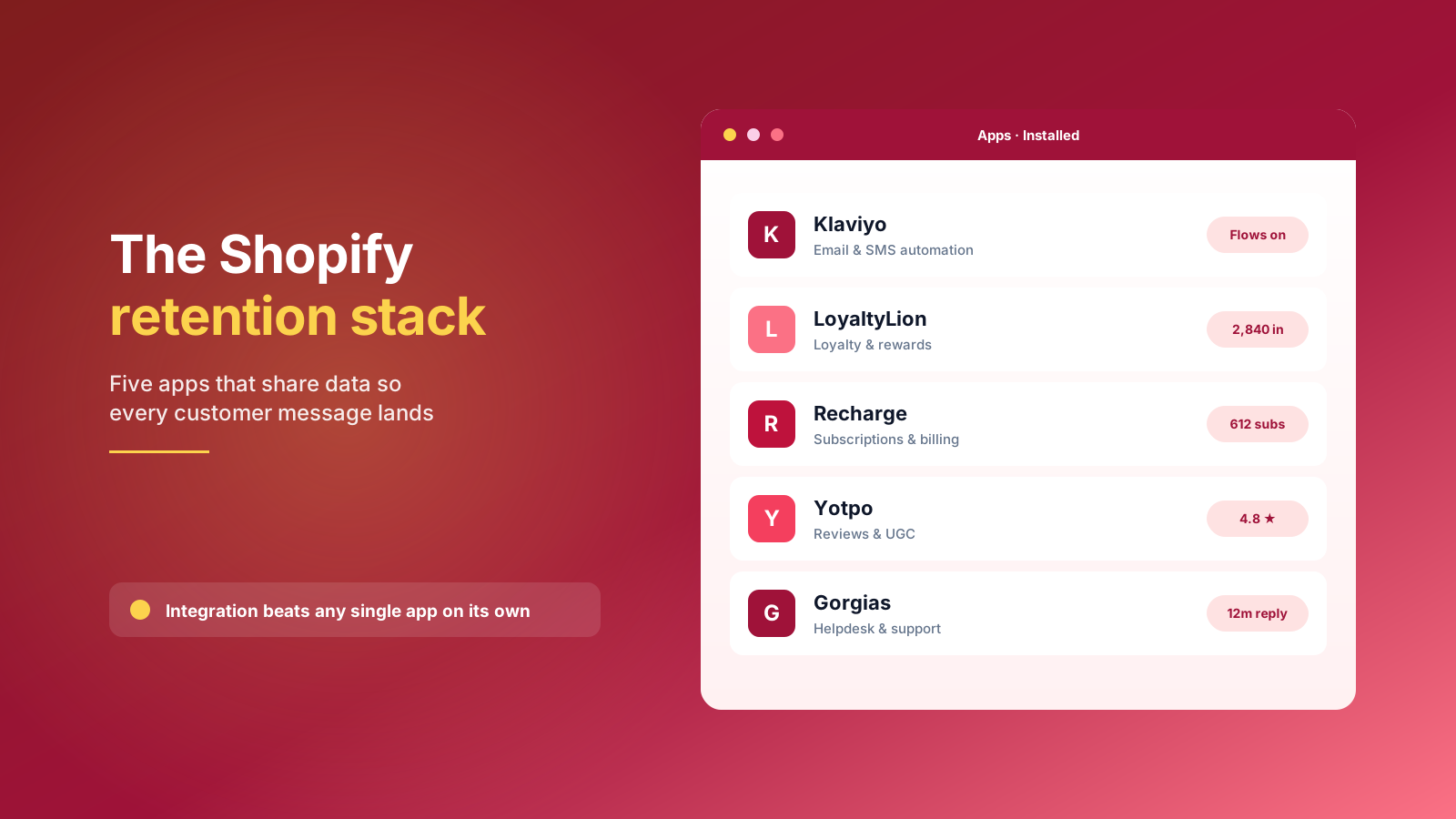
Strategy only works if the tooling supports it. One reason most retention advice falls flat for ecommerce is that it is written for software-as-a-service businesses with account managers and contract renewals, not for a Shopify store shipping physical products. The right apps and services, chosen for the features that matter to a retail brand rather than a SaaS company, are what make the strategies above practical. Here is the stack that actually delivers retention for a DTC brand, and the technology partners worth knowing.
Email and SMS: Klaviyo is the default for a reason. It plugs straight into Shopify, holds your customer and order data, and powers the segmented flows that drive repeat purchases. If you are weighing up the cost, our Klaviyo pricing breakdown covers what to expect as your list grows.
Loyalty and rewards: Apps such as LoyaltyLion, Smile.io and Yotpo run points, tiers and referrals natively on Shopify, and report back into your email platform so loyalty status can trigger the right messages.
Subscriptions: A subscription app handles recurring billing, customer self-management and dunning for failed payments, turning replenishable products into predictable monthly revenue.
Reviews and user-generated content: Review platforms collect social proof that both converts new buyers and re-engages existing ones, while feeding the content that fuels community. They also raise engagement between orders and give you another source of customer feedback to act on.
Helpdesk: A Shopify-native helpdesk keeps order history and customer context in one place so support agents reply fast and personally, with AI chatbots handling routine questions.
Customer data and analytics: A CRM or customer data platform stitches together orders, email engagement and support history into one profile, and retention analytics turn that raw data into the insights, segments and churn indicators your strategies depend on. The point of the stack is integration: when your loyalty, email, subscription, support and analytics tools share customer data, you can act on the full picture of each customer rather than guessing. This adds real efficiency, since your whole organization works from one source of truth. Most growing brands do not need every tool at once, but they do need the few that talk to each other.
Personalisation, Customer Data and AI
The thread running through every strong retention programme is personalisation, and personalisation runs on customer data. (American readers will know it as personalization, but the principle is identical.) A generic email blast treats your best customer and a one-time buyer identically, which trains both to tune you out. Using what you know about each customer, their purchase history, browsing behaviour, preferences and stage in the lifecycle, lets you send the right message at the right moment. Done responsibly, and within government data rules such as GDPR in the UK, this is the single biggest driver of retention.
This is where your customer data and analytics earn their keep. A unified profile that combines orders, email engagement and support history turns scattered information into insights you can act on. Those insights point to practical solutions: which segment to email, which customer interactions need a human, and which product to recommend next. From there you can build segments, spot the indicators that predict churn, and tailor recommendations to what each customer is most likely to want next. Even simple personalisation, such as recommending a refill before a customer runs out, lifts repeat rate noticeably and shows customers you understand their needs.
AI is making this easier and more powerful, and it is one of the defining retention trends of 2026. Predictive analytics flag at-risk customers before they churn, AI chatbots resolve common questions instantly, and recommendation engines surface the right product and fresh campaign ideas without manual effort. The opportunity for ecommerce brands is to use these tools to scale personal attention, not to replace it. The brands that get this right feel more human as they grow, not less, because their data lets them treat thousands of customers as individuals. For the search side of the same shift, our guide to AI and generative engine optimisation covers how discovery is changing too.
Where to Start: Sequencing Your Retention Programme
Trying to do all nine strategies at once is how retention projects stall. The brands that succeed sequence the work into clear steps, making retention a priority and starting with the changes that pay back fastest. Almost every store has room to improve here, and the importance of getting the order right is hard to overstate.
Begin by measuring. Pull your current retention rate, repeat purchase rate and lifetime value so you know your starting point and can prove progress. Without a baseline, every later decision is a guess.
Next, fix the post-purchase flow. It is the fastest win available because it captures intent you have already paid for, and it needs nothing more than your existing email platform. From there, add a loyalty programme to give repeat buyers a reason to keep choosing you, then layer in segmentation so your messaging gets sharper over time. In addition, weigh up subscription options for any product people reorder. Subscriptions, referrals and community come once the foundations are generating repeat orders reliably.
Make retention someone's job, not an afterthought. In a small team that might be one person owning the numbers; in a larger organisation it could be a dedicated role. Either way, a simple monthly process of reviewing the indicators, shipping one improvement and checking the result turns retention from a vague ambition into a habit. The best practices here are unglamorous: measure, prioritise the biggest leak, fix it, repeat.
Retention compounds, so the order matters less than the discipline of shipping one improvement at a time and measuring its effect. For instance, a brand that nails its post-purchase flow first often sees enough lift to fund the next initiative. If you want a partner with the resources to build this properly on Shopify Plus, our ecommerce growth team does exactly this. Get in touch to talk through your retention programme.
Build a Retention Team, Process and Measurement
Strategies and tools only deliver if someone owns the outcome. In many ecommerce brands, retention falls between teams: marketing chases new customers, customer service handles complaints, and nobody is accountable for whether customers come back. Closing that gap is one of the highest-impact moves a growing brand can make.
You do not need a large team to do this well. In a small business it might be one person who owns the retention numbers and coordinates across marketing and support; in larger organizations it could be a dedicated retention or customer success role. What matters is clear ownership, the right skills, and a regular process. The strongest setups give employees and frontline staff across marketing, service and operations a shared goal, so the whole team understands that keeping customers is everyone's job, not a single department's problem. Investing in that team's development pays back over the long term.
Make measurement a habit. A simple monthly meeting works for most brands: review the core metrics and churn indicators on a dashboard, pick the single biggest opportunity, ship one improvement, and check the result against your baseline. This brings real efficiency to the work, since the team focuses on one thing at a time instead of chasing everything. Over a year, that disciplined loop of measure, prioritise, act and review compounds into a serious competitive advantage. The best practices here are not glamorous, but they are what separate brands that talk about retention from brands that actually move the numbers.
Resource it sensibly. Retention usually delivers a stronger return than the equivalent spend on acquisition, so the case for giving it real time, tools and ownership is straightforward. Treat it as a core part of how the business grows, not a project that runs once and stops.
Common Retention Mistakes to Avoid
Even brands that take retention seriously trip over the same problems. Watch for these.
Discounting instead of rewarding. Training customers to wait for the next discount erodes margin and loyalty at the same time, and it teaches people that your brand is only worth buying on promotion. Reward the behaviour you want, such as a second order or a referral, rather than reaching for blanket discounts and cutting price.
Treating every customer the same. Sending identical messages to first-time buyers and your most loyal customers wastes the relationship and pushes people to unsubscribe. Segmentation is not optional once you have a few thousand customers.
Over-automating to the point of feeling robotic. Automation should make personal touches scalable, not replace them entirely. A flow that ignores what a customer actually bought reads as spam and cheapens the customer experiences you are trying to build. Several factors make automation feel human or hollow, and the difference decides whether it strengthens or erodes your customer relationships.
Measuring nothing. Plenty of stores run a loyalty app and a few flows without ever checking whether repeat purchase rate has moved. If you are not tracking retention, you are guessing, and you cannot tell which efforts are worth keeping.
Skipping onboarding. Many brands pour effort into winning the order then leave the new customer to work everything out alone. A simple onboarding program that confirms the order, sets delivery expectations and shows people how to get value from what they bought sharply improves the odds of a second purchase.
Relying on a single channel. Leaning entirely on email, or entirely on a loyalty app, leaves opportunities on the table. Customers move between email, SMS, social media and your site, and a joined-up presence across those touchpoints retains far better than any one channel alone.
Neglecting the existing customer for the next sale. The constant pull toward acquisition means the customers you already have get the least attention. Reversing that bias is the whole point of a retention strategy, and improving your ecommerce conversion rate for returning visitors is part of the same job.