 Nic Dunn, CEO, Charle Agency
What Ecommerce Returns Actually Cost
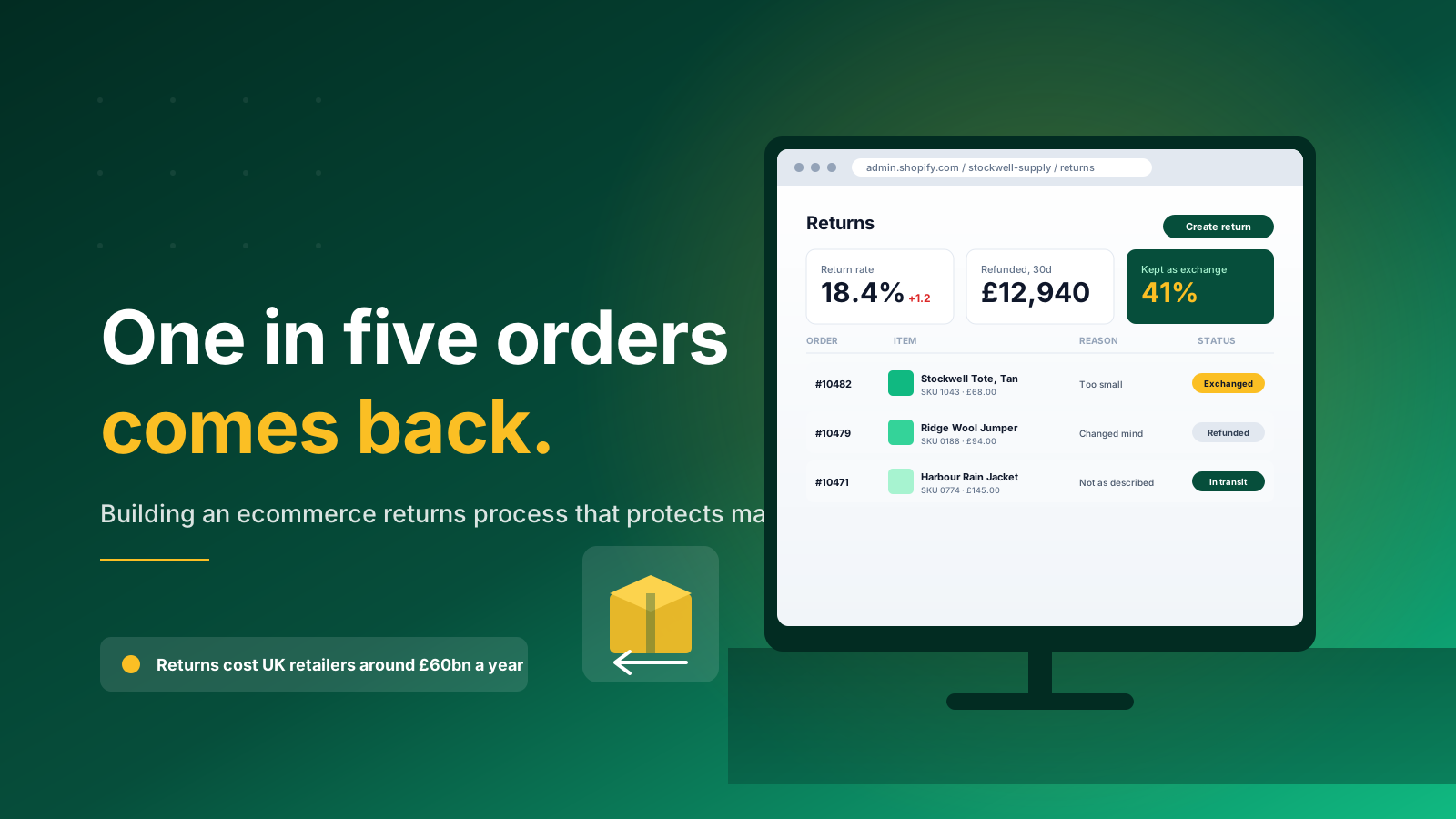
An ecommerce return is a completed sale reversed. The revenue goes back, the gross profit disappears, and your business pays to get the item into a condition where it can sell again. That third part is the one most online retailers never put a number against.
The cost of a single return
Pitney Bowes BOXpoll research puts the average cost of processing an online return at 21% of the order value. Other studies place the range wider, between 20% and 65% of an item's original value depending on category and condition. Either way, ecommerce returns are not free even when products come back pristine.
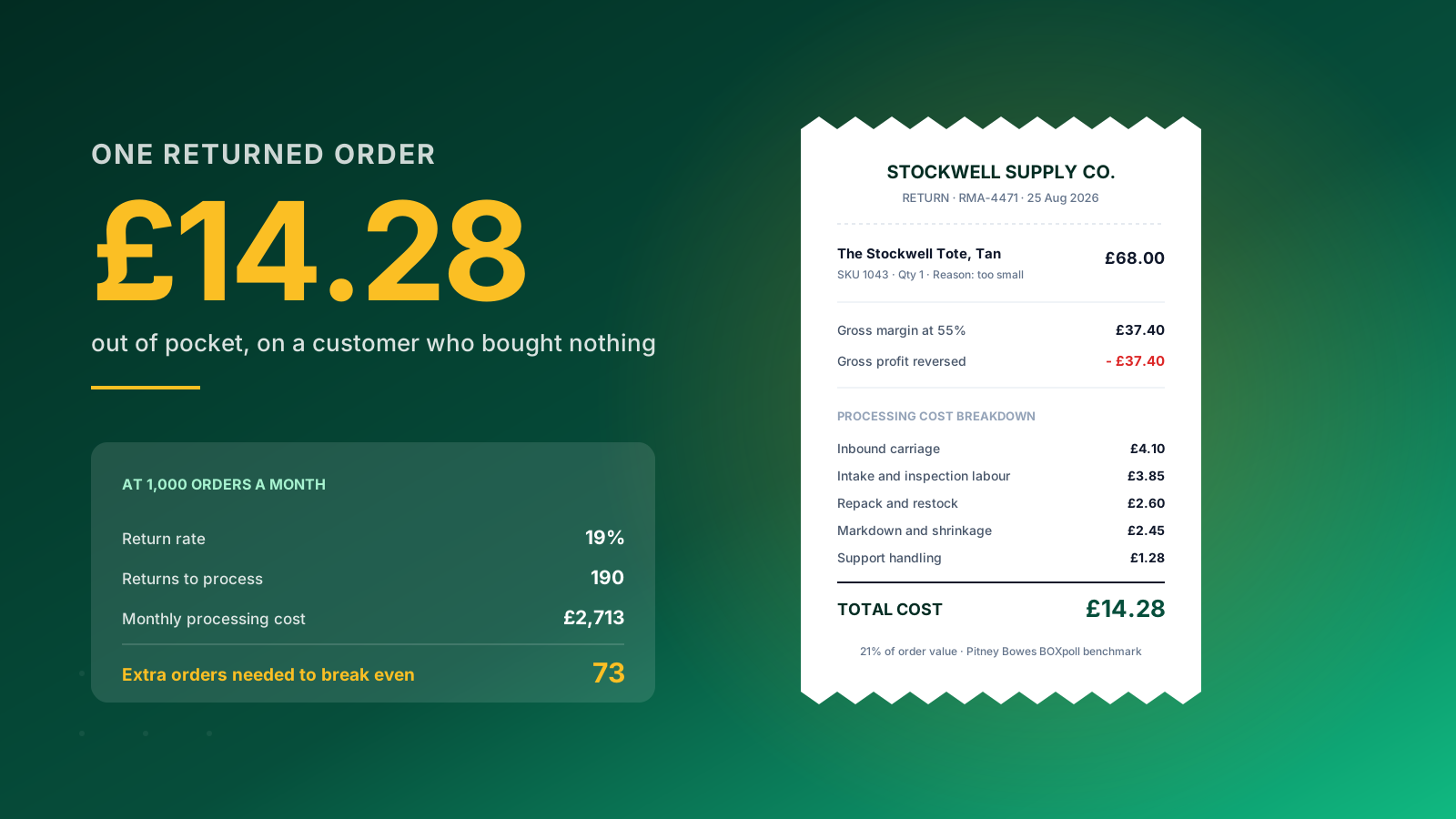
Work it through on a real order. A store with a £68 average order value and a 55% gross margin books £37.40 of gross profit on each sale. When that order comes back, the £37.40 vanishes and the business spends roughly £14.28 handling the return. You are £14.28 down on a customer who ultimately bought nothing.
What returns cost across a year
Now scale it. At 1,000 orders a month and a 19% return rate, that is 190 returns costing about £2,713 in processing every month. To cover that processing cost alone you need to win 73 extra sales. Most retailers would spend far more than £2,713 in paid media to acquire 73 purchases, which is why ecommerce returns deserve the same attention as acquisition.
The wider picture backs this up. Consumer returns are estimated to cost UK retailers around £60bn a year. Online parcel returns typically cost about £3 more to process than an in-store return, and some reports suggest handling a return can cost up to twice as much as the original delivery. Reverse logistics is now a market expected to be worth $954.5bn globally by 2029.
The costs that never reach your P&L
Opened, seasonal or discontinued products get marked down, refurbished or written off. Cash sits in transit rather than in inventory you can sell. Customer service handles the enquiries. Every extra journey adds packaging waste and transport emissions. None of these appear as a single line in your accounts, which is exactly why they go unmanaged and why the opportunity to recover margin here is so consistently missed.
Why Customers Send Things Back
Almost every return traces back to one gap: the product that arrived did not match the product the customer pictured. Close that gap between customer expectations and reality and the rate falls.
Return rates by category
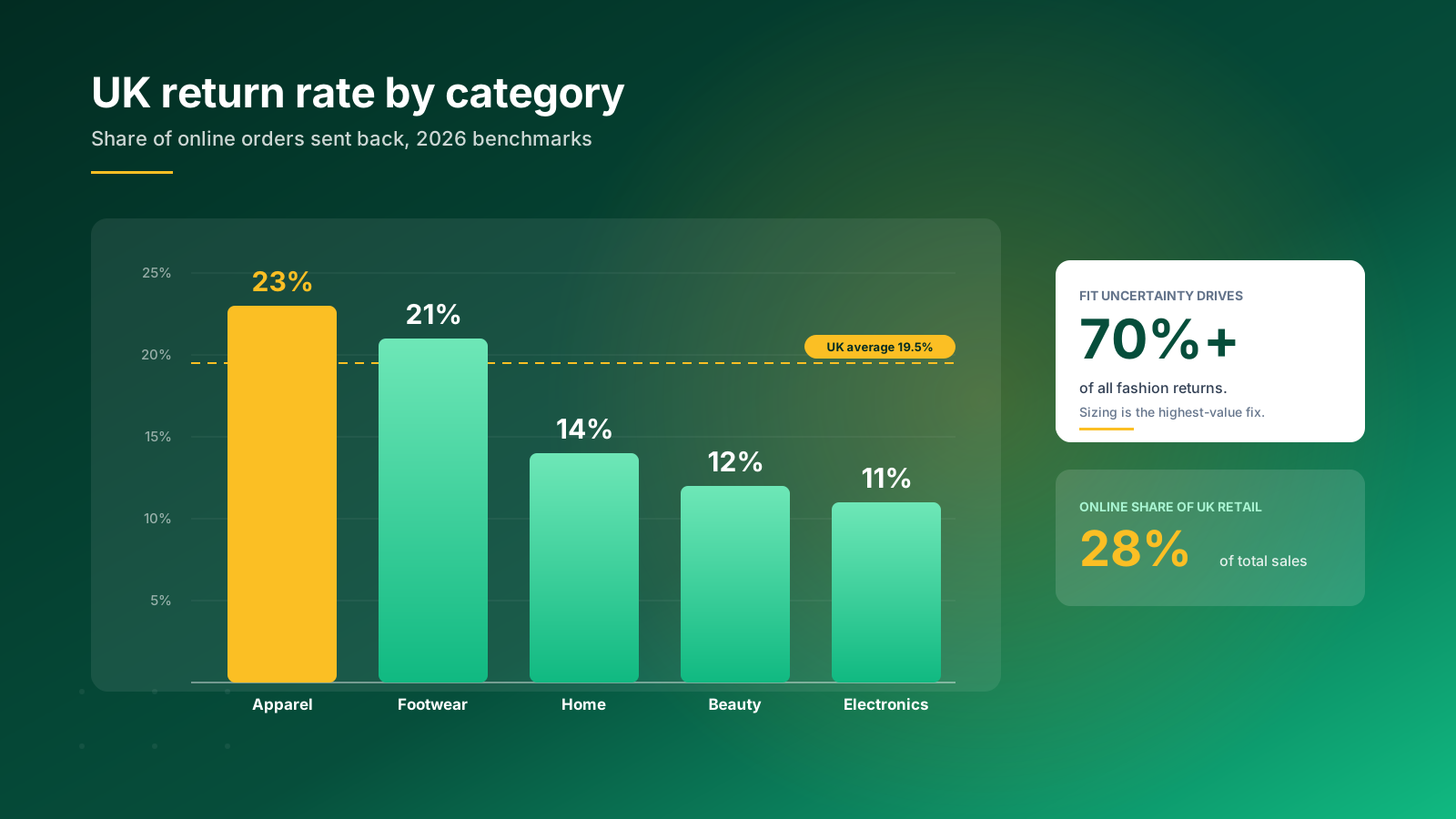
The UK average ecommerce return rate sits close to 19% to 20%, but category matters far more than the headline figure. Apparel runs at roughly 23%, beauty around 12% and electronics near 11%. Fashion and footwear brands should expect closer to a quarter of orders back. Comparing your business to a cross-category average tells you almost nothing; comparing return rates against your own category tells you everything.
The six reasons behind most returns
The reasons cluster into a short list:
- Wrong size or fit: the single biggest driver in apparel and footwear. Over 70% of fashion returns stem from fit uncertainty.
- Not as described: colour, material, scale or functionality differed from the photography and the product information on the page.
- Poor product quality: DHL's returns research names quality as the number one global reason shoppers send items back.
- Damaged in transit: packaging and carrier handling failures.
- Changed mind: impulse purchases and buyer's remorse, which UK law explicitly protects.
- Bracketing: deliberately ordering several sizes or colours with the intention of keeping one.
Why bracketing distorts your return rates
Bracketing deserves its own note because it is growing and it distorts your numbers. A customer who orders three sizes and keeps one produces a 67% return rate on paper while behaving like a perfectly good customer. If your reporting treats every returned unit as a failure, you will make the wrong policy decisions. Measure the customer, not just the parcel.
Generational patterns matter as well. DHL found that more than 20% of Gen Z, social shoppers and Millennials return something at least once a month, against 14% of Gen X and 6% of Baby Boomers. If your audience skews young, a higher rate is structural rather than a sign something is broken.
The UK Legal Baseline for Ecommerce Returns
Before you design a return policy, you need to know what is not negotiable. UK consumers have statutory rights here, and no commercial approach can override them. The Consumer Contracts (Information, Cancellation and Additional Charges) Regulations 2013 set the floor for UK distance selling, and most ecommerce returns guides skip this entirely.
What the Consumer Contracts Regulations require
The core obligations are straightforward:
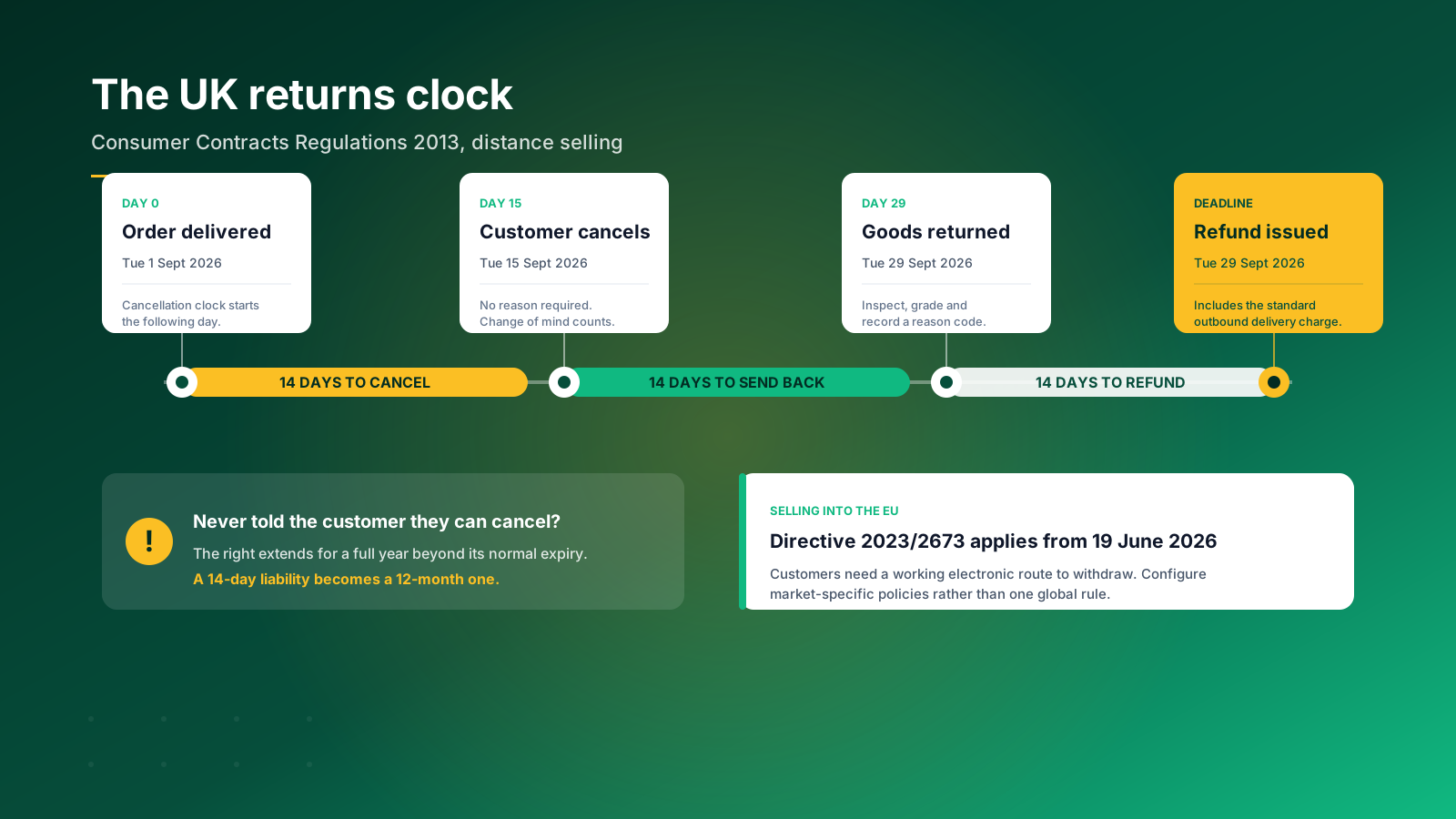
- A 14-day cancellation window. For most online purchases the customer has 14 days from the day after delivery to cancel for any reason, including simply changing their mind. This is a statutory minimum and no policy wording can shorten it.
- A further 14 days to return the goods. Once a customer cancels, they have 14 calendar days to send the item back.
- Refunds within 14 days. You must refund within 14 calendar days of the cancellation, including the standard outbound shipping charge.
- You must tell customers about the right to cancel. Fail to do so and the cancellation period is suspended until you do. Never provide that information and the right extends for a full year beyond the point it would normally have ended.
That last point is the expensive one. A missing or buried cancellation notice converts a 14-day liability into a 12-month liability across every order your business ships. It is the cheapest returns problem to fix and the most commonly missed.
Faulty goods are a separate right
The Consumer Rights Act 2015 covers faulty goods, which is a different right entirely. A customer with a faulty item has 30 days for a short-term right to reject and a full refund, and your returns policy cannot charge them for return postage on a fault. Treating the two paths identically is a common source of disputes and avoidable damage to customer satisfaction.
Selling into the EU from June 2026
If you sell into the EU, note that Directive 2023/2673 applies from 19 June 2026 and requires merchants to provide a straightforward electronic route for customers to exercise the 14-day right of withdrawal. In practice that means a working self-serve cancellation and returns flow, a return window of at least 14 days from delivery of the final item, and deadlines extended when they fall on weekends or public holidays. Brands selling across UK and EU markets should configure market-specific policies rather than applying one global rule.
Charle's CEO Nic Dunn puts it plainly: your legal minimum is the starting line, not the strategy. The regulations tell you what you must do. Everything above that line is a commercial decision you get to make deliberately.
Mapping Your Returns Process End to End
A returns process is reverse logistics with a customer experience wrapped around it. Six stages, each with an owner and a service level.
The six stages of a returns process
1. Request. The customer initiates a return, ideally through a self-service portal rather than an email to your support inbox. Generate a return merchandise authorisation, or RMA, so the item can be tracked from this point forward.
2. Authorisation. Check the request against your policy: is it inside the return window, are the products eligible, is it final sale, is there proof of purchase. Automate this check. Manual eligibility review is where returns processes slow down and where inconsistency creeps in.
3. Return shipping. Issue a label or a label-free drop-off code and give customers clear information about where to take the package. State the timeframe for each step so nobody has to guess. UK retailers have a strong network to work with, including Evri's 9,000-plus ParcelShops, Royal Mail, InPost lockers and store drop-off if you trade physically.
4. Receipt and inspection. Grade the item on arrival: resellable, refurbishable, recyclable or write-off. Record a reason code at this stage. Reason codes captured at inspection are far more reliable than the reasons customers select at request.
5. Resolution. Refund, exchange or store credit, processed against your stated timeline. Speed here has a disproportionate effect on customer satisfaction and on whether the customer buys again.
6. Reintegration and analysis. Push resellable stock back into available inventory automatically so it can sell again, and feed the reason-code data back to merchandising and product teams.
Where most returns processes break
Step six is the one most brands never build. A return that updates inventory but never updates a product page has cost your business money and taught it nothing. The same applies to step two: if a human is manually approving every request, your process will not scale past a few hundred ecommerce returns a month without adding headcount.
Setting Up Returns in Shopify
Shopify handles a genuine amount of returns natively, and plenty of brands install an app before exhausting what they already own. Start here.
Configuring return rules
Return rules live in your Shopify admin under Settings and control the policy that self-serve returns enforce. You configure:
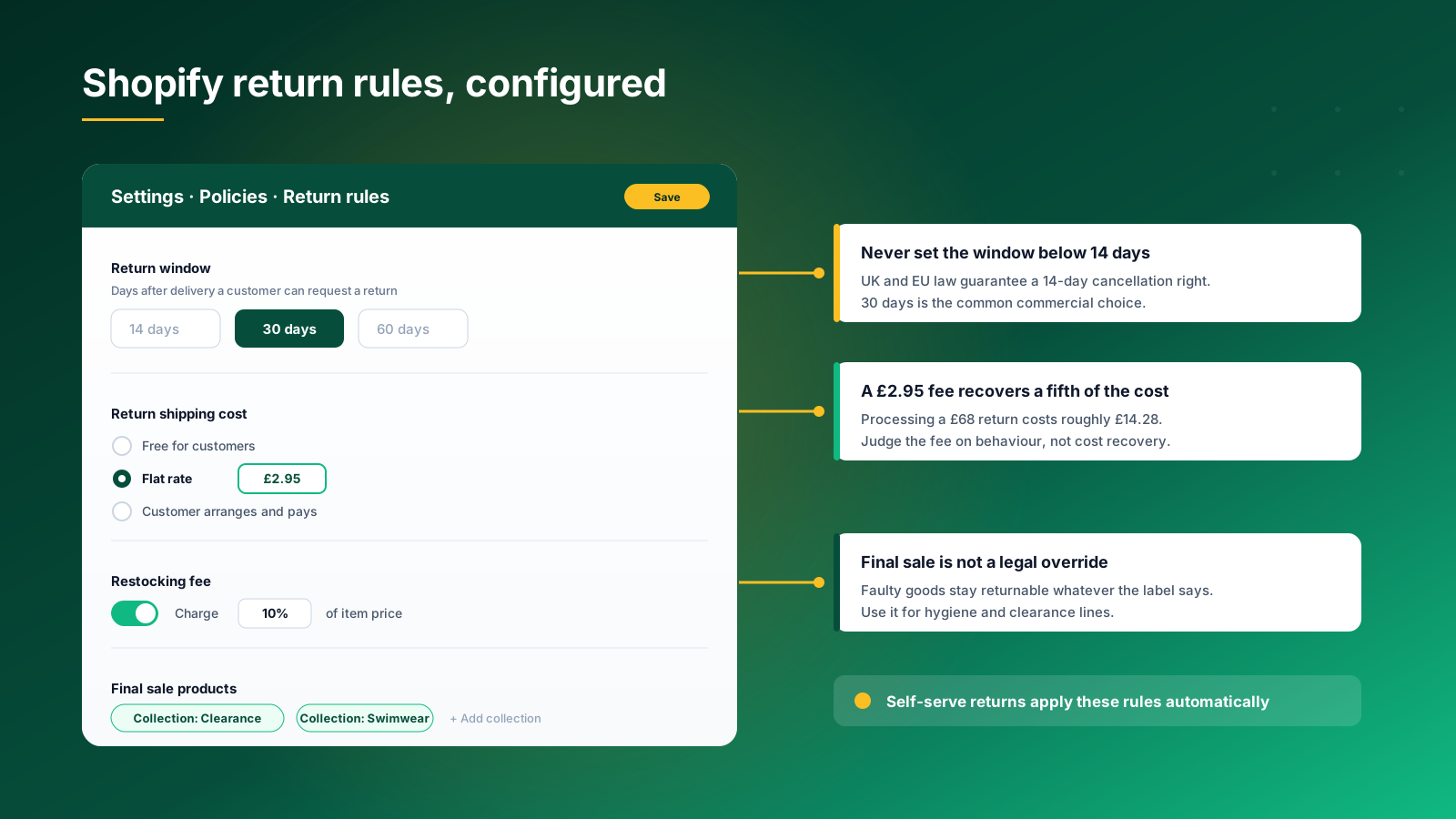
- Return window: how many days after delivery a customer may request a return. Common settings are 14, 30 or 60 days. UK and EU stores should not go below 14.
- Return shipping cost: free, a flat rate, or customer-paid.
- Restocking fee: a percentage of the item price deducted from the refund.
- Final sale items: specific products or collections excluded from returns and exchanges.
Turning on self-serve returns
Self-serve returns let customers request a return from their account without contacting support. Turning this on is the single highest-leverage change for most stores: it removes the support ticket, applies your rules consistently, and gives customers a status they can check. Shopify also supports market-specific policies, so a UK shopper and a US shopper can see different windows and fees from the same online store.
Beyond that, the platform covers store credit as a refund method, restocking fees, B2B return requests, POS return rules for omnichannel retailers, and exchanges created from the admin.
What still needs an app
Shopify generates prepaid return labels automatically, but only where both the store and the customer are in the United States. UK brands and anyone handling international ecommerce returns need either a carrier integration or a dedicated returns app for automatic label generation.
One configuration detail worth checking: make sure your returns portal is linked from the order confirmation email, the shipping confirmation, the footer and the product page. A self-serve portal nobody can find generates the same support volume as having no portal at all.
Free Returns, Paid Returns, or Something in Between
This is the decision that moves your margin most, and the UK market has shifted hard in one direction.
What UK retailers actually charge
By 2026, 35% of the UK's top 100 fashion retailers charged customers for returns, up from 23% in 2023. The specifics are public. Zara deducts £1.95 from the refund on posted returns while keeping store returns free. H&M charges £1.99 for non-faulty returns, waived for members of its free loyalty scheme. Boohoo applies a £1.99 flat fee, with Premier members getting one free return per order. Uniqlo and Next also charge. Paid ecommerce returns have moved out of value retail and into segments where free returns were previously treated as untouchable.
The case for keeping returns free
The counter-argument is real. Around 58% of online shoppers review a brand's returns policy before buying, and free returns materially influence conversion and customer satisfaction. DHL's research found that a third of global shoppers will not buy from another country because of returns costs. Charge badly and you lose the sale before it happens.
Five policies that beat a blanket rule
The useful answer is rarely a single global setting. Better options include:
- Free above a threshold. Free returns on orders over £50 protects you on low-value products and nudges average order value upward.
- Free for members. Tie free returns to a loyalty programme, as H&M does, and the policy pays for customer data.
- Free exchanges, paid refunds. Make the outcome you want cheaper than the outcome you do not.
- Free in-store, paid by post. Cheaper for your business and it brings the customer back through the door.
- Behaviour-based. Apply fees to serial returners while keeping returns free for the majority who never abuse the policy.
Whatever you choose, price it against the arithmetic from the first section rather than against what a competitor does. A £1.99 fee recovers about 14% of a £14.28 processing cost. It is a signal to the customer far more than it is a recovery of cost, and it should be judged on the behaviour it changes.
Turning Refunds into Exchanges and Store Credit
A refund is a lost sale. An exchange is a retained one. The gap between those two outcomes is the biggest revenue opportunity in returns management, and it is almost entirely a design problem.
Design the exchange as the default
Most returns portals present the refund as the default and bury the alternatives. Reverse that. Lead with the exchange, show customers what they can swap into, and make the size or colour they most likely wanted the first option on the screen. A customer returning a size 10 for a size 12 does not want their money back; they want the size 12.
Store credit and instant exchanges
Store credit is the second-best outcome. Offering a small uplift, for example £10 extra credit against a £60 refund, converts a cash outflow into future sales at a fraction of your customer acquisition cost. Shopify supports store credit as a native refund method, so this does not require a new platform.
Instant or advanced exchanges take it further. The replacement ships as soon as the return is scanned into the carrier network rather than when it arrives at your warehouse. It removes the wait that pushes customers to buy the replacement from someone else, at the cost of carrying a small amount of risk on items that never turn up.
Frame the whole thing as retention rather than logistics. Our guides to customer retention strategies and increasing customer lifetime value apply directly here, because a well-handled return is one of the strongest loyalty signals a brand can send.
Reducing Returns Before They Happen
Every return you prevent is worth more than every return you process efficiently. Prevention happens on the product page, not in the warehouse.
Fix sizing first
With over 70% of fashion returns driven by fit uncertainty, sizing is where the money is. Detailed size charts, garment measurements rather than vague labels, fit guidance based on real customer feedback, and user-submitted photos all reduce the guesswork. DHL found 78% of shoppers are open to virtual try-on tools, so the appetite for richer fit technology is there.
Photography, descriptions and reviews
Photograph honestly: multiple angles, true colour representation, a sense of scale, and lifestyle shots that show products in context. Video is particularly effective for items where texture, drape or mechanism matter.
Then write descriptions that pre-empt returns. Dimensions, weight, materials, care instructions and the situations the product is not suitable for. Our guide to optimising product pages covers the structure, and the same product information that reduces ecommerce returns tends to improve organic visibility.
Surface reviews and questions too. Reviews that mention fit, and a visible Q&A section, do the expectation-setting work for you at zero marginal cost and lift customer satisfaction at the same time.
Protect the parcel
Damage in transit is a preventable return. Right-sized packaging, adequate protection and a carrier whose handling you actually trust. Our guides to shipping on Shopify and the best Shopify shipping apps go deeper on carrier setup.
Finally, act on the data. If one product returns at 35% with "too small" as the dominant reason code, change the size chart, add a "runs small" note, or reconsider the product. That single change is worth more than any policy tweak.
Sustainability is now part of the returns conversation
Every returned package is a second journey, a second set of packaging and, for a meaningful share of items, landfill. UK consumers increasingly expect brands to have a view on this, and a sustainability approach to returns is no longer a nice-to-have for brands trading on their environmental credentials.
Practical moves: grade returned items for resale rather than defaulting to disposal, run a recommerce or refurbished channel for items that cannot go back to full price, use recyclable or reusable return packaging, and consolidate returns at a drop-off point rather than collecting individually from every address. Consumers respond well to a returns policy that explains what happens to the item after it comes back.
Spotting Returns Fraud and Policy Abuse
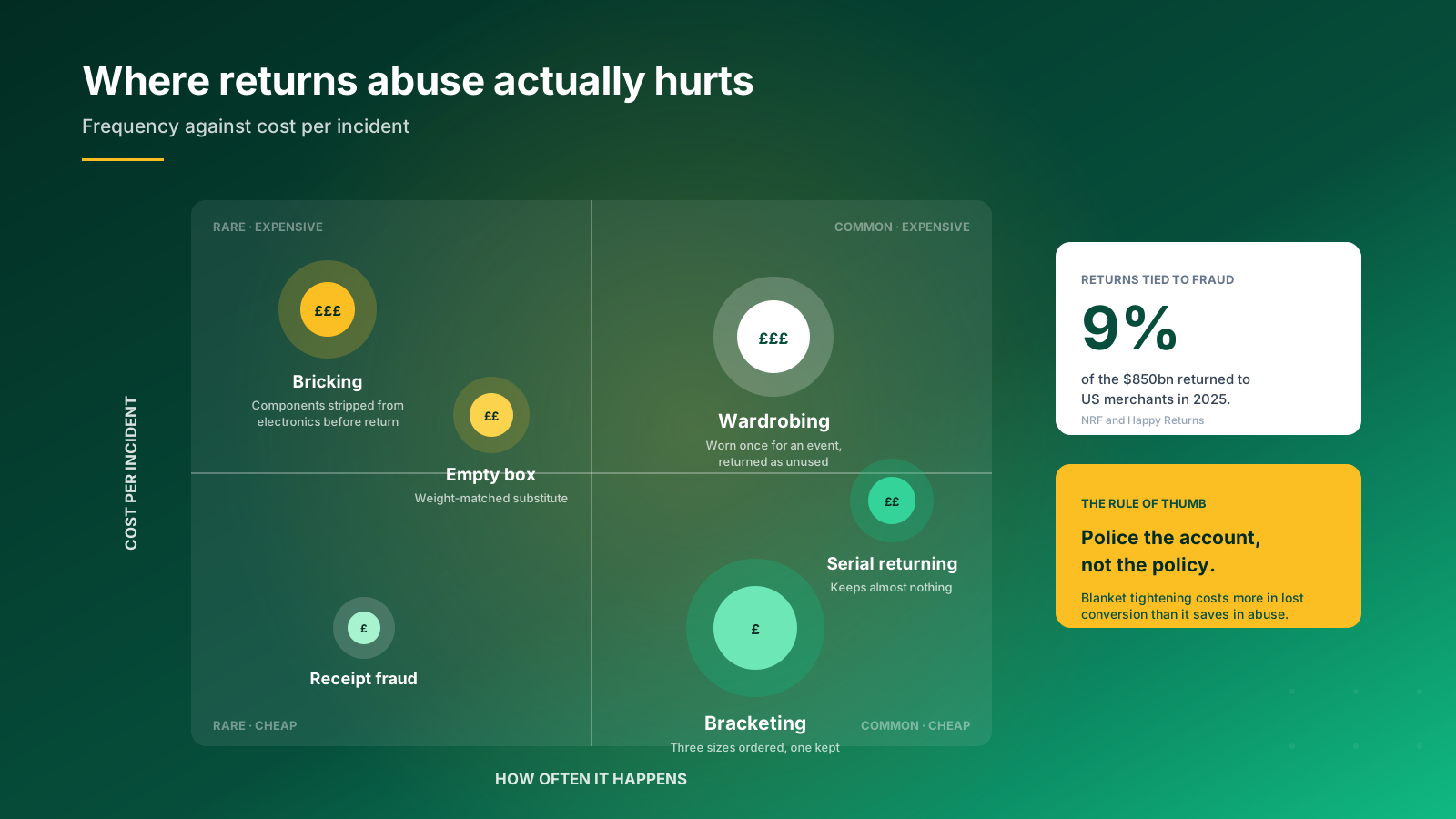
A generous returns policy attracts good customers and, unavoidably, a small group who exploit it. The 2025 Retail Returns Landscape report from the National Retail Federation and Happy Returns estimated returns cost merchants around $850bn in 2025, with roughly 9% of that activity tied to fraud.
The patterns worth knowing
- Wardrobing: buying an item, wearing it once and returning it as unused.
- Bracketing abuse: ordering multiple variants routinely with no intention of keeping most of them.
- Serial returning: a customer whose returns consistently outweigh their keeps.
- Bricking: stripping components from electronics and returning the shell as intact.
- Empty box: returning a box with nothing in it, or a weight-matched substitute.
- Switch fraud: returning a counterfeit or cheaper item in place of the genuine one.
- Friendly fraud: claiming non-delivery or a fault and raising a chargeback. Our guide to handling chargebacks on Shopify covers the dispute side.
Detecting abuse without punishing everyone
Detection starts with per-customer reporting rather than per-order reporting. Track return rates by customer, flag accounts whose keep rate falls below a threshold you set, and look at velocity as well as volume. A customer returning six items across six months looks nothing like a customer returning six items in a week.
Then act proportionately. Requiring inspection before refund, removing free-return eligibility, or capping the number of open returns per account are all measured responses. Blanket policy tightening punishes the 95% of customers who behave well in order to stop the 5% who do not, and it usually costs more in lost sales than it recovers in prevented abuse.
Choosing Returns Management Software
A returns management system automates eligibility, generates labels, runs the exchange flow, communicates status and captures returns data in one place. Automation is the point: every manual approval, every hand-typed label, every "where is my refund" email is cost you can remove. The question is not whether your business needs one, but when.
When native Shopify is enough
Native Shopify return rules and self-serve returns are enough when you process a modest volume, you sell mostly domestically, and refunds outnumber exchanges. You are not paying for anything you do not use, and the setup takes an afternoon.
When to add an app
Add an app when you hit one of these: international ecommerce returns requiring automatic label generation, a branded portal that matches your storefront, customer-initiated exchanges with variant swapping, conditional rules based on product type or customer segment, or the need for real revenue-retention reporting.
At the time of writing, the established options for Shopify retailers include Loop Returns, which starts around $155 a month on an annual contract and suits brands processing 200-plus returns monthly who want an exchange-first experience; ReturnGO, which starts around $23 a month at entry level and is the most configurable on conditional rules; and AfterShip Returns, which sits between the two. Pricing changes, so treat this information as a starting point for your own comparison rather than a quote.
Whatever you choose, the integration that matters most is inventory. If a graded, resellable item does not automatically return to available stock, you are paying for software that solves the customer experience while leaving the cash flow problem exactly where it was.
The Returns Metrics Worth Tracking
Most brands track one returns number, and it is the least useful one. Here is a fuller set.
The seven numbers that matter
Return rate. Items returned divided by items sold, multiplied by 100. Track return rates by category, by product and by channel, never as a single store-wide figure.
Return reason mix. The distribution of reason codes captured at inspection. This is where the useful insights live, and it doubles as your product improvement backlog, ranked by cost.
Keep rate by customer. The percentage of purchased value a customer retains. It separates the bracketer from the abuser and tells you which customers to protect.
Exchange rate. The share of returns resolved as an exchange or store credit rather than a refund. This is the number that moves when you redesign the portal, and it converts directly into retained revenue.
Return processing cost per unit. Your real figure, covering inbound shipping, labour, inspection, repackaging and markdown. Calculate it once properly and every policy decision afterwards becomes easier.
Time to refund. Days from carrier scan to money back with the customer. It correlates strongly with repeat purchase and with customer satisfaction, and it is usually the fastest thing on this list to improve.
Net revenue after returns. Gross sales minus refunds minus processing cost. This is the number that belongs in your board pack, not gross revenue.
Ecommerce returns will never reach zero, and an online store with a very low return rate is often one that is under-selling rather than over-performing. The goal is a process where the returns you get are cheap to handle, the reasons behind them feed back into the product, and customers come away willing to buy again. If you would like help building that on Shopify, our conversion optimisation work and our ecommerce agency team can help. Get in touch to talk it through.