 Nic Dunn, CEO, Charle Agency
What Live Chat Actually Is on an Ecommerce Store
Live chat is a real-time messaging channel that lets a shopper ask a question inside your website and get an instant answer without leaving the page. On an ecommerce store that page is usually a product page or a basket, and that position is what separates live chat from every other customer service channel you run.
The term covers three different things, and conflating them is where most implementations fail. Live chat support in the strict sense is a human agent replying in a session-based window. Chatbots answer common questions from a script or a knowledge base. AI agents read your catalogue and order data, compose answers, and escalate to a person when they cannot resolve the issue. Around 58% of businesses now run a combination of the three, and roughly 80% of ecommerce businesses are expected to use chatbots by the end of 2026.
Messaging is a fourth thing again. Live chat is synchronous and the session ends. Messaging over WhatsApp, Instagram or SMS is asynchronous, so the communication history persists and customers come back hours later. Most Shopify stores run both, with the widget on site and messaging channels feeding the same inbox.
The commercial point is simple. Live chat is the only customer support channel that reaches a shopper before they have spent anything. Email and phone calls almost always handle orders that already exist. Chat sits inside the buying decision, and every benefit below comes from that position.
1. Fewer Abandoned Baskets
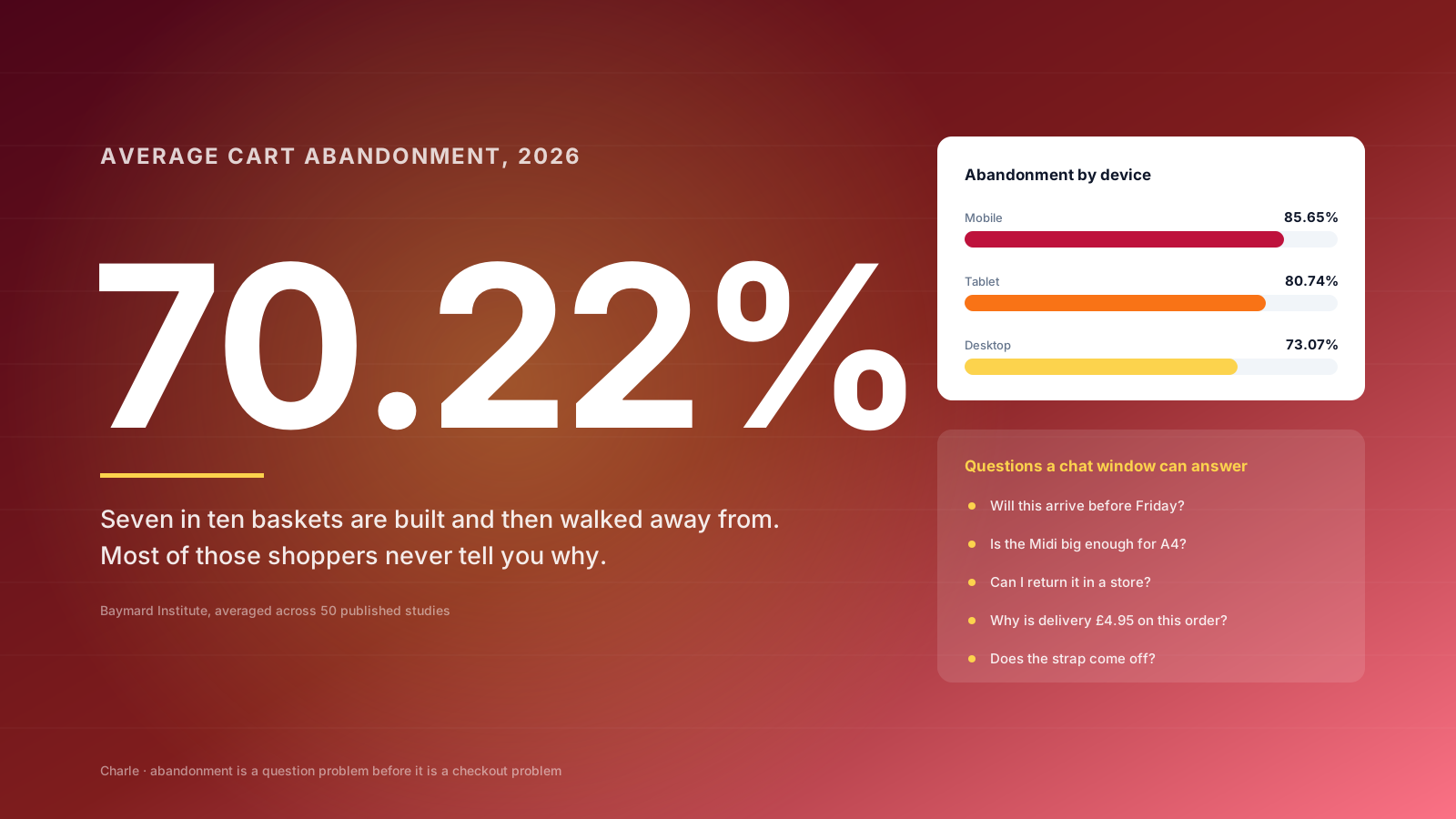
The average cart abandonment rate is 70.22%, averaged by the Baymard Institute across 50 separate studies. Seven in ten customers build a basket and leave, and almost none of them tell you why.
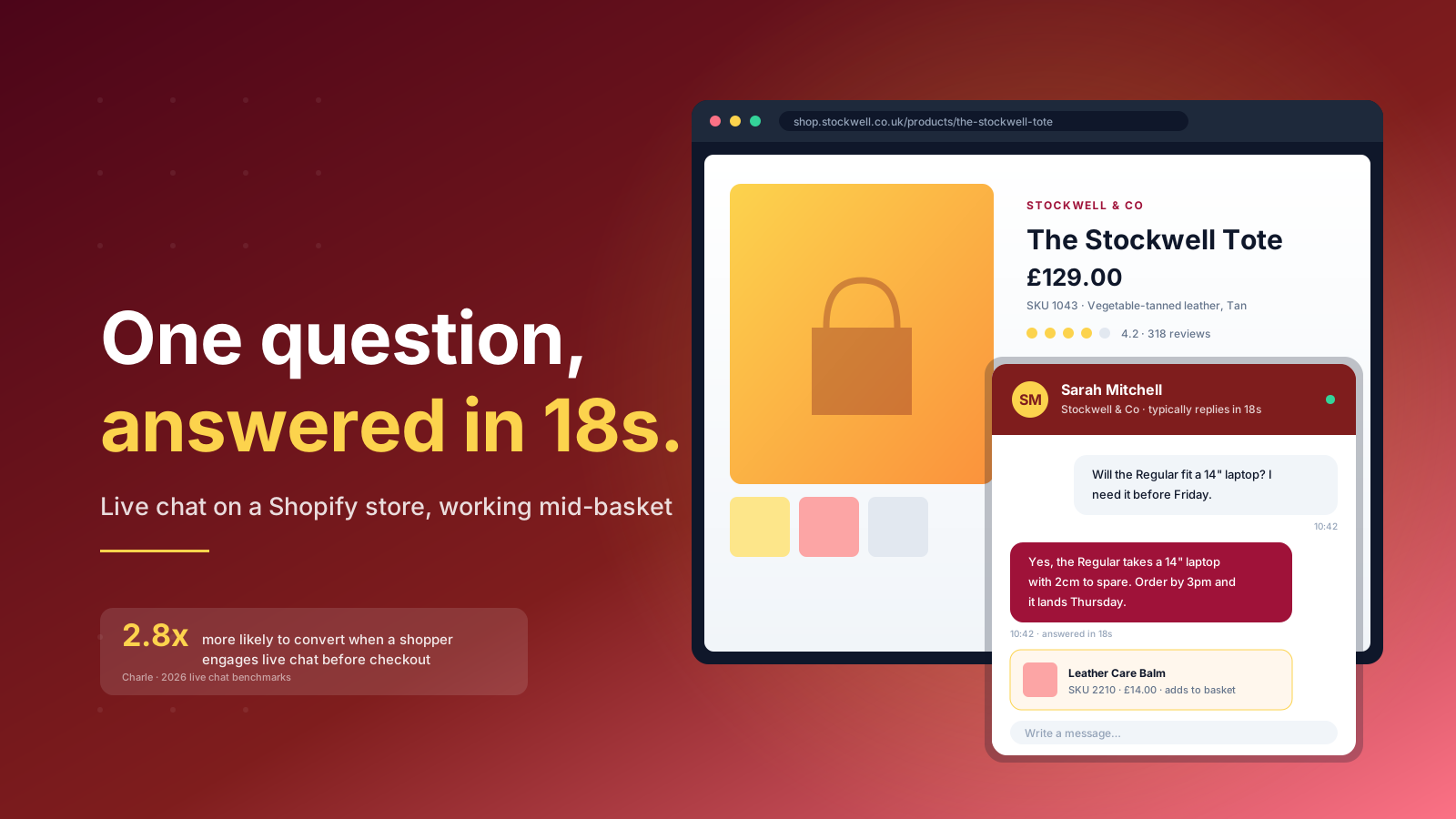
Analytics shows where they left. It does not show what they were thinking. A customer who cannot tell whether the Regular size fits a 14 inch laptop closes the tab. So does one unsure the order arrives before Friday. These are missing information problems rather than checkout design problems, and layout testing does not solve them.
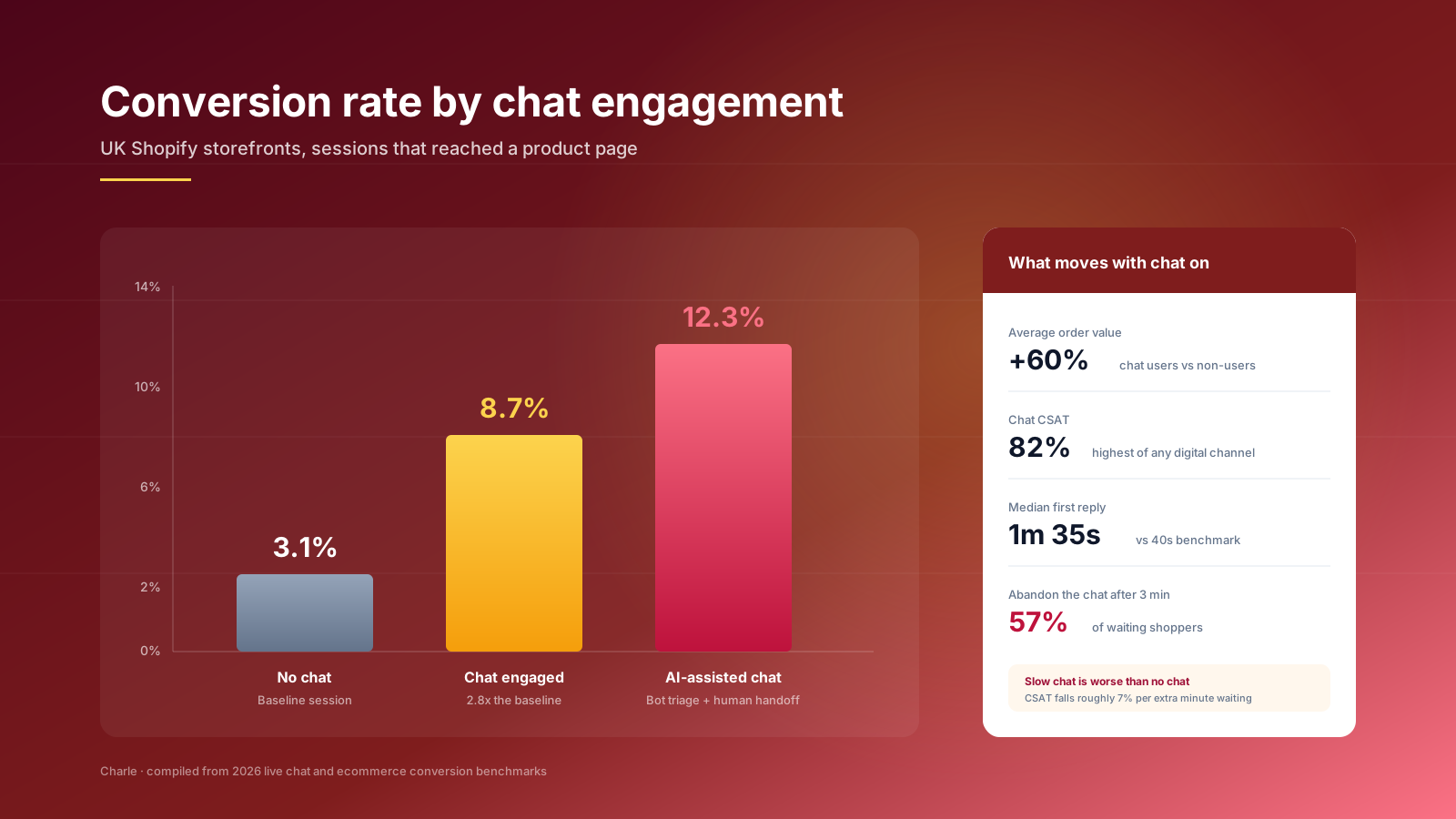
Live chat turns that silence into a conversation. Visitors who engage the window are roughly 2.8 times more likely to convert than visitors who do not. Chat-to-conversion rates typically land between 10% and 20%, against the 2% to 3% a static contact form manages, and live chat backed by an AI agent has been measured pushing session conversion as high as 12.3%.
The mechanism is unglamorous. A customer asks a question, an agent answers it in under a minute, and an order that was about to evaporate completes instead. For the email and checkout side of the same problem, see our guide to reducing cart abandonment.
2. Higher Average Order Value
Customers who use live chat spend up to 60% more per purchase than customers who do not. That figure gets quoted constantly without explanation, so here is the explanation.
Recommendation engines work from purchase correlation. Shoppers who bought these walking boots also bought this waterproof jacket, so show the jacket. That logic is blind to context. A live chat agent asks one question, learns the customer is going to Kenya in March, and the jacket is wrong while a sun hat is right. That is personalisation a widget cannot fake.
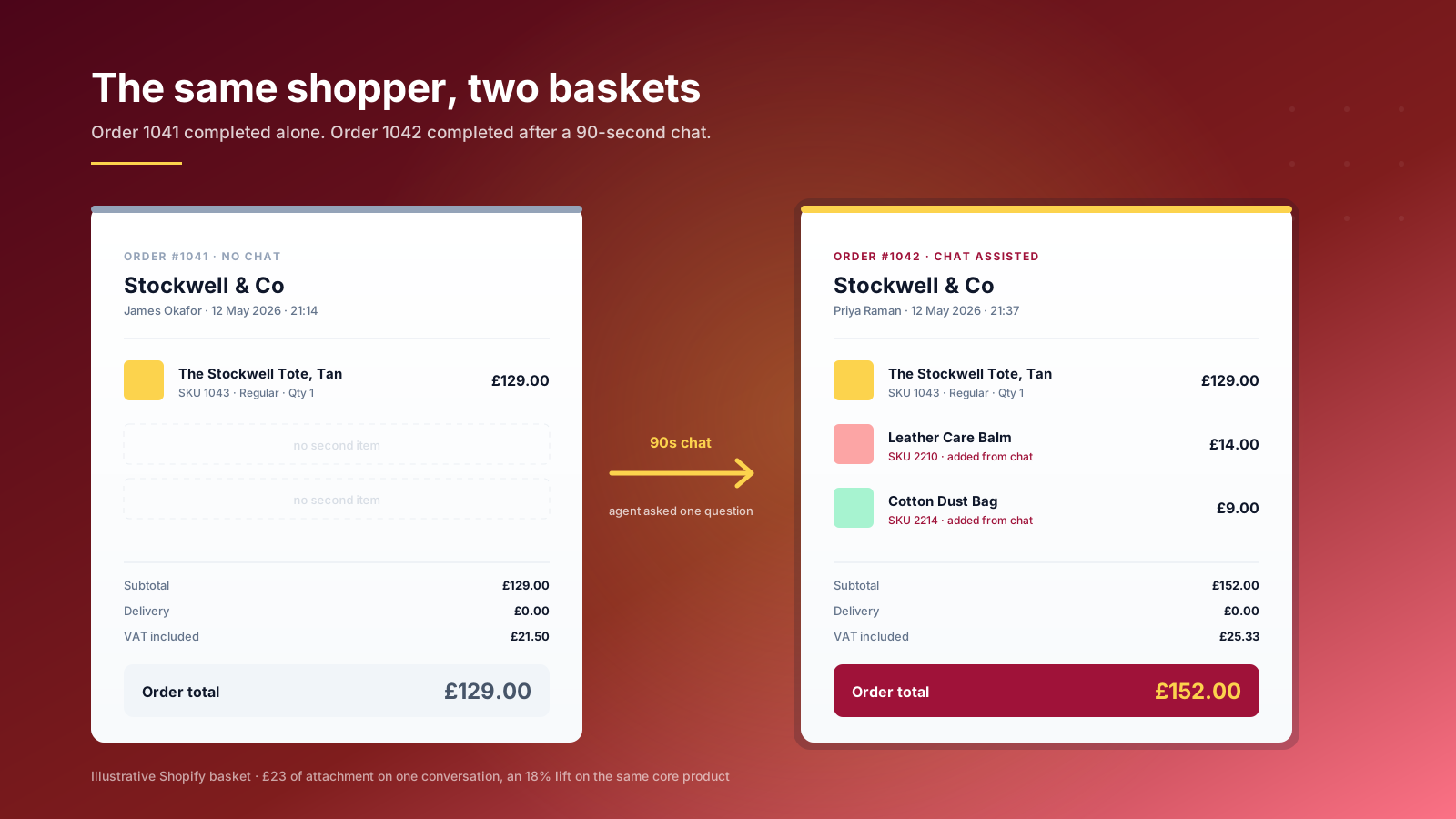
The attachment usually comes from care products, accessories and sizing insurance rather than a second headline item. Example: a customer buying a £129 leather tote adds a £14 care balm and a £9 dust bag once the agent mentions that untreated vegetable-tanned leather marks in the rain. That is £23 of extra sales on an order the recommendation block would never have found, and it arrives with a reason attached rather than a nudge.
There is a loyalty effect on top of the immediate uplift. A customer who has had a useful conversation with your brand has a reason to return that a discount code does not create, and that compounds into customer lifetime value.
3. Trust a Product Page Cannot Build
In a shop, consumers decide whether to trust you from the state of the room and the behaviour of the staff. Online they have your photography, your reviews and your returns policy, and for an unfamiliar business that is thin evidence.
A chat window that answers in twenty seconds is proof of life. It shows there are people behind the storefront, that they know the products, and that somebody will pick up if something goes wrong later. For a store nobody has heard of, that rapport is worth more than another trust badge in the footer.
The reverse is equally true, which makes this benefit conditional. A widget nobody answers, or one that opens straight into a bot with no route to a human, damages the customer experience. It reads as a business that wanted the appearance of service without the substance. Customers can tell within two exchanges whether they are talking to a person, and 57% abandon the chat entirely once the wait passes three minutes.
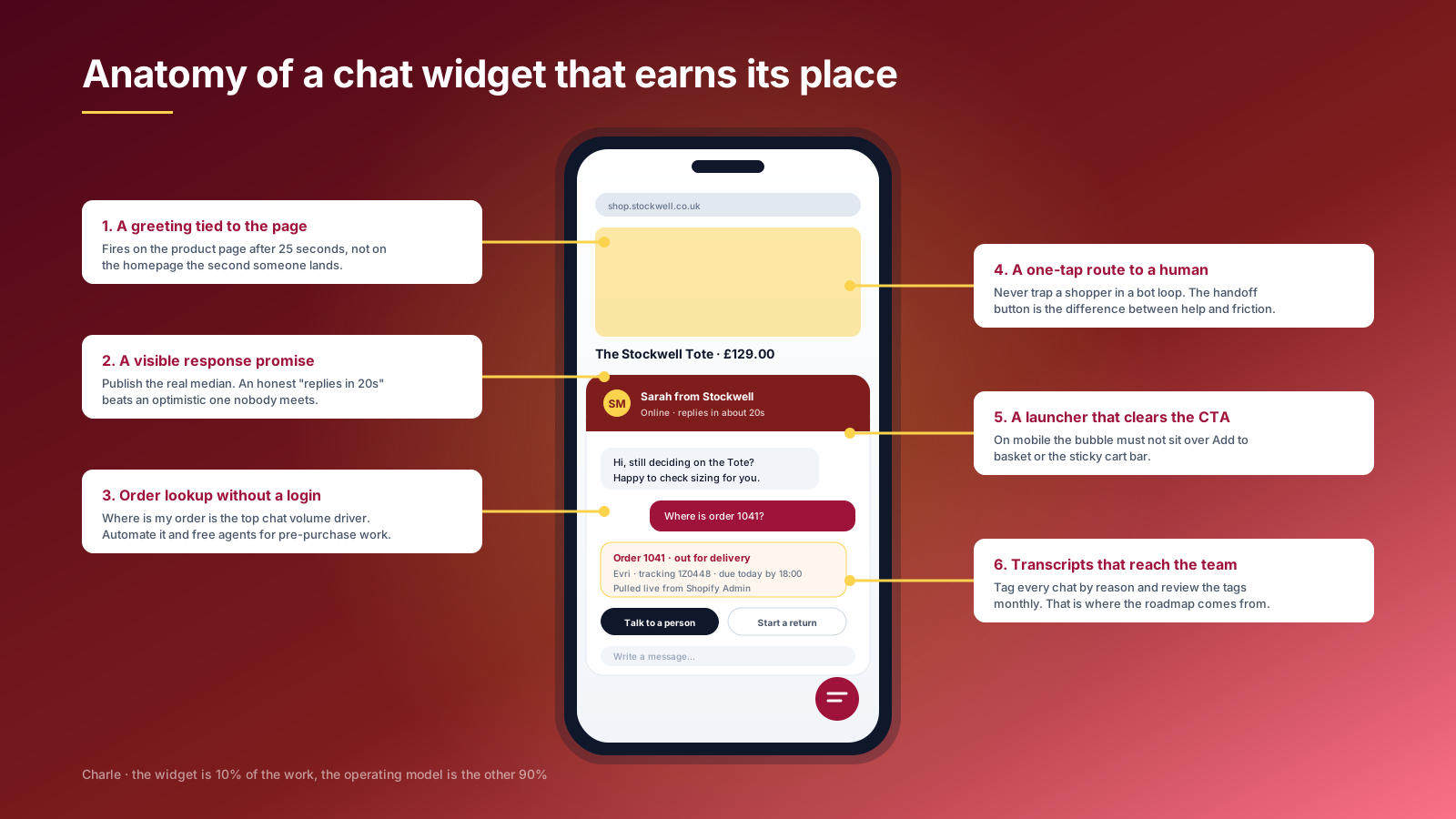
That is also why the greeting matters. A proactive invitation naming something specific about the page a shopper is on lands as help. A generic pop-up two seconds after arrival reads as an advert.
4. Lower Cost Per Contact
A phone agent handles one conversation at a time. A live chat agent comfortably handles three, and with well-built canned responses and a decent knowledge base can push higher without quality dropping. That ratio is the entire cost-effective argument for chat, and it holds up.
The saving compounds when you separate the query types. Where is my order is consistently the largest driver of customer service tickets in ecommerce, and it is also entirely automatable. An AI agent reading Shopify order data resolves it without a person ever seeing the message, which frees your support team for the pre-purchase questions where a human answer converts.
Chat also removes work from other channels. A question answered at 21:00 on a Tuesday is an email nobody writes on Wednesday morning and a phone call nobody makes. It moves customer support into a cheaper format rather than stacking cost on top of what you already run.
Cost per contact is still the wrong single metric. A chat that produces a £152 order is not a support cost at all, and treating the chat team as a cost centre is the fastest way to under-resource it into uselessness. Track revenue per chat alongside cost per chat, or the numbers point you in the wrong direction.
5. Voice of Customer Data
Chat transcripts are the cheapest customer research an ecommerce business can run. Every conversation is a customer describing an issue in their own words, timestamped and attached to a specific page.
Analytics tells you the Midi tote page has a 68% exit rate. Transcripts tell you that eleven customers this month asked whether it fits A4 paper, which means the dimensions are missing or buried. One of those is a data point, the other is a fix. Tag every chat by reason, review the tags monthly, and the roadmap writes itself.
The same chats are a copy resource. The phrases customers use to describe your products rarely match the phrases your marketing team uses, and that gap is a search visibility problem as much as a conversion one. Mining chat language for product information and FAQ content pulls your copy closer to how people actually search.
Nic Dunn, CEO of Charle, puts it plainly: the fastest route to a better conversion rate is usually reading three months of chat transcripts rather than commissioning another round of user testing. The evidence already sits in the tool you are paying for. Our guide to improving ecommerce conversion rate covers turning those findings into tests.
6. It Works Hardest on Mobile
Mobile cart abandonment runs at 85.65% against 73.07% on desktop. Mobile is where the money leaks, and it is also where live chat has the largest relative effect, with measured mobile chat conversion lifts several times the mobile baseline.
The reason is friction. On a phone, comparing three products, checking a size guide and reading the delivery policy means a great deal of tapping. A chat window collapses all of it into one thread. The customer types a question and stays exactly where they were, which is convenience the rest of the interface cannot offer.
This benefit is fragile. A badly placed widget causes the exact problem it is meant to solve. A launcher sitting over the Add to basket button, or a panel that opens full screen and hides the sticky cart bar, costs more orders than it saves and hurts accessibility for anyone using a screen reader. Test the widget on real devices alongside the rest of your mobile store optimisation work.
7. Faster Recovery When Things Go Wrong
Every store gets orders wrong. Parcels vanish, sizes run small, a courier leaves a box in a bin. What separates businesses customers stay with is the gap between the problem happening and the resolution.
Email measures that gap in hours. Live chat measures it in minutes, and the emotional difference is out of proportion to the time saved. A customer who gets a replacement dispatched during a four-minute chat tells a different story about your brand than one who waits until the next working day for a templated reply. Satisfaction with the recovery often ends up higher than satisfaction with an order that went smoothly.
Chat also catches the complaints that would never reach you otherwise. Most customers only give feedback after an exceptional experience or a terrible one. The large middle group, mildly disappointed and quietly not returning, will raise concerns in a chat window because the barrier is one sentence rather than a form. That group is exactly who your customer retention strategy is trying to hold on to.
8. A Competitive Advantage Still Going Spare
Around 53% of consumers say they would rather deal with a business through chat than any other digital method, while only a minority of businesses have implemented live chat support properly. That gap has narrowed since the figures were first published, but it has not closed, and it is far wider in some categories than others.
Check the ten stores you compete with on your main category term. Count how many have a chat widget, then count how many answer within a minute on a weekday evening when your traffic peaks. The second number is always smaller, and it is the one that matters.
The advantage is largest for considered purchases. Nobody needs assistance to buy bin bags. People do want a conversation before spending £600 on a mattress, £300 on a bike or £180 on made-to-measure blinds, and those are the categories where a competitor without staffed chat is handing you the sale.
Where Live Chat Costs You Money
This is the section the software vendors leave out. Live chat is not free, and there are stores that should not run it.
Understaffing is worse than absence. Median first response across the industry is 1 minute 35 seconds, but the benchmark customers actually reward is under 40 seconds, and satisfaction falls roughly 7% for every additional minute of waiting. A widget showing Online when nobody is watching it is a broken promise made at the moment of purchase.
Hours have to match your traffic, not your office. Consumer ecommerce peaks between 19:00 and 22:00 and again at weekends. Chat staffed from 09:00 to 17:00 covers the quietest part of the day. Either extend cover, hand the evening to an AI agent with a clear handoff, or set explicit offline hours and collect an email address instead of pretending.
Low-margin, low-consideration catalogues rarely justify it. If your average order value is £18 and customers buy in ninety seconds without questions, the agent time will not pay for itself. Put the budget into delivery speed and returns instead.
There is a compliance overhead. Chat transcripts contain personal data, so under UK GDPR you need a lawful basis, a retention period and a route for a customer to request deletion. If an AI agent drafts replies, your privacy notice needs to say so. None of this is difficult, but it is easier to set up on day one than to retrofit.
Tone is a training problem. Chat is informal, which invites agents to be casual in ways that damage a premium brand. Write the tone rules down, build canned responses that sound like your brand rather than a helpdesk, and review real chats weekly for the first month.
How to Launch Live Chat on Shopify
The widget is the easy part. The operating model around it decides whether any of the benefits above show up.
Pick tools for the job you have. Shopify Inbox is free, native and genuinely fine for a small team handling modest volume tied to store data. It is thin on advanced automation, AI agents and reporting features, which is why larger catalogues move to a dedicated helpdesk. Our comparison of the best customer support apps for Shopify covers the trade-offs.
Decide what the chat is for before you install it. A window positioned as pre-purchase help behaves nothing like one positioned as order support. The first belongs on product and collection pages with proactive invitations. The second belongs in the footer and the account area. One greeting trying to do both does neither well.
Automate the repetitive third. Order status, delivery timescales, returns and stock questions are the bulk of inbound volume and nearly all of it resolves without a person. Build the integration with Shopify order data properly so the automation answers with real tracking information rather than a link to a tracking page.
Set triggers deliberately. An invitation after 25 seconds on a product page, or after 40 seconds on the basket, converts. The same invitation two seconds after landing on the homepage annoys. Start conservative and widen once you can see which triggers produce conversations rather than dismissals.
Measure four things. First response time, resolution rate, chat-assisted conversion rate and revenue per chat. The first two measure service quality, the second two measure commercial value. If you are unsure what good looks like across the funnel, start from our ecommerce conversion rate benchmarks.
Read transcripts together. Thirty minutes a month with merchandising, support and development people in the same room, reading real chats, produces more usable roadmap items than most quarterly planning sessions.
If you would like help working out whether live chat belongs on your store, our Shopify Plus agency team works on exactly this kind of conversion problem. Get in touch and we will look at your funnel with you.