 Nic Dunn, CEO, Charle Agency
What Cart Abandonment Is and How to Measure It
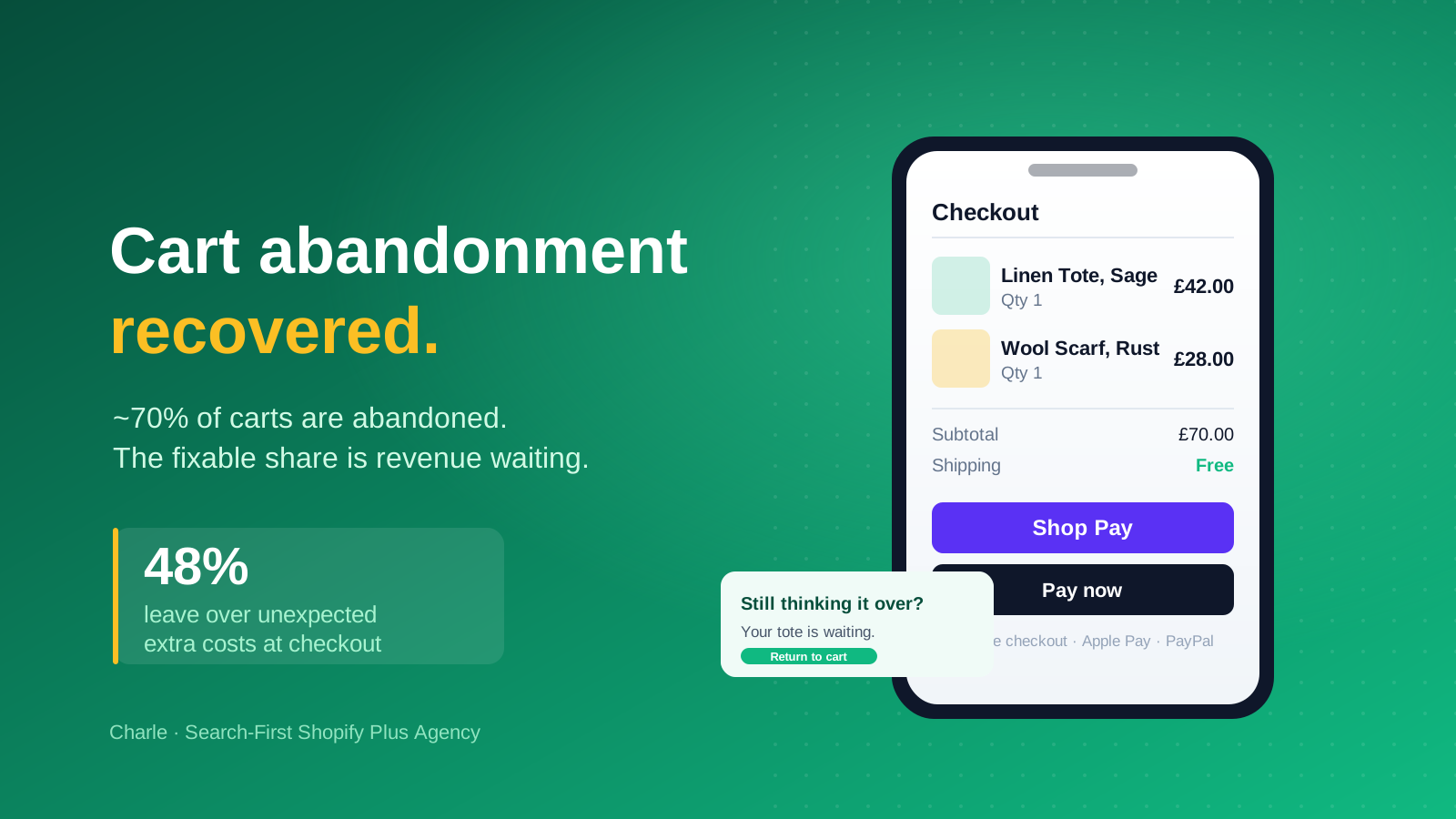
Cart abandonment, also called shopping cart abandonment, happens when a shopper adds one or more items to their basket but leaves before completing the purchase. Any item that enters the shopping cart and never makes it through the transaction is counted as abandoned. It is one of the most closely watched metrics in ecommerce because it sits right on top of revenue: these are people who showed clear buying intent during the checkout process and then stopped short.
The maths is simple. Divide the number of completed transactions by the number of carts created, then subtract that figure from one. If 1,000 shoppers create a cart and 280 of them buy, your cart conversion rate is 28% and your cart abandonment rate is 72%. Track it in your Shopify analytics and in your analytics setup so you are measuring the same thing consistently month to month, because retailers often define a cart differently and end up comparing numbers that do not match.
For context, the average documented shopping cart abandonment rate sits at around 70%, based on a meta-analysis of dozens of separate studies by the Baymard Institute. Rates vary by sector, but most stores land somewhere between 60% and 80%. If your number is in that band, you are normal for the industry. The goal is not zero, it is to claw back the share of users who left for reasons you can actually fix and turn more visitors into paying customers.
Why Cart Abandonment Matters for Shopify Brands
Every abandoned cart is demand your business has already paid to create. You spent on ads, content, or email to bring that shopper in, they told you they wanted the product, and then the sale evaporated at the last step. For most ecommerce businesses, reducing abandonment is far cheaper than buying more traffic to compensate for it, and it lifts conversion rates across the whole store.
The problem is heaviest on mobile. Mobile cart abandonment runs at roughly 80%, against about 66% on desktop, a gap of around 15 points that has barely closed in years. Since mobile now accounts for the majority of ecommerce traffic, a clunky checkout process on phones quietly drains more revenue than almost any other single issue on a Shopify store.
There is also a compounding effect. A shopper who hits friction once and leaves is less likely to come back, and a frustrating checkout experience damages trust in the brand overall. Fixing the causes of abandonment improves the experience for everyone, not only the customers you recover. It also lifts the return on every other growth channel, which is why retailers should treat it as a core part of conversion rate optimisation rather than a standalone fix.
The Real Reasons Shoppers Abandon Their Carts
Some abandonment is unavoidable. A large share of consumers use the shopping cart as a wishlist, comparing prices across brands or saving items for later with no immediate intent to buy. You will never convert all of these visitors, and chasing that group wastes effort. The opportunity sits with the shoppers who genuinely wanted to buy and were pushed away by something on your store.
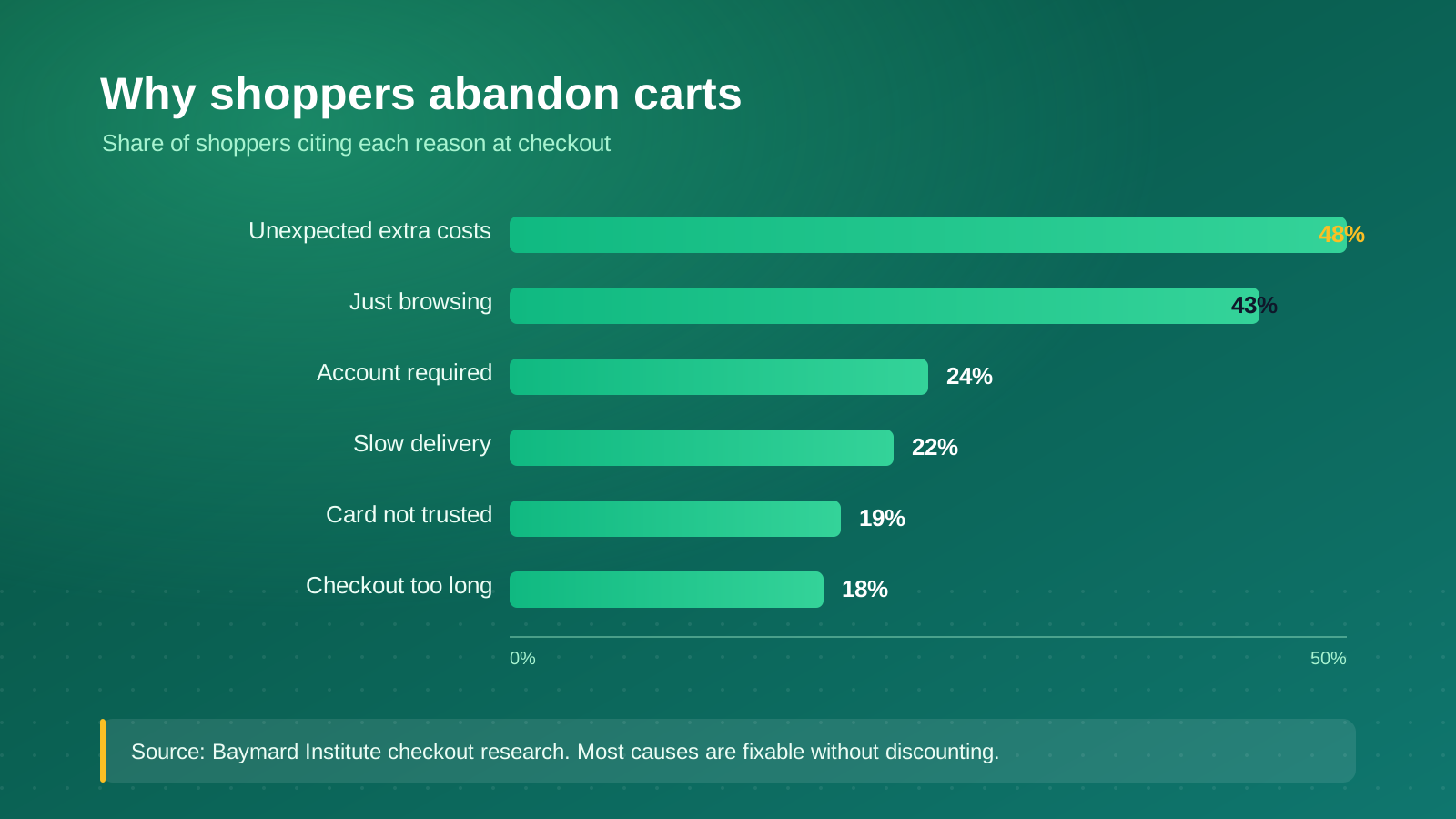
The single biggest fixable cause is unexpected cost. Baymard's research puts extra costs at checkout, mostly shipping and taxes, as the number one reason for abandonment, cited by around 48% of consumers, and it has held that top spot for years. People budget for the price they saw on the product page. When delivery, handling, or tax appears for the first time during the checkout process, it reads as a nasty surprise and they leave.
The other recurring culprits are remarkably consistent across the research:
- Forced account creation: being made to register before buying adds friction at the worst possible moment. The lack of a clear guest checkout option is a textbook example of self-inflicted abandonment.
- A long or complicated checkout process: around 18% of shoppers abandon because it is too long or confusing. The average checkout still runs to roughly five steps and eleven form fields, and every extra one costs you users.
- Security concerns at the payment page: close to half of shoppers will leave a sale over security concerns if the checkout page does not feel safe, particularly when entering credit cards on unfamiliar websites.
- Missing preferred payment method: no PayPal, no digital wallet, no buy now pay later (BNPL), and a segment of buyers simply will not complete. Shoppers have firm payment preferences, and a thin variety of options sends them elsewhere.
- Crashes and technical issues: slow pages, crashes, broken steps, and payment errors all push shoppers out, and these issues hit harder on older devices and poorly built ecommerce sites.
- Unexpected charges and weak reassurance: surprise shipping fees and shipping costs, vague return policies, an absence of reviews or testimonials, and slow delivery all erode the commitment needed to buy.
Abandonment rates are not uniform. They vary by industry and by order value: considered, higher-value purchases in industries like fashion, travel, and automotive see higher cart abandonment rates than impulse buys, so benchmark against your own vertical rather than a single global percentage. Mollie's study of 10,000 European consumers found payment factors and trust ranked alongside cost, which makes sense given how much of the world now shops on mobile. The challenge is to work out which of these factors is costing you the most attention and revenue, then fix that first.
The pattern is clear. Most fixable abandonment comes down to cost transparency, friction, trust, and payment choice. Before you reach for a discount code, work through that list, because discounting to solve a friction problem just trains shoppers to wait for a deal and weakens your relationship with parts of your customer base.
How to Reduce Cart Abandonment
The reasons above map neatly onto a set of fixes. Work through them in order of impact rather than trying everything at once, and measure each change so you know what actually moved the rate.
Show the full price early. Surface shipping, taxes, and any fees on the product page and in the cart, not at the final step. A shipping calculator in the cart removes the single biggest surprise. If you can absorb delivery into the product price or offer a clear free-shipping threshold, even better. Honesty up front beats a lower headline price that balloons at checkout.
Strip the checkout process back. Every extra field and page is another exit point. Offer a guest checkout option so nobody is forced to create an account, autofill address details where possible, and cut the flow to the fewest steps that still capture what you need. A shorter checkout experience lifts conversion rates for almost every store. Our guide to Shopify one-page checkout covers how to consolidate the journey on Shopify specifically.
Show progress and answer questions in context. A progress bar or step indicator in the checkout flow tells shoppers how close they are to finishing, which reduces the frustration that ends sessions. Validate fields inline so errors surface early, and answer common questions about delivery, returns, and security right where they arise rather than forcing people to hunt for answers elsewhere on your sites.
Offer the payment methods people actually use. Cards alone are no longer enough. Add PayPal, Apple Pay, Google Pay, and Shop Pay, and consider buy now pay later (BNPL) options such as Klarna or Clearpay where they suit your target audience and margins. Spreading payments lowers the perceived value barrier on a high order value, and accelerated wallets remove the need to type card details on a phone, which is exactly where abandonment is highest.
Build trust at the point of payment. Display security badges, recognisable payment logos, and clear contact details. Show reviews and testimonials near the cart and checkout. Make your return, refund, and delivery policies easy to find before checkout, not buried in the footer. These measures reduce security concerns and the likelihood that a hesitant shopper walks away.
Fix speed, performance, and the mobile experience. Slow load times, crashes, and layout glitches kill conversions, especially on mobile devices. Compress images, minimise scripts, and test the full checkout on a real phone regularly. Strong site performance is one of the highest-impact best practices for ecommerce sites, and most modern checkout software and APIs make it straightforward to monitor. If the checkout feels awkward on mobile, that is where you are losing the most money. This is closely tied to broader conversion rate work across the store.
Recovering Abandoned Carts
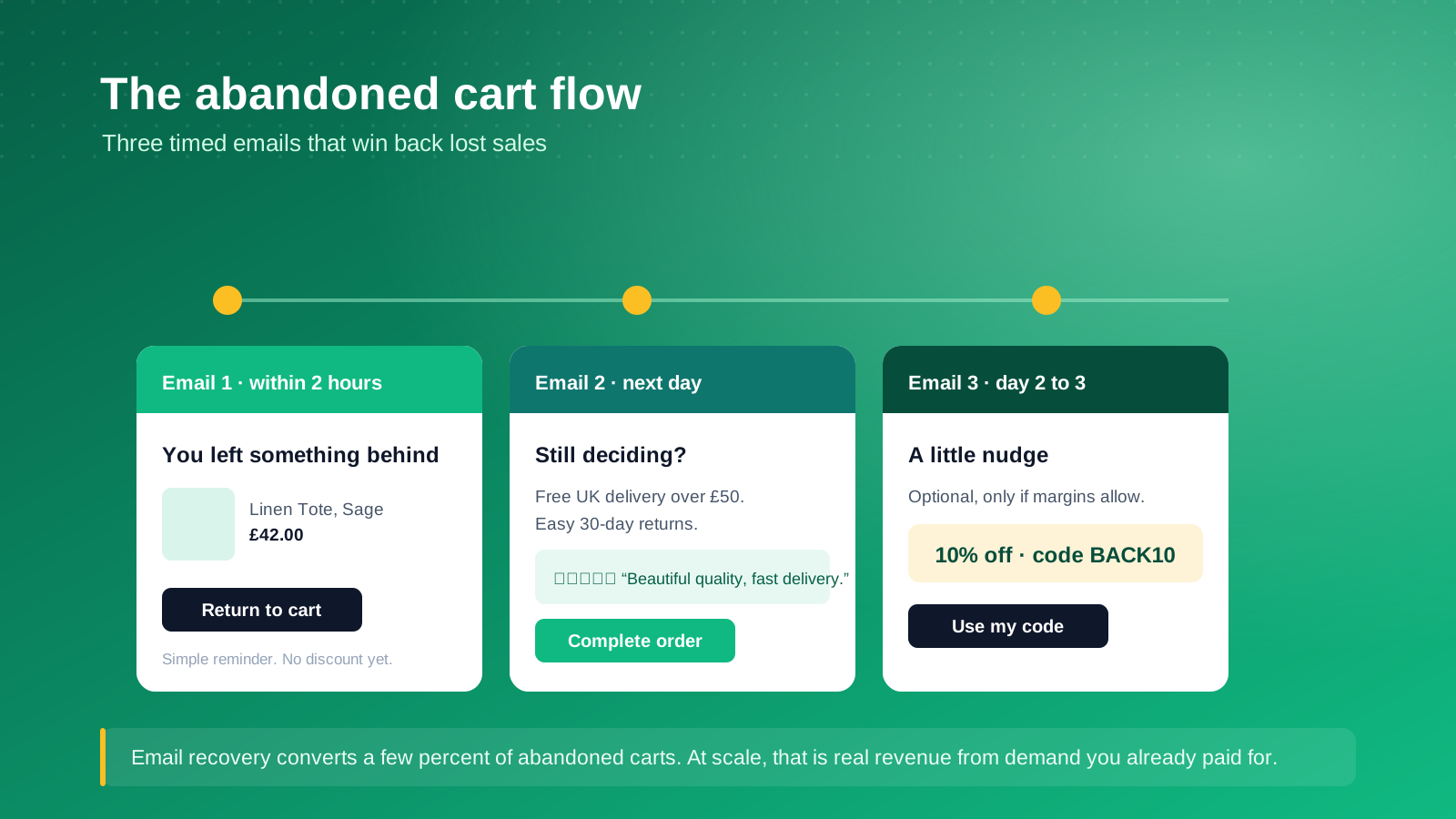
No matter how good your checkout is, some shoppers will always leave. Cart recovery is the second line of defence: reaching the people who abandoned and giving them an easy route back. Done well, this is one of the highest-return activities in ecommerce because the audience has already shown intent.
Abandoned cart emails are the workhorse. A short series that reminds the shopper what they left, includes a clear image and a one-click link back to their cart, and answers any obvious hesitation will recover a meaningful share of lost sales. Timing matters: the first message tends to perform best when it lands within a few hours of abandonment, with one or two follow-ups over the next day or two. Email recovery typically converts a few percent of abandoned carts on its own, and that compounds into real revenue at scale.
On Shopify, the most reliable way to run these flows is through a platform like Klaviyo, which connects directly to your store and triggers based on real cart events. A well-built abandoned cart flow, supported by browse abandonment and post-purchase flows, turns recovery into an always-on system rather than a manual task. If you are weighing up the investment, our breakdown of Klaviyo pricing is a useful starting point.
The best cart abandonment emails do more than nag. They use gentle urgency, helpful messages, and social proof to rebuild the value the shopper saw in the first place, which strengthens customer relationships rather than burning them. A measured approach protects your customer base while still recovering sales.
Email is not the only lever. SMS reminders work well for time-sensitive carts when you have consent. Exit-intent prompts can catch a shopper before they leave with a reason to stay, such as a reminder of free shipping or relevant offers. Retargeting ads on social and display can re-engage abandoners who are not on your email list. Used together, and without bombarding people, these channels widen the net well beyond a single reminder email.
Cart Abandonment vs Checkout Abandonment
It helps to separate two things that often get lumped together. Cart abandonment covers anyone who adds an item and leaves before buying, including the large group still browsing. Checkout abandonment is narrower and more serious: it counts shoppers who actually started checkout, entering details or reaching the payment step, and then dropped out.
The distinction matters because the two groups need different responses. Cart abandoners are often early in their decision and respond to reminders, social proof, and reassurance. Checkout abandoners had high intent and almost completed, so they are usually being blocked by something concrete: an unexpected cost, a missing payment option, a form that will not submit, or a card decline. Those are friction problems to engineer away, not motivation problems to nudge.
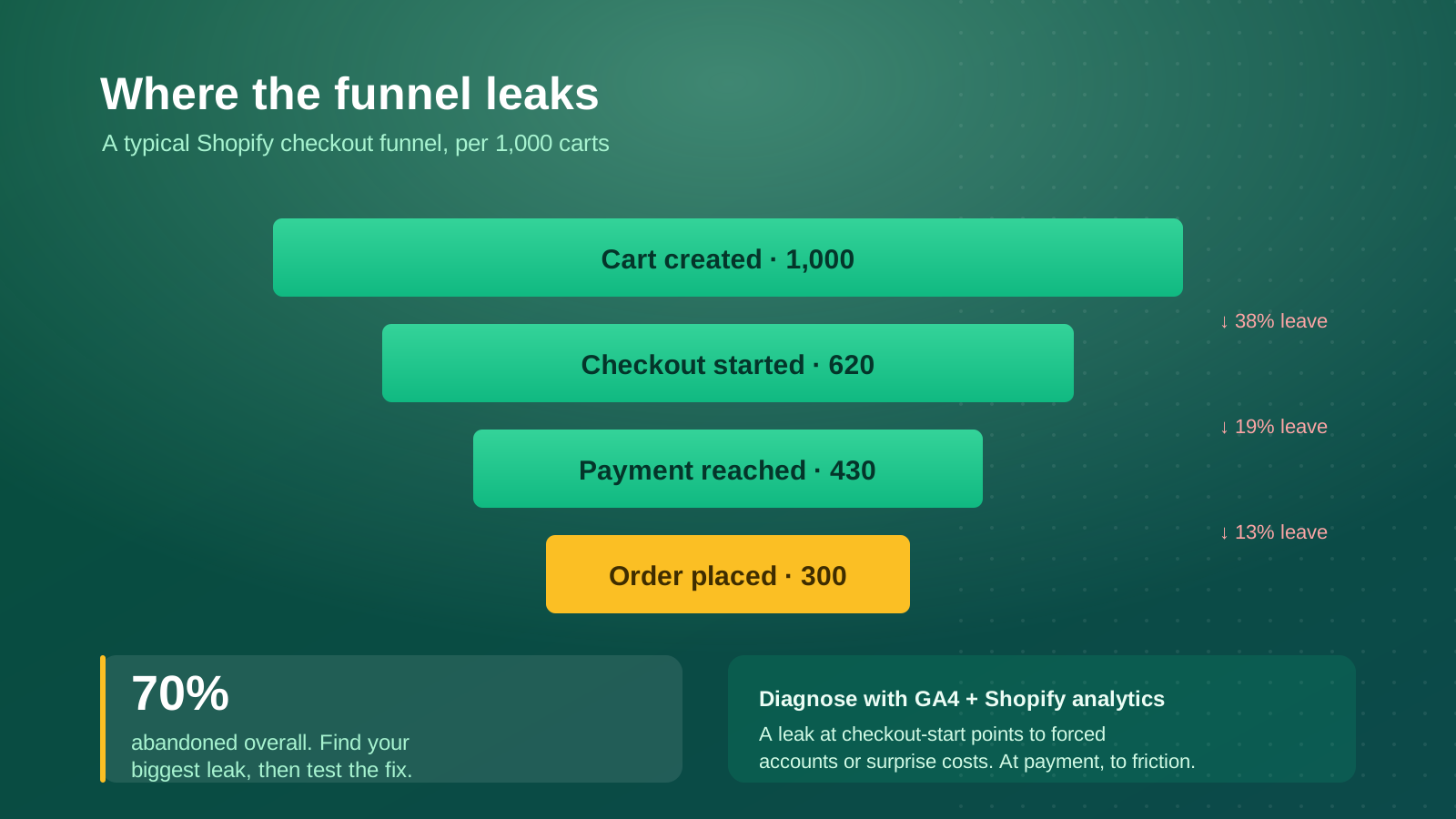
Look at both rates in your analytics. A high cart abandonment rate with a healthy checkout completion rate points to top-of-funnel browsing behaviour. A high checkout abandonment rate points to a problem inside the checkout flow itself, which is where the fastest wins usually live. Measuring each as a percentage of the stage before it tells you exactly which of your checkout processes is leaking and where the user experience breaks down.
How Shopify Helps You Reduce Abandonment
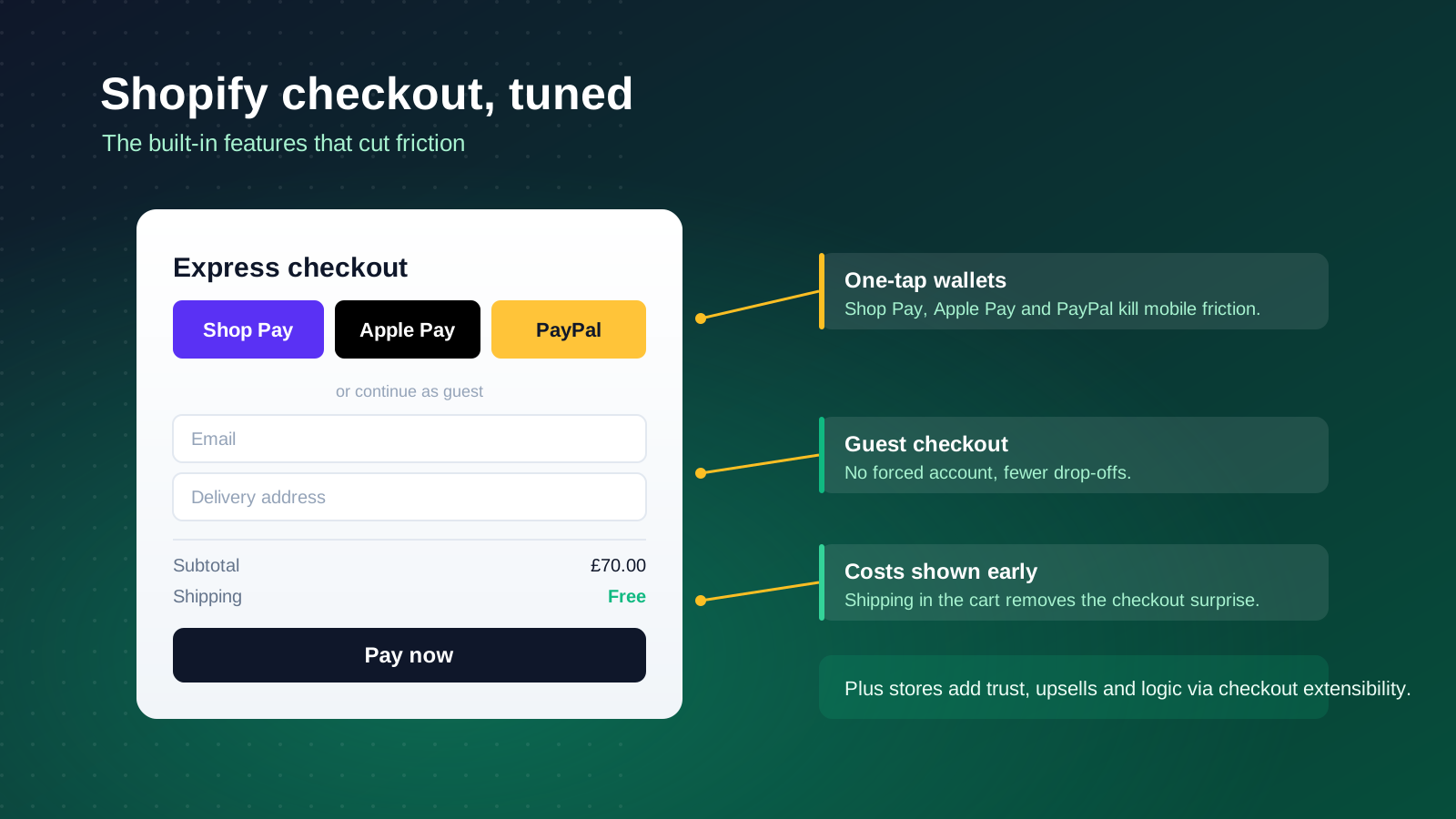
Most cart abandonment advice is written for any platform, which means it stops short of the specifics that matter day to day. On Shopify, several of the highest-impact fixes are features you can switch on or configure rather than build from scratch.
Shop Pay is the standout. It lets returning shoppers complete in a single tap with details already saved, and Shopify's own data has consistently shown it converts higher than guest checkout. For mobile shoppers, where abandonment peaks, removing the need to type anything is a genuine difference-maker. Enabling Shop Pay alongside Apple Pay, Google Pay, and PayPal covers the payment-choice and friction problems at once.
Shopify Checkout is fast, mobile-optimised, and hosted on infrastructure built for conversion, so you inherit a strong baseline. On Shopify Plus you gain deeper control through checkout extensibility, letting you add trust elements, upsells, and custom logic without breaking the streamlined flow. Our guide to editing the Shopify checkout walks through what is possible at each plan level.
Shopify Flow and the app ecosystem handle the recovery side. You can trigger automations, connect Klaviyo for abandoned cart flows, and layer on software for reviews, shipping rates in the cart, and back-in-stock alerts. Most of these tools plug in through Shopify's APIs, so you rarely need bespoke development on an ecommerce store to address abandonment; you need the right features configured well. For ambitious brands, that configuration work is exactly where a Shopify Plus agency earns its keep.
Measure, Test, and Keep Improving
Reducing cart abandonment is not a one-off project. The best stores treat it as an ongoing cycle of measuring, hypothesising, testing, and refining. The reasons shoppers leave shift with seasons, traffic mix, and new products, so the work is never quite finished.
Start with the data. Shopify analytics and Google Analytics 4 show where shoppers drop out of the funnel, and a checkout funnel view tells you whether the loss is at the cart, the information step, or payment. Pair that with session recordings and heatmaps to see what people actually do, not just where they leave. Often a single confusing field or a hidden cost explains a large share of the drop-off.
Then test deliberately. Rather than changing five things at once, run structured A/B tests on the highest-suspicion areas: shipping messaging, the number of checkout steps, payment options, or trust signals. Let each test gather enough data to make confident decisions before you act on it. A little patience here pays off, because in fact most failed experiments come from calling a result before the numbers settle. This study-led approach is what separates stores that guess from stores that compound small wins into a materially lower abandonment rate over time.
It also pays to look outward. Order from your own competitors as a customer and note the tactics they use: where their checkout feels smoother, which payments they accept, how they handle the shopping experience on mobile. In other words, treat every awkward step you find as an opportunity to make your own customer experience better. These small opportunities add up. The brands that win on cart abandonment are simply the ones paying closest attention to the small things.
If you would like expert help diagnosing where your store loses shoppers and building a plan to recover them, our ecommerce growth team can help. Get in touch to talk through your checkout and cart recovery setup.