 Nic Dunn, CEO, Charle Agency
What Is Zero-Party Data?
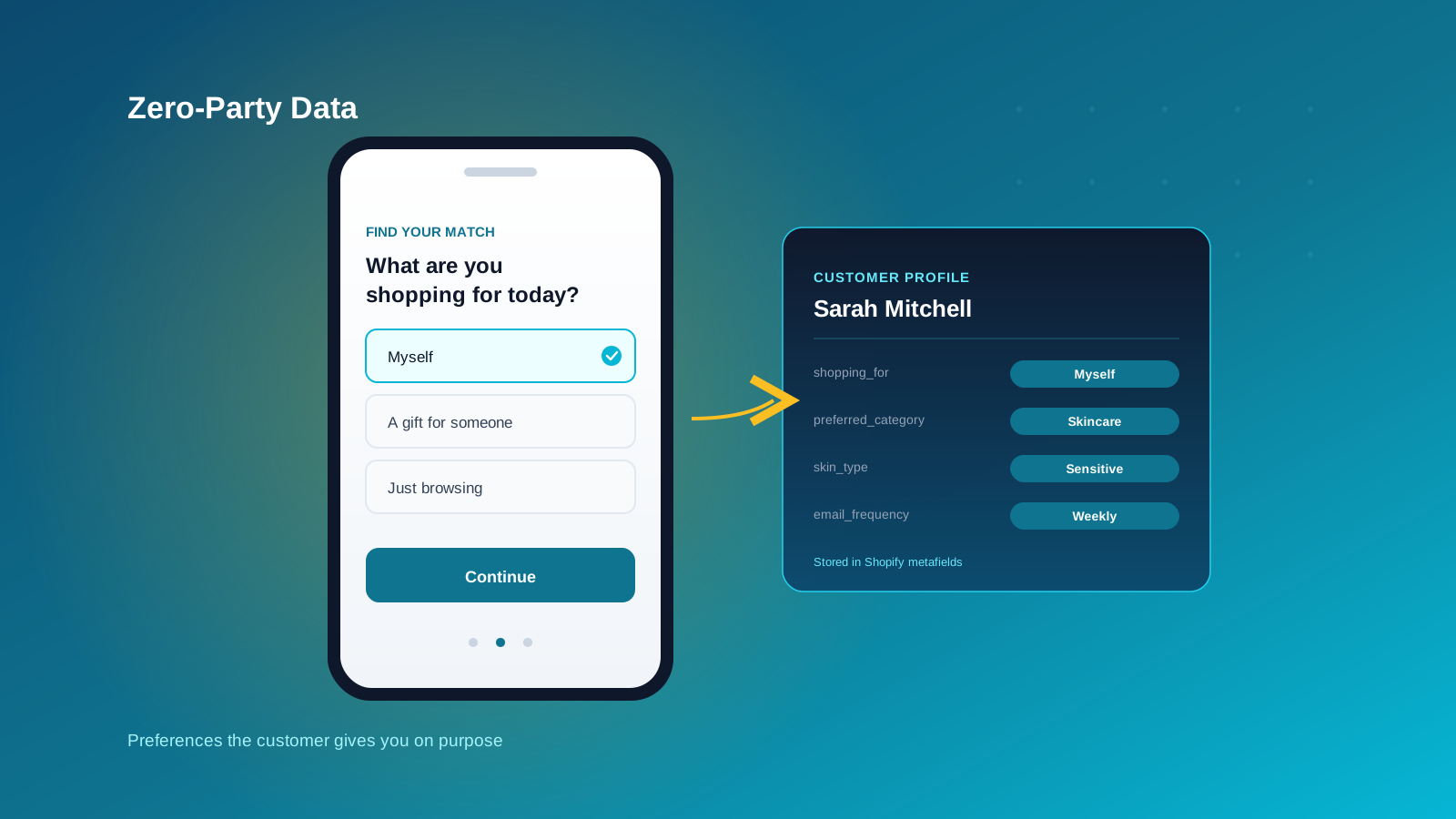
Zero-party data is information a customer intentionally and proactively shares with a brand. It covers stated preferences, purchase intentions, interests, and the way someone wants to be recognised by your store. Because the customer volunteers it, you never have to guess at the source or the meaning.
The term comes from Forrester research by analyst Fatemeh Khatibloo, and the distinction it draws is simple but important. Behavioural data tells you what someone did. Zero-party data tells you what someone wants. A shopper who browses three pairs of running shoes has given you a signal you have to interpret. A shopper who tells you they run marathons and prefer neutral cushioning has given you a fact you can act on immediately.
Common examples include quiz answers about skin type or fitness goals, product preferences such as size, fit, colour, or flavour, communication choices like preferred channel and frequency, and the reason someone is buying, whether that is a gift, a replacement, or a first purchase. Each of these is explicitly given, not inferred, and that is what makes zero-party data the most trustworthy input for personalisation.
Zero-Party Data vs First, Second, and Third-Party Data
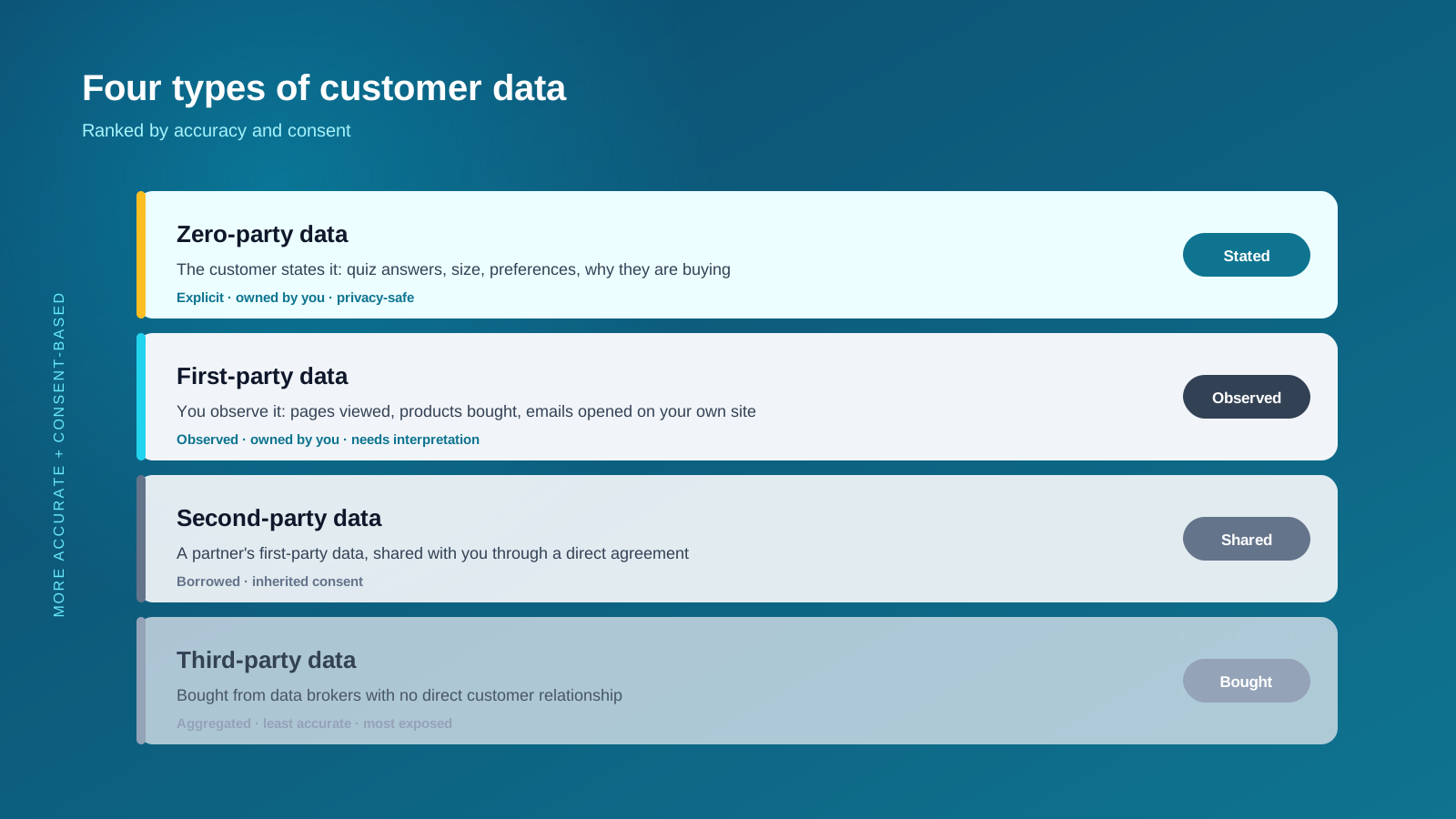
To understand why zero-party data has become so valuable, it helps to see it in context next to the other three types of data that ecommerce companies work with. Each is collected differently and carries a different level of accuracy and risk.
Zero-party data is information a customer deliberately shares, such as answering a quiz, setting preferences, or telling you why they are shopping. It is explicit, consent-based, and highly accurate.
First-party data is information you collect from a customer's behaviour on your own channels: pages viewed, products purchased, emails opened, and time on site. It is reliable and yours to keep, but it is observed rather than stated, so it still needs interpretation.
Second-party data is another company's first-party data, shared with you through a direct partnership. It can extend your reach, but you inherit someone else's collection standards and consent.
Third-party data is aggregated and bought from data brokers who never had a direct relationship with the customer. It is the least accurate, the hardest to justify under privacy law, and the type most exposed to the shift away from tracking.
The line that matters most is between stated and observed. Zero-party data is the only category the customer actively chooses to give you, which is why it sidesteps the trust and compliance problems that dog the others.
Zero-Party Data Examples
Zero-party data is easiest to understand through concrete examples. In each case the customer states something directly, and the brand gets a fact rather than a guess about what they want.
Quiz and finder answers. A skincare brand asks a shopper their skin type and concerns, a coffee brand asks about roast preference and brew method. These stated product preferences drive an instant recommendation and guide shoppers to the items they will actually like, which improves the whole shopping experience.
Preference centre selections. A subscriber chooses which categories they care about, how often they want messages, and which channels they prefer. This preference centre data lets you cut irrelevant messaging and lift engagement.
Survey and poll responses. Post-purchase surveys and on-site polls capture feedback, satisfaction, and intent. A single "who are you buying this for" answer separates gift buyers from personal shoppers and shapes what you show each individual next.
Account and profile details. Sizes, style choices, birthdays, and wishlists saved to a customer profile are all zero-party data the shopper chose to hand over. Over time these profiles become a rich, permission-based picture of your audience.
Social and community inputs. Instagram story polls, quizzes shared on social media, and community sign-up questions all produce declared data you can tie back to a customer profile.
The common thread across these data examples is intent. The customer knows what they shared and expects you to use it, which is exactly what separates zero-party data from data collected in the background.
The Benefits of Zero-Party Data
The benefits of zero-party data compound over time, and they show up across marketing, product, and customer experience. Here is where the advantage is clearest.
Accuracy and less guesswork. Because the data is declared, it removes the guesswork that comes with inferring intent from behaviour. That accuracy and reliability improves the quality of every downstream decision, from segmentation to merchandising.
Stronger customer relationships and trust. Asking, listening, and acting builds trust. Customers reward the brands that respect their stated preferences with repeat purchases and lasting brand loyalty.
Higher conversion rates. Relevant recommendations and messaging lift conversions. When the shopping experience matches stated intent, conversion rates and average order value both tend to rise.
More efficient marketing efforts. Sharper segments mean fewer wasted messages and a better return on your marketing campaigns. You spend budget on the people who told you what they want, not the ones you hope might.
Better products and research. Aggregated preferences are a research asset in their own right. Patterns in the data reveal gaps, inform new products, and give your wider data strategy a factual foundation.
Why Zero-Party Data Matters for Ecommerce in 2026
The privacy landscape has moved, and not in the direction most people expected. In April 2025 Google confirmed it would not deprecate third-party cookies in Chrome after all, reversing years of planning. That does not make cookies safe. Safari and Firefox already block third-party cookies by default, so roughly half the web is effectively cookieless, and Chrome now lets users switch tracking off in their privacy settings. Building a growth strategy on data you can lose at any moment is a fragile position.
Zero-party data is the opposite. It does not depend on a browser, a pixel, or an ad platform's rules. It lives in your systems because a customer gave it to you directly, which means it survives every privacy change still to come. For a business that depends on organic and repeat revenue, that stability turns raw data into insights you can actually trust.
Customers are also more willing to share than many brands assume, as long as they get something back. Industry surveys have found that a majority of shoppers will hand over personal preferences in exchange for more relevant experiences, and that most feel frustrated by impersonal interactions and reward the brands that earn their trust. On the other side of the table, marketers have named the collection and activation of zero-party data one of their highest priorities for the year, because it is one of the few sources of customer insight that is only getting stronger. The demand and the willingness are both there.
For Shopify brands specifically, zero-party data solves a practical problem. Paid acquisition keeps getting more expensive, and the stores that win are the ones that turn a first purchase into a second and third. Knowing what a customer actually wants is the foundation of the retention work that makes that possible. Our guides to customer retention strategies and increasing customer lifetime value both lean heavily on the kind of preference data covered here.
How to Collect Zero-Party Data on Shopify
This is where most articles on the topic stop being useful. They explain what zero-party data is, then wave vaguely at "quizzes and surveys" without saying how any of it works on a real store. Here are the ways Shopify brands collect it in practice, and each one turns a small interaction into insights the business can use.
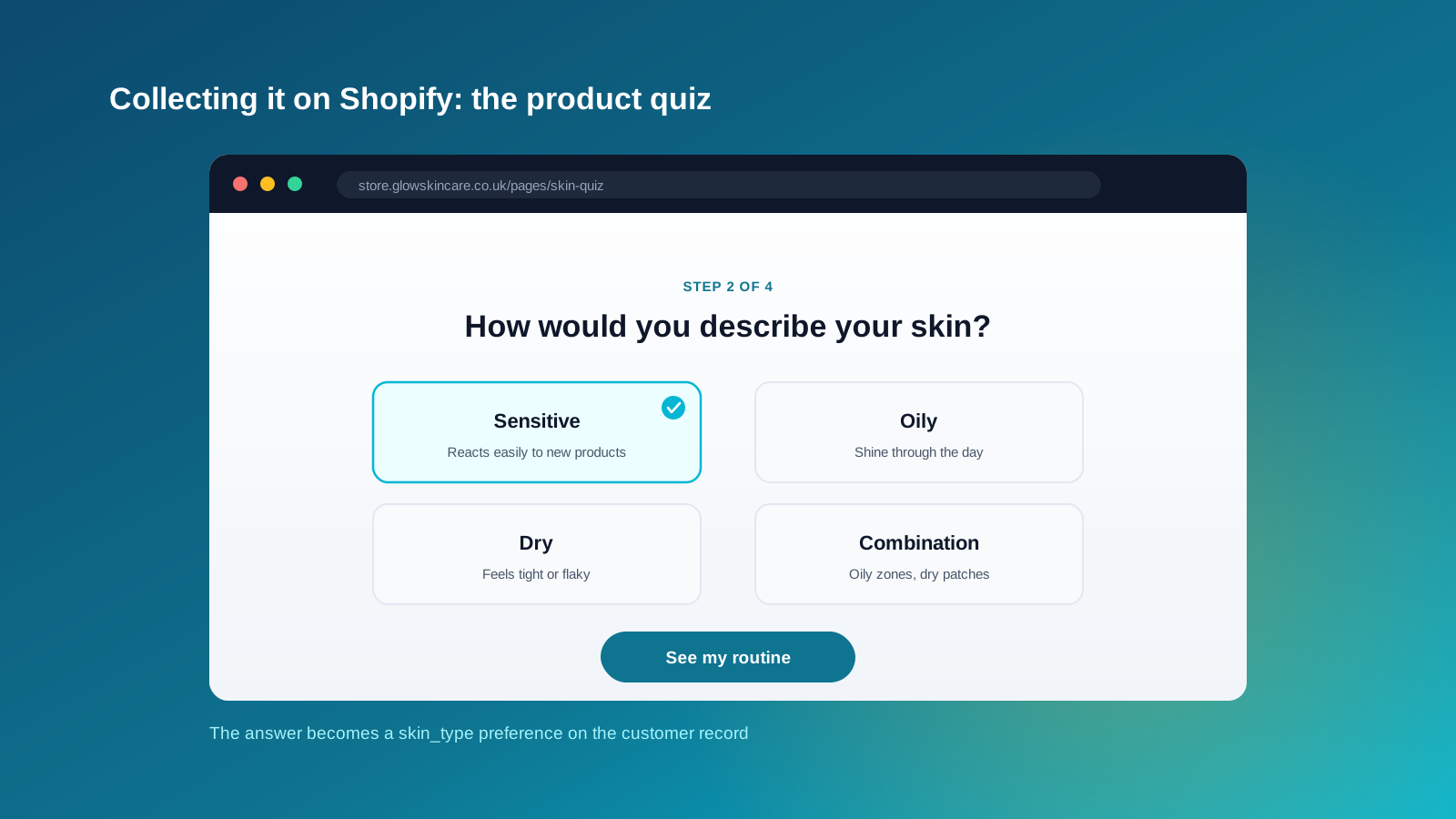
Product quizzes and finders. A quiz is the cleanest collection method because the customer receives an obvious reward for answering: a personalised recommendation. Apps such as Octane AI, Prehook, and RevenueHunt let you build "find your product" flows that ask about skin type, fit, use case, or goals, then route the shopper to the right products. The answers are pure zero-party data and can pass straight into your marketing tools.
Sign-up and welcome forms. The email capture pop-up is a missed opportunity on most stores. Instead of asking only for an address, add one or two preference questions: what are you shopping for, which categories interest you, are you buying for yourself or as a gift. Klaviyo forms support these custom fields natively and write the answers to the customer profile.
Preference centres. A preference centre lets subscribers tell you which topics they want to hear about and how often. It reduces unsubscribes and gives you clean segmentation data at the same time. This is one of the highest-value, lowest-effort collection points a Shopify store can add.
Customer accounts. Shopify's customer accounts let shoppers save preferences, sizes, and details across visits. Encouraging account creation with a genuine benefit, such as faster checkout or saved favourites, turns a login into a standing source of stated preferences.
Post-purchase surveys. The moment after checkout is one of the best times to ask a single question, because the customer is engaged and you are not blocking a sale. "How did you hear about us?" and "Who are you buying this for?" both produce data you can use for attribution and personalisation.
Loyalty programmes. A loyalty programme is a value exchange by design, which makes it a natural home for preference collection. Rewarding members for completing a profile or answering a question feels fair because the points are a real benefit. Our roundup of the top loyalty apps for Shopify covers the tools that do this well.
You do not need all of these at once. Start with the two that fit your store best, usually a quiz and a smarter sign-up form, and add more collection points as you prove the value.
How to Build a Zero-Party Data Strategy
Collecting a few quiz answers is a tactic. A zero-party data strategy is what turns scattered tactics into a repeatable system. Here is the approach we use with Shopify brands, and it works for B2C retailers, larger companies, and fast-growing businesses alike.
1. Define what you need and why. Start from the decisions you want to improve, then work backwards to the key data points that inform them. Collecting for its own sake creates clutter, not insight, so be ruthless about quantity versus quality.
2. Map collection methods to the customer journey. A welcome quiz suits new visitors, a preference centre suits subscribers, and post-purchase surveys suit existing customers. Matching the ask to the moment is the difference between a good response rate and an ignored form.
3. Set the value exchange for each ask. Every request needs a reason the customer will care about, whether that is a better recommendation, rewards, perks, or early access. The stronger the value exchange, the more customers share.
4. Centralise the data. Route every answer into Shopify metafields and your CRM so customer profiles stay complete and consistent across the platforms and websites you run. This is the step most brands skip, and it is where the strategy either scales or stalls.
5. Activate and measure. Feed the data into segmentation, personalisation, and campaigns, then track the impact so you know which asks earn their place. A clear data collection strategy is a loop, not a one-off project.
Run the cycle regularly and each pass sharpens your understanding of the audience and closes gaps a competitor has left open. The brands that treat this as an ongoing discipline build an advantage that paid media cannot buy.
Storing Zero-Party Data: Shopify Metafields as Your Source of Truth
Collecting the data is only half the job. If quiz answers live in one app, survey responses in another, and preferences in a third, you end up with fragments that never combine into a usable picture. The fix on Shopify is to make the customer record your single source of truth.
Shopify customer metafields are custom fields attached to each customer, and they are the right place to store stated preferences. A "skin_type" metafield, a "preferred_category" metafield, or a "buying_for" metafield keeps the data structured, queryable, and available across your entire stack. Because Shopify holds it centrally, every connected app can read and write the same values instead of keeping its own private copy.
This matters most where personalisation actually happens. Klaviyo can sync custom profile properties to and from Shopify metafields, so a preference captured in a quiz can drive an email flow, and an email choice can update the Shopify record. Keeping the two in sync means your on-site experience and your marketing are working from the same facts about each customer.
The principle is straightforward: collect into Shopify, store in metafields, and let your tools activate from there. Treating the customer record as the hub, rather than any single app, is what turns scattered answers into a durable asset and a source of insights the whole business can rely on. It also connects naturally to the way we think about customer segmentation, since clean, structured customer preferences are exactly what good segments are built from.
How to Use Zero-Party Data to Drive Revenue
Data you never act on is just storage. The value of zero-party data comes entirely from what you do with it, and for a Shopify store that falls into three areas.
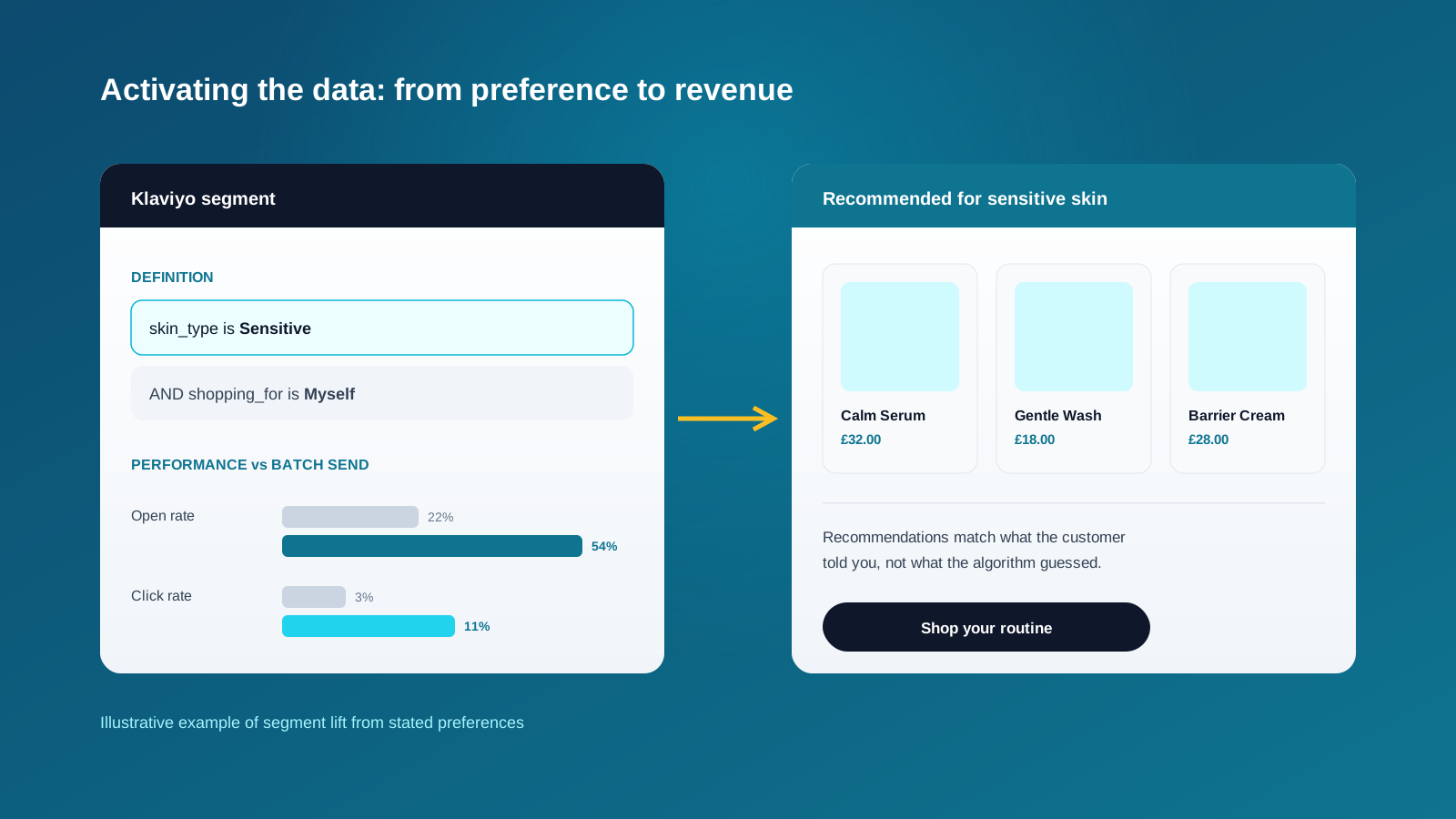
Segmentation and email flows. Stated preferences make segments sharper than behaviour alone ever could. A customer who told you they buy for sensitive skin should see different products, different subject lines, and different offers from one who told you they shop for gifts. In Klaviyo, preferences stored as profile properties or synced metafields let you build these segments directly and trigger flows that reference what the customer actually said. Our guide to email marketing strategy goes deeper on structuring these flows.
On-site personalisation. Once you know a customer's stated preference, the storefront should reflect it. That can be as simple as leading with the categories they chose in a quiz, or as advanced as swapping hero content and product recommendations based on a saved preference. The rule Salesforce puts well is worth keeping in mind: if a customer tells you they prefer red, do not then show them a blue website. Following through on stated preferences is what makes personalisation feel considered rather than creepy.
Product recommendations and merchandising. Zero-party data lets you recommend based on what someone told you they need, not just what similar shoppers bought. A fit quiz can cut returns by guiding customers to the right size. A goals quiz can raise average order value by bundling the right products. These are direct commercial outcomes for the business, and the experiences you build on stated preferences compound as your dataset grows. Every quiz answer and preference you collect makes the next recommendation sharper and builds a little more trust with the customer. If improving conversion is the priority, our guide to improving your ecommerce conversion rate pairs well with this work.
Zero-Party Data, Privacy, and Compliance
Privacy is where zero-party data has a structural advantage, but it does not remove your obligations. Handled well, compliance becomes a reason customers trust you rather than a box to tick.
Consumers are more aware of data privacy than ever, and their expectations have risen with it. Zero-party data answers many privacy concerns directly, because the customer chose to share and knows exactly what they gave and why. That transparency is the opposite of the guesswork behind third-party tracking, and it is why declared data avoids most data privacy concerns before they start.
You still need to meet the relevant privacy regulations. Under UK GDPR and PECR in Britain, and privacy laws like the CCPA and CPRA in the United States, you need clear consent, a stated purpose, and an easy way for customers to see and control their information. These regulations reward exactly the transparency that makes a value exchange work, so good practice and compliance pull in the same direction.
The practical rule is simple: collect with consent, explain the purpose, store the data securely, and give customers control over their information. Do that and zero-party data becomes the most defensible customer data you hold, resilient across every browser, platform, and regulation still to come.
Measuring the Impact of Zero-Party Data
Zero-party data only earns its place if you can see the results. Measurement turns a collection habit into a business case, and it tells you which asks to keep and which to drop.
Start with collection metrics. Completion rates on quizzes, forms, and polls tell you whether the value exchange is landing. Low completion usually means you asked for too much or offered too little, and it is the first signal worth acting on.
Then track activation. Compare engagement, conversions, and conversion rates for customers who shared preferences against those who did not. Use your analytics to watch for patterns and signals that a particular data point predicts a purchase, a repeat order, or a higher value customer. Layering this over purchase history and customer behaviour turns raw preferences into a map of the customer journey.
Finally, connect it to revenue. Tie preference-driven campaigns back to purchases and customer lifetime value so you know the real impact, not just the vanity metrics. Reviewing this regularly closes gaps, drives improvements, and keeps your data strategy honest.
The Value Exchange: Getting Customers to Share
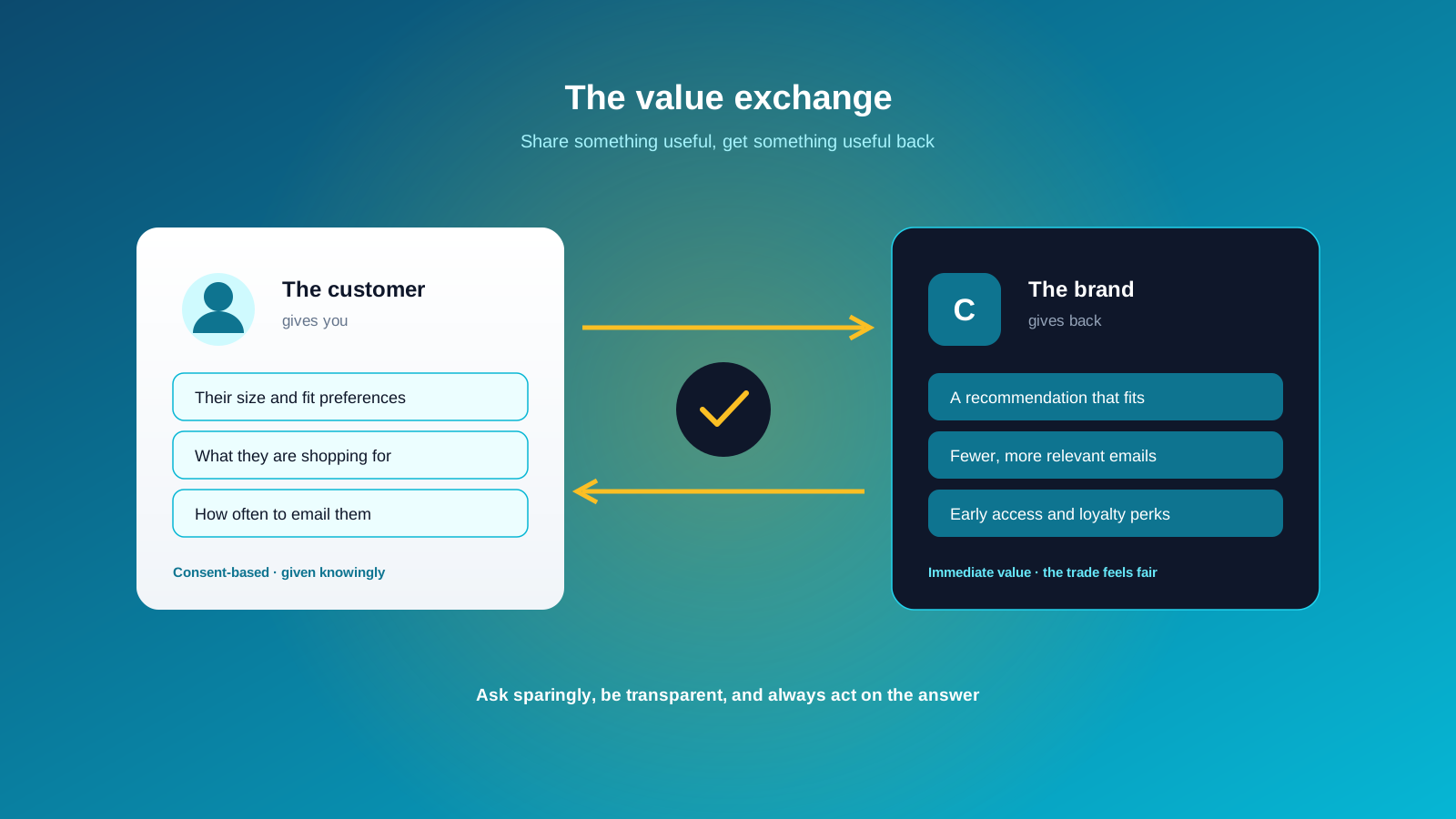
Every piece of zero-party data rests on a simple bargain. The customer gives you information, and you give them something worth having in return. Get the exchange right and shoppers share willingly. Get it wrong and your forms sit empty.
The value you offer does not have to be a discount. A genuinely useful recommendation, early access, a better fit, or content matched to a stated goal all work, and they often build more loyalty than a blunt percentage off. What matters is that the reward is real and immediate, so the customer feels the trade was fair the moment they make it.
Be transparent about what you are asking and why. A short line explaining that answers will be used to personalise recommendations does more for completion rates than a clever headline. Shoppers are comfortable sharing when they understand the purpose, and uneasy when the request feels like data collection for its own sake.
Ask sparingly. You do not need a customer's full profile on the first visit. Progressive profiling, where you collect one or two details at a time across several touchpoints, keeps each ask light and builds a richer picture without ever feeling intrusive. And once someone has told you a preference, honour it. The fastest way to lose trust is to ask a question, then behave as though the answer never happened.
Common Zero-Party Data Mistakes to Avoid
Most zero-party data programmes fail for the same handful of reasons. Knowing them in advance saves months of wasted effort.
Collecting data you never use. If a quiz asks five questions but only one drives anything, drop the other four. Every extra question lowers completion rates, so only collect what you will act on.
Letting data sit in silos. Preferences trapped inside a single app are close to worthless. Route everything back to the Shopify customer record so your whole stack can use it, as covered in the metafields section above.
Asking too much, too soon. A long form on a first visit reads as a demand, not an exchange. Start small and build the profile over time.
Breaking the promise. Asking a customer their preference and then ignoring it is worse than never asking. Make sure the data actually changes what the customer sees and receives.
Forgetting consent and compliance. Zero-party data is consent-friendly by nature, but you still need clear opt-ins and honest explanations under UK GDPR and PECR. Handled properly, transparency becomes a selling point rather than a hurdle.
If you want help turning preference data into a personalisation and retention engine on Shopify, our ecommerce growth team can help. Get in touch to talk through your store.