 Nic Dunn, CEO, Charle Agency
What Is Ecommerce Email Marketing?
Ecommerce email marketing is the discipline of turning visitors, subscribers and existing customers into repeat buyers through a structured mix of automated email campaigns, segmented broadcasts and behavioural triggers. It is a form of e-commerce email marketing that sits on top of your store, your platform analytics and your customer data, and uses every signal a shopper gives you, including browsing demographics, purchase history, cart activity, product preferences, repeat purchases and previous engagement, to send the right messages to the right people at the right moment. The strongest email marketing strategies for any ecommerce business combine all of these signals into a single coherent programme.
The short answer most ecommerce founders are looking for: a strong email programme should drive 25 to 40 percent of total store sales, with 60 to 70 percent of that coming from a small set of automated flows and the rest from weekly broadcast email campaigns. That is the headline number, and the rest of this guide explains how to build it.
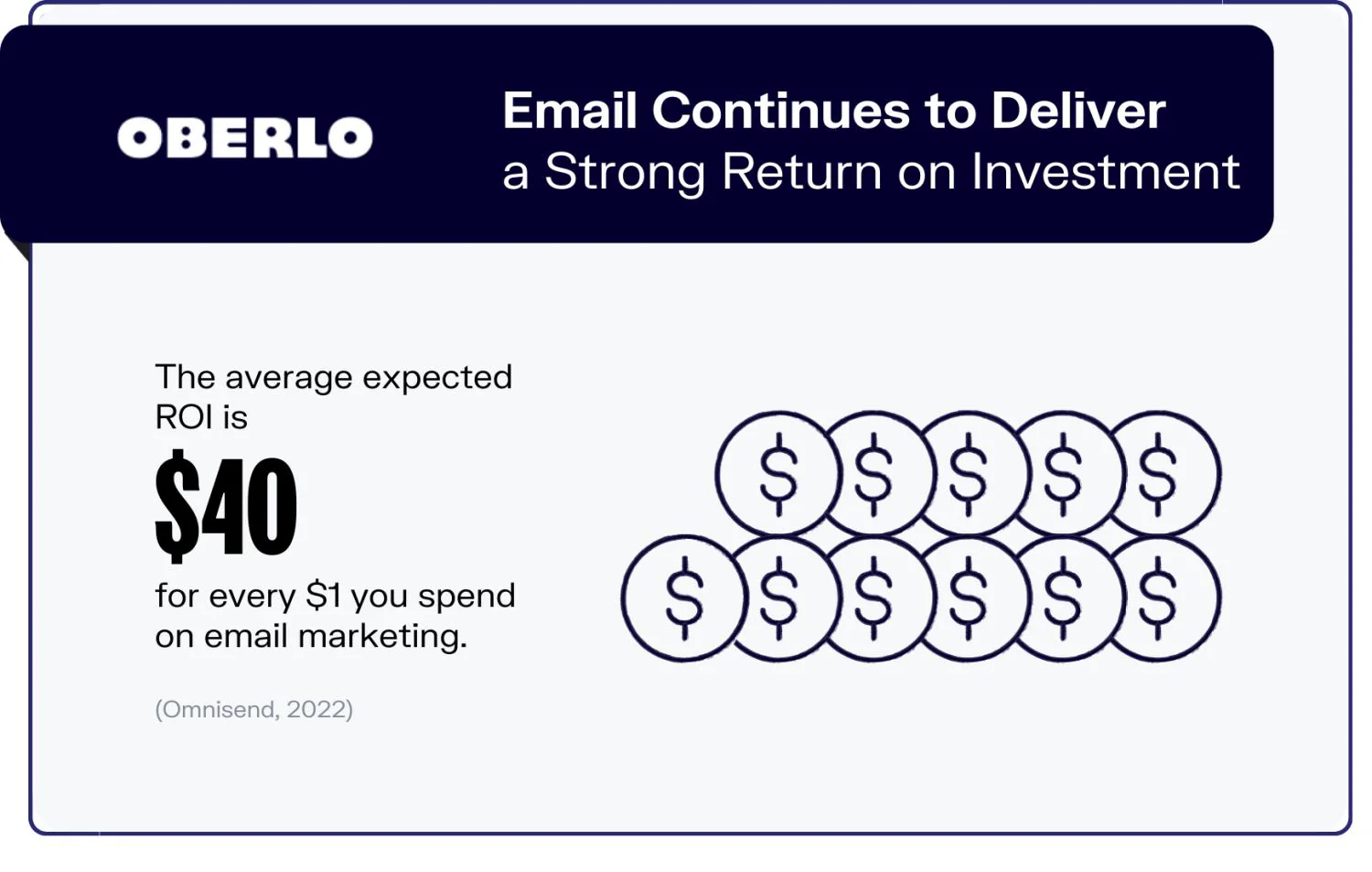
The reason it still matters in 2026 is simple economics. Email is owned, addressable and cheap to send compared with paid social or other marketing channels. The Data and Marketing Association puts email's average return on investment between £36 and £42 for every £1 spent in the UK, with Klaviyo citing Statista at £38 per £1 and Salesforce reporting a marketwide ROI of 3,800 percent for email overall. Omnisend's 2026 Ecommerce Marketing Report goes further, recording $79 in attributed sales per $1 spent across its merchant base, with a 53 percent year-on-year click-to-conversion increase and a UK click-to-conversion rate of 16.54 percent. For a Shopify store doing £1 million a year, those numbers mean a well-built email programme should be contributing £300,000 to £400,000 of attributable revenue, with the cost of running it usually well under 5 percent of that figure.
What separates a strong programme from a weak one is structure. Brands that treat email as a Monday-morning newsletter rarely break 5 percent revenue contribution. Brands that build proper lifecycle flows, segment intelligently and connect their email platform to live customer data routinely sit in the 25 to 40 percent range. Email also nurtures the customer relationships that paid social cannot, because the audience has actively opted in. The rest of this guide walks through exactly how to get there.
The 90-Day Plan
The fastest route to a high-performing email programme is a clear 90-day roadmap. There are many email marketing strategies competing for attention, but the one below is the one we keep coming back to. The plan below is the same staged approach we use with new Charle clients. It prioritises the automations that produce sales inside the first 30 days, then layers on segmentation and optimisation. By day 90, email should be a predictable channel contributing at least 25 to 30 percent of store revenue.
Weeks 1 to 4: foundations. Authenticate your sending domain with SPF, DKIM and DMARC. Migrate or set up your email platform (most commonly Klaviyo for Shopify brands above £500k revenue, Shopify Email or Omnisend below that). Build branded email templates that match your site. Launch your three highest-impact flows first: welcome series, browse abandonment, and abandoned cart. Add a sign-up form or quiz to collect zero-party data and grow the list. Welcome emails alone generate 320 percent more revenue than standard promotional sends, so getting this flow live in week one is the single highest-ROI move on the plan.
Weeks 5 to 8: conversion and retention layer. Add post-purchase flows (thank-you, replenishment, review request, cross-sell), back-in-stock alerts and a basic win-back sequence for lapsed buyers. Introduce segmentation by behaviour, purchase frequency, purchase history and product category. Send your first segmented email campaigns and start tracking flow revenue separately from campaign revenue in Klaviyo or your reporting layer.
Weeks 9 to 12: scale and optimise. Run A/B tests on subject lines, send times and creative. Build a VIP and loyalty flow for top-spending customers. Plan a rolling 90-day campaign calendar that ties to product launches, seasonal peaks and content drops. Review flow performance weekly, sunset under-engaged contacts to protect deliverability, and start adding predictive segments such as "likely to churn" and "highest predicted lifetime value".
Goals and Metrics
A good ecommerce email strategy starts with goals that connect to sales, not just engagement. Open rates and click-through rates matter, but they are leading indicators. The metrics that move your P&L are revenue per recipient, share of total store sales, repeat purchase rate, customer lifetime value and email-driven ROI.
Common ecommerce email goals:
- Drive 25 to 40 percent of total store revenue from email, split roughly 60/40 between flows and campaigns
- Increase repeat purchase rate and customer relationships by 5 to 10 percentage points within six months
- Recover at least 10 to 15 percent of abandoned carts through automated email and SMS. FluentCRM benchmarks recovery at 10.7 percent across active merchants
- Grow the engaged subscriber list (opens or clicks in the last 90 days) by 20 percent year on year
- Lift average order value through cross-sell and bundle automations on post-purchase
- Improve email-attributed conversions to 1 to 5 percent on flows and 0.05 to 0.2 percent on broadcast campaigns
- Match or exceed the success metrics your competitors publish for their welcome series, abandoned cart and back-in-stock messages
Key metrics to monitor: Track open rate, click-through rate, conversion rate, revenue per email, revenue per recipient, unsubscribe rate, ROI per send and list growth. Break each one down by flow versus campaign, by segment and by send time. Pay particular attention to revenue per recipient, which normalises results regardless of audience size and is the single most useful number for comparing one send to another. Klaviyo's 2025 benchmarks put the top 10 percent of campaigns at a 4.74 percent click rate and $0.97 in revenue per recipient, which is a useful upper-bound for ambitious teams.
Clear goals turn email marketing into a forecastable channel. Once you know your average revenue per recipient and your monthly send volume, projecting next quarter's email sales becomes a straightforward calculation rather than a hopeful guess. The brands that hit their goals consistently are the ones who treat each campaign as a test and review the results weekly.
Data Foundation
Personalised, segmented email only works if the customer data feeding it is clean, connected and current. On Shopify and Shopify Plus, the data layer behind email usually involves three components: your store, your email platform and any third-party tools you use for reviews, loyalty or subscriptions. Each one needs to flow into the others in close to real time.
Key data sources to integrate: Connect Shopify directly to your email platform so that orders, refunds, product catalogue, inventory and customer profiles sync continuously. If you are using Klaviyo, the native Shopify integration handles this and exposes properties such as last order date, total spend, demographics and predicted lifetime value out of the box. Layer on customer data from review apps (Yotpo, Junip, Okendo), loyalty apps (LoyaltyLion, Smile, Yotpo) and subscription apps (Recharge, Skio) so that email triggers fire based on the full customer picture, not just transactional data.
Zero and first-party data: Zero-party data is anything the customer chooses to give you, such as preferences, sizes, interests and use cases. There are two main types of customer-level data that matter here. First-party data is anything you observe from their behaviour: pages viewed, products clicked, time on site, frequency of purchase, repeat purchases, and full purchase history. With Apple Mail Privacy Protection and third-party cookie deprecation now standard, this owned data layer is more valuable than ever for personalisation, retargeting and segmentation. Collect it through pop-ups that ask one good question, post-purchase surveys, preference centres and product quizzes. Brands that quiz on entry tend to see welcome flow conversion rates around 4 to 6 percent, compared with 1 to 2 percent for a simple discount-for-email exchange.
Data hygiene: Remove invalid addresses on every send, suppress contacts who have not opened in 90 days from broad campaigns, and run a sunset flow every quarter to re-engage or remove unengaged subscribers. Stripe's email research notes that marketing lists decay by about 22.5 percent each year, so steady hygiene is the only way to keep results stable as the list ages. Poor list hygiene is the single biggest cause of declining open rates and the easiest one to fix. A clean list of 30,000 will out-perform a stale list of 100,000 on sales every time, and it costs less to run.
A strong customer data foundation is what turns email from a guess into a science. Once the integrations are right and the data is clean, every other section of this strategy becomes easier to execute.
The Lifecycle Framework
Before you build any specific flow, it helps to have a mental model of the entire customer journey email needs to cover. The lifecycle framework below is how we organise email strategy for Charle clients. It maps every flow and campaign to one of six stages, so nothing gets missed and nothing gets duplicated. Litmus's 2025 retail playbook uses a very similar six-stage model, and cites the Kate Spade programme as a 174 percent revenue lift when the framework is applied end-to-end.
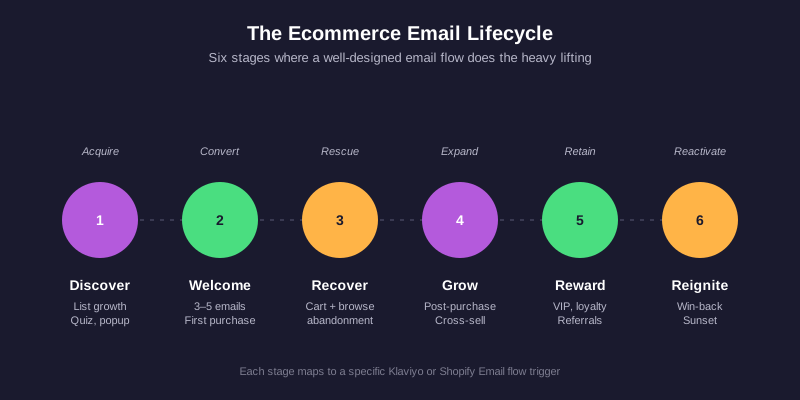
1. Discover. The acquisition stage. Goal: capture the email address with as much zero-party data as possible. Tactics: exit-intent pop-up, on-site quiz, lead magnet, embedded footer form, social media driving sign-ups. Best brands tie the form to context, asking shoppers a single relevant question (skin type, room size, training goal) that immediately feeds the next stage. This is where nurturing begins, before a sale has happened.
2. Welcome. The conversion stage. Goal: turn the new subscriber into a first-time buyer within 7 to 14 days. Tactics: 3 to 5 email welcome series with a meaningful incentive, brand story, product education and social proof. Welcome flows are typically the second-highest revenue automation in any account. Campaign Monitor benchmarks the welcome open rate at 91.43 percent, four times standard promotional sends, so the welcome email is the single best-read message in your programme.
3. Recover. The rescue stage. Goal: bring back shoppers who showed buying intent but did not complete. Tactics: abandoned cart (3 emails over 24 hours), browse abandonment (2 emails over 48 hours), abandoned checkout SMS. Recovery flows almost always have the highest revenue per recipient in the entire account because intent is so strong. Cart abandonment averages 70 percent across ecommerce, which is the recoverable revenue this stage exists to claw back.
4. Grow. The expansion stage. Goal: increase order frequency and basket size from existing customers. Tactics: post-purchase thank-you, replenishment reminders, cross-sell sequences based on first product purchased, review request after delivery, drip sequences for category education. This stage is where most brands leave money on the table.
5. Reward. The retention stage. Goal: protect and grow customer relationships with your best buyers. Tactics: VIP early access, loyalty point reminders, surprise rewards, referral programmes, anniversary emails, and milestones such as a customer's first-year anniversary or their tenth purchase. Even a small segment of VIPs (often the top 5 percent of customers) frequently contributes 30 to 40 percent of total revenue, and referred customers carry 16 percent higher lifetime value than cold acquisition.
6. Reignite. The reactivation stage. Goal: bring lapsed customers back or sunset them cleanly. Tactics: tiered win-back at 90, 180 and 365 days, with progressively stronger discounts; sunset flow at 12 months to remove permanently unengaged contacts. Removing dead weight keeps deliverability strong and reporting honest.
Every email you ever send should map to one of these six stages. If you cannot place a planned email on this framework, it probably should not be going out.
The Nine Core Automated Flows
Automated flows are the engine room of an ecommerce email programme. They run in the background, triggered by customer behaviour, and reliably produce the bulk of email sales once built. In Charle's accounts, the nine flows below typically account for 55 to 70 percent of total email revenue from less than 5 percent of total sends.
For each flow we have listed the Shopify or Klaviyo trigger to use, the recommended length and the metric that matters most.
- Welcome series. Trigger: subscriber added to "Newsletter" list. Length: 3 to 5 emails over 7 to 14 days. Goal: first purchase. Send 1 should deliver the incentive (typically a discount code) immediately; subsequent sends layer in brand story, bestsellers and social proof. FluentCRM benchmarks the welcome open rate at around 50 percent, and Stripe's data has welcome emails generating roughly three times the revenue per email of any other promotional send. Watch revenue per recipient as the headline number.
- Abandoned cart. Trigger: Shopify "Started checkout" event. Length: 3 emails (1 hour, 24 hours, 72 hours). Goal: complete checkout. Show the exact cart items, reinforce free returns or guarantees, and only add a discount on email 3. A recovery rate of 10 to 15 percent of carts is realistic, with FluentCRM clocking the median at 10.7 percent.
- Browse abandonment. Trigger: viewed product but did not add to cart. Length: 1 to 2 emails. Goal: bring shopper back to product page. Use dynamic product blocks with the items they viewed, plus customer reviews. Often outperforms the cart flow on volume because the audience is much larger, and the click-through rates tend to be strong because the personalisation feels relevant.
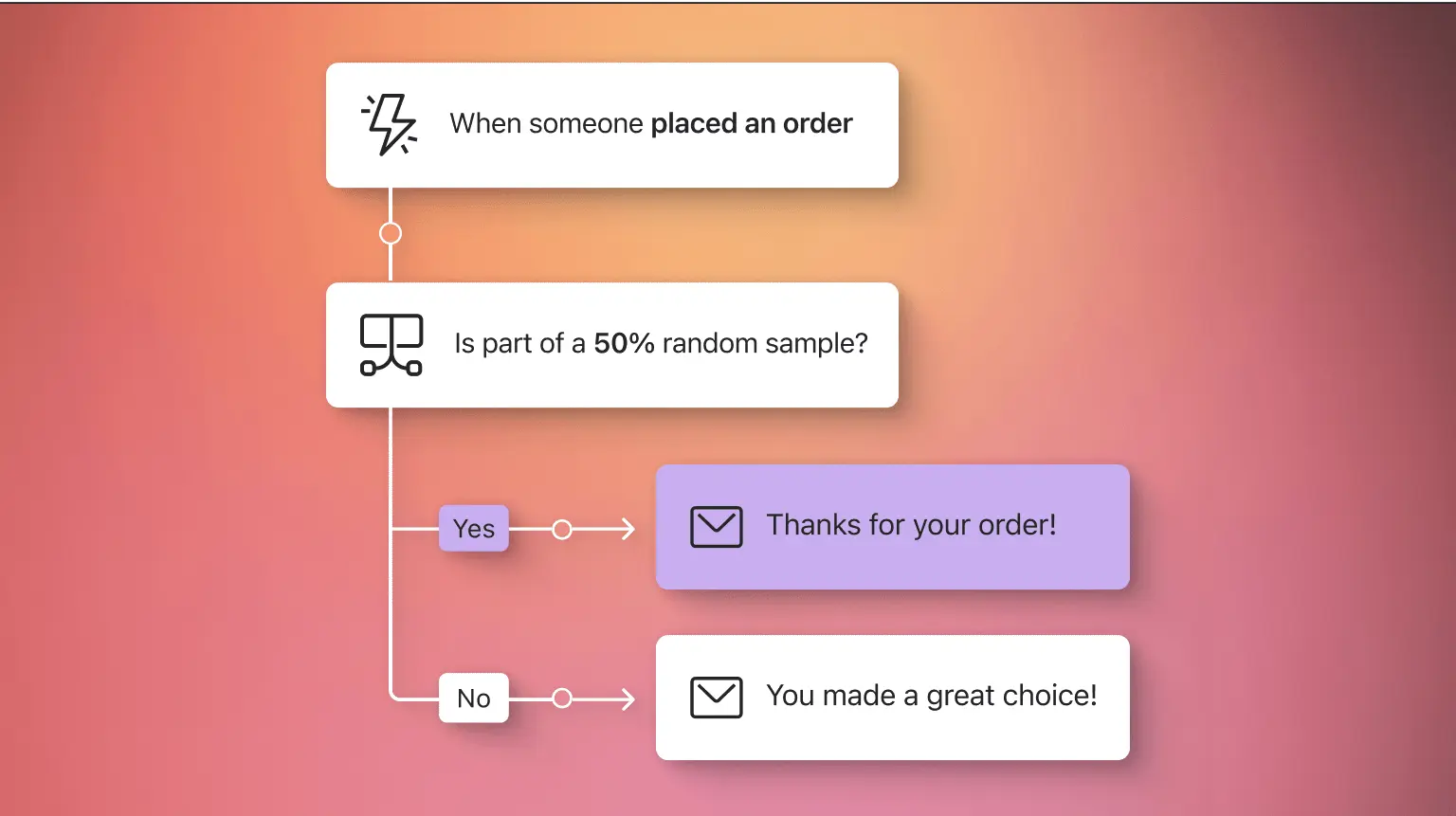
- Post-purchase thank-you. Trigger: order placed. Length: 1 to 2 emails. Goal: build trust, set delivery expectations, suggest follow-on products. Insert care information for the specific product they bought to demonstrate expertise and reduce returns. Transactional and post-purchase emails consistently see the highest open rates of any email type, often four to eight times higher than promotional sends.
- Cross-sell and replenishment. Trigger: order delivered (or N days after order for replenishment categories). Length: 1 to 3 emails. Goal: second purchase. Use Klaviyo's predicted next order date or a simple time-since-last-order trigger keyed to your category (90 days for skincare, 30 for coffee, 6 months for apparel).
- Back-in-stock alert. Trigger: customer signed up to product restock notification. Length: 1 immediate email plus a 24-hour reminder. Goal: capture the impatient demand the moment stock returns. Often the highest conversion rate of any flow in the account because intent is so strong. FluentCRM records back-in-stock open rates around 59 percent.
- VIP and loyalty. Trigger: customer enters VIP segment (typically top 5 to 10 percent by spend or order count). Length: ongoing programme rather than a fixed sequence. Goal: protect retention and lift order frequency. Tactics include early access, free shipping for life, surprise gifts, exclusive incentives and personalised content. Retaining a customer is roughly five times cheaper than acquiring a new one, which is the entire economic case for this flow.
- Review request. Trigger: order delivered + 7 to 14 days. Length: 1 to 2 emails. Goal: collect on-site customer reviews and user-generated content. Connect this to your reviews platform so the customer can complete a review in two clicks. Better reviews lift conversion rates across the entire site.
- Win-back and sunset. Trigger: no order in 90, 180 or 365 days. Length: tiered, 1 email per tier with progressively stronger offers. Sunset at 12 months. Goal: reactivate the recoverable, remove the rest. Suppressing unengaged contacts is one of the easiest deliverability wins available.
Build the first three flows in week one and the rest over the following 60 days. Even rough first versions of these flows will outperform any campaign you send, because behavioural triggers always beat broadcast scheduling.
Campaign Planning
Email campaigns are everything you send on a schedule rather than on a behavioural trigger. They cover newsletters, product launches, seasonal promotions, content drops and brand storytelling. While automated flows produce the bulk of sales, campaigns are what build the brand and drive list engagement that keeps the flows working in the first place.
Building your campaign calendar: Map a rolling 12-week calendar around four anchors: product launches, content moments, seasonal peaks and recurring promotions. Tie every send to a clear business outcome (sales, sign-ups, content reads, review collection). Plan at least four weeks ahead so creative and segmentation can be properly built rather than rushed. For UK Shopify brands, the seasonal calendar usually includes Valentine's, Mother's Day, Easter, Father's Day, summer, back-to-school, Black Friday and the December gifting window.
Cadence and timing: Two to four campaigns per week tends to be the sweet spot for established Shopify brands. Smaller lists and newer brands can often only support one to two without burning engagement. Resist the temptation to blast the whole list every send. Instead, layer segments: send the full launch to engaged subscribers in the first wave, then re-target non-openers with a different subject line 48 hours later. Use Klaviyo's smart sending to suppress anyone who already opened a recent campaign within the same week.
Balancing promotion and value: A 60/40 split between promotional and editorial sends works well for most fashion, beauty and lifestyle brands. Editorial sends include behind-the-scenes content, founder stories, how-to guides and customer features. They lift open rate on the list as a whole, which in turn improves deliverability for the promotional sends that drive sales. Brands that send promotional emails only tend to see open rates erode within 6 to 9 months.
Every campaign is a chance to teach the algorithm and the customer that you are worth opening. Treat the calendar as a living document, review what worked monthly, and rotate underperforming concepts out quickly.
Segmentation
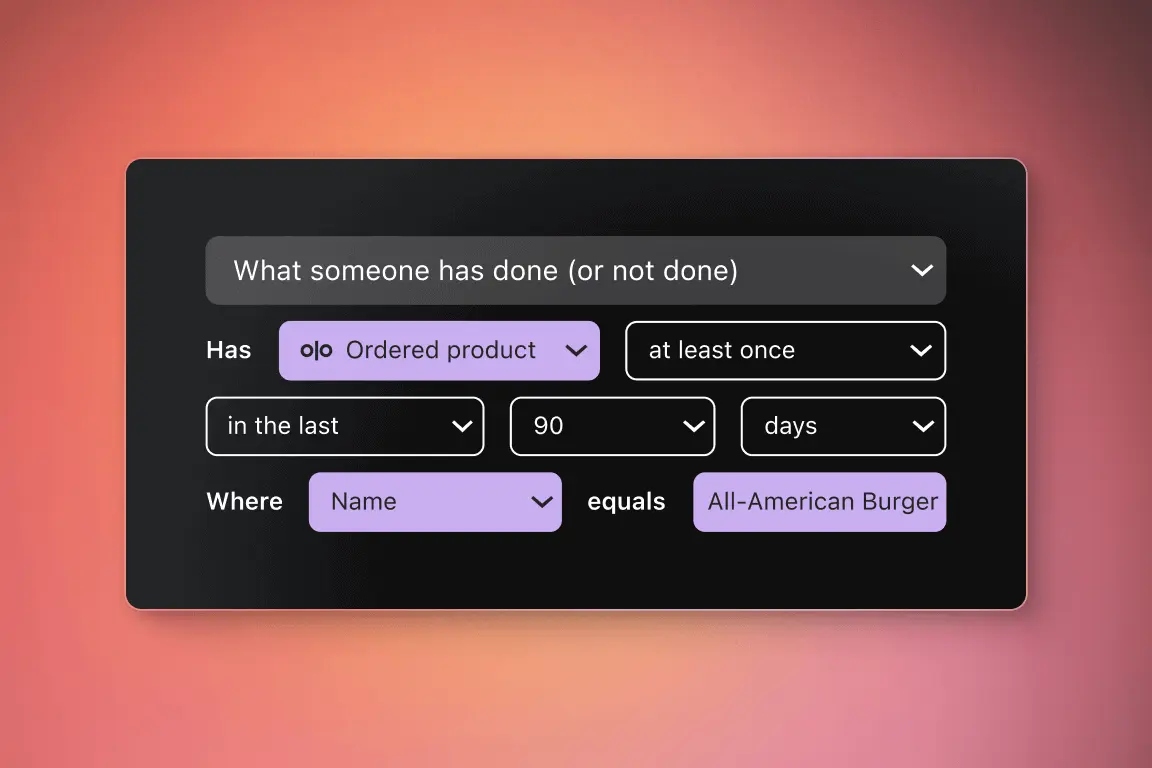
Segmentation is the lever that separates merchants who send the same email to everyone from merchants who let the data do the work. The aim is not to slice the list into 50 micro-segments, but to make sure each campaign goes to the people most likely to engage with it.
Core audience segments to build first:
- New subscribers (not yet purchased): joined within the last 30 days, no orders. Bias welcome offers and brand storytelling.
- First-time buyers: one order, placed in the last 60 days. Bias second-purchase content, care guides and complementary products.
- Repeat customers: two or more orders. Bias loyalty mechanics, new arrivals and curated product recommendations.
- VIPs: top 5 to 10 percent of customers by lifetime spend. Bias exclusive access, priority service and surprise rewards.
- Lapsed customers: last order more than 90 days ago. Bias win-back discounts and "we have changed" updates.
- High-intent browsers: viewed product pages in the last 14 days, no recent order. Bias product-led campaigns with social proof and customer reviews.
- Engaged unengaged: opened or clicked recently but never purchased. Bias barrier-removal content (sizing, returns, guarantees).
Layering RFM scoring: Recency, frequency and monetary scoring is the most reliable framework for building VIP and at-risk segments at scale. Score every customer 1 to 5 on how recently they purchased, how often, and how much they have spent. A customer scoring 5/5/5 is a VIP. A customer scoring 1/5/5 (used to buy a lot, has now gone quiet) is a high-value win-back target worth a personal email rather than a generic one. Klaviyo, Shopify Email and Omnisend all support RFM-style segmentation, although Klaviyo's native predictive analytics make it easiest.
Personalisation at the segment level: Use purchase history, repeat purchases and demographics to vary hero imagery, copy, messages and product blocks per segment. A VIP repeat buyer should see a different hero image, a different CTA and different products to a brand-new subscriber, even on the same campaign send. Smart personalisation pays back in higher click-through rates, more conversions and stronger long-term customer relationships. There are essentially two types of personalisation worth running at scale: rule-based (if/then logic on segment membership) and predictive (model-driven product or content selection).
Best practices: Review segments monthly and check that membership is changing. A segment that never shrinks or grows is probably wrong. Avoid building so many segments that no individual one is large enough to send to. Test content variations per segment rather than per campaign, and always include a control group on big tests so you know the lift is real.
Done well, segmentation is the single highest-leverage thing you can do for email sales. Brands that move from "send all" to "send to relevant" routinely see revenue per send double inside a quarter.
Subject Lines That Convert
The subject line and preview text are the only parts of an email most subscribers will ever read. Treat them as a creative discipline in their own right, not an afterthought once the body copy is done. Across Charle clients, the difference between a strong and a weak subject line is regularly worth a 5 to 10 percentage point swing on open rate, which compounds through the entire funnel into more conversions and more sales.
Five subject-line frameworks that consistently outperform:
- Useful. Promise something concrete the reader gets by opening. Examples: "Your size is restocked", "Free shipping until midnight on your saved cart", "New skincare routine guide for combination skin". Useful subject lines work because the value proposition is in the line itself.
- Curious. Open a small loop the body has to close. "We almost did not send this", "The mistake most coffee drinkers make at home", "Three things we changed about the formula". Curiosity-driven subject lines tend to lift opens but can hurt click-through if the body does not pay off the promise.
- Personal. Use first name, location or a recent behaviour. "Saved for you, Sarah", "Back in stock in your size", "Your favourite shade just dropped". Personalisation tokens lift open rates 20 to 30 percent on average, but only when the personalisation is meaningful, not just a name swap.
- Comparative. Anchor the offer against something familiar. "Our most-reviewed jumper, now £20 less", "Why 4,000 customers chose this over the original". Numbers and proof anchor the value and signal social proof in the inbox.
- Time-bound. Use urgency sparingly, but use it. "Last 48 hours on the summer edit", "Closing tonight: VIP early access", "Restock ends Friday". Empty urgency erodes trust quickly, so only deploy it on genuine deadlines.
Preview text is the second headline. Most ESPs let you set preview text independently from the first line of the email. Use it. The strongest combinations have a subject line that creates curiosity and a preview line that confirms the value or adds a second hook. Never let the preview default to the opening sentence of your email body, which is usually a generic greeting.
Run subject-line A/B tests on every major campaign. Send variant A to 20 percent of the list, variant B to another 20 percent, and roll the winner to the remaining 60 percent after a 4-hour read window. Track open rate for the variant comparison and click-through rate for the winner, since a subject line that lifts opens but tanks clicks is not actually winning.
Creative and Content
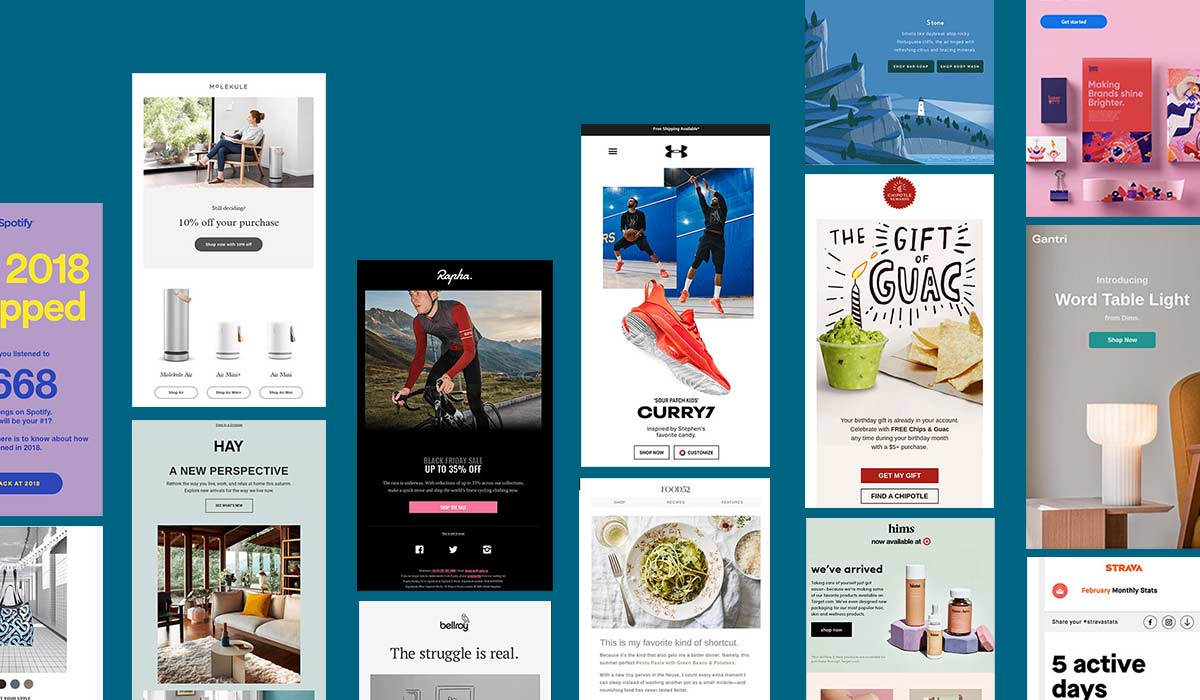
Once the subject line wins the open, the creative needs to deliver. Email design for ecommerce in 2026 is mobile-first, image-supported but never image-only, and accessibility-conscious. The goal is to communicate the offer and route the click in under 10 seconds of attention. Strong creative reinforces brand identity, increases conversions and protects the customer relationships behind the list.
Design and branding principles: Single-column layout. Hero image with one clear product or proposition. Body copy at 16 pixels minimum. Bulletproof CTAs (HTML and CSS buttons, not images) at least 44 pixels tall so they tap cleanly on mobile. Limit yourself to one primary call-to-action per email and one secondary at most. Test in dark mode, which now accounts for around 40 percent of email opens, and check that branding, logos and product photography hold up against a dark background.
Content approach: Write to one customer, not a list. Copy that uses "you" outperforms copy that uses "our customers" or "everyone" by a measurable margin. Lead with the benefit, not the feature, and lean on benefits the shopper actually cares about (saving time, fitting in, looking good, feeling confident). For product launches, the body copy should answer three questions in this order: what is it, why should I care, why now. Reinforce the offer with social proof (customer reviews, rating, customer quote) rather than adjectives. Keep the body under 150 words for most campaign sends; the body's job is to earn the click, not to close the sale.
Accessibility and quality: Include alt text on every image so the email still makes sense if images do not load (true for around 20 percent of Outlook opens). Maintain at least a 4.5:1 colour contrast between text and background. Compress images so the total email weight stays under 200KB. Test every send on the top three inbox providers (Gmail, Apple Mail, Outlook) and on both light and dark mode before scheduling.
Balance promotion with editorial: Editorial sends (founder letters, behind-the-scenes content, customer features, product care guides, sustainability updates) typically have 10 to 15 percentage points higher open rates than promotional sends. They cost almost nothing in sales (subscribers who want to buy will buy) and they earn the inbox placement that future promotional sends rely on. Sharing the editorial content again on social media keeps the assets working twice.
AI and Automation
AI moved from novelty to core feature across the major ecommerce email platforms during 2025. Klaviyo, Omnisend and Shopify Email all now ship AI assistants for subject lines, send-time optimisation, predictive segmentation and dynamic content. Used well, they cut production time and lift performance. Used badly, they produce generic copy that erodes the brand.
Where AI genuinely helps right now:
- Send-time optimisation (also marketed as "send-time optimization" on US-built platforms). Klaviyo's smart sending picks an individual send time per recipient based on past engagement. Typical lift on open rate is 5 to 10 percent with no creative work.
- Predictive customer attributes. Expected next order date, predicted lifetime value, churn risk score, demographics inference, and machine-learned personalization profiles for each subscriber. These let you build segments such as "predicted to churn in next 14 days" that would be impossible to assemble manually.
- Subject-line variant generation. Use the AI to draft 10 variants, then pick 2 to test rather than relying on the AI to choose for you.
- Dynamic product recommendations. Most platforms now serve a personalised product block based on what each recipient has viewed or bought. Convert this into the second module of every campaign for an easy lift on click-through rate.
- Drip and nurturing sequences. AI-assisted drip flows shorten the build time on multi-step nurturing tracks (post-purchase education, content drip for new categories) and surface optimisation suggestions based on which steps actually drive conversions.
- Image and content moderation. AI-assisted accessibility checks (alt text generation, colour contrast) and spam-trigger detection before send.
Where AI is not yet good enough to leave alone: writing full email body copy, picking which products to promote, naming the brand voice, deciding on creative direction. Use AI to do the work a junior would do; keep the strategic and creative decisions human-led. Brands that fully hand the keyboard to an AI tend to produce on-brand-sounding noise that gradually loses the qualities that made the brand distinctive in the first place.
A 2026 caveat on bot engagement: Inbox providers are increasingly using AI to pre-scan and filter promotional content, and bot clicks now inflate raw engagement metrics by 20 to 60 percent on some lists. That means open rate alone is unreliable; track click-to-conversion as the ground-truth metric for whether your messaging is actually landing.
Best practice: Treat AI as a senior assistant. Have it draft, summarise, optimise and test. Have your team approve, adjust and ship. Build a quarterly review where you check whether the AI features you turned on are actually producing the lift you expected; quietly turn off the ones that did not.
Choosing a Platform for Shopify
Almost every Shopify brand eventually chooses between four platforms: Shopify Email, Klaviyo, Omnisend or Mailchimp. The right answer depends on revenue, technical maturity and how much automation you genuinely need. Below is the matrix Charle uses with clients to make this call.
Shopify Email. Best for: brands under roughly £250k a year, small lists, brands who want zero new tools and a single bill. Strengths: native to Shopify so the customer data is always right, no integration to maintain, free for the first 10,000 sends per month. Limitations: limited automation complexity, basic segmentation, no predictive analytics. A great starting point that most brands eventually outgrow.
Klaviyo. Best for: Shopify Plus brands and ambitious mid-market stores from roughly £500k a year. Strengths: deepest native Shopify integration of any third-party tool, best segmentation engine, predictive analytics, mature flow builder, strongest reporting on ROI per email. Limitations: pricing scales with engaged contacts and gets expensive past 100k profiles; the feature surface is large enough to be intimidating for small teams. The platform we recommend most often for serious ecommerce email programmes.
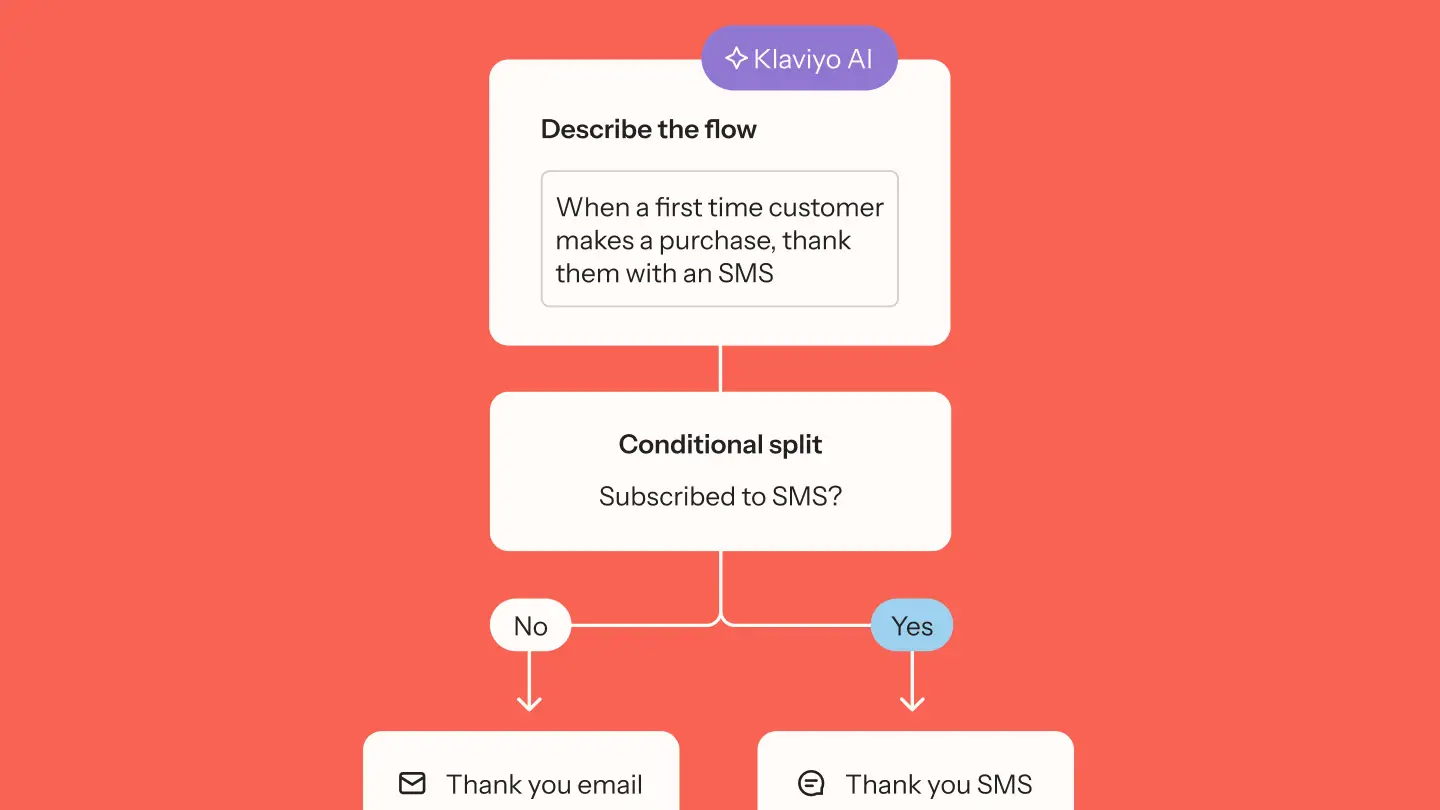
Omnisend. Best for: brands that want native SMS plus email in one tool, smaller teams that value simplicity. Strengths: clean interface, strong out-of-the-box automations, fair pricing, well-built SMS integration. Limitations: smaller ecosystem than Klaviyo, less powerful segmentation, fewer integrations with Shopify apps. A pragmatic choice for brands who do not need everything Klaviyo can do.
Mailchimp. Best for: brands already using Mailchimp who do not want to migrate. Strengths: well-known, broad email template library, decent campaign tools. Limitations: the Shopify integration was officially restored in 2023 but has never been as deep as Klaviyo or Omnisend; segmentation and automation lag behind purpose-built ecommerce tools. We rarely recommend it for new Shopify builds.
Migration considerations: Moving between platforms is largely a customer data and deliverability exercise, not a creative one. Export profiles, lists, suppression lists and consent records. Re-authenticate the sending domain on the new platform. Warm the new IP gradually over 3 to 6 weeks by sending only to your most engaged segment first. Rebuild flows from scratch in the new platform rather than trying to clone them exactly; the new flow builder will usually have better ways to express the same logic. Plan for a 2 to 4 week dip in performance during the changeover and budget for it.
Compliance, GDPR and Deliverability
Compliance and deliverability are linked. The UK and EU regimes (UK GDPR plus the Privacy and Electronic Communications Regulations, GDPR for EU recipients) both require explicit, informed consent for marketing email and easy withdrawal of that consent. Mailbox providers (Gmail, Apple, Outlook) reward senders who treat compliance seriously by placing more of their mail in the inbox rather than the promotions tab or spam.
Consent and customer data protection: Use a clear opt-in checkbox at checkout and on sign-up forms. Pre-ticked boxes are not valid consent under UK GDPR. Keep a record of when, where and how every contact opted in (most ESPs do this automatically). Honour data subject requests promptly: subscribers can ask to access, correct or delete their data, and you should aim to fulfil within 30 days. Maintain a public privacy policy that names your email platform as a processor.
Authentication is non-negotiable in 2026. Gmail and Yahoo now require SPF, DKIM and DMARC for any sender pushing more than 5,000 emails a day, and increasingly enforce it for everyone. Set up all three properly on your sending domain, and use a branded subdomain (mail.yourbrand.com) so a single bad campaign cannot damage your transactional deliverability. BIMI (Brand Indicators for Message Identification) is now widely supported and worth setting up to display your logo in supported inboxes, which itself becomes a branding signal.
List hygiene and engagement: Suppress contacts who have not opened in 90 to 180 days from broad campaigns. Run a sunset flow before deleting. Avoid imported lists you did not collect yourself; they are the fastest way to land in spam. Watch your spam complaint rate (anything over 0.1 percent is a red flag), bounce rate (under 2 percent) and unsubscribe rate (under 0.5 percent on most sends). All of these protect sender reputation, which is the foundation under every other metric in this guide.
Unsubscribe and preferences: Every marketing email needs a clearly visible unsubscribe link. Pair it with a one-click preference centre so subscribers can dial down frequency rather than leaving entirely. Brands that offer a preference centre typically lose 30 to 40 percent fewer subscribers per month.
Compliance done well is a deliverability strategy, not a tax. The cleanest, most compliant lists almost always have the highest open rates and the lowest spam complaints, which is what mailbox providers reward.
Performance and 2026 Benchmarks
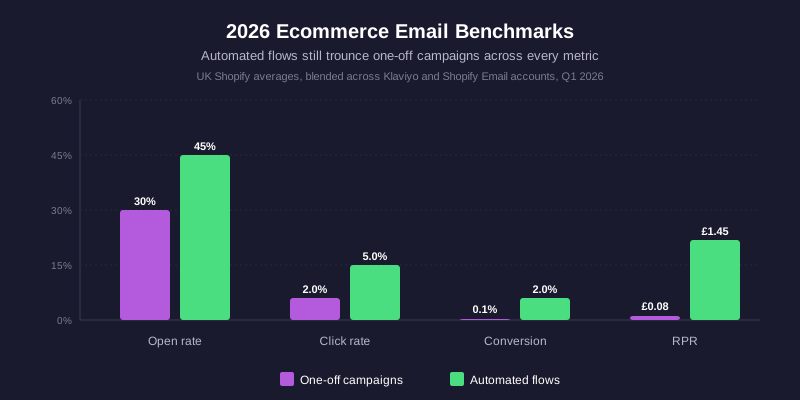
Strong measurement turns email from a sporadic effort into a forecastable channel. Most ecommerce business owners want one thing from their reporting: did this week's messages drive the sales they were meant to? The numbers below are the 2026 benchmarks we see across Charle client accounts on Shopify and Shopify Plus. Treat them as a sanity check, not a target; the target should always be improvement against your own previous quarter's results.
Core metrics to monitor:
- Open rate. Healthy campaign range 25 to 35 percent (inflated since Apple MPP). Automated flows usually 40 to 55 percent because intent is higher and audiences are smaller. Welcome emails frequently hit 50 percent and back-in-stock alerts 59 percent.
- Click-through rate. Campaigns 1.5 to 3 percent; flows 3 to 8 percent. Recovery flows (abandoned cart, browse, back-in-stock) regularly hit 8 to 15 percent click-through rate. Klaviyo's 2025 benchmarks put the top 10 percent of campaigns at 4.74 percent.
- Conversion rate. Campaigns 0.05 to 0.2 percent of recipients; flows 1 to 5 percent. The flow-to-campaign multiplier here is the single best argument for prioritising automation work.
- Revenue per recipient. Campaigns £0.05 to £0.15; flows £0.50 to £3+. RPR normalises across audience sizes and is the cleanest comparison number across sends. Klaviyo's top decile lands at $0.97 per recipient.
- List growth. Aim for 5 to 10 percent monthly net growth on the engaged segment (opens or clicks in 90 days), not the total list. Total list growth without engaged growth usually means deliverability is about to suffer.
- Email share of revenue. Strong programmes sit between 25 and 40 percent of total store sales, with flows producing 60 to 70 percent of that share from less than 5 percent of sends.
- ROI per email. The cohort-wide ROI for ecommerce email sits between £36 and £42 per £1 spent (DMA), £38 in the UK (Statista), and as high as $79 per $1 spent on Omnisend's 2026 cohort. Treat anything below £15 per £1 as a sign the programme needs work.
Reporting cadence: Review campaign metrics weekly, automated flow metrics monthly, and full programme performance quarterly. Look for declining engagement on the top 10 percent of your list as the earliest warning sign of a deliverability or relevance problem. When something dips, isolate by segment and creative variant rather than tweaking everything at once.
Testing and optimisation: Run an A/B test on every meaningful campaign and on every flow at least once a quarter. Vary one element at a time (subject line, hero image, button copy, send time). Hold-out groups (sending no email to a small control segment) are the most underused test in ecommerce email and the only way to measure true incremental ROI rather than attribution noise. If holding out 5 percent of your engaged segment for a month shows no revenue dip in that group, your attribution is overstating email's contribution and the real number is lower.
Resourcing and Budget
Most ecommerce email programmes fail on resourcing rather than strategy. The plan above looks great in a deck and dies the moment no one owns the weekly send. Plan for ownership before you plan for tactics.
Roles to cover: strategy (calendar, segmentation, testing roadmap), creative (copy and design for each send), build and QA (assembling the email in the ESP, previews, list selection), reporting (weekly numbers, quarterly review). In a small team one person may cover most of this, but the four functions need explicit time in the week, not just goodwill. The most common breakdown is when the creative function is shared with the wider marketing team and email becomes the bottom of every queue.
Time and workflow: Budget around 4 to 6 hours per campaign for a brand sending 2 to 4 a week (concept, copy, design, build, test, schedule). Add 2 hours a week for reporting and 1 day per quarter for strategy review. Use a shared campaign brief template so creative starts with a clear objective, segment and message every time.
Budget considerations: Platform subscription is the main variable cost and usually 5 to 12 percent of email revenue (Klaviyo, Omnisend and Shopify Email all price on contact count or send volume). Creative and copy come next; in-house headcount is usually cheaper at scale than agency or freelance retainers but slower to start. Plan to invest 10 to 15 percent of marketing budget on email if it is currently producing less than 20 percent of revenue, and bring that down to 7 to 10 percent once the programme is mature.
When to bring in agency help: Most Shopify brands hit a ceiling around the point where the in-house team can keep the campaigns going but cannot find time to build new flows or run real testing. That is the right point to bring in a specialist agency, either to build out the next layer of automation or to take strategy and creative off the in-house team entirely. Choose partners who can show you specific results on Shopify accounts they have grown, not just decks of generic benchmarks.
Multi-Channel Integration
The strongest ecommerce email programmes do not stop at email. They sit inside a coordinated retention stack with SMS, push, on-site personalisation, social media and loyalty, all sharing the same customer data and the same segmentation logic. The customer rarely thinks in channels; they think about whether your brand is being relevant and useful.
Email plus SMS. Abandoned cart and back-in-stock alerts are the obvious starting point. Send the email first (richer creative, full product information), follow with a short SMS if there is no click within a defined window. SMS open rates sit around 90 percent within 3 minutes, so the channel is invaluable for time-sensitive messaging but expensive enough that you only use it where it earns its cost. Use platforms that handle both (Klaviyo, Omnisend) to keep consent, suppression and reporting unified.
Email plus on-site. Connect your email segments back to your Shopify storefront via tools such as Klaviyo Web Personalisation or Shopify's customer events to vary banners, recommendations, messages or popups for known subscribers. Visitor-level personalisation across both channels typically lifts on-site conversion rates by 5 to 10 percent and protects email open rates against the slow drift that always sets in on broadcast-only programmes. A VIP arriving on the homepage should see a different hero from a first-time visitor. A subscriber currently in your abandoned-cart flow should see the cart items front and centre.
Email plus loyalty. Loyalty apps (LoyaltyLion, Smile, Yotpo) pass point balances, tier status and reward redemptions into your ESP, where they become triggers and personalisation tokens. The strongest play is a "loyalty progress" email triggered when a member is within one purchase of the next tier, which routinely outperforms generic VIP campaigns.
Email plus social media and paid retargeting. Suppress paid social retargeting for anyone in an active abandoned-cart email flow; you are paying twice for the same recovery. Conversely, export your engaged email segments to Meta and Google as custom audiences for new-product campaigns, where the warm audience consistently outperforms cold prospecting. Reuse the editorial content from your email programme as organic social posts to compound the asset.
Multi-channel is not about doing more, it is about doing the same things in a more joined-up way. The brands who get this right protect their customers from being shouted at by four different channels and reward them by appearing in the right place at the right moment.
Common Mistakes
The same handful of mistakes show up over and over again in account audits. Each one is correctable, and each one is leaking sales while it goes unaddressed.
Treating the list as one audience. Sending the same email to a brand-new subscriber and a six-time repeat customer is a guaranteed way to depress engagement and train the inbox provider to bury you. Even basic segmentation (engaged versus unengaged, repeat versus first-time) outperforms send-all on every metric. Pair it with segment-level personalisation for the easiest results lift available.
Skimping on flows. Most brands have a welcome series and an abandoned cart, then stop. The remaining 7 flows in the list above usually represent more recoverable email sales than anything campaigns can do. Build them in priority order and you will see compounding gains over the following two quarters.
Discount dependency. Constant promotional emails with discounts train customers to wait for the next sale, erode margin, and burn out the list. Build editorial sends, brand storytelling and product education into the calendar to balance the promotional cadence. Save big discounts for genuine moments and use smaller incentives (free shipping, gift with purchase) the rest of the year.
Ignoring deliverability until it breaks. Authentication, list hygiene and engagement-based suppression all feel optional until inbox placement drops and sales with it. Treat deliverability as ongoing maintenance, not a project you do once. The brands losing deliverability quickly are usually the ones leaning hardest on discount messaging and broadcast sends without segmentation.
Confusing attribution with incrementality. Email gets credited for revenue it would have earned anyway because Shopify and Klaviyo use cookie-based attribution windows. The only way to know true incremental ROI is to run hold-out tests where a small control segment receives no email at all for a measurable period. Doing this honestly is uncomfortable but it is the only number that does not lie.
No testing rhythm. Brands that "feel" their way to subject lines and send times will lose to brands that test theirs. A simple weekly A/B on the largest campaign of the week, run for a quarter, will produce compounding wins worth more than any single creative refresh.
Forgetting that email is a relationship channel. The best brands build customer relationships through email by sending tips, useful content, and the occasional surprise alongside the promotional cadence. Treat the list like a community rather than a megaphone and the long-term LTV numbers move in the right direction.
What We'd Change First on Most Shopify Email Programmes
After running this on Shopify Plus accounts across fashion, beauty, food and drink, sport and lifestyle, the order that actually matters is rarely the order brands attempt it in. Most teams try to fix campaigns first because that is what sits in the weekly content meeting, and they leave flows half-built. The bigger lever is almost always the opposite: get the nine flows mechanically right before you touch the campaign calendar, then segment what is already working.
A common pattern we see: a UK fashion brand on Mailchimp moves to Klaviyo, and the brief is "open rates have been drifting and revenue is flat". The audit usually finds one weak welcome email, no browse-abandonment flow, no back-in-stock, and a segmentation strategy that is basically "all engaged" versus "everyone else". The fix is to rebuild the welcome into a 4-email sequence, add browse and back-in-stock, layer RFM scoring on top, and introduce a couple of editorial sends per month alongside the existing promotional cadence. Brands following that playbook regularly see email revenue move from single-digit percent of store sales into the 25-35 percent range within two quarters, with no new creative team and no bigger discounts. The lift comes almost entirely from flows and segmentation that should have existed already.
The second thing we would change is how teams measure. Most clients report email by attributed revenue from Klaviyo, which is genuinely useful but consistently overstates incremental ROI by 20 to 40 percent because of cookie-based attribution windows. Running quarterly hold-out tests (suppress 5 percent of your engaged segment from all sends for a month, compare revenue against the rest of the segment) is uncomfortable the first time and clarifying every time after that. We have yet to see an account that did not benefit from the discipline of treating email as one channel inside a stack rather than as a closed-loop attribution model.
Our short answer: build the flows, then segment, then test, then create. Most teams do it in reverse.
Conclusion
A strong ecommerce email marketing strategy is not a single tactic or a clever campaign. It is a system: a clean customer data foundation, a clear lifecycle framework, the nine core automated flows, a balanced campaign calendar, sharp subject lines, well-built segments, the right platform for your size, honest measurement and a team that owns the weekly send. Brands that build this system reliably see email move from 5 to 10 percent of revenue to 30 to 40 percent of total sales inside a year.
The mistake is to treat email as a side channel that runs itself. The opportunity is to treat it as the most profitable, most controllable revenue lever in the business. Every store has the customer data, the platform options and the customer base to do this. What is usually missing is the structure to put it all together. Get the structure right and the ROI follows.
At Charle, we build and run email programmes for Shopify and Shopify Plus brands across fashion, beauty, food and drink, sport and lifestyle. We have done the platform migrations, the flow rebuilds, the segmentation overhauls and the deliverability fixes that take a programme from contributing 8 percent of revenue to contributing 35 percent. If you want a second pair of eyes on your current strategy, or you want help building the next layer, get in touch with our team and we will walk through your account together.