 Nic Dunn, CEO, Charle Agency

Introduction
To optimise product pages for SEO, give each product page a unique, keyword-led title tag and description, complete Product schema, fast mobile load times, genuine reviews and clear internal links, then canonicalise near-duplicate variants so pages do not compete with each other. Those signals tell Google what the product is, who it is for and why it deserves the click, and they are the same signals that convince a shopper to buy.
Strong product page SEO helps your store appear when customers are comparing products and looking for clear information before they buy. Search engines reward pages that load quickly, answer common questions and structure product data cleanly, so a page that combines accurate data, relevant keywords, quality images and a clear description gets matched to the right queries far more confidently.
Optimising a product page goes well beyond rewriting the description. It means improving titles, metadata, images, URL structure, internal links, page speed and product schema so search engines can interpret every part of the page. That work drives stronger rankings, more traffic from people ready to buy, and a better user experience that lifts conversions. This guide walks through each tactic so you can strengthen product page SEO at scale across your site.
Understanding Product Page SEO
Product page SEO is the process of making individual product pages easier for search engines like Google to crawl, understand and rank. Instead of focusing only on the homepage or category pages, you treat each product detail page as an asset that can attract visitors from specific search queries. There is a common misconception that shoppers always enter through the homepage or a category page and then work down to a product. In reality, product pages often earn direct organic traffic from people who already have their card in hand, so a page that ranks well is a page that converts.
A strong product page combines several signals that work together. The title, headings, title tag, URL, product name, product description, images, alt text, reviews and product schema each tell search engines something different about the item. If those elements are inconsistent, duplicated across pages or missing key data, the page becomes harder to interpret and loses visibility against competitors. When everything is aligned, search engines can confidently place your products in results pages, image search and rich snippets, which leads to more clicks and higher quality traffic.
For ecommerce SEO, product pages play a different role to collection and category pages. Category pages capture broader research terms, while product pages answer specific questions about a single item, such as size, colour, features, pricing and availability. Good product page SEO puts clarity and user experience first, then aligns that content with a focused keyword strategy so both users and search engines see the same story.
Prioritising Your Highest Value Pages
Not every product page carries equal SEO value, and treating them as if they do is how large catalogues waste effort. Some products earn hundreds or thousands of clicks a month while others barely register an impression, even when they sell well offline. On a store with tens of thousands of SKUs you cannot hand-optimise every page, so the smart move is to prioritise.
Apply the Pareto principle: roughly 20 percent of your categories and products usually drive around 80 percent of organic revenue, so start there. Use Google Search Console and your analytics to find the pages that already earn impressions and clicks, then improve those templates first before working down the list. This growth mindset keeps your team focused on the product pages where a ranking gain actually moves revenue for the business, rather than spreading thin SEO effort across every page on the site.
Keyword Strategy for Product Pages
A clear keyword strategy ensures each product page targets the search queries customers actually use for specific items. Unlike category pages that focus on broader terms, product pages should align with precise intent such as product names, attributes, features and model details. Effective keyword research shows how people describe the item, which keyword variations they search for, and where branded and non-branded queries differ.
Choosing the primary keyword
The primary keyword for a product page is usually the product name or a close variation of it. Secondary terms relate to attributes such as size, colour, material, use case or category. You can find opportunities by reviewing competitor pages, analysing Google Search Console data and checking search results to see how similar products are positioned. When keywords are added naturally to titles, headings, content and alt text, the page gives clear context without keyword stuffing.
Product attributes and SKUs
Include the brand name, series, model number and, where shoppers search for them, the SKU. For products like Lego sets or industrial parts, customers often search by SKU or model identifier, so including it in the product name, URL and title tag can win those queries outright. Linking attributes such as brand or range to their overview pages also strengthens your internal structure. Consistency across metadata, URLs, schema, images and internal links gives search engines a complete picture of the product and helps it appear across a wider range of queries.

Title Tags and Meta Descriptions
Title tags and meta descriptions are two of the highest-leverage on-page elements on any product page, yet they are often generated from a single template and left untouched. The title tag is a primary ranking signal and, alongside the meta description, decides how your product is presented in the SERP and whether shoppers click.
Writing product titles that rank
Keep the title tag to roughly 50 to 60 characters, or around 285 to 575 pixels, and place the product name, brand and most important attribute near the front so nothing critical is cut off. Google rewrites title tags in a large share of results, in some studies more than 60 percent of the time, so give it a clear, accurate title to work from rather than stuffing in every keyword. A common template such as "Product Name, Attribute, Brand" scales across a catalogue while still letting you overwrite the best sellers by hand.
Meta descriptions that earn the click
A product page holds a lot of incidental text, so without a defined meta description Google may pull an unhelpful snippet. Write a meta description of roughly 140 to 155 characters that includes the primary keyword, states the key benefit and adds a call to action such as free next-day delivery. Better meta descriptions lift click-through rates, and a higher CTR from the SERP is one of the clearest signals that your title and description match what people are searching for.
Optimising On Page Elements
Strong on page elements are the foundation of an effective product page. Search engines need clear titles, accurate descriptions, high quality images, robust schema and a logical hierarchy to understand the product and match it to the right search queries. Users need structured content that answers their questions quickly, builds trust and reduces friction on the path to purchase.
Product descriptions
Your product description should go deeper than a short paragraph or a list of features. High performing product pages include enough written content to demonstrate authority, explain benefits, highlight use cases and give buyers the clarity they need before they add to basket. Crucially, write your own descriptions rather than reusing the manufacturer copy that appears on hundreds of other sites, as duplicate product descriptions are treated as low quality. NOVOS reported a 34 percent increase in non-brand SEO traffic and a 48 percent rise in non-brand revenue for a client simply by rewriting product descriptions, which shows how much this single element can move.
Images, video and user generated content
Images remain essential for conversions but should not carry the entire page. Compress each image, use descriptive alt text and show the product in context, and add short video or 360 degree views where they help. User generated content is now one of the most valuable parts of a product page: customer reviews, Q&As and customer photos prove the item performs as described, add fresh content and introduce natural language variations of your keywords.
Keep the buy button and key details above the fold
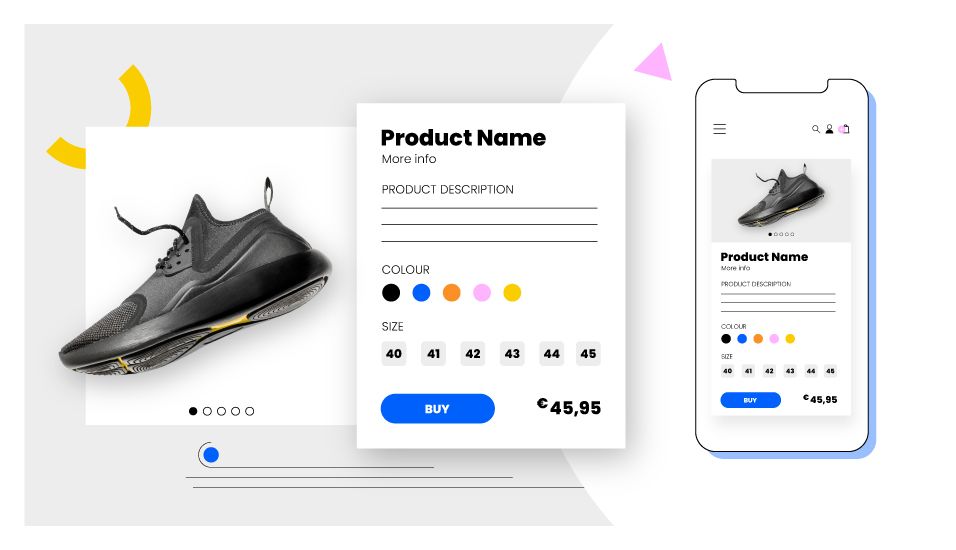
Borrow from Amazon and put everything a shopper needs to decide near the top: price, availability, the add to cart and buy now buttons, guarantees and standout features in a scannable format. When users can act without hunting for the button, bounce rates fall and conversions rise, and those engagement signals feed back into rankings. Supporting content like size guides, comparison tables, specification blocks, delivery details and trust badges can sit further down the page.
URLs, Breadcrumbs and Structure
A clean URL and clear site structure help both shoppers and search engines understand where a product sits. A good product URL is descriptive, readable, consistent, brief and lowercase, using hyphens to separate words. For an Osprey Kyte 46 pack, a slug like osprey-kyte-46-pack-womens is far stronger than a string of parameters, and a URL that reflects the query tends to earn more clicks in the SERP.
Breadcrumbs are internal links that show shoppers where they are in the site hierarchy and let them jump back to a category with one click. Well-structured breadcrumbs, for example Home, Backpacks, Hiking backpacks, Hiking backpacks for women, give search engines a clear map of your store and should be marked up with BreadcrumbList schema. Combined with logical categories and a sensible URL pattern, this structure makes your product pages easier to crawl and easier to navigate.
Structured Data and Rich Results
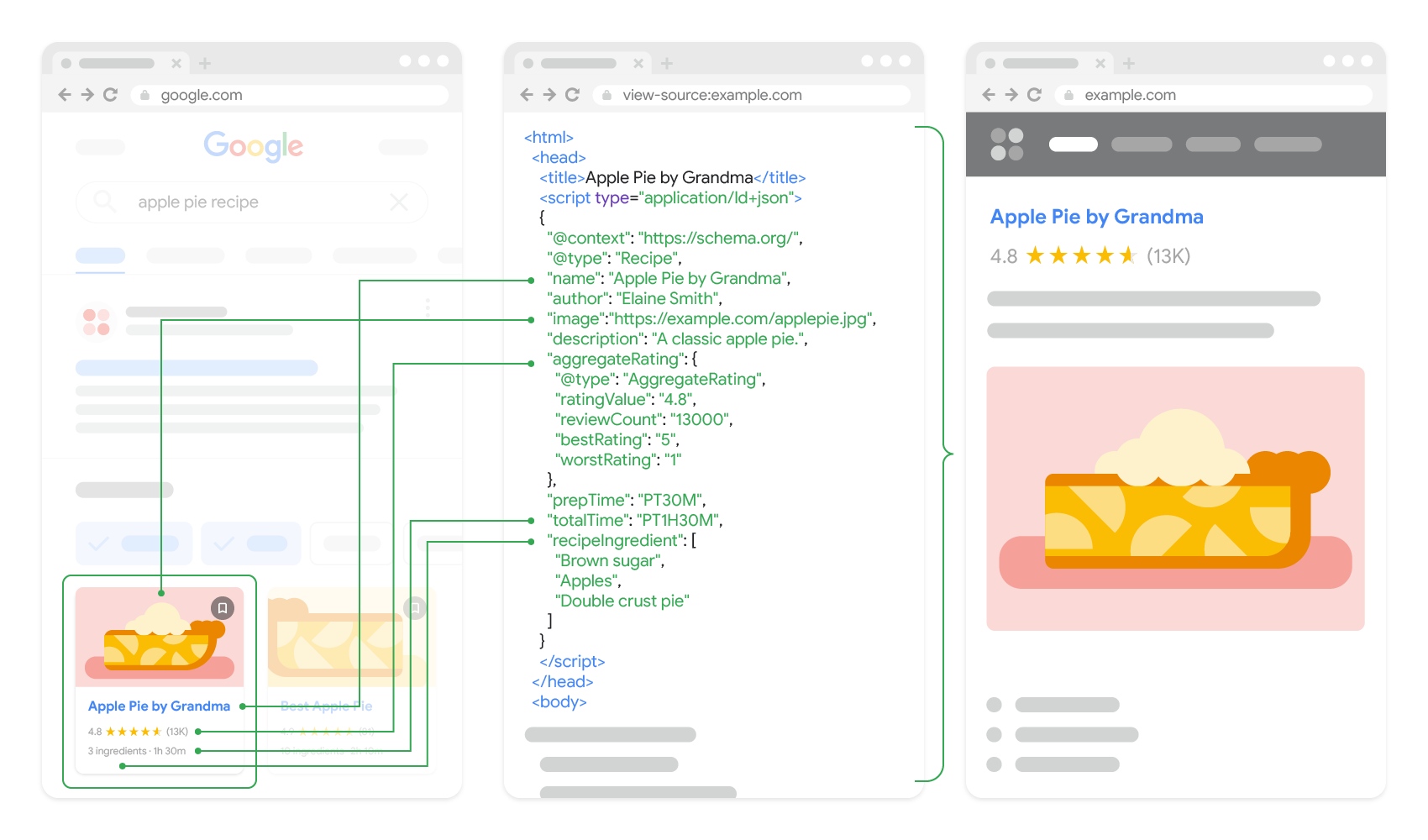
Structured data helps search engines understand the key information on your product pages and display it through rich results that improve visibility and click-through rates. Product schema should include accurate details such as the product name, image, price, availability and brand so search engines can match your page to relevant queries with confidence. The Offer property covers price and availability, while AggregateRating and Review markup can surface star ratings directly in search results.
Many ecommerce themes add basic schema automatically, but it often needs refining to include missing attributes or correct errors, and you should validate it with Google's Rich Results Test before release. Consistent data across your content and markup prevents issues and improves how your products appear. For a deeper walkthrough, read our guide: How to Add Schema to Product Pages for SEO.
Product Variants and Canonicalisation
Product variants are one of the most common causes of duplicate content on ecommerce sites. A single trainer available in ten colours and seventeen sizes can generate well over a hundred near-identical URLs, and if each one is indexable they compete with each other and dilute ranking potential. The fix is canonicalisation.
Near identical variants
Unless there is genuine search demand for a specific variant and you can write unique content for it, pick one primary variant, give it a self referencing canonical tag and point the other variants to it. This tells Google which version to index and prevents keyword cannibalisation between colours or sizes. Only split variants into separate indexable pages when the search demand and the resources to write unique descriptions justify it.
Products in multiple categories
The same product often sits in several categories, for example a backpack listed under hiking, sale and mountain biking, each with its own URL. To stop those pages competing, choose a primary URL and canonicalise the others to it. Handle discontinued products with the same care: keep pages with traffic or backlinks live with alternatives shown, or 301 redirect permanently removed products to the closest relevant item so you retain link equity.
UX and Conversion Impact
Strong user experience supports both SEO performance and conversion rate. When a product page is easy to scan, fast to load and structured around the questions customers ask before purchasing, users stay longer and engage more, and search engines prioritise pages that consistently deliver a smooth experience. The scale of the opportunity is real: Baymard Institute research found that only around 49 percent of ecommerce sites deliver a decent or good product page experience, which means most sites leave conversions on the table.
Key UX elements include a readable layout, a clear information hierarchy, visible pricing and availability, trust signals such as reviews and guarantees, and easy navigation back to category or related items. These reduce friction and help users understand the product without leaving the page, while accessibility across devices strengthens search engines' confidence in the page.

Handling Out of Stock and Seasonal Products
How you manage out of stock and seasonal products has a direct impact on search visibility and user experience. Removing product pages when stock runs out can lose rankings, waste backlinks and leave gaps in your site structure. The better approach is to keep the URL live, show clear availability information and offer alternatives, so search engines retain the page in the index and users still have a route to purchase.
For seasonal items or core ranges, keeping the same URL year after year preserves search value and avoids starting from zero each season, so you refresh content, pricing and imagery while keeping the page's authority. If a product will not return, a 301 redirect to the closest relevant category or product retains link equity and guides users to an alternative.
Internal Linking
Internal linking helps search engines understand the relationship between your product pages, category pages and wider site structure. Clear links improve crawlability, distribute authority across your site and give users straightforward paths to related products. A well linked product page is easier to index and more useful for visitors comparing items or returning to a category. Orphan pages that lose all internal links, often when a parent category is removed, tend to rank poorly and can even be dropped from the index, so keep an eye out for them.
Key internal links include paths from category pages to products, links between complementary products, and contextual links from blog content to relevant items. For large catalogues, automated linking by shared attributes or best sellers maintains consistency at scale and strengthens relevance signals across your product pages.
Image and Video Optimisation
Optimised images and videos improve page speed, accessibility and how well search engines understand your product pages. Each image should be compressed, correctly sized and supported with descriptive alt text and a keyword-led file name that reflects what the picture shows. Serving modern formats such as WebP, and including product images in an image XML sitemap, gives them a chance to rank in Google image search and drive extra traffic.
Alongside images, short product videos or demonstrations increase time on page. Keep media lightweight so it loads quickly on mobile, where it should support clarity rather than slowing the page down.
Reducing Page Load
Fast loading product pages improve user experience, reduce bounce rates and help search engines assess page quality. The commercial impact is well documented: Amazon found that every 100 milliseconds of added load time cost it around 1 percent in sales, and a Google study showed that as mobile load time rises from one to ten seconds, the probability of a visitor bouncing increases by 123 percent. Page speed is especially important on mobile, where most ecommerce browsing and buying now happens, so a fast, mobile-friendly layout is essential.
To improve performance, remove unused apps, reduce heavy JavaScript, compress images and ensure your theme loads only the files it needs. A content delivery network, lazy loading for below-the-fold media and efficient browser caching all keep product detail pages responsive. When pages load quickly, search engines can crawl them more effectively and users move through the purchase with less friction. Sense-check your pages against the top-ranking competitors rather than chasing a perfect score in isolation.

Reviews and UGC
User generated content such as reviews, Q&As and customer photos adds credibility to your product pages and provides the natural language signals search engines look for when evaluating relevance. Reviews matter to shoppers too: BrightLocal research found that around 74 percent of consumers check reviews on at least two sites before buying. They also keep pages fresh and introduce keyword variations that widen the range of queries a page can rank for.
Make reviews easy to scan and place them close to the main product information so users can weigh up the details quickly, and mark them up with Review and Rating schema so search engines can surface stars in the SERP. Customer questions and answers fill content gaps and reduce uncertainty for new shoppers. When UGC is genuine, structured clearly and supported by strong on page content, it improves trust, conversions and overall SEO performance.

International SEO
International SEO ensures your product pages appear correctly for users in different markets. When your site operates across regions, multiple currencies or translated content, search engines need clear signals to understand which version of each product page to show. Hreflang tags, consistent URLs and accurate localisation prevent duplicate content issues and ensure users land on the correct version of a product.
Translated descriptions, local pricing, regional stock information and market specific attributes improve relevance for international customers, and keeping structure consistent across countries helps search engines navigate the site efficiently. When international versions are aligned and well marked up, your product pages compete effectively in each target market.

Optimising for AI Search and Generative Engines
AI powered search experiences rely on clear product data, structured content and consistent language to understand your products and recommend them in generative answers. Unlike traditional search engines that focus on keywords and links, large language models use context, attributes and user intent to decide which product pages offer the most relevant information. Pages with complete product details, accurate descriptions and strong schema have a better chance of being surfaced in AI driven shopping results.
To optimise for generative engines, make sure your product pages carry accurate specifications, clear features, supported claims and well structured information a model can interpret without confusion. A direct, factual answer near the top of the page helps AI engines extract and cite it. Reviews and Q&As also help models understand real customer experiences, which strengthens relevance in AI recommendations. For a deeper guide, read How to Use ChatGPT and AI to Optimise Ecommerce Stores, and explore our GEO and AI-SEO services for ecommerce stores.
Measuring Product Page Performance
Tracking product page performance shows how well your SEO work is influencing search visibility, user behaviour and sales. Key metrics include organic traffic to the page, keyword positions, click-through rates, engagement, add to basket actions and completed purchases. Google Search Console is essential for reviewing search queries, impressions, average position and indexing status, while GA4 shows behaviour on the page such as scroll depth, time on page and conversion paths. Together they reveal which product pages are improving and which need further work, and regular reviews keep them competitive as queries, competitors and search results change.
Common Product Page SEO Mistakes
Many ecommerce product pages struggle to rank because of avoidable issues. Common mistakes include thin or duplicate product descriptions, missing alt text on images, slow page speed from large files or unused apps, and inconsistent product data that makes the page harder to understand. Letting near-identical variants compete without canonical tags, and deleting out of stock pages that still hold rankings, both quietly cost SEO visibility.
Other frequent problems include poor internal linking, weak title tags, missing schema, unclear availability and over reliance on manufacturer copy. Pages that lack trust signals such as reviews, or rely too heavily on images without written context, underperform. Fixing these gaps builds stronger product pages that support rankings and conversions across the site.
Product Page SEO Checklist
- Clear, descriptive product title and a title tag of roughly 50 to 60 characters
- Unique meta description with the primary keyword and a call to action
- Unique product description with helpful detail and no manufacturer duplication
- Optimised images with correct sizing, WebP format and descriptive alt text
- Fast loading, mobile friendly page with minimal unused scripts or heavy apps
- Accurate and complete Product, Offer and Review schema markup
- Self referencing canonical tags, with near-identical variants canonicalised to a primary
- Descriptive URL and BreadcrumbList markup for clear structure
- Internal links from categories, related products and content, with no orphan pages
- Visible pricing, availability, delivery information and a buy button above the fold
- Genuine reviews, ratings and Q&As marked up with Review schema
- International versions correctly set with hreflang where relevant
- Regular performance reviews in Google Search Console and GA4
Charle's View
After a decade building and scaling ecommerce stores, the mistake we watch brands make most often is treating every product page as equally worth optimising. It is not. On a large catalogue the honest play is to canonicalise aggressively and pour real effort into the top 20 percent of products and their category pages, rather than spreading thin, near-duplicate colour pages across the whole store and hoping Google sorts it out. It will not, and those pages just cannibalise each other.
The other thing we would push back on is the obsession with word count. A product page does not rank because it is long. It ranks because the title tag is accurate, the description is unique, the schema is complete and the page loads fast on a phone. Get those four right at a template level, add genuine reviews, and you will beat a competitor with twice the copy and half the structure. If we were rebuilding a store's product pages today, we would start with the templates and the canonical logic, not the prose.
If you want expert support improving your ecommerce SEO, our team can help. Learn more on our Ecommerce SEO Agency page or get in touch. For brands planning a platform move, our SEO migration service protects your rankings and product pages throughout, and you can compare providers in our Top Ecommerce SEO Agencies guide.