 Nic Dunn, CEO, Charle Agency
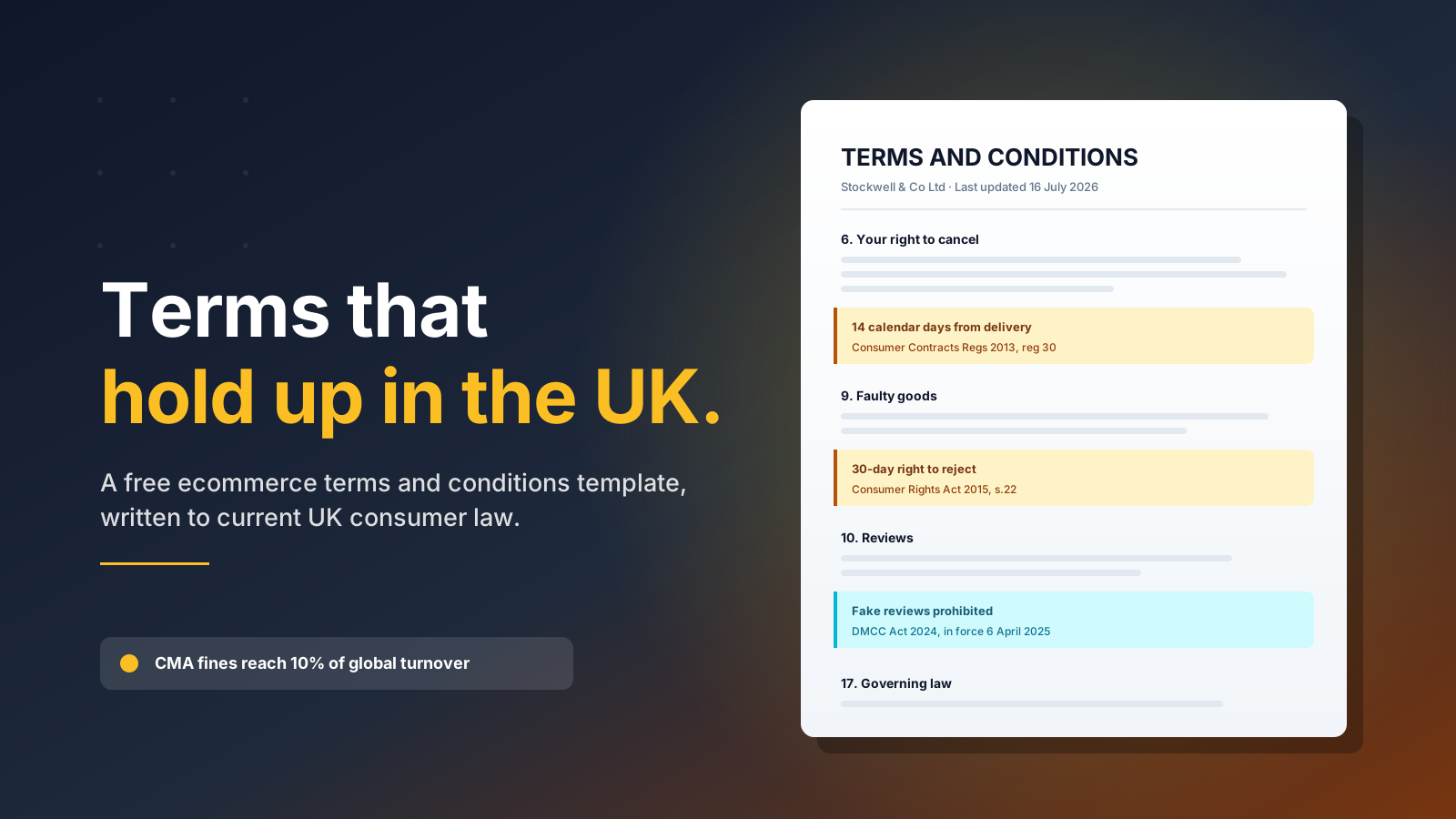
Do UK Stores Legally Need Terms and Conditions?
Almost every page competing for this search tells you the same thing: terms and conditions are not legally required. That answer is technically true and practically misleading, and it is worth taking apart before you copy anyone's clauses.
No UK statute says "thou shalt publish a document called Terms and Conditions". What UK law does say is that a distance seller must give consumers a long list of specific information before they are bound by a contract, and must give it in a clear and comprehensible way. That obligation comes from the Consumer Contracts (Information, Cancellation and Additional Charges) Regulations 2013. Separately, the Electronic Commerce (EC Directive) Regulations 2002 require you to make your name, geographic address, email address, company registration number and VAT number easily, directly and permanently accessible.
So the document is optional. The information in it is not. Terms and conditions are simply the container almost every store uses to discharge those obligations in one place. Skip the container and you still owe the contents, only now they are scattered across your site or missing entirely. Those obligations attach to every transaction you take, whichever platform your products sit on.
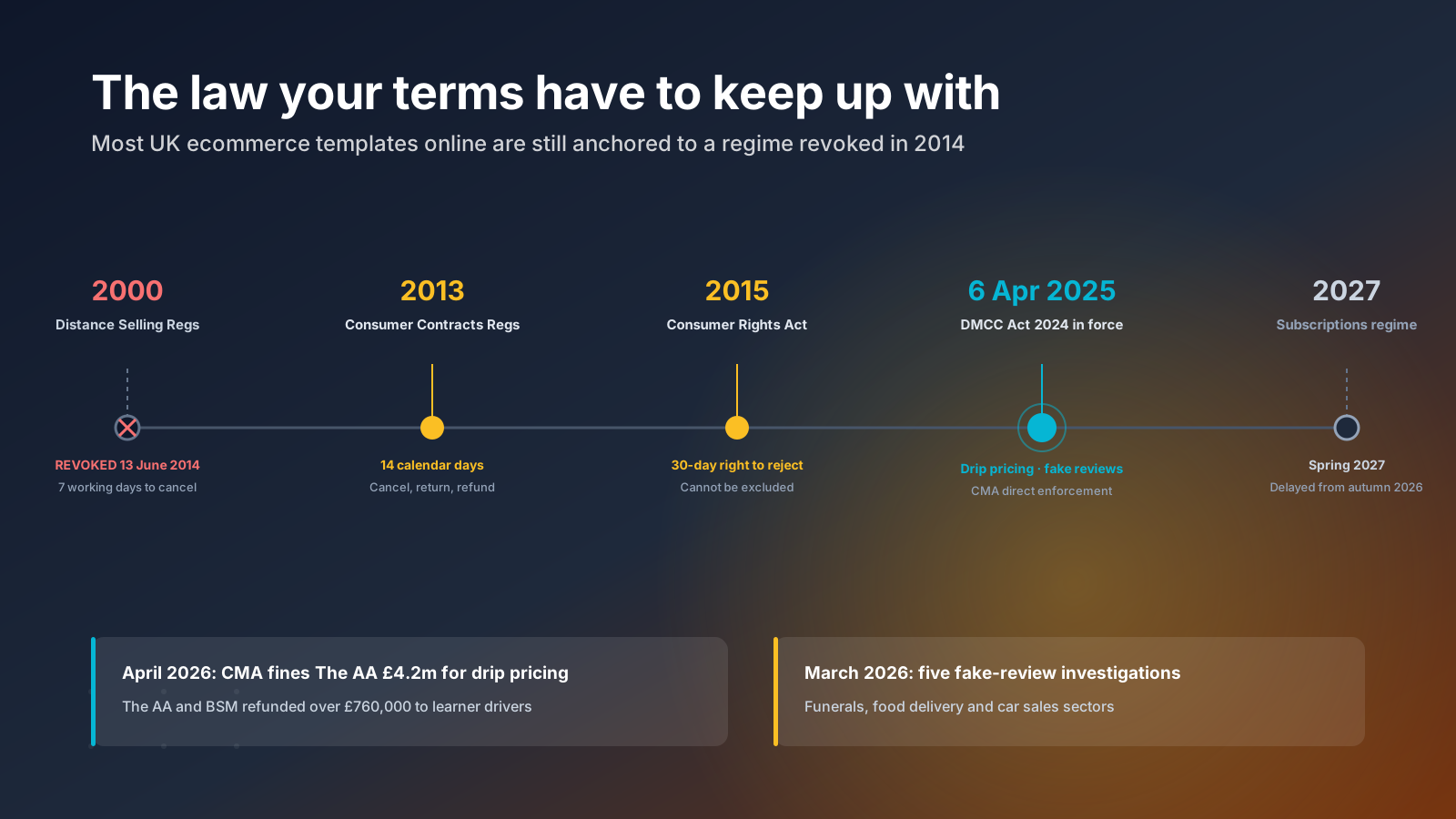
There is a second reason to take the document seriously. If you fail to tell a customer about their cancellation rights, the 14-day cancellation window does not start. It extends by a further 12 months. A missing clause can turn a two-week return liability into a year-long one, and that is a commercial exposure rather than an abstract compliance point.
The Five Laws Your Terms Have to Respect
UK ecommerce terms sit on top of five pieces of law. Every clause in the template below traces back to one of them.
The Consumer Contracts (Information, Cancellation and Additional Charges) Regulations 2013. This is the cancellation regime. A consumer buying at distance has 14 calendar days from the day after the goods reach them to change their mind for any reason, with no fault required. It also sets out the pre-contract information you must supply.
The Consumer Rights Act 2015. Goods must be of satisfactory quality, fit for purpose and as described. A consumer who receives faulty goods has a short-term right to reject them and get a full refund within 30 days, then a right to repair or replacement after that. Section 31 makes these rights impossible to exclude by contract, which is why blanket disclaimers copied from American templates are so much dead text.
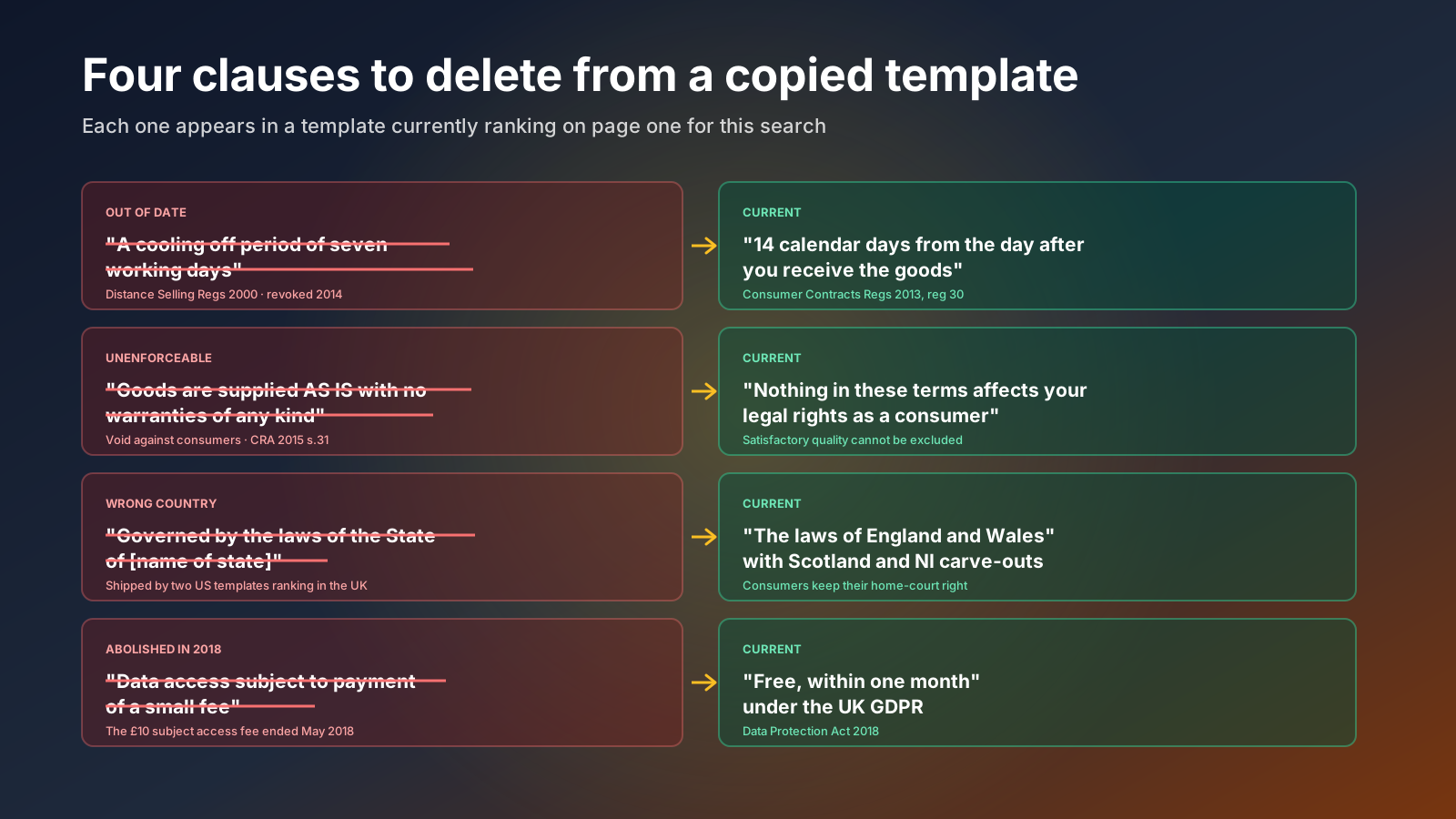
The Digital Markets, Competition and Consumers Act 2024. The consumer protection provisions came into force on 6 April 2025 and gave the Competition and Markets Authority power to fine businesses directly, without going to court first. Drip pricing and fake reviews are now banned outright.
The Electronic Commerce (EC Directive) Regulations 2002. Still in force after Brexit. This is where the requirement to publish your company details comes from.
The UK GDPR and the Data Protection Act 2018. Your terms should point to a privacy policy rather than try to be one. Subject access requests are free and answered within one month.
The Free Template
Read this first. Charle is a Shopify agency, not a law firm, and this template is not legal advice. It is a well-researched starting point that reflects the law as at July 2026. Your business has facts we know nothing about: what you sell, who you sell it to, whether you ship abroad, whether you take subscriptions, whether you handle age-restricted goods. Have a solicitor review this before it goes live, particularly the liability and governing law clauses. The cost of an hour of legal review is considerably lower than the cost of a Trading Standards enquiry.
Replace everything in square brackets. Delete any clause that does not describe your business, because a clause that misdescribes what you do is worse than no clause at all.
1. Who we are. [Trading name] is a trading name of [Legal entity name], a company registered in England and Wales under company number [00000000], with its registered office at [address]. Our VAT number is [GB 000 0000 00]. You can contact us at [email] or [phone].
2. About these terms. These terms apply to every order you place with us through [domain]. Please read them before you order. By placing an order you agree to them. We may change these terms, and the version that applies to your order is the version published when you placed it.
3. How your order is accepted. Your order is an offer to buy from us. Our acknowledgement email confirms we have received your order, but it is not acceptance. A contract is formed only when we email to confirm that the goods have been dispatched. If we cannot accept your order we will tell you and refund you in full. We may decline an order where the goods are out of stock, where payment is not authorised, where we have identified a pricing or description error, or where we cannot complete our fraud checks.
4. Price and payment. Prices are shown in pounds sterling and include VAT at the prevailing rate. The total you must pay, including any unavoidable fees, is shown before you commit to the order. Delivery charges are shown separately before checkout. If we discover an error in the price of goods you have ordered, we will contact you to ask whether you wish to continue at the correct price or cancel. Payment is taken at the point of dispatch [or: at the point of order, if that is what your gateway does].
5. Delivery. We deliver to [territories]. Delivery estimates are estimates and not guarantees. We will deliver within 30 days of the contract being formed unless we agree a longer period with you. Risk in the goods passes to you on delivery.
6. Your right to cancel. If you are a consumer, you have the right to cancel this contract within 14 days without giving any reason. The cancellation period ends 14 days after the day on which you, or a carrier you named, take physical possession of the goods. To cancel, tell us clearly by [email], by post to [address], or by using the model cancellation form. You may use any clear statement, and a phone call or email is enough.
7. Refunds after cancellation. If you cancel, we will refund all payments received from you, including the standard cost of delivery to you. Where you chose a more expensive delivery option than our cheapest standard option, we refund only the cost of the standard option. We will make the refund without undue delay and no later than 14 days after the day we receive the goods back, or 14 days after you supply evidence that you have sent them back, whichever is earlier. We refund using the same payment method you used. You must send the goods back within 14 days of telling us you are cancelling. You bear the direct cost of returning the goods. We may reduce your refund to reflect any reduction in the value of the goods caused by you handling them beyond what is necessary to establish their nature, characteristics and functioning.
8. When the right to cancel does not apply. The 14-day right does not apply to goods made to your specification or clearly personalised, goods liable to deteriorate or expire rapidly, sealed goods which are not suitable for return for health protection or hygiene reasons once unsealed, sealed audio or video recordings or software once unsealed, and newspapers or magazines other than subscriptions. For digital content supplied by download or streaming, you lose the right to cancel once supply has begun, provided you gave express consent and acknowledged that you would lose the right.
9. Faulty or misdescribed goods. Nothing in these terms affects your legal rights. Under the Consumer Rights Act 2015, goods must be of satisfactory quality, fit for purpose and as described. If they are not, you have a right to reject them and receive a full refund if you tell us within 30 days of receiving them. After 30 days you may ask us to repair or replace them, and if that fails you may claim a price reduction or reject them. This is separate from and additional to the 14-day cancellation right above.
10. Reviews. We publish reviews only from customers who have bought the product. We do not write, commission, incentivise or host fake reviews, and we do not remove genuine negative reviews to distort the overall picture.
11. Limitation of our liability to you. We are responsible for loss or damage you suffer that is a foreseeable result of our breaking these terms or failing to use reasonable care and skill. We do not exclude or limit our liability where it would be unlawful to do so, and that limitation includes liability for death or personal injury caused by our negligence, for fraud, and for any breach of your statutory rights in relation to the goods. We are not liable for business losses. If you use the products for any commercial purpose we have no liability to you for loss of profit, loss of business, business interruption or loss of business opportunity.
12. Your account and acceptable use. You are responsible for keeping your account credentials confidential. Users must not misuse our site by knowingly introducing malicious code, attempting unauthorised access, or using automated systems to extract data from it or from any of our websites.
13. Suspension and termination. We may suspend or close your account where you have breached these terms, where we suspect fraudulent use, or where we are required to do so by law. Termination does not affect any order already accepted, and it does not remove your statutory rights in relation to goods you have already bought. You may close your account at any time by contacting us. We may also withdraw or suspend the site itself, and we will give you reasonable notice where we can.
14. Intellectual property. All content on [domain], including text, photography, design and logos, belongs to us or our licensors. You may not reproduce it commercially without our written permission.
15. Your personal data. We handle personal data in line with our privacy policy at [URL], which explains our lawful basis for processing, how long we keep your data, and how to exercise your rights under the UK GDPR.
16. Modification of these terms. We may change these terms to reflect changes in the law, in our products, or in how we operate. Any modification applies to orders placed after we publish it, and we will date each version so you can see what applied to your transaction.
17. Complaints and disputes. If something has gone wrong, contact us at [email] and we will respond within [X] working days. If we cannot resolve your complaint you may be able to refer it to an alternative dispute resolution provider, and we will tell you whether we intend to use one. Nothing here stops you taking disputes to court.
18. Governing law and jurisdiction. These terms are governed by the law of England and Wales, and the courts of England and Wales have jurisdiction over any dispute. If you live in Scotland you may bring proceedings in either the Scottish or the English courts. If you live in Northern Ireland you may bring proceedings in either the Northern Irish or the English courts. As a consumer you keep the protection of the mandatory rules of the country where you live.
Four Clauses to Delete From Any Copied Template
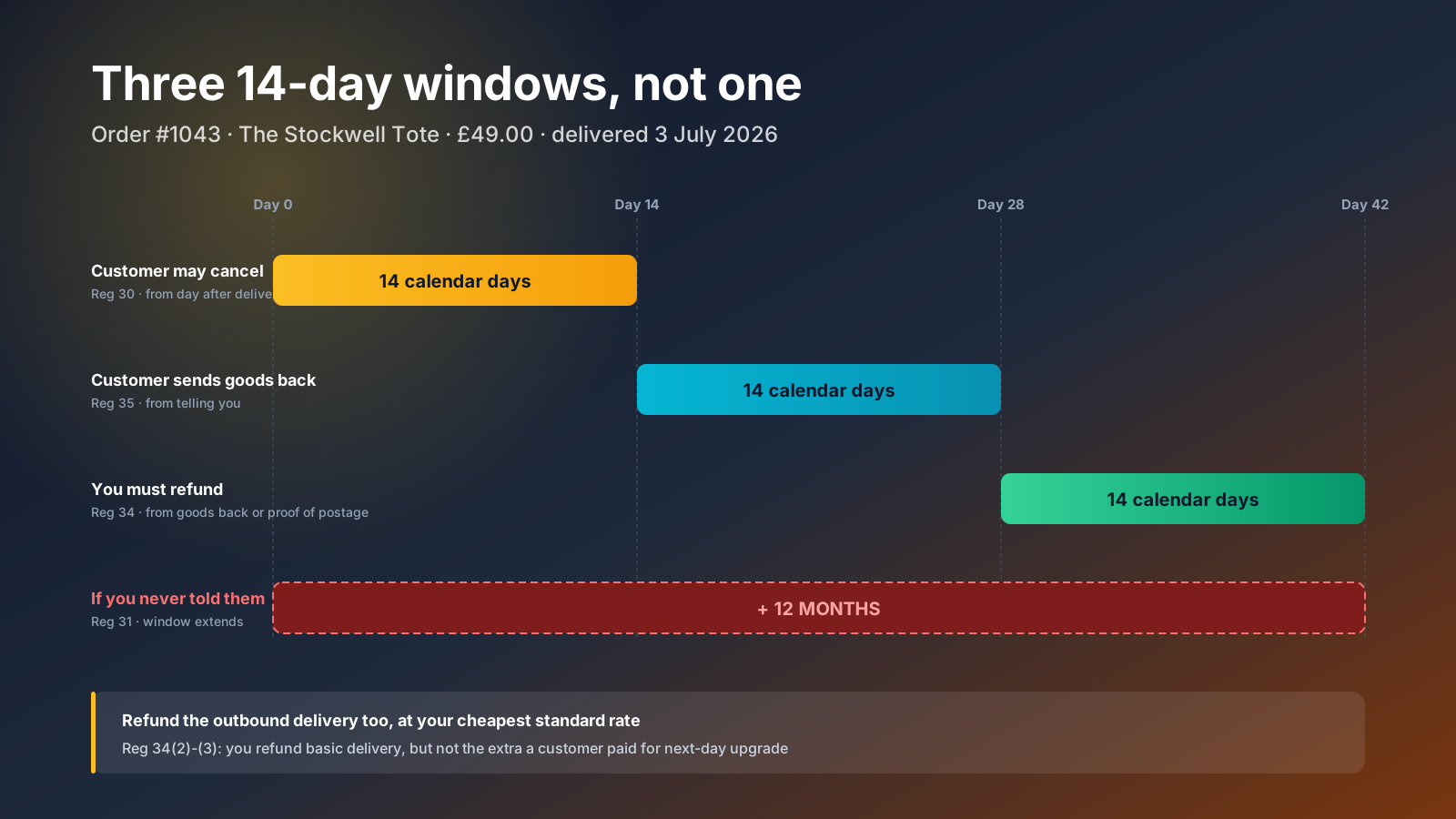
Each of the following appears in a template currently ranking on page one of Google for this exact search. If you copied any of them onto a UK store, you would be publishing something wrong.
"A cooling off period of seven working days." This is the Consumer Protection (Distance Selling) Regulations 2000, which were revoked on 13 June 2014 and replaced by the 2013 Regulations. The correct figure is 14 calendar days, not seven working days, and it runs from the day after delivery rather than the day after the order. Any template still carrying the seven-day figure predates the current regime by more than a decade and should be treated as unreliable throughout, not just in that clause.
"Goods are supplied AS IS with no warranties of any kind." Standard in US templates, and not enforceable against a UK consumer. Section 31 of the Consumer Rights Act 2015 stops you contracting out of satisfactory quality, fitness for purpose and correspondence with description. Publishing it does not merely fail, it also signals to a regulator that your terms were copied without review.
"Governed by the laws of the State of [name of state]." Two of the templates ranking for this UK query ask you to fill in a US state and county, and one hardcodes a clause directing complainants to the California Department of Consumer Affairs. A UK merchant cannot complete those fields honestly.
"Access to your data is subject to payment of a small fee." The £10 subject access fee was abolished when GDPR took effect in May 2018. Subject access is free and you have one month to respond. A template carrying this line predates the current data protection regime entirely.
The pattern matters more than the individual errors. Terms and conditions are the least glamorous page on a store, so they get written once and never revisited. Then the law moves. The templates that rank well for this search rank on domain authority rather than accuracy, and several of them have not been touched since before the DMCC Act existed.
What the DMCC Act 2024 Changed
The Digital Markets, Competition and Consumers Act 2024 is the biggest change to UK consumer law since 2015, and none of the eight pages currently ranking for this keyword mention it. Its consumer protection provisions took effect on 6 April 2025.
The headline change is enforcement. The CMA can now decide that a business has broken consumer law and fine it directly, without first proving the case in court. Penalties reach 10% of global annual turnover or £300,000, whichever is higher, and individuals can be fined up to £150,000. That is a different order of risk from the old regime.
Drip pricing is now banned. Any fee a customer cannot avoid paying has to be in the headline price, not revealed later in the funnel. If every buyer pays a booking fee, a service charge or a mandatory handling charge, it belongs in the price you advertise. Optional extras can still be added later. In April 2026 the CMA fined The AA £4.2 million over drip pricing, and The AA and BSM together refunded more than £760,000 to learner drivers.
Fake reviews are banned, and the duty is active rather than passive. A fake review is one that presents itself as based on genuine experience when it is not. You are expected to take reasonable steps to prevent them appearing, which means verification and detection rather than waiting for complaints. In March 2026 the CMA opened five investigations into fake and misleading reviews across the funerals, food delivery and car sales sectors. For a Shopify store running a reviews app, the practical question is whether that app verifies purchase.
One piece of the Act has not arrived yet. The subscription contracts regime, which will require clearer pre-contract information, reminders before renewal and easier exit, has been delayed repeatedly. It was expected in spring 2026, then autumn 2026, and in April 2026 the government pushed it to spring 2027. If you sell subscriptions, your terms will need revisiting when the secondary legislation lands.
How to Add Your Terms to Shopify
This is the step the legal template sites cannot help you with, because none of them are written for a platform.
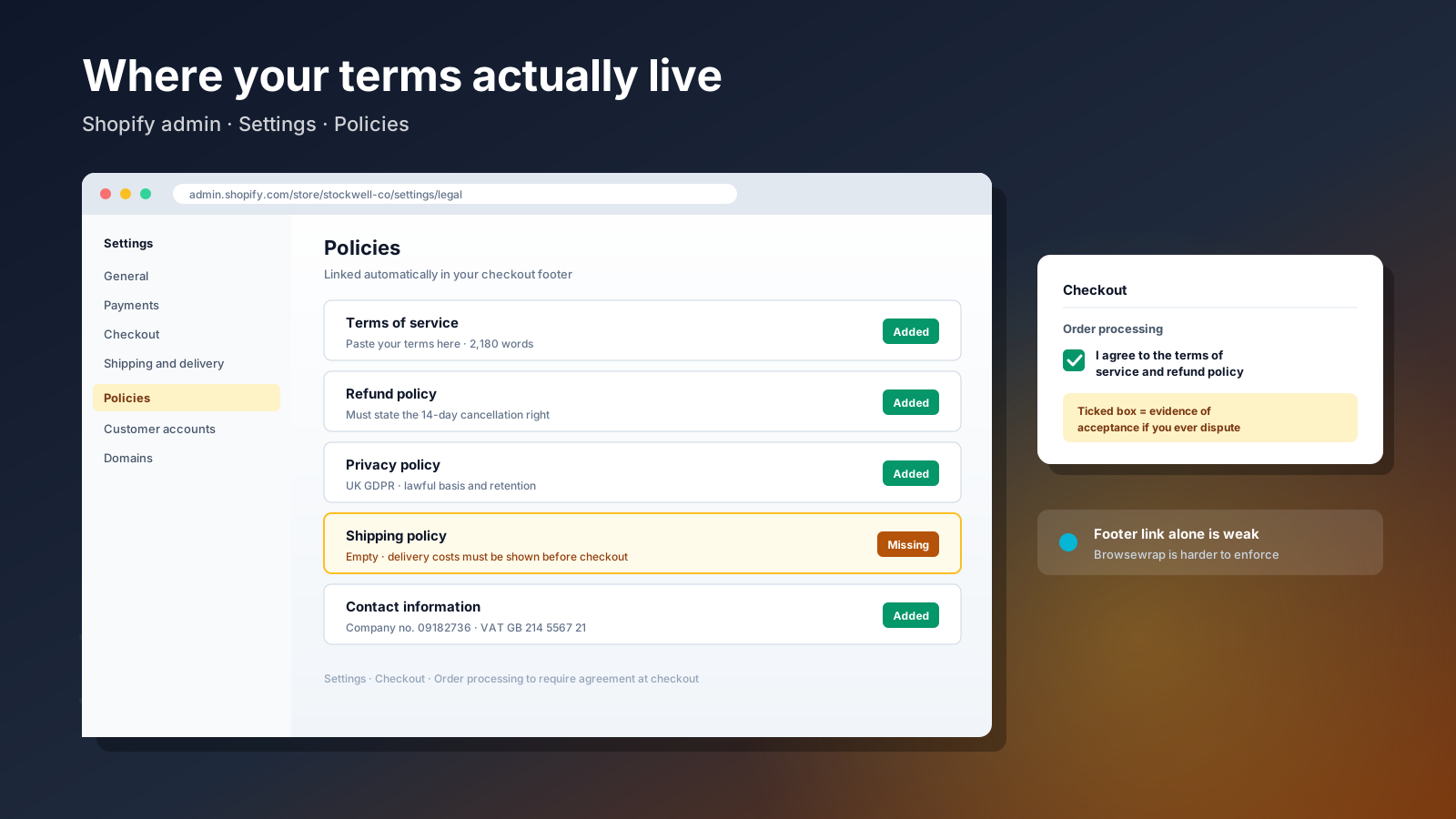
In your Shopify admin, go to Settings, then Policies. You will find fields for Terms of service, Refund policy, Privacy policy, Shipping policy, Legal notice and Contact information. Paste your terms into Terms of service. Shopify links these automatically in the footer of your checkout pages, which handles part of your accessibility duty under the E-Commerce Regulations.
Do not let Shopify's built-in policy generator do the work unreviewed. It produces a generic starting point, and the sample refund policy it generates has historically used figures that do not match the 14-day cancellation right. Treat generated output as a first draft.
A footer link on its own is a weak form of agreement. Lawyers call it browsewrap, and its weakness is that you cannot show the customer ever saw it, which makes the terms harder to enforce. Terms are more likely to be enforceable where you can show the user was given a fair chance to read them and actively agreed. The stronger option is in Settings, then Checkout, under Order processing, where you can require customers to tick a box reading "I agree to the terms of service and refund policy" before they can complete checkout. That tick is evidence of acceptance, and it timestamps the transaction.
There is a conversion cost to consider. Any extra field between a shopper and a completed order costs you some percentage of orders, and the box adds friction at the worst possible moment. Nic Dunn, CEO of Charle, takes the view that the checkbox earns its place on stores selling high-value, made-to-order or age-restricted goods, where a disputed order is expensive, and rarely earns it on a low-value repeat-purchase store where the same dispute costs less than the orders you lose. Test it rather than assuming. If you are working on checkout more broadly, our guides to editing the Shopify checkout and Shopify one-page checkout cover what you can change on each plan.
Three further placements are worth getting right. Your company details from clause 1 belong in Contact information so they are permanently accessible. Your delivery costs belong in Shipping policy so they are visible before a customer commits. And your returns process belongs in Refund policy, where Shopify surfaces it at checkout, rather than being buried in the terms. Keep the two consistent: if your refund policy promises 28 days of returns and your terms say 14, the more generous promise is the one a customer will hold you to.
When a Template Is Not Enough
A template is a starting point for a straightforward store selling physical goods to UK consumers. Several situations take you past what any free template can safely cover.
You sell subscriptions. The DMCC subscription regime is coming in spring 2027 and will impose specific duties around renewal reminders and cancellation. Get advice rather than guessing.
You sell business to business. Consumer protections do not apply, so the whole balance of the document changes. B2B terms are a different document, not a tweak. If you run both, you need two sets and a reliable way of telling which customer is which. Our guide to B2B on Shopify Plus covers the platform side.
You sell digital content, software or licences. You are licensing rather than selling, and the cancellation carve-outs work differently.
You ship outside the UK. Consumers keep the mandatory protections of their own country of residence. Selling into the EU means the Consumer Rights Directive applies alongside your terms.
You sell age-restricted, regulated or perishable goods. Alcohol, knives, supplements, medical devices and food all carry sector rules that sit on top of general consumer law.
You host user content or run a marketplace. Once users can post reviews, photographs or listings, you need acceptable use, takedown and moderation provisions that a sale-of-goods template does not contain.
Keeping Your Terms Current
The failure mode for terms and conditions is not writing them badly. It is writing them once. Every stale template ranking for this search was accurate when published.
Put a review in your calendar twice a year, and trigger an extra review whenever you change what you sell, add a subscription or pre-order, start shipping to a new country, change payment or delivery providers, or see a change in the law. Date the document visibly so customers and regulators can see when it was last touched, and keep a copy of each version, since the version that applies to an order is the one that was live when the order was placed.
The next fixed date in the diary is the subscription regime in spring 2027. If you sell anything on a recurring basis, that is the review that matters.
If you would like help getting the commercial side of your store right, from conversion rate to Shopify SEO, our Shopify Plus agency and ecommerce SEO teams can help. Get in touch to talk it through. For the legal review itself, speak to a solicitor.