 Nic Dunn, CEO, Charle Agency
The Benefits of Shopify Plus at a Glance
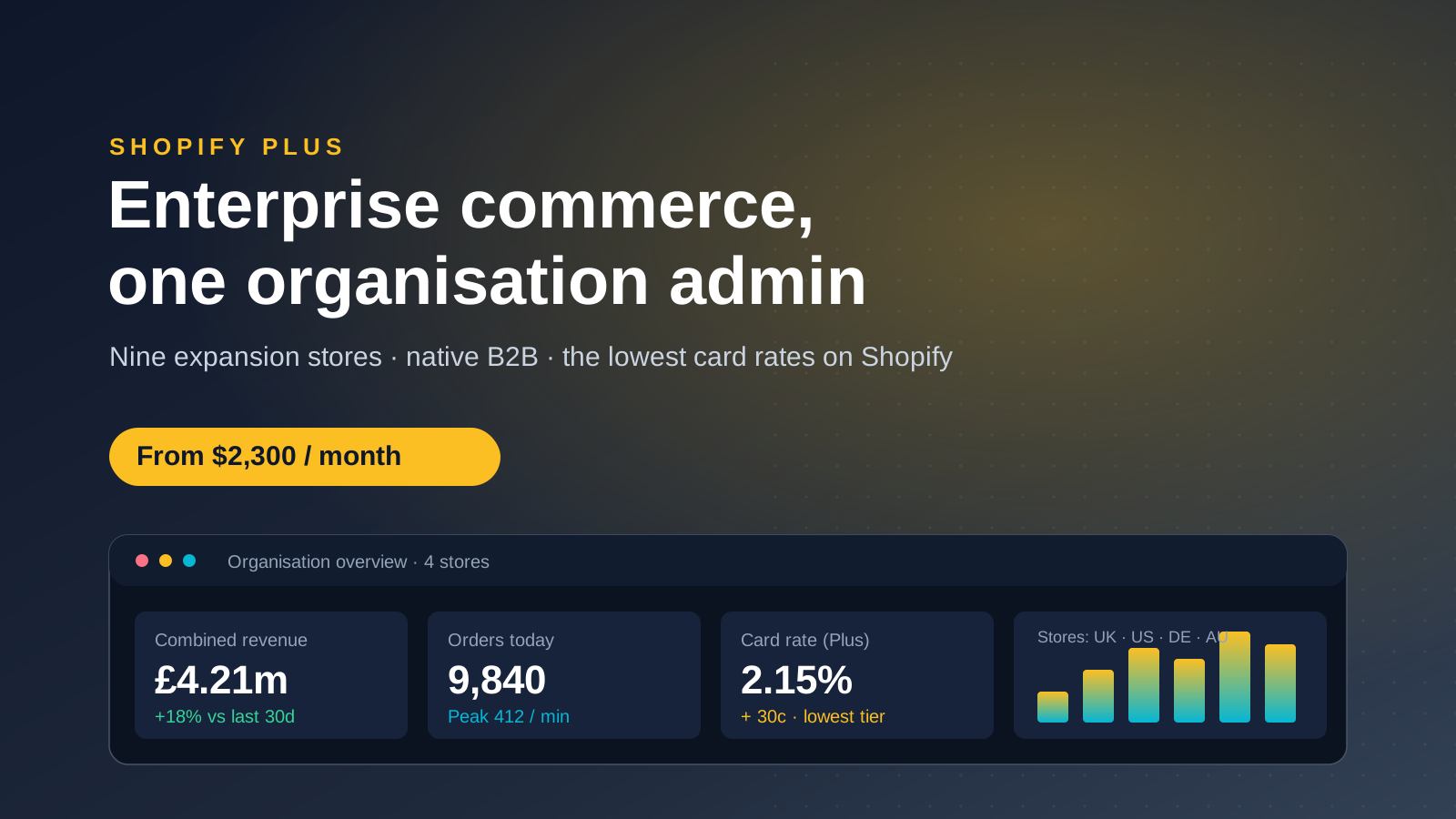
The main benefits of Shopify Plus are lower transaction fees, a customisable checkout through Checkout Extensibility, native B2B selling, up to nine international expansion stores under one licence, unlimited staff accounts, higher API limits and exclusive automation tools like Shopify Flow and Launchpad. It is built for high-volume brands typically processing $1m or more in annual sales that need enterprise performance without the cost and complexity of platforms like Adobe Commerce or Salesforce Commerce Cloud.
Shopify Plus starts at $2,300 per month on a three-year term. That is a significant jump from the standard plans, so the real question is not what Shopify Plus does, but whether the benefits pay for themselves at your volume. For most brands the answer turns on three numbers: the transaction fees you save, the developer time automation removes, and the revenue gained by selling internationally and to wholesale buyers from one platform.
The sections below break each benefit down with current 2026 figures, then close with our honest view on when an upgrade is worth it. If you are still deciding between tiers, our guide to Shopify vs Shopify Plus sits alongside this one.
What Is Shopify Plus and Who Is It For?
Shopify Plus is the enterprise plan of Shopify, launched in 2014 to give high-growth merchants the scalability and customisation of an enterprise platform while keeping the simplicity of a fully hosted, software-as-a-service model. It runs on the same core as every other Shopify plan, which means no servers to patch, no upgrades to schedule and no security maintenance to budget for. What changes at the Plus tier is the ceiling: higher limits, exclusive features and dedicated support.
The brands that get the most from Shopify Plus tend to share a profile across a variety of use cases. They are scaling direct-to-consumer (DTC) businesses processing high order volumes, hybrid B2B and DTC operations that want both channels in one admin, or international merchants managing several regional storefronts. What they have in common is a stage of business growth where the platform itself starts to limit their goals. Gymshark is the textbook example: it moved from Adobe Commerce (Magento) to Shopify Plus in 2018 after its previous platform buckled under traffic spikes during major product drops, and it has since grown its customer base into one of the largest fitness brands in the world.
It is a weaker fit for organisations that need deep backend control, ERP-driven pricing across thousands of accounts, or complex procurement workflows with multi-level approval chains. Measured against enterprise competitors like Adobe Commerce, Salesforce Commerce Cloud and BigCommerce, Shopify Plus trades some of that low-level freedom for speed and reliability. For most growing enterprises that is the right trade, because the time saved goes back into selling rather than running an e-commerce platform. Knowing which camp you are in, with a clear mind about your own requirements, is the whole decision.
Lower Transaction Fees and Pricing
The most measurable benefit of Shopify Plus is what it does to your fees. As your sales volume climbs, the difference between standard transaction rates and Plus rates compounds into real money, and for many brands the saving alone justifies a large slice of the subscription.
How Shopify Plus pricing works in 2026
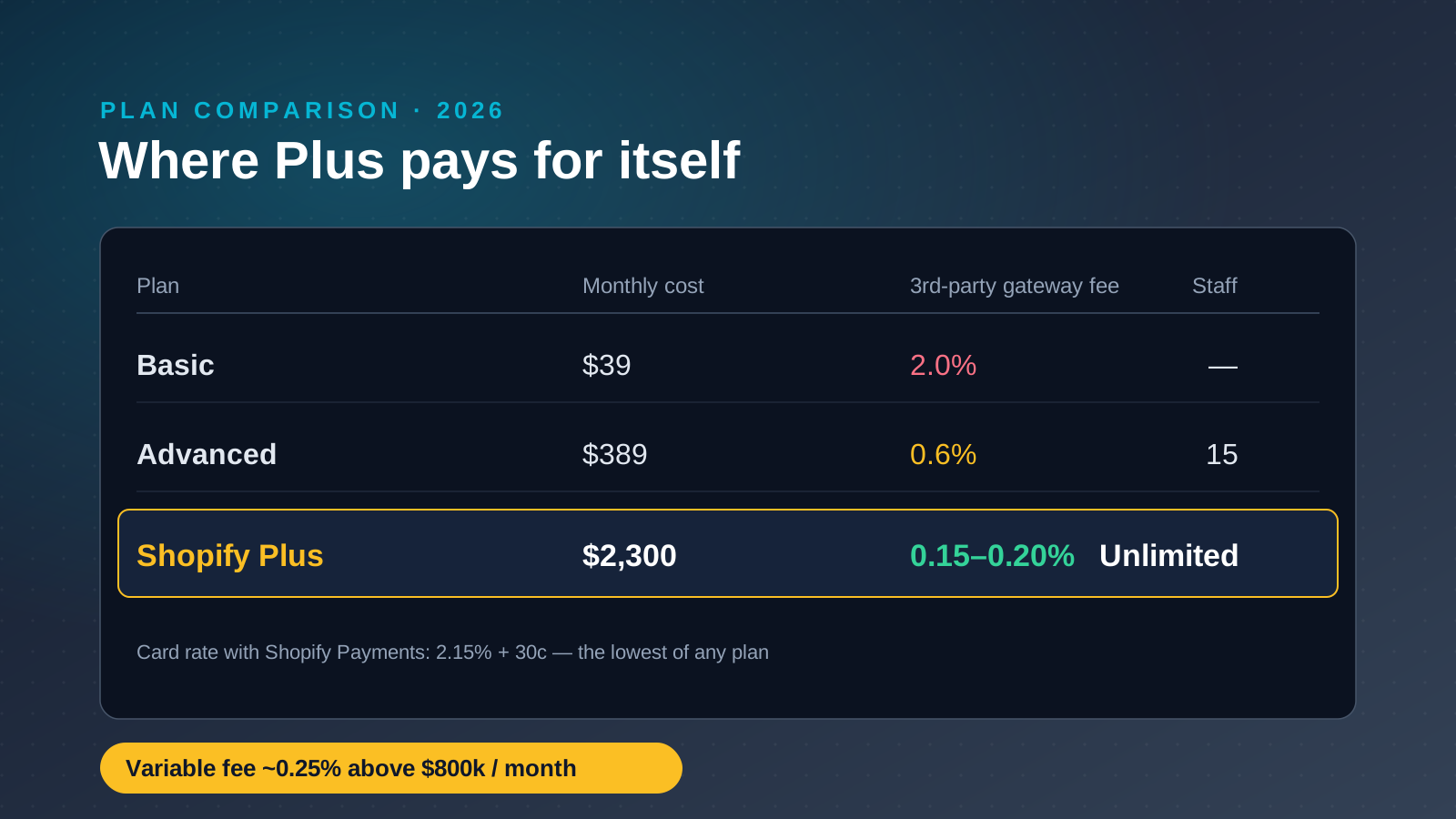
Shopify Plus starts at $2,300 per month on a three-year term, or $2,500 per month on a one-year term. Once a store crosses roughly $800,000 in monthly sales, the flat fee shifts to a variable platform fee of around 0.25% of revenue, capped at $40,000 per month. For context, Basic Shopify is $39 per month and Advanced is $389 per month, so Plus is an order of magnitude more expensive on paper. The point is that the cost is designed to scale with a business already doing serious volume. Our full Shopify pricing breakdown covers every tier in detail.
The table below puts the plans side by side so the trade is easy to see:
| Plan | Monthly cost | Card rate (Shopify Payments) | Third-party gateway fee | Staff accounts |
|---|---|---|---|---|
| Basic | $39 | 2.9% + 30c | 2.0% | Limited |
| Advanced | $389 | 2.5% + 30c | 0.6% | 15 |
| Shopify Plus | from $2,300 | 2.15% + 30c | 0.15–0.20% | Unlimited |
Transaction fees and Shopify Payments
This is where the savings live. On Shopify Plus with Shopify Payments, domestic Visa and Mastercard credit cards and debit cards run at roughly 2.15% + 30c, the lowest card rates of any Shopify plan. If you bring your own payment provider instead of Shopify Payments, Shopify charges a small additional fee of around 0.15% to 0.20% per transaction, compared with 2% on Basic and 0.6% on Advanced. The freedom to offer local payment methods and alternative payment options in each market still stands; the surcharge simply rewards brands that keep payments on Shopify Payments. A brand turning over several million pounds a year and using an external gateway can save tens of thousands annually by moving up to Plus rates and, ideally, onto Shopify Payments to remove the surcharge entirely.
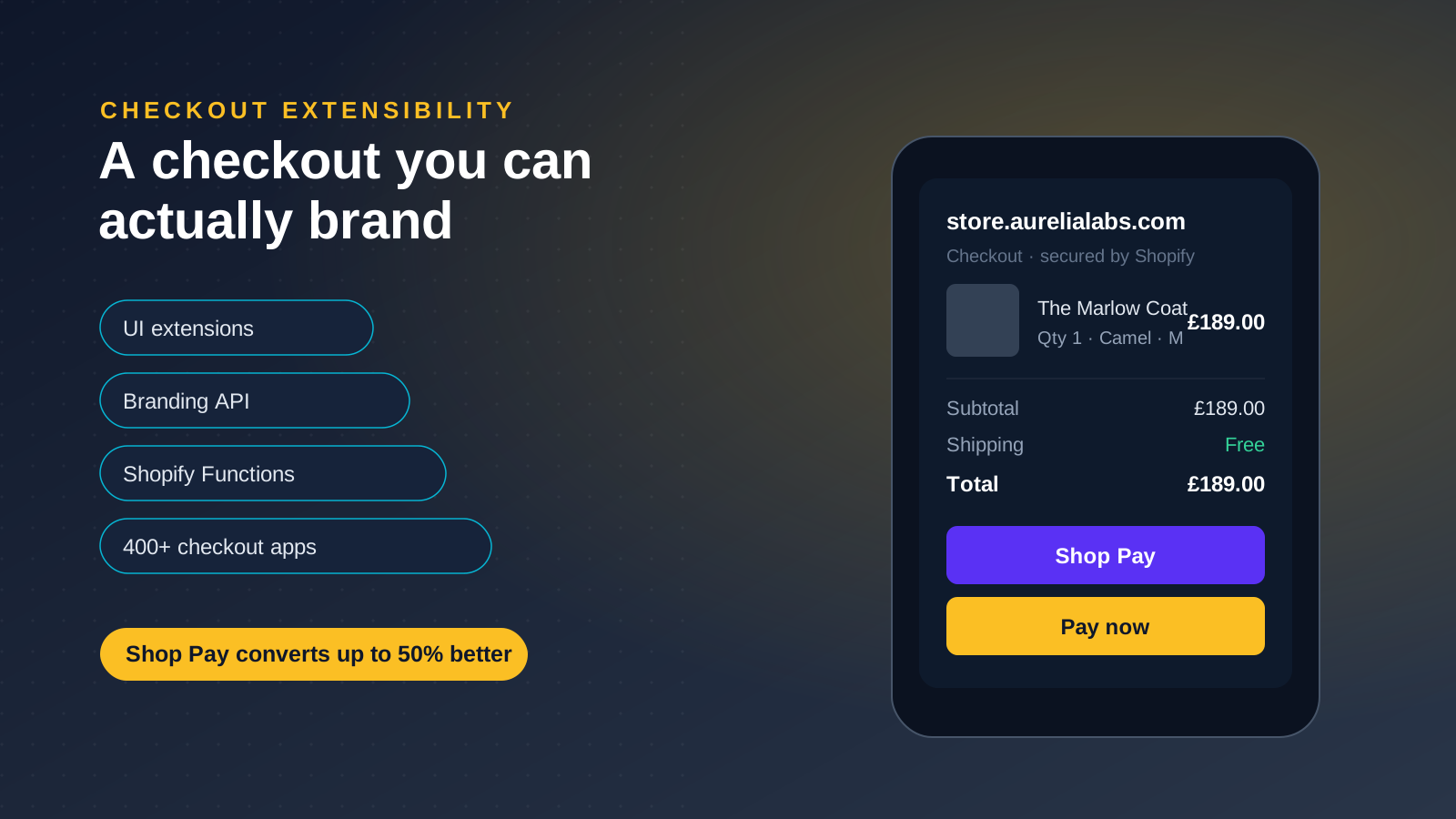
There is a knock-on benefit beyond the headline rate. Shop Pay, Shopify's accelerated checkout, converts as much as 50% better than standard guest checkout, so the payments stack is not only cheaper to run but tends to recover more completed orders and lift conversion rates. Less checkout friction also nudges average order value upward, because returning customers complete purchases in a tap. Lower cost per transaction plus a higher conversion rate is the combination that makes the pricing defensible at scale.
Checkout Extensibility and Customisation
For years the locked-down checkout was the biggest frustration with Shopify. Checkout Extensibility changed that for Plus merchants, and it is now one of the platform's strongest advantages. It replaced the old checkout.liquid approach, which was fully sunset for core checkout pages in August 2024 and for Thank You and Order Status pages in August 2025.
The new model gives Plus brands controlled, upgrade-safe customisation through three building blocks: UI extensions for adding content and logic, the Checkout Branding API for matching the checkout to your store's look, and Shopify Functions for custom business rules. With over 400 extensibility-powered checkout apps available, brands can add upsells, custom delivery and payment logic, loyalty redemption and post-purchase offers without editing core code. The trade is that direct HTML, CSS and JavaScript editing of the checkout is gone; every change now runs through Shopify's framework, which is more secure and survives platform upgrades cleanly.
Beyond the checkout, Plus opens up deeper customisation across the storefront. You get full control over branding and the customer experience, and the freedom to design bespoke checkout flows where standard plans would force a workaround. For brands where the checkout experience is a genuine conversion battleground, this single benefit often carries the upgrade, because smoother checkout experiences convert more shoppers into buyers.
Native B2B and Wholesale
If you sell wholesale, native B2B is one of the most valuable benefits of Shopify Plus, and it is included at no extra cost. It lets you run wholesale and DTC from a single store and product catalogue, instead of maintaining two separate storefronts or stitching together apps. The B2B features are built into the core admin rather than bolted on as an app, so that consolidation is the headline: one admin, one set of inventory, one source of truth for both customer types.
The B2B feature set is built around a few core ideas. Each wholesale customer is a Company, with company profiles that hold one or more Locations, each able to carry its own pricing, net payment terms and tax settings. Catalogs and price lists control which products and items a buyer sees and at what price, supporting percentage discounts, fixed prices and volume breaks. Native payment terms such as Net 30 and Net 60 are assigned at the company level, and buyers log in through Shopify's customer accounts to access their negotiated pricing. Quantity rules, minimum orders and self-serve reordering for repeat purchases round out genuinely modern B2B functionality.
The practical win is that wholesale buyers get the same speed and transparency as DTC customers, which reduces the load on your sales team and encourages larger, more frequent orders. Brooklinen, the DTC bedding brand, used Shopify Plus B2B to spin up a dedicated B2B store inside its existing admin rather than building a custom solution from scratch. Paired with customer segmentation, these B2B capabilities let you treat wholesale companies differently from retail shoppers without running two systems. For brands weighing this up, our Shopify B2B guide goes deeper on setup.
International Expansion Stores
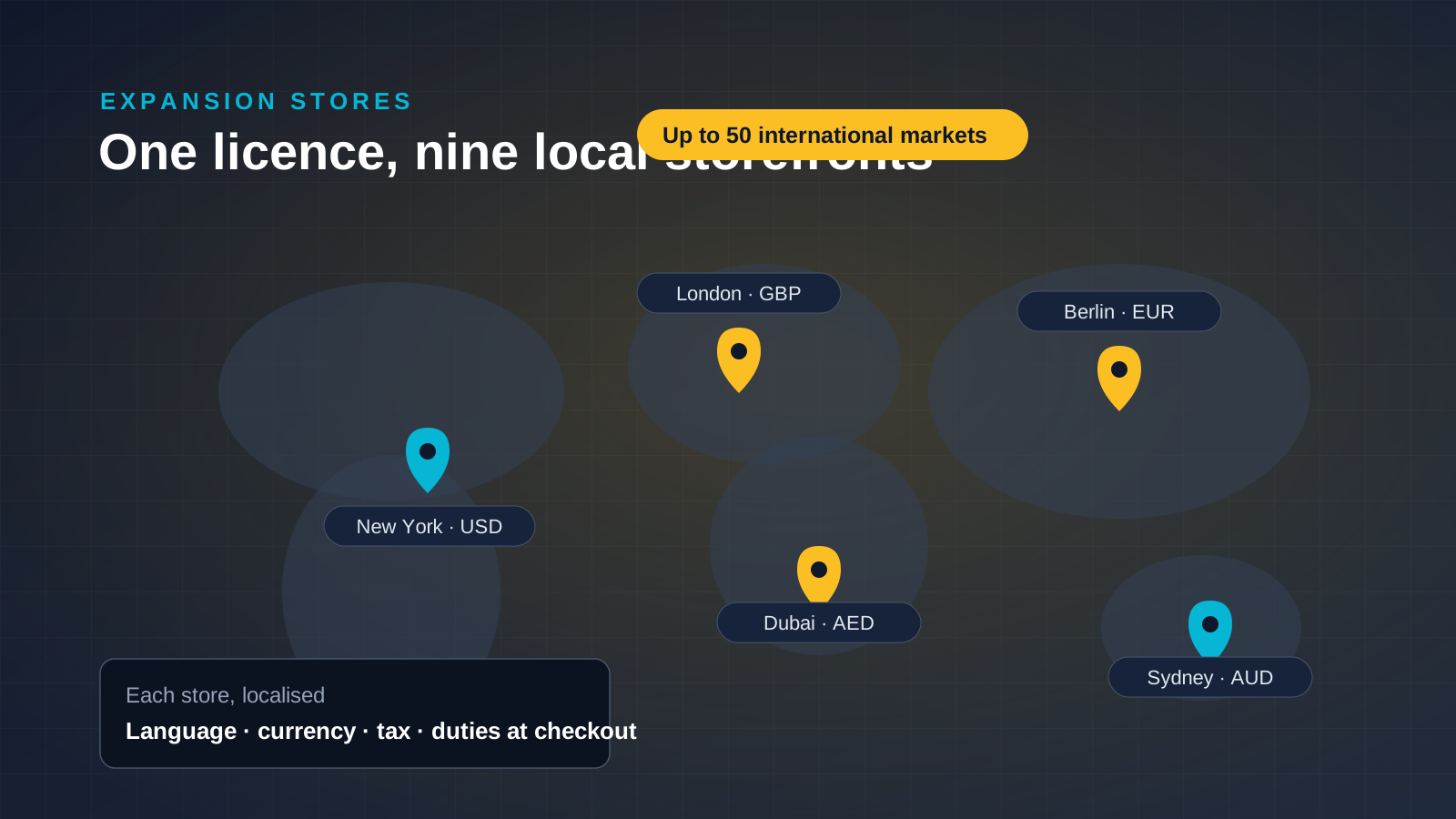
Selling globally is where Shopify Plus pulls clearly ahead of the standard plans. A Plus licence includes your main store plus up to nine expansion stores, each configurable for a different market, language, currency and product catalogue, all managed from one organisation-level admin that keeps store management in one place across every region. Additional expansion stores beyond the nine are available at around $300 per month each.
Each expansion store comes with what international commerce actually needs: localised shipping options and currency, automatic price presentment across currencies, multiple languages and regional tax compliance. Shopify Plus gives access to up to 50 international markets, spanning countries from the United States to Australia, with automated duties and import taxes calculated at checkout so customers see the full landed cost before they buy, which cuts the cart abandonment that surprise fees cause. Brands can present a genuinely local experience in every region without duplicating their entire infrastructure.
This matters because international growth is often the single biggest revenue lever for a scaling brand, and managing it well from one platform is far cheaper than running separate sites per region. It is worth knowing the limitation too: app vendors sometimes charge per storefront, so a brand running a variety of local stores across different regions can see app costs multiply. It is manageable, and most mainstream apps now negotiate, but it belongs in your total-cost maths. Our guide to international pricing with Shopify covers the currency side in detail.
Automation: Flow, Functions and Launchpad
Automation is the benefit that quietly pays for itself in saved hours. Shopify Plus includes three exclusive or enhanced automation tools that let lean teams operate like much larger ones: Shopify Flow, Shopify Functions and Launchpad. Since its launch, Shopify Flow alone has automated hundreds of millions of merchant tasks and processes, freeing teams from repetitive admin work and improving operational efficiency.
Shopify Flow and Shopify Functions
Shopify Flow is a visual, no-code workflow builder that uses triggers, conditions and actions to automate operational tasks: tagging high-value customers as VIP, running customer segmentation, flagging suspected fraud, alerting your team when inventory drops below a threshold, onboarding B2B buyers and triggering post-purchase marketing. On standard plans Flow is limited, so non-Plus merchants lean on third-party apps that add cost and complexity. Shopify Functions, which replaced the older Shopify Scripts and the script editor, extend that control further by letting developers customise discounts, shipping rates, promotions, payment method visibility and product bundling across the whole store rather than just the checkout.
Launchpad for scheduled campaigns
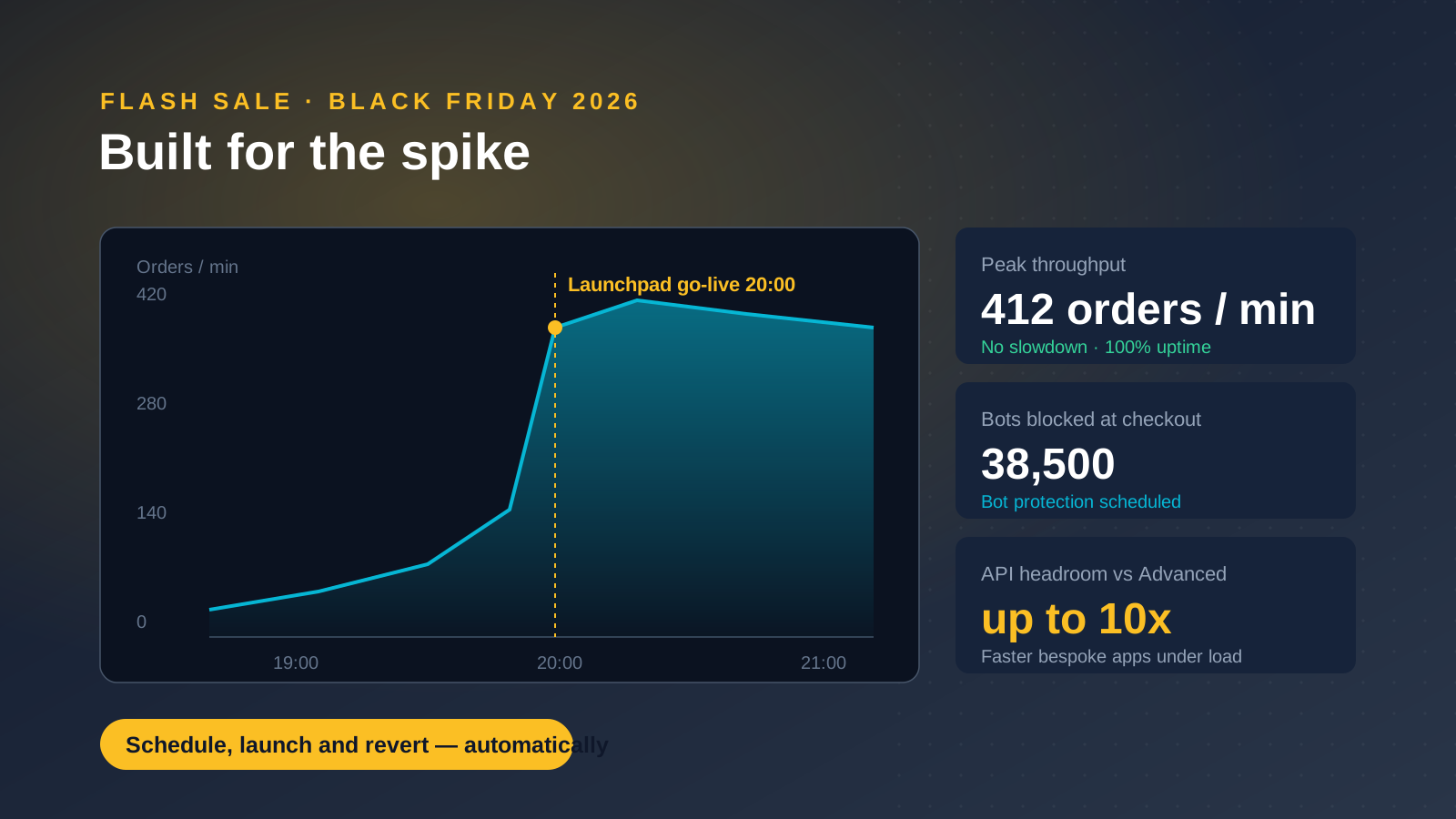
Launchpad is a Plus-exclusive scheduler for high-stakes events. It lets you schedule product drops, flash sales, promotions, theme changes and price updates to go live and revert automatically, with real-time monitoring of each event, so a Black Friday campaign or a limited release runs without late-night manual changes or the risk of a missed go-live. Paired with bot protection during flash sales, it gives brands the confidence to run demand spikes that would break a lesser setup. For teams running frequent campaigns, this is hours of work and a category of human error removed at a stroke.
Shopify POS Pro and Omnichannel
For brands with physical retail, Shopify POS Pro is included with Plus across up to 200 store locations at no extra cost, with the option to extend further. That turns Shopify Plus into a single system for multichannel selling rather than two platforms bolted together, with store management unified across every location. True multichannel commerce means online, in-store and marketplace orders all flow through the same inventory and customer records, and the unified customer view is the real prize.
POS Pro gives you advanced inventory management across locations, channels and warehouses, keeping items and stock counts in sync, plus fully synced customer profiles so a sales assistant can see lifetime spend, past purchases and loyalty points in store. Seamless options like buy-online-pickup-in-store, local delivery and easy returns or exchanges work across channels. A customer who earns loyalty points online can redeem them at the till, and a return started online can be completed in store. The platform treats every shopper as one customer whether they buy online or offline, which is exactly what omnichannel retail is supposed to mean and rarely delivers.
Scalability, Performance and APIs
Underneath every other benefit sits the infrastructure, and this is where Shopify Plus earns its enterprise label. The platform is built to absorb the kind of traffic that takes brands down on other systems: high-volume flash sales, viral moments and seasonal peaks. Plus stores benefit from higher performance limits, unlimited bandwidth and storage, guaranteed uptime and the headroom to handle thousands of transactions per minute without the site slowing or falling over.
Security and reliability are part of the same picture. Every Shopify plan ships with PCI DSS compliance, SSL and DDoS protection, but Plus adds the guaranteed uptime and reliability that high-volume brands depend on, along with real-time monitoring of store health. Two technical advantages matter most for scaling teams. First, API rate limits on Shopify Plus are significantly higher than on Advanced, reported at up to ten times the capacity, which means bespoke apps and integrations with your ERP, CRM and other systems run faster and can do more without hitting ceilings. These integrations are where a lean tech stack becomes a connected one, and the extra headroom gives a brand the agility to ship new capabilities quickly. Second, Plus includes bot protection that can be scheduled around flash sales and product launches, stopping automated bots from beating real customers to limited stock. With proper analysis of peak-load data, higher API headroom, strong security and reliable performance under load are what let a brand build ambitious functionality and trust it on the biggest sales days of the year. For brands moving across from another platform, our Shopify migration services handle the heavy lifting.
Staff Accounts, Admin and Dedicated Support
The day-to-day management benefits are easy to overlook but add up fast for a busy team. Shopify Plus includes unlimited staff accounts with granular permissions, against a cap of 15 on Advanced and fewer below that. For a growing brand or a multi-location retailer, being able to give every team member the right level of access without rationing seats is a genuine operational advantage.
The organisation-level admin ties it together. It gives you a single command centre to manage everything from billing, users and permissions to analytics across every store in your business, with both a combined view and per-store reporting. You can review which stores are outperforming and which are lagging against your baseline, surfacing the information that matters without logging into each one separately.
Finally, support steps up to enterprise standard. Plus merchants get a dedicated account manager and launch engineer, priority 24/7 support, and access to the Shopify Plus community, a network of certified Shopify Plus partners and the merchant success programme. During a migration or upgrade, that named contact is the difference between a smooth launch and a stressful one, and the community is a real advantage that competing platforms struggle to replicate. If you want a partner alongside Shopify's team, the benefits of working with a Shopify agency compound here.
When We Tell Brands to Upgrade, and When We Don't
After building and optimising more than 100 Shopify Plus stores for brands like Doisy & Dam, Kandid and Another Space, here is the view we give brands that ask whether the upgrade is worth it. The honest answer is that the subscription is rarely the deciding factor. What matters is whether your numbers cross the lines where Plus features start paying for themselves and support the next stage of your business growth.
We think the clearest trigger is transaction volume. If you are on Advanced and using a third-party payment gateway while turning over a few million a year, the fee saving from Plus rates plus Shopify Payments often covers a large part of the cost before you count a single other feature. The second trigger is operational pain: if your team is burning hours on manual merchandising, campaign changes or wholesale order entry, the automation and B2B tooling pay back in time, not just money. The third is international, where running several regional stores from one admin is dramatically cheaper than the alternative.
Where we tell brands to wait is when the motivation is prestige rather than maths. If you are under roughly $1m in annual revenue, Advanced at $389 a month covers most needs, and the Plus saving usually will not offset the cost until monthly sales approach the $500,000 to $800,000 range. We would also push back on anyone treating the $2,300 base as the full cost; factor in apps, themes, development and payment processing before committing. Plus is a brilliant platform for a brand that has genuinely outgrown the standard plans. For one that hasn't yet, it is money better spent on growth. If you want a second opinion on your specific numbers, our Shopify Plus agency team is happy to talk it through.