 Nic Dunn, CEO, Charle Agency
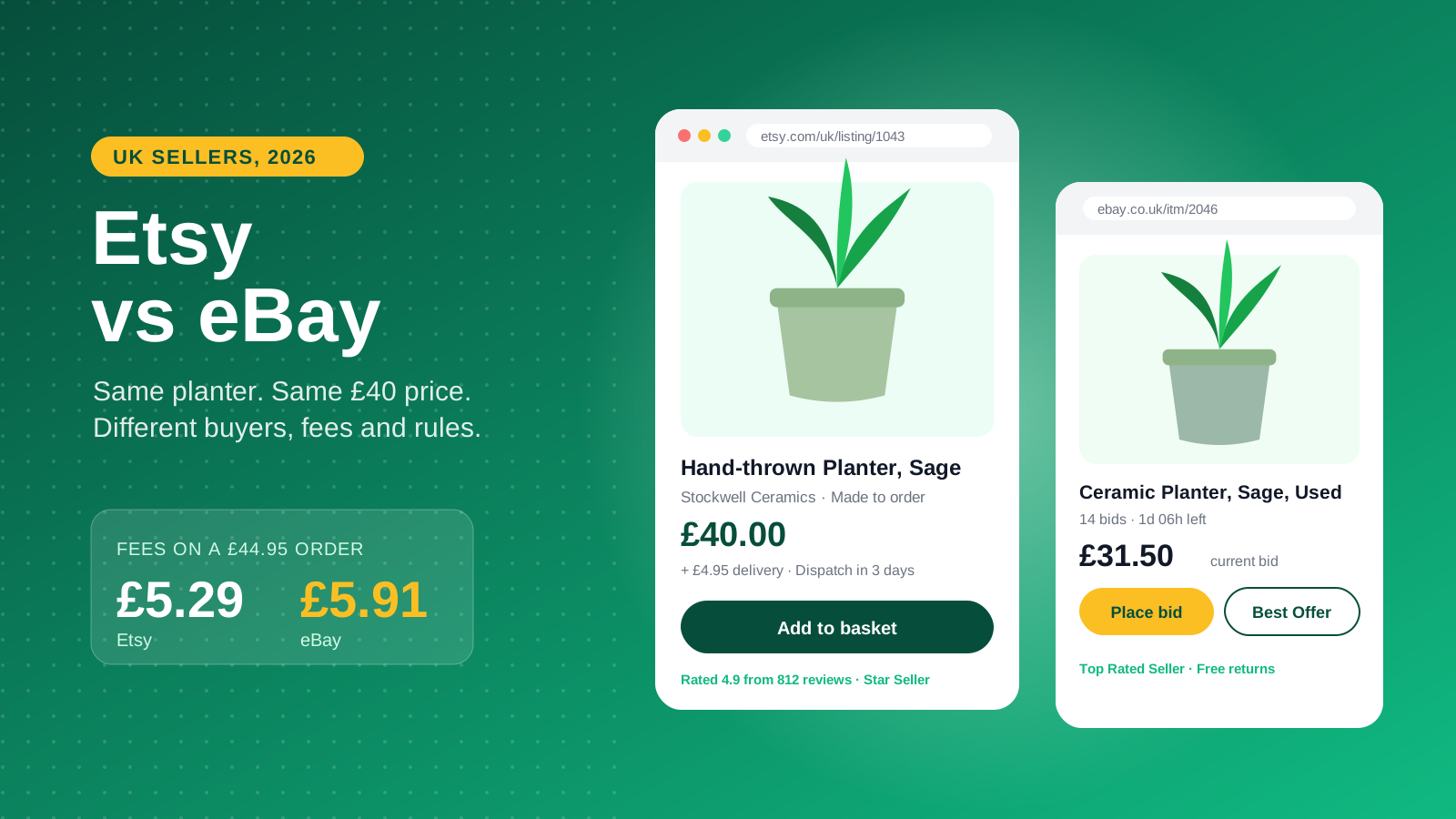
Etsy vs eBay at a Glance
Etsy is the better selling platform for handmade, personalised, vintage and niche design-led products. eBay is the better platform for resale, branded goods, used and refurbished items, collectibles, electronics and high-volume stock. For most sellers the product decides the platform before fees or traffic come into it.
The two marketplaces differ in scale as well as focus. eBay reported around 136 million active buyers in its Q2 2026 results, against roughly 87 million on Etsy. Etsy shoppers arrive looking for something they cannot find on the high street. eBay shoppers arrive comparing condition, model and price. The fit between your products and each customer base matters more than raw audience size.
Here is how the Etsy vs eBay comparison looks side by side for a UK seller in 2026:
| Factor | Etsy | eBay |
|---|---|---|
| Best for | Handmade, personalised, vintage (20+ years), craft supplies | Resale, branded, used, refurbished, collectables, parts |
| Active buyers (Q2 2026) | About 87 million | About 136 million |
| Listing options | Fixed price only | Auction, Buy It Now, Best Offer |
| Seller tools | Shop Manager, Etsy app, Seller Handbook | Seller Hub, eBay app, sales reports |
| Listing fee | $0.20 (about £0.15) per listing, renews every 4 months | Free allowance each month, then £0.35 per listing |
| Sale fees (UK business seller) | 6.5% transaction + 4% + £0.20 processing + 0.48% regulatory | Category final value fee (mostly 9.9% to 14.9%) + £0.30 or £0.40 per order + 0.35% regulatory |
| Dropshipping | Not allowed | Allowed from wholesale suppliers only |
| Shopify integration | Third-party apps | Shopify Marketplace Connect or third-party apps |
If you are still deciding between a marketplace and your own store, our comparison of Shopify vs Etsy covers that trade in more depth.
What You Can Sell on Etsy vs eBay
Product rules are the biggest practical difference between Etsy and eBay. Etsy restricts what you sell. eBay restricts how you sell it.
Etsy's seller policy says every item must be made, designed, handpicked or sourced by the seller. In practice that means four types of product: handmade goods, original designs made with a disclosed production partner (print on demand counts here), vintage items that are at least 20 years old, and craft supplies. Sellers must disclose production partners and any use of AI. Reselling mass-produced stock and dropshipping are not allowed.
eBay is far more open. You can sell new, used, open-box and refurbished goods across almost every category, from clothing, trainers and trading cards to car parts, collectibles and consumer electronics. eBay allows dropshipping only when orders ship directly from a wholesale supplier. eBay's stricter rules sit around listing accuracy, item location and seller performance rather than product origin.
A quick way to sort your catalogue:
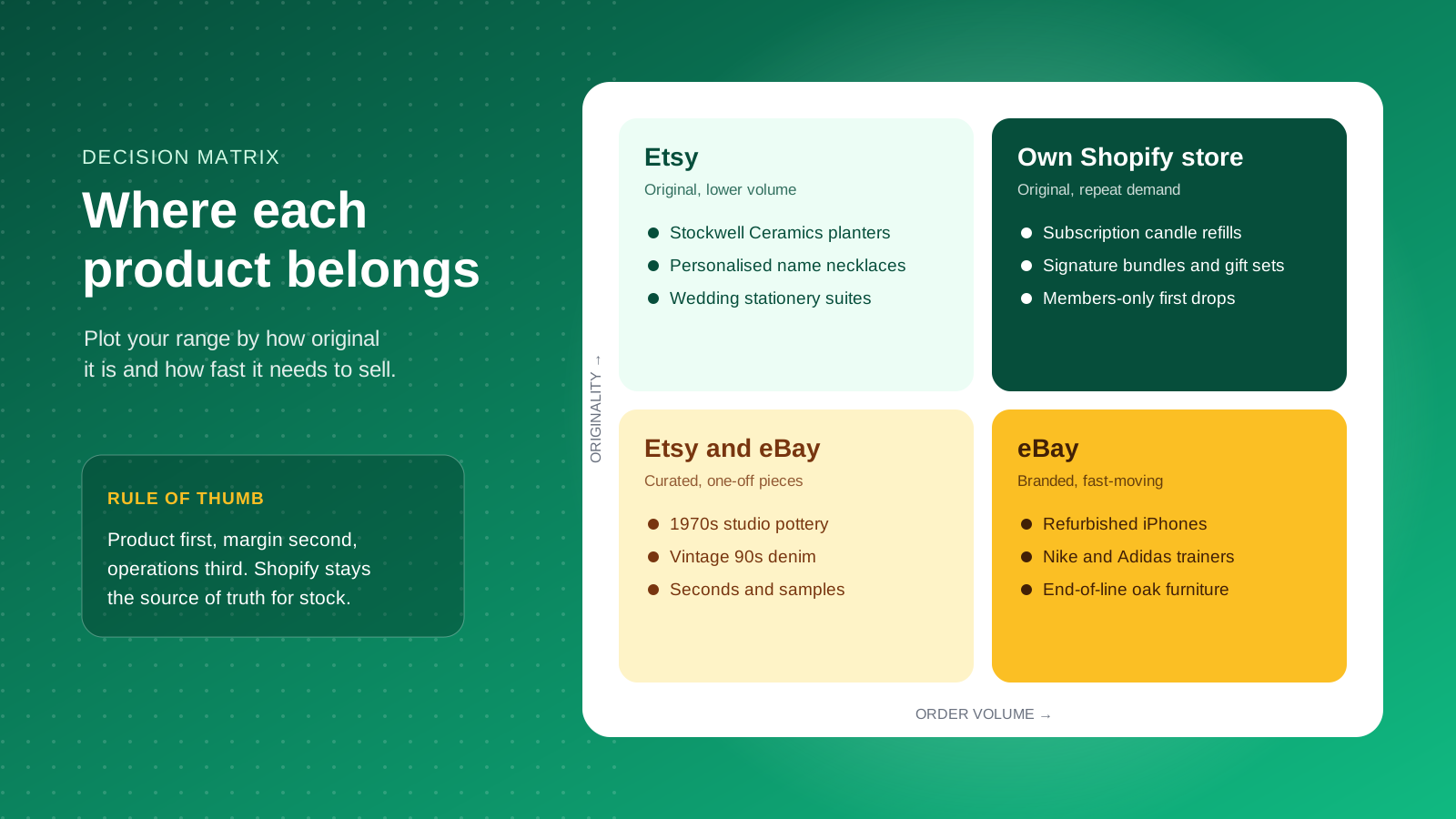
- Etsy fits: hand-thrown ceramics, personalised jewellery, wedding stationery, art prints, 1990s vintage denim, candle-making kits.
- eBay fits: branded trainers, refurbished phones, collectable figures, spare parts, end-of-line stock, pre-loved designer bags.
- Both can work: print-on-demand apparel you designed, genuine vintage over 20 years old, small-batch products with a strong brand story.
Etsy vs eBay Fees for UK Sellers in 2026
On a typical mid-priced order, Etsy and eBay seller fees land within about a pound of each other. The difference comes from how the fees are built, how each platform charges on shipping costs, and the advertising costs that sit on top.
Etsy fees
Etsy charges a $0.20 listing fee (about £0.15, billed in dollars) every time an item is listed or renewed, and listings auto-renew every four months or after each sale. When an item sells, Etsy takes a 6.5% transaction fee on the total order, including postage and gift wrap. The Etsy Payments payment processing fee is 4% plus £0.20 for UK sellers. On 22 June 2026 Etsy raised its UK Regulatory Operating Fee from 0.32% to 0.48% of the order value. UK-based sellers also pay 20% VAT on Etsy's fees. Etsy Plus is an optional $10 a month subscription for extra listing credits and shop customisation.
eBay fees
eBay UK business sellers get a monthly allowance of free listings, then pay £0.35 per listing. The main cost is the final value fee, a category-based percentage of the total sale including postage. Most categories sit between 9.9% and 14.9%: Home, Furniture & DIY is 11.9%, Crafts is 12.9%, and Jewellery & Watches is 14.9%. Since 12 February 2026 there is also a per-order fee of £0.30 for orders up to £10 and £0.40 above £10, plus a 0.35% regulatory operating fee. VAT at 20% applies to eBay's fees too.
Private sellers are a separate case. Since October 2024, eBay UK has charged private sellers no final value fee on most items, with buyers paying a Buyer Protection fee instead. Brands and anyone selling regularly for profit must register as a business seller, so the business rates are the ones that matter for a growing shop.
A worked example
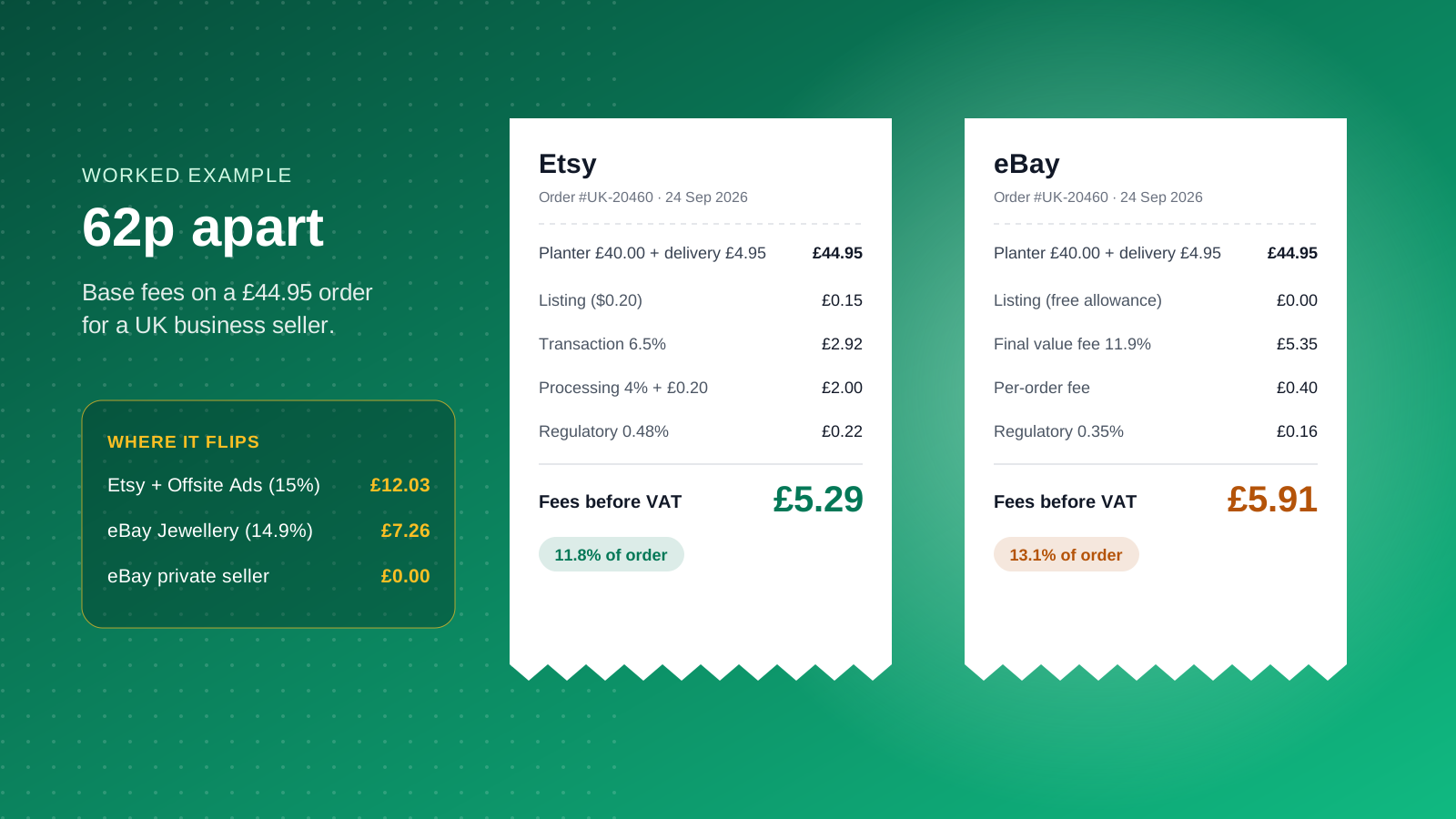
Take a handmade ceramic planter at £40 with £4.95 postage, so a £44.95 order, sold by a UK business seller:
| Fee | Etsy | eBay (Home, Furniture & DIY) |
|---|---|---|
| Listing | £0.15 | £0.00 (within allowance) |
| Transaction or final value fee | £2.92 (6.5%) | £5.35 (11.9%) |
| Payment processing | £2.00 (4% + £0.20) | Included |
| Per-order fee | None | £0.40 |
| Regulatory operating fee | £0.22 (0.48%) | £0.16 (0.35%) |
| Total before VAT and ads | £5.29 (11.8%) | £5.91 (13.1%) |
Etsy comes out 62p cheaper here. Move the same planter into eBay's Jewellery & Watches rate and eBay's total climbs to £7.26. Add an Etsy Offsite Ads sale at 15% and Etsy's total jumps to £12.03. Headline rates mean little until you know your category, price point and share of sales from paid placements.
Who Buys on Etsy and eBay
Etsy shoppers pay for originality. eBay shoppers look for value, condition and specific items.
Etsy's marketplace generated $2.6 billion in gross merchandise sales in Q2 2026, up 7.5% year on year, from around 87 million active buyers. Etsy says most of its traffic is direct or organic, and a large share of buyers come back repeatedly. Shoppers expect price variation based on craftsmanship and customisation, and Etsy's community of artists, crafters and small businesses is part of the appeal, so a £65 personalised necklace can sit happily next to a £22 one. Gifting drives much of Etsy's demand, so Q4 and Mother's Day matter disproportionately.
eBay works at a different scale. Q2 2026 gross merchandise volume was $22.4 billion from around 136 million active buyers, and the UK is one of eBay's largest seller markets. eBay shoppers compare listings closely, filter by condition and sort search results by price, so identical items compete hard on price and shipping costs. Collectors and bargain hunters make eBay excellent for moving stock quickly, and weaker for charging a premium for branding.
The UK context matters too. Both platforms now report seller income to HMRC under the digital platform reporting rules once you pass 30 sales or about £1,700 in a calendar year. It does not change your tax position, but it makes trading easier for HMRC to spot.
Listings, Pricing and Search Visibility
Etsy keeps listings simple. eBay gives sellers more pricing tools and asks for more operational discipline in return.
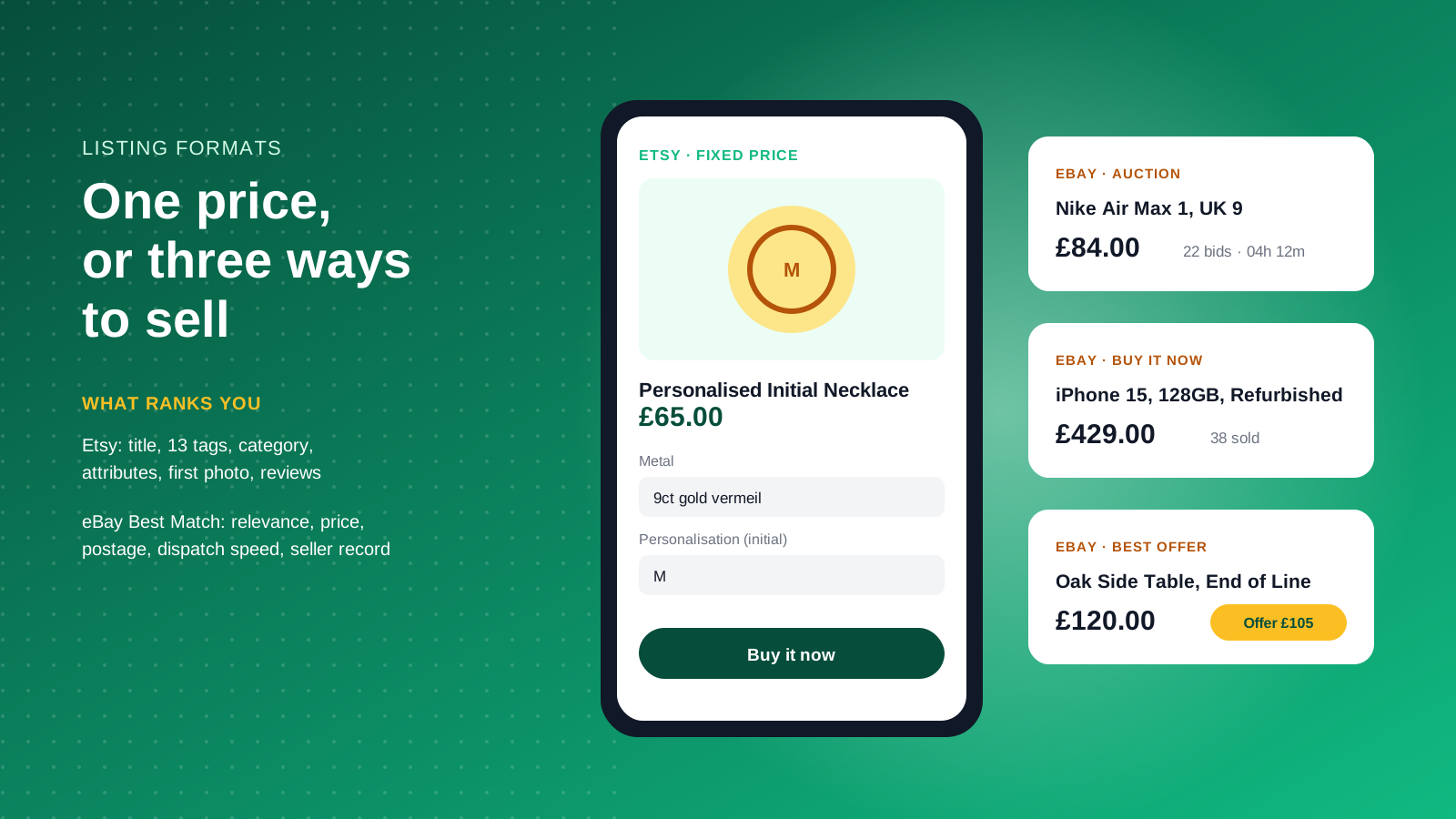
Every Etsy listing is fixed price, with variations for size, colour or personalisation. Etsy search starts with query matching on titles, the 13 tags, categories and attributes, then ranks search results using listing quality signals such as the first photo, reviews, ratings and conversion history. Filling every tag with real keywords, choosing the most specific category and writing titles the way shoppers search are the basics of Etsy SEO.
eBay offers fixed-price Buy It Now listings, auctions, auctions with Buy It Now and Best Offer. Auctions suit rare or hard-to-value items, and Best Offer shifts older stock without a public price cut. eBay's default Best Match ranking weighs relevance alongside price, postage cost, delivery speed and seller performance. Item specifics carry real weight on eBay, especially in categories like trainers and parts where buyers filter by exact model.
Etsy rewards clear product language and strong photos. eBay rewards the same things, plus fast shipping, accurate item specifics and clean feedback.
Advertising: Etsy Ads, Offsite Ads and eBay Promoted Listings
Advertising is where the fee comparison between Etsy and eBay most often flips.
Etsy Ads run on a daily budget from $1 a day, and you pay per click inside Etsy search whether or not the item sells. Etsy Offsite Ads promote your listings on Google, Meta, Pinterest and Bing, and you only pay when a sale comes from one of those clicks within 30 days. The fee is 15% of the order for shops with under $10,000 in sales over the past 12 months, and those shops can opt out. Above $10,000, Offsite Ads become mandatory at 12%. On those orders, a 12% fee structure becomes a 24% one.
eBay Promoted Listings come in two main flavours. The general option charges an ad rate you set, as a percentage of the sale price, only when a buyer clicks and buys within 30 days. The priority option is cost-per-click with keyword and bid control, closer to a search ad. eBay also offers offsite promotion, a discounts manager for sales events, and social sharing to Instagram and Facebook, which Etsy offers too. Because you choose the ad rate on eBay, advertising costs are more predictable than Etsy's mandatory Offsite Ads, though competitive categories push ad rates up quickly.
Shipping, Returns and Seller Protection
Both platforms sell discounted shipping labels, but Etsy gives makers room for processing time while eBay puts more pressure on shipping speed and tracking.
Etsy calculates an estimated delivery date from your stated processing time plus carrier transit, which suits made-to-order and personalised products. You can buy discounted shipping labels from Royal Mail and other carriers in Shop Manager, set reusable delivery profiles and qualify for the Star Seller badge by shipping on time with tracking and replying to messages quickly. Etsy's Purchase Protection can refund buyers on your behalf for eligible orders, up to $250, if you shipped on time to the right address with tracking.
eBay measures sellers in Seller Hub on late dispatch, transaction defects and disputes closed without seller resolution, and buyers leave public feedback on every sale. Hitting Top Rated Seller status improves visibility and trust, and it requires consistent dispatch within your stated handling time, usually one or two working days. eBay's Money Back Guarantee protects buyers, but sellers who upload valid tracking and describe items accurately are protected against unfair claims, including false "not received" cases. eBay's international delivery programme also handles customs for overseas orders, which is simpler than managing customs paperwork yourself on Etsy.
If order volume is growing on either marketplace, fulfilment quickly becomes the constraint. Our guide to choosing a fulfilment house covers when outsourcing makes sense.
Brand Control and the Customer Relationship
Neither Etsy nor eBay lets you own the customer, and that is the cost most comparisons leave out.
Both marketplaces restrict how you use buyer contact details. You cannot add Etsy or eBay buyers to your marketing list without their separate consent, and you cannot push them to buy off-platform. Storefront customisation is limited to banners, logos and policies on Etsy, and to templates on eBay. Both platforms can change fees, search ranking or policies at short notice, as Etsy's June 2026 regulatory fee rise showed. A shop doing 90% of its revenue on one marketplace is exposed to every one of those changes.
That is a reason to be clear about their job, not to avoid them. Etsy and eBay are very good at discovery: putting a first-time buyer in front of your product at no upfront cost. They are poor at retention, because the repeat purchase still goes through their checkout and their fees. The brands that scale use marketplaces to find customers, then give those customers a reason to buy direct next time, through packaging inserts, product care guides and a genuinely better experience on their own site. Our guide to customer retention strategies covers how to do this properly.
Running Etsy and eBay Alongside a Shopify Store
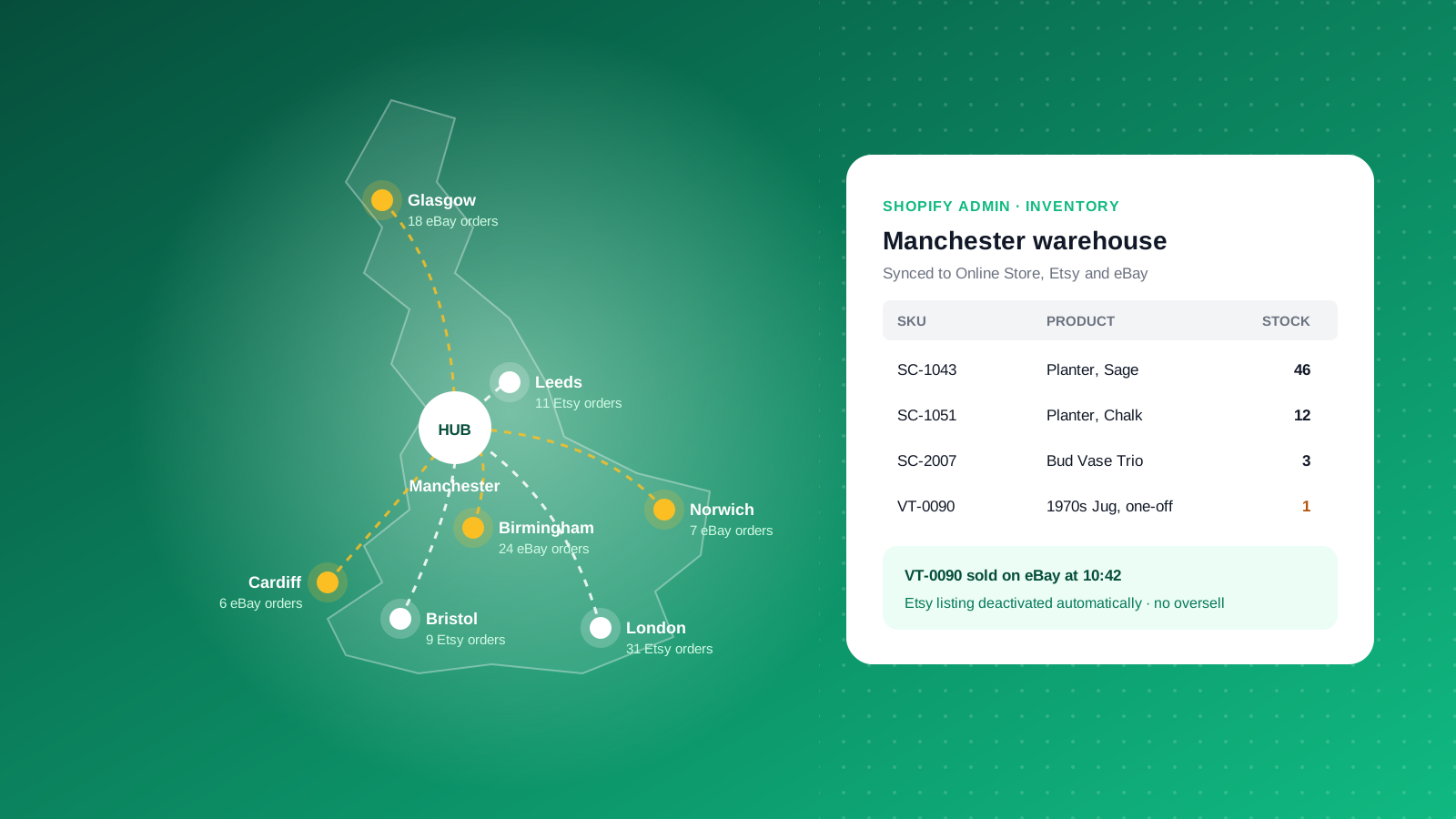
For growing businesses, the question is rarely Etsy or eBay. It is how to run both selling platforms without breaking inventory, pricing and customer experience on your own store.
eBay connects to Shopify through Shopify Marketplace Connect, Shopify's own app, which syncs products, inventory and orders and charges 1% per synced order. Etsy is different. Shopify stopped accepting new Etsy connections through Marketplace Connect, so new Etsy integrations run through third-party apps that sync listings and stock with your Shopify catalogue. Whichever route you take, Shopify should be the source of truth for inventory. Overselling a one-off vintage piece on two channels at once costs you a refund, a poor review and, on eBay, a defect on your seller record.
A few rules make multichannel selling far easier to manage:
- Keep one product record. Titles and descriptions can be tailored per channel, but SKUs, stock and costs should live in Shopify.
- Price by channel margin. Build Etsy and eBay fees, VAT on fees and expected ad costs into marketplace prices rather than copying your DTC price.
- Hold back your best range. Many brands list entry products on marketplaces and keep bundles, subscriptions and exclusives for their own store.
- Track contribution, not revenue. £10,000 of Etsy sales with 25% lost to fees and ads contributes less than £8,000 of direct sales on your own store.
Our guide to the best Shopify inventory management apps covers the tools that keep stock accurate across channels, and our Shopify vs Amazon comparison looks at the same question for the largest marketplace of all.
Etsy or eBay: Which Should You Choose?
Choose based on your products first, your margins second and how much operational work you can take on third.
- Choose Etsy if you make, design or curate your products, your price reflects craftsmanship or personalisation, and your buyers are gifting or looking for something unique. Etsy's fixed-price model and processing-time flexibility suit makers and small studios.
- Choose eBay if you sell branded goods, electronics, used, refurbished or collectible items, you want auctions or Best Offer, and you can dispatch quickly and consistently. eBay's reach and pricing tools suit resellers and brands clearing excess inventory.
- Choose both if your range spans the two, such as a brand selling original designs on Etsy and end-of-line or seconds stock on eBay, and you have Shopify syncing inventory underneath.
- Choose your own store as the core if you already have repeat customers, a recognisable brand or a margin that marketplace fees would erode. Use Etsy or eBay as acquisition channels on top.
At Charle we build and grow Shopify and Shopify Plus stores for brands that have often outgrown a marketplace-only model. If you are planning the move from Etsy or eBay to a store you own, our Shopify Plus agency team can help you plan the migration, keep your marketplace channels running and build a site that earns the repeat order. Get in touch to talk it through.