 Nic Dunn, CEO, Charle Agency
What is a Shopify Partner?
A Shopify Partner is an individual, freelancer or agency that Shopify has formally recognised as a skilled and trusted expert within its ecosystem. Shopify Partners are listed on the Shopify Partner Directory, which acts as the official marketplace for brands to find verified help with their Shopify stores.
To appear in the Shopify Partner Directory, partners must demonstrate genuine expertise in their area, whether that is design, development, marketing or strategy. Shopify vets applications before granting directory visibility, which means anyone listed there has cleared a baseline quality threshold. Compare that to a general freelance platform, where quality is highly variable and not formally verified.
The Shopify Partner ecosystem is now one of the largest in ecommerce. Over 100,000 Shopify Partners operate worldwide, spanning agencies of all sizes, solo freelancers, and specialist consultancies. Shopify Partners earn collectively over $1.3 billion in partner revenue every year. The diversity of the network means brands can find Shopify Partners for any challenge, from launching a brand-new store to migrating an enterprise platform, to complex international expansion across world markets.
Shopify Partners are also part of a broader programme that gives them access to Shopify development stores, the Partner Dashboard for managing multiple client accounts, Shopify Academy training, Shopify documentation and developer resources, and early information about platform updates and features. These structural advantages mean a good Shopify Partner is consistently ahead of the curve, rather than scrambling to learn about new Shopify features after they launch. The right Shopify Partner brings real scalability potential: as your business operations grow, the partnership can extend to new services, new markets and new opportunities without rebuilding from scratch.
The six types of Shopify Partner. Inside the Shopify Partner ecosystem, brands typically encounter six archetypes of expert:
- Shopify Developers. Shopify developers write the code that brings a Shopify store to life. They work in Liquid (Shopify's templating language), JavaScript, and increasingly Hydrogen for headless builds. Shopify developers handle custom theme builds, Shopify Functions, Shopify Apps, integrations, and the complex technical features that off-the-shelf themes cannot deliver.
- Shopify Designers. Shopify designers create the user experience and visual identity of a Shopify store. The best Shopify designers wireframe in Figma, run user testing, and design with conversion in mind, not just aesthetics. Their work bridges brand identity and merchandising functionality.
- Shopify Marketers. Shopify marketers deliver search engine optimisation, paid media, content, social, and email programmes that drive traffic and revenue for Shopify brands. Shopify marketers within partner agencies typically have specialised expertise across the Shopify ad ecosystem, Klaviyo for email, and conversion rate optimisation.
- Shopify Agencies. Shopify agencies are full-service teams of Shopify experts, combining design, development and marketing under one roof. Shopify agencies typically suit scaling brands that need coordination across disciplines rather than juggling multiple freelancers.
- Shopify Freelancers. Shopify freelancers are independent Shopify experts who specialise in one or two disciplines, such as Liquid development, Klaviyo email or technical SEO. Freelancers are well suited to smaller, well-scoped projects where coordinating an agency would be overkill.
- Shopify Affiliates. Shopify affiliates focus on referring new merchants to Shopify, earning commission on signups. Shopify affiliates often overlap with content creators and educators who write or produce video content about ecommerce.
Charle has been working as a Shopify Partner since 2018. In that time we have built over 100 Shopify and Shopify Plus stores, and the access that comes with Shopify Partner status, both to the platform's technical depth and to its product roadmap, has been central to delivering results for the brands we work with.
Shopify Partner vs Shopify Plus Partner: What is the Difference?
This is one of the most common questions we hear from brands exploring the Shopify ecosystem, and the distinction matters when you are choosing who to work with.
A Shopify Partner is the entry-level accreditation. It covers agencies and individuals who work with Shopify merchants at any plan level and have met Shopify's baseline requirements for being listed in the Shopify Partner Directory.
A Shopify Plus Partner is a higher tier, specifically for agencies that work with Shopify Plus merchants and have demonstrated a consistent track record at the enterprise level. Shopify Plus Partners are evaluated more rigorously, with Shopify reviewing client work, revenue thresholds and the depth of expertise across the team. In return, Shopify Plus Partners receive access to a dedicated Shopify relationship manager, early access to Plus-specific features, invitations to Shopify Plus events, and additional tools designed for high-growth merchants.
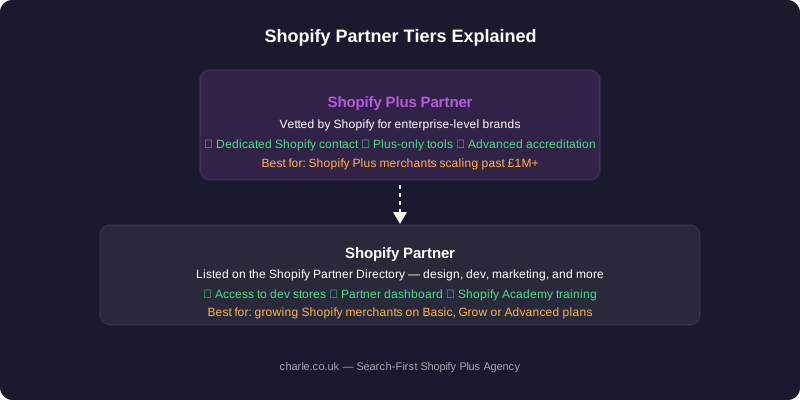
The Service Track and Technology Track structure. In late 2023 Shopify consolidated its previous partner programmes into a single programme with two tracks. The Shopify Partner Program now distinguishes between Service Track partners (agencies and consultancies delivering services to merchants) and Technology Track partners (app and integration providers building tools for merchants).
The Service Track has four earned tiers above the baseline Registered level: Select, Plus, Premier, and Platinum. Each tier is achieved through commercial performance and credential attainment. The Service Track is the relevant ladder for any agency aiming to achieve Shopify Plus Partner status.
The Technology Track has three tiers: Plus, Premier, and Platinum. All three are invitation-only, based on market influence, commercial impact, and integration credentials. Technology Track is the ladder for Shopify Partners who build apps and platform integrations.
For brands on Shopify's standard plans (Basic, Grow, Advanced), working with either tier of Shopify Partner is appropriate. For brands on Shopify Plus, or those planning to migrate to Plus, a Shopify Plus Partner brings specific knowledge of the enterprise platform that a standard partner may not have. This includes the Checkout Extensibility framework, B2B on Shopify, Shopify Markets Pro, and the more complex technical requirements of large-scale stores.
There is also a practical difference in how Shopify Plus Partners operate day to day. Having a direct line to a Shopify relationship manager means that problems can be escalated and resolved faster, and that clients benefit from strategic input that goes beyond what a standard partner can access. If your business is at a point where the platform itself is a strategic asset, not just a tool, that kind of access matters.
Charle is a certified Shopify Plus Partner, which means we work with merchants who want to build and scale at an enterprise level. If you are on a standard plan and growing towards Plus, our guide to Shopify Plus benefits explains exactly what the upgrade includes.
What Do Shopify Partners Do?
The range of services that Shopify Partners offer is broad, which is part of what makes the Shopify ecosystem valuable. Rather than managing multiple unconnected agencies, many brands work with a single Shopify Partner that covers multiple disciplines, or build a coordinated network of specialist Shopify Partners.
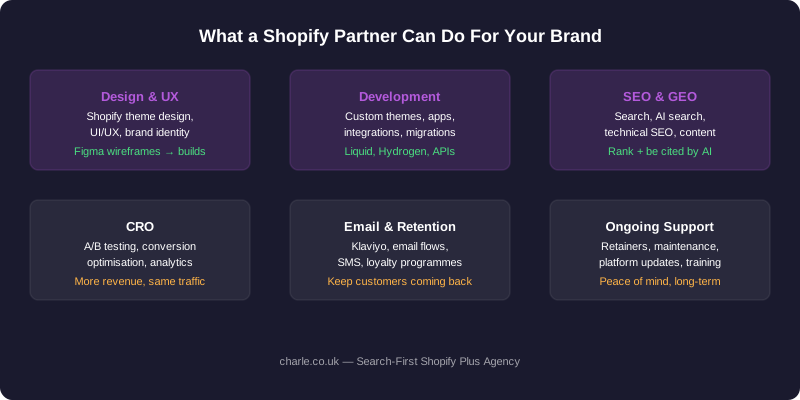
Shopify Partners for store setup and migration. For businesses launching on Shopify for the first time or moving from another platform, Shopify Partners handle everything from store configuration and theme setup to payment gateway integration, product data migration, and migrating product listings. Charle has led migrations from platforms including Magento, WooCommerce, Visualsoft and BigCommerce, and the complexity of getting that right without disrupting live trading is where Shopify Partner experience pays off. The fastest way to know whether a Shopify Partner is the right place to start your store setup work is to get in touch and ask about a similar migration they have shipped. For more detail, see our guide to migrating to Shopify.
Shopify Partners for design and user experience. Shopify Partners with design capabilities deliver Shopify website design that produces custom themes, UI designs and on-site experiences expressing a brand's identity and converting visitors into customers. Strong Shopify website design and branding work typically involves wireframing in tools like Figma, presenting concepts to client teams, and then overseeing the build to ensure what was designed is what gets built. The goal is always a Shopify ecommerce store that looks distinctive, loads quickly, and makes purchasing feel natural for the customers a brand wants to attract.
Shopify Partners for development and customisation. Not everything businesses need exists as a standard Shopify theme feature or off-the-shelf app. Shopify developers within partner teams can build custom software using Liquid, Shopify's native templating language, as well as Shopify Functions for checkout customisation, custom Shopify apps for bespoke workflows, and headless implementations using Hydrogen for brands that need maximum front-end flexibility. Shopify Partner developers also handle troubleshooting and debugging when bugs surface inside complex stores. For a deeper look at what Shopify Plus development includes, see our guide to Shopify Plus.
Shopify Partners for SEO, GEO and organic search. This is an area where Shopify Partners with genuine search expertise create measurable competitive advantage. Search engine optimisation for ecommerce involves technical SEO, content strategy, on-page optimisation, and increasingly, Generative Engine Optimisation (GEO), which is about ensuring your brand appears in AI-powered search results like Google AI Overviews and ChatGPT shopping recommendations. Brands that invest in SEO through an experienced Shopify Partner build long-term organic traffic that reduces paid acquisition costs over time. See our complete Shopify SEO guide for the full picture.
Shopify Partners for conversion rate optimisation. Getting more out of existing traffic is often the highest-ROI activity for established Shopify brands. CRO services from a Shopify Partner include user experience audits, A/B testing, heatmap analysis, and data-driven experiments that progressively improve conversion rates across key pages and flows. Our guide to AB split testing walks through how we approach this with clients.
Shopify Partners for email marketing and customer retention. Shopify Partners with email expertise typically work within platforms like Klaviyo, building automated flows, newsletter segmentation strategies and campaign programmes that drive repeat purchase and increase customer lifetime value. Retention is consistently the most underfunded lever for growing Shopify businesses, despite the compounding returns it delivers, and is often the place where partner ROI shows up fastest.
Shopify Partners for ongoing support and maintenance. Once a Shopify store is live, it needs consistent technical attention, from Shopify platform updates and app compatibility to performance monitoring, troubleshooting and content changes. A Shopify retainer with a trusted Shopify Partner is the most cost-effective way to ensure you always have skilled resources available without the overhead of an in-house team. Read our overview of Shopify support and maintenance options.
Benefits of Working With a Shopify Partner
The practical advantages of working with an accredited Shopify Partner are significant compared to working with a generalist agency or unverified freelancer. Brands gain access to deep expertise, structural Shopify benefits, and a level of platform knowledge that takes years to build.
Expertise and experience. Shopify Partners accumulate experience across dozens or hundreds of client projects. That experience compounds. The visible surface of Shopify, the theme editor and the app store, is straightforward. Beneath that, Liquid templating, Shopify Functions, the Admin API, metafields, Shopify Markets and the complexities of Shopify Plus all require sustained investment in expertise. Shopify Partners have almost certainly solved the specific challenge your brand is facing before, because they have seen variations of it across many other Shopify stores.
Time savings and efficiency. Creating and managing a Shopify store can be time-consuming, especially for brands new to the platform. Shopify Partners deliver results faster than an inexperienced team because they have done the same tasks many times. Brands can focus on products, supply chain and marketing strategy, while Shopify Partners handle store setup, web design, custom development, on-site optimisation, and integration work.
Advance knowledge of platform features and changes. Shopify rolls out platform updates continuously. Some changes are incremental; others, like the migration from Online Store 2.0 or the shift to Checkout Extensibility, require meaningful technical preparation. Shopify Partners receive advance notice of these features and changes through Shopify's communications and partner events, which means their clients are rarely caught off guard.
Customisation and advanced solutions. Standard Shopify themes will only take a brand so far. Every business is different, and Shopify Partners can deliver custom functionality, bespoke themes, custom checkout experiences, loyalty mechanics, and the kind of distinctive user experience that helps a brand stand out from the competition. Many of these decisions hinge on careful execution: a Shopify Partner with senior development talent can deliver advanced solutions while keeping the storefront performant, whereas a less experienced option often produces software that looks good but slows the store down. Shopify Partners turn customisation from a constraint into a competitive advantage.
Increased sales and performance. Working with Shopify Partners has been shown to maximise growth for ecommerce brands on the platform. Shopify Partners bring proven strategies for conversion rate optimisation, email marketing, retention, performance tuning, and acquisition. Most Shopify Partners use a data-led approach, with tools such as A/B testing and conversion benchmarking, to identify exactly where revenue is leaking and where it can be lifted.
Multi-disciplinary skills without the headcount. A Shopify agency partner gives businesses access to designers, developers, SEO specialists, email marketers and strategists on demand, without the cost and complexity of building that capability in-house. For a growing brand, this flexibility is genuinely difficult to replicate through direct hiring, especially in the UK and US ecommerce talent markets. The right partnership effectively gives a brand an extended operations team without the salary commitments.
Ongoing support and long-term understanding. As a relationship with a Shopify Partner deepens over time, the partner builds up detailed understanding of your brand, your customers, your team's capabilities, and your historical performance. This context makes every subsequent project more effective, because the Shopify Partner is not starting from zero each time. Long-term Shopify Partners often become commercial collaborators, not just service providers, contributing to strategy and roadmap conversations alongside delivery.
Direct relationship with Shopify. Shopify Plus Partners, in particular, bring a direct relationship with Shopify that benefits clients in tangible ways. From faster resolution of technical platform issues to strategic input from Shopify's own merchant success teams, this access can shave weeks off complex projects and surface platform innovation opportunities that brands working alone would miss. Shopify Partners earn recurring commission on merchant subscription fees and revenue share on app and theme sales, which means their commercial incentives genuinely align with helping your brand grow rather than churn.
Is a Shopify Partner Worth the Investment?
Honest answer: not always. Shopify Partners earn their money at scale and against complexity. Below a certain operational size, the cost of a retained Shopify Partner outweighs the return, and brands are better off learning the platform themselves or working with a single vetted freelancer for specific tasks. The decisions around when to bring in a partner depend on revenue, business complexity, and how much spare capacity the in-house team really has.
From the conversations we have with brands every week, the threshold where a Shopify Partner consistently clears ROI is roughly £40,000 in monthly Shopify revenue, or a clear complex project (a Plus migration, a custom B2B build, a headless storefront) that demands specialist Shopify expertise the brand does not have in-house. Below those thresholds, partner economics get tight: brands pay for coordination and seniority they may not fully use.
The Shopify community itself is reasonably candid about this. Reddit threads about Shopify Partners regularly surface the same critique: many self-described Shopify Partners are individual freelancers who passed a certification and charge agency rates. The value of a real partner agency is not the badge itself but the system behind it: a senior developer plus a UX designer plus a CRO strategist plus a project manager working as a coordinated team. That coordination only justifies its cost when the underlying revenue and complexity warrant it.
Red flags when evaluating Shopify Partners:
- Guaranteed revenue increases or specific traffic numbers stated before any audit has happened.
- Vague deliverables and broad scope statements that resist measurement.
- Long contract minimums before any work has been demonstrated.
- Cold outreach claiming to "fix your SEO" without having looked at your store.
- Inability to point you to their official Shopify Partner Directory listing.
Shopify Partners are worth the investment when the work is genuinely beyond DIY, when scale demands coordinated expertise, and when the partner has earned a tier that signals real platform depth. They are not worth the investment when the brief is small, the budget is squeezed, and the brand has the time and skills to do the work themselves.
How to Find a Shopify Partner
There are several routes brands use to find a Shopify Partner, each with different strengths depending on what is needed.
The Shopify Partner Directory. The official directory at shopify.com/partners/directory is the most complete starting point. Brands can filter by service type, location and language, which helps narrow the field quickly. Every Shopify Partner listed has been vetted by Shopify, so brands are working within a qualified pool from the outset. The Shopify Partner Directory replaced the older Shopify Experts Marketplace in October 2023, consolidating Shopify's vetted directory of agencies and individuals into a single discovery surface. Review client testimonials on Shopify Partner profiles carefully, and look for case studies that reflect your store's scale and sector.
The Shopify Partner Directory hire flow. Once brands find a Shopify Partner they want to contact, the Directory's Contact button sends a structured enquiry to the Shopify Partner via email. Many Shopify Partners will then request a collaborator account on your Shopify store so they can scope the work properly. Importantly, the Shopify Partner bills brands directly for the work, not through Shopify, and collaborator access expires after 90 days of inactivity if it is not formally closed. Reviews from brands appear on the Shopify Partner's Directory profile within 48 hours of submission, but only when submitted by a merchant on a paid Shopify plan.
Referrals from other merchants. Recommendations from fellow Shopify store owners are often the most reliable signal. If a brand you respect has achieved results you aspire to, finding out which Shopify Partner they worked with is valuable intelligence. Industry communities, LinkedIn, and ecommerce events are good places to ask. Referrals carry weight precisely because the person recommending has experienced the Shopify Partner relationship directly, not just seen a polished case study.
Direct search and content authority. Shopify Partners who produce consistently useful content on their blog, whether through articles, guides, podcasts or industry commentary, typically have deeper expertise than those who do not. If you have been reading an agency's blog or articles and finding them genuinely insightful, that is a meaningful signal about the quality of thinking inside the business. Our articles section, written by Nic Dunn, CEO at Charle, reflects the way we approach every client relationship: with rigour, specificity, and a genuine investment in sharing what we know about Shopify and ecommerce.
Third-party freelance marketplaces. Platforms like Upwork and Fiverr list Shopify freelancers who can support smaller, more contained projects. These are not Shopify Partners in the formal sense and have not been vetted by Shopify, so review portfolios, case studies and reviews carefully. Freelance marketplaces work best for well-defined, single-task work rather than ongoing strategic engagements.
How to Choose the Right Shopify Partner
Finding a Shopify Partner and choosing the right one are two different things. The questions brands ask during the evaluation process will determine whether they end up with a Shopify Partner who drives real commercial outcomes or one who delivers competent work without meaningful impact.
Verify their Shopify credentials specifically. Ask whether they are a Shopify Partner, a Shopify Plus Partner, or simply an agency that works with Shopify among many other platforms. The difference matters. A generalist digital agency that has built a handful of Shopify stores brings a very different depth of knowledge to a dedicated Shopify Partner. Check their listing on the official Shopify Partner Directory directly.
Review relevant case studies. Look for projects at a comparable scale to your business, in a similar sector if possible. A Shopify Partner who has delivered outstanding results for luxury fashion brands may not have the same commercial instincts for a health and wellness subscription business. The best Shopify Partners understand the difference between ecommerce categories and adapt their approach accordingly.
Ask about their process. How do they approach discovery? How do they handle project delays? What does their testing and QA process look like? A Shopify Partner who has thought carefully about how they operate will have clear answers to these questions. Vague responses suggest they are making it up as they go.
Understand who will actually work on your account. In larger agencies, pitches are often led by senior people who then hand the project to more junior team members. Ask specifically who will manage your account day to day, and what their experience looks like. The quality of your day-to-day Shopify Partner contact matters as much as the agency's overall reputation.
Assess commercial understanding. A Shopify Partner who understands your business model will ask questions about your margins, your customer acquisition costs, your average order value, and how organic search fits into your channel mix. If an agency only ever asks about design preferences and feature requirements, they may not be thinking strategically enough about what actually moves the needle for your business.
Check references. Ask for two or three client references you can speak to directly. Any Shopify Partner worth working with will be comfortable providing them. These conversations reveal what the working relationship is actually like, rather than what the agency presents in a pitch.
For a full framework on this process, read our guide on how to choose a Shopify agency.
How to Become a Shopify Partner
If you are a developer, designer, marketer or agency looking to formalise your Shopify expertise, the Shopify Partner Programme is the natural route to recognition and commercial opportunity. The Shopify Partner Programme is free to join, and Shopify Partners earn recurring revenue through referrals, app sales, theme sales, and direct client work.
The signup steps. Becoming a Shopify Partner follows a clear process:
- Go to shopify.com/partners and click "Join now".
- Create a Shopify Partner account or sign in with an existing Shopify account.
- Complete the registration form with your name, business details, and contact information.
- Read and agree to the Shopify Partner Program terms of service.
- Verify your email address using the link Shopify sends.
- Complete your Shopify Partner profile, including services offered, experience, and portfolio links.
- Familiarise yourself with the Shopify platform through Shopify Academy training and certifications.
- Set up development stores to build, test and demonstrate work without needing a paid Shopify plan.
- Apply for inclusion in the public Shopify Partner Directory once you have demonstrated quality of work and earned a baseline of client reviews.
- Earn revenue through client referrals, custom builds, app development, theme development, or affiliate activity.
Eligibility criteria for the Shopify Partner Programme. While anyone can sign up for a Shopify Partner account, becoming a publicly listed Shopify Partner requires meeting Shopify's criteria:
- Being a web designer, developer, marketer, content creator, or agency with relevant ecommerce skills and experience.
- Having a portfolio of completed Shopify projects or a client base that demonstrates the ability to support merchants.
- Demonstrating a track record of high-quality work, supported by client reviews on your Shopify Partner Directory profile.
- Complying with Shopify's policies and guidelines, including the Shopify Partner Programme terms of service.
- For Shopify Plus Partner status, meeting Shopify's enterprise revenue thresholds and demonstrating sustained experience working with Plus merchants.
Progressing through the Shopify Partner Programme tiers (Select, Plus, Premier, Platinum) requires sustained commercial performance and ongoing investment in Shopify certifications. The Shopify Foundations and Shopify Theme Development certifications are particularly valuable for agencies focused on builds. Established Shopify Partners gain dedicated Shopify managers, advance access to platform features, and the structural support that makes it genuinely easier to deliver great work for clients.
The commercial upside is real. Shopify Partners earn referral revenue when they bring new merchants to Shopify, recurring commission on merchant subscriptions, and high revenue share on apps and themes sold through the Shopify ecosystem. For developers, designers and agencies invested in the platform, becoming a Shopify Partner is the most direct path to scaling a Shopify business.
Our View on Shopify Partners
Most articles about Shopify Partners read like a recruitment pamphlet, including the ones written by partners themselves. After working through more than 100 Shopify and Shopify Plus builds, what we would actually tell a brand evaluating Shopify Partners is this: the badge matters far less than the tier, and the tier matters far less than who specifically will work on your account.
Most brands we speak to conflate "agency" with "Shopify Partner". They are not the same thing. A generalist digital agency that has built four Shopify stores carries a different operational reality than a Shopify Partner whose team works inside Liquid, Shopify Functions, and Plus checkout extensibility every day. The agency may be a Shopify Partner on paper. The depth is what determines the outcome.
The Shopify Partners that brands get the most value from share three traits. They specialise rather than generalise. They take the time to understand commercial context before recommending solutions. And they treat the relationship as a long-term commercial collaboration rather than a transactional project engagement. When a brand is deciding whether to roll out B2B on Shopify or stay on a separate platform, that decision usually plays out across months and multiple stakeholders, not a single briefing call. That is the bar to set: whether a Shopify Partner can hold a strategic conversation, not just deliver a Figma file.
If you are evaluating a Shopify Partner right now, the practical filter we would use is this: ask them to describe the last hard commercial decision they helped a Shopify client make, and what they would do differently if they were rebuilding that decision today. A real Shopify Partner will have an answer. A vendor will not.