 Nic Dunn, CEO, Charle Agency
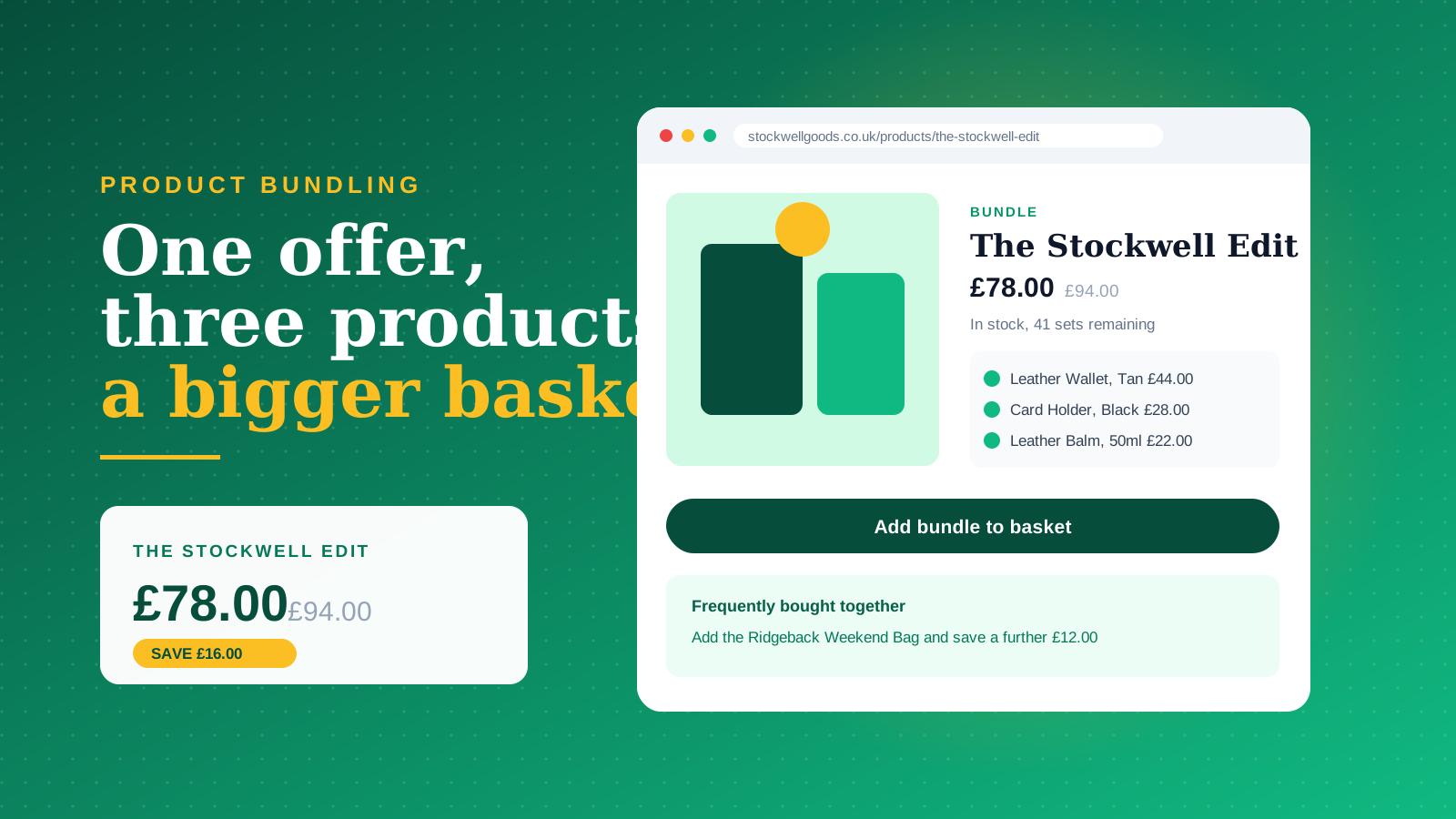
What Product Bundling Actually Is
Product bundling groups two or more products into one purchase at one price. Customers see a single proposition rather than three separate decisions, and the retailer sees one transaction instead of one, or none.
The definition is simple. The commercial reality is not. A product bundle changes three things at once: the price the shopper pays, the number of items that leave your warehouse, and the margins you keep on each of those units. Most ecommerce stores only measure the first two.
Product bundling is often confused with cross-selling and upselling, and the difference matters when you come to build one. A bundle presents a fixed proposition with a defined price. A cross-sell suggests complementary products and lets customers decide on each one individually. An upsell pushes the shopper towards a more expensive version of the thing they were already looking at. Bundles combine products, an upsell trades the customer up, and cross-sells widen the basket one item at a time. All three raise basket size; only bundling does it by changing what the offer is rather than how many times you make it.
The reason bundling keeps its place in every serious strategy to increase average order value on Shopify is that it works on the two levers that actually move revenue: units per order and value per unit. Paid acquisition only moves the number of orders, and it gets more expensive every year.
The Seven Types of Product Bundle
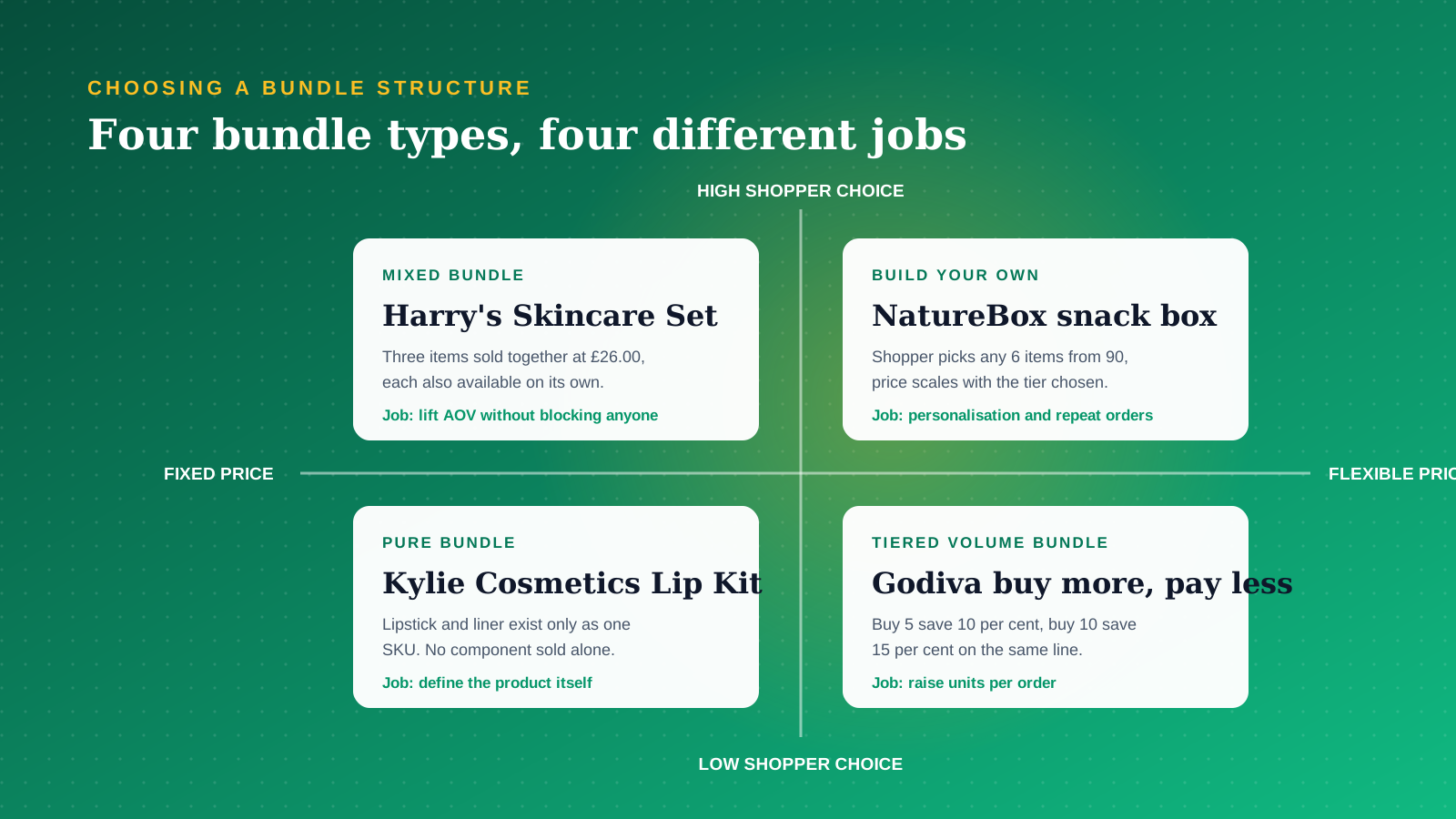
Bundle structure is not decoration. It decides what the offer can do, what it costs you, and how much work it takes to build. Seven types of product bundling cover almost every case in retail and ecommerce, and the product bundling strategies below map onto all of them.
Pure bundling
The components exist only inside the bundle. Nobody can buy them individually. A pure bundle is really a new product, a kit with its own SKU, and it works when the parts genuinely belong together. The risk is that shoppers who want only one component walk away.
Mixed bundling
The same products are available individually and as a package, with the package priced lower. This is the default structure for most ecommerce brands because it raises the basket without blocking a single-item sale, and it gives customers a clear incentive to take the larger order. It is also the structure with the most evidence behind it.
Cross-sell bundling
A main product with complementary items attached: a camera paired with a memory card and a case, a coat paired with the scarf that matches it. Cross-sell bundles hold the strongest margins when the attachment is a genuine accessory rather than a second hero product, because accessories usually carry more headroom than the products they hang off.
Buy one get one bundling
The shopper buys one item at full price and gets a second free or discounted. BOGO works hardest on consumables and repeat purchases, where the second unit brings forward a sale you would have made later, and works worst on considered purchases, where it mostly funds a decision the customer had already taken.
Tiered and volume bundling
The offer improves as the basket grows: buy three save ten per cent, buy six save fifteen. Tiered bundles raise units per order rather than the product mix, which makes them a blunt but reliable incentive for consumables and gift bundles.
Build your own bundling
The shopper assembles a package from a defined set of options at a set price or price band. This is the most engaging structure and the most technically demanding one, and it suits categories with a wide assortment of similar goods such as beauty, snacks, supplements and socks.
Subscription and replenishment bundling
The same set of products ships on a repeating schedule at a subscription price. This is the only bundle type that is bought once and counted many times, which is why it does more for loyalty and lifetime value than any of the other six. It suits consumables where the customer has already decided they want the category and simply wants the process handled: coffee, skincare refills, pet food, supplements. The trade is that subscription bundles are the hardest to change, because every edit to the components has to survive customers who signed up to a different offer.
14 Product Bundling Examples That Lift AOV
Each of these product bundling examples is doing something specific. The value is not in copying the bundle, it is in copying the mechanism. The list runs across beauty, food, fashion, stationery and electronics, because the mechanism transfers between categories even when the products do not. Every example below is a retail or ecommerce bundle you can look at yourself.
1. Kylie Cosmetics Lip Kit
The Lip Kit pairs a lipstick with a complementary liner in one box. It is a pure bundle that stopped being read as a bundle and became the product itself, which is the strongest position a bundle can reach. The lesson is that a pure bundle needs a name of its own, not a list of the products inside it.
2. Harry's Skincare Essentials Set
Harry's sells the kit as a single product containing three essentials rather than three items sold together. The copy does the work: it explains why the items belong in the same routine. Each item is still available on its own, so no customers are forced into the bundle.
3. HelloFresh recipe boxes
A HelloFresh box is a pure bundle at the scale of a business model. Nobody wants to buy two shallots and a sachet of harissa. The value is entirely in the grouping, the recipe and the delivery. When the individual goods are unappealing on their own, pure bundling is the only structure that works.
4. NatureBox build your own snack box
Customers pick their own selection from the assortment against a fixed box price. The personalisation raises perceived value without raising the discount, and it generates preference data on every order that tells you which items to bundle next.
5. Bloom & Wild flowers with chocolates
A complementary seasonal attachment offered at the point of purchase. Gift buying is a high-pressure transaction, and an attachment that makes the gift feel more considered converts far better than a straight discount. Seasonal gift bundles also give you a legitimate reason to change the offer four times a year.
6. The Tesco Meal Deal
A sandwich, a snack and a drink for one fixed price, with each of the three items still sold separately. It is the most familiar mixed bundle in Britain and it demonstrates the principle better than any ecommerce example: the price is memorable, the assortment is wide, and customers never feel they have lost an option.
7. Sweaty Betty bundle collection page
Most retailers introduce bundles on the product page or in the basket. Sweaty Betty gives bundles a collection page of their own, with the mechanic explained on the way down. Customers who land there have already accepted the idea of buying more than one item before they pick anything.
8. H&M two-pack basics
Two identical sweatshirts sold as one line. On low-priced basics the savings look generous to customers and cost the retailer very little, because a single despatch of two units is cheaper to pick, pack and ship than two separate orders. Quantity bundles on cheap goods are often neutral on margins or better, once shipping is taken into account.
9. Murad 3-Step Glow Bundle
Murad states the savings against the combined individual price in more than one place on the page. That repetition matters. Savings that customers have to calculate are savings that do not influence the decision.
10. ASOS exclusive bundles
ASOS sells bundles whose components are not available separately on the site, and labels them as exclusive. Exclusivity turns a pure bundle from a restriction into a reason to buy, and it lets a retailer carry categories it would rather not hold as individual SKUs.
11. Paperchase buy one get one half price
A stationery BOGO that works because the second unit is bought months earlier than it otherwise would have been, and because it nudges customers into trying an adjacent product. BOGO on a repeat-purchase item is a timing play, not a discount play.
12. Apple student accessory offers
Apple pairs accessories with laptop and tablet purchases during its student period. The hero product holds its price, the accessories carry the offer, and the attach rate on a high-value order does more for revenue than the same money spent discounting the laptop.
13. Bath & Body Works gift sets
A body wash, lotion, fragrance mist and hand cream presented as one gift-ready kit. Gift bundles solve a problem customers have rather than one the retailer has, which is why they sustain full price through a season when everything around them is discounted.
14. Godiva buy more, pay less
Tiered pricing on a single line: the more boxes in the basket, the lower the price per box. Tiered offers work on gifting and consumables because customers have a genuine reason to want several, and the tier gives them permission.
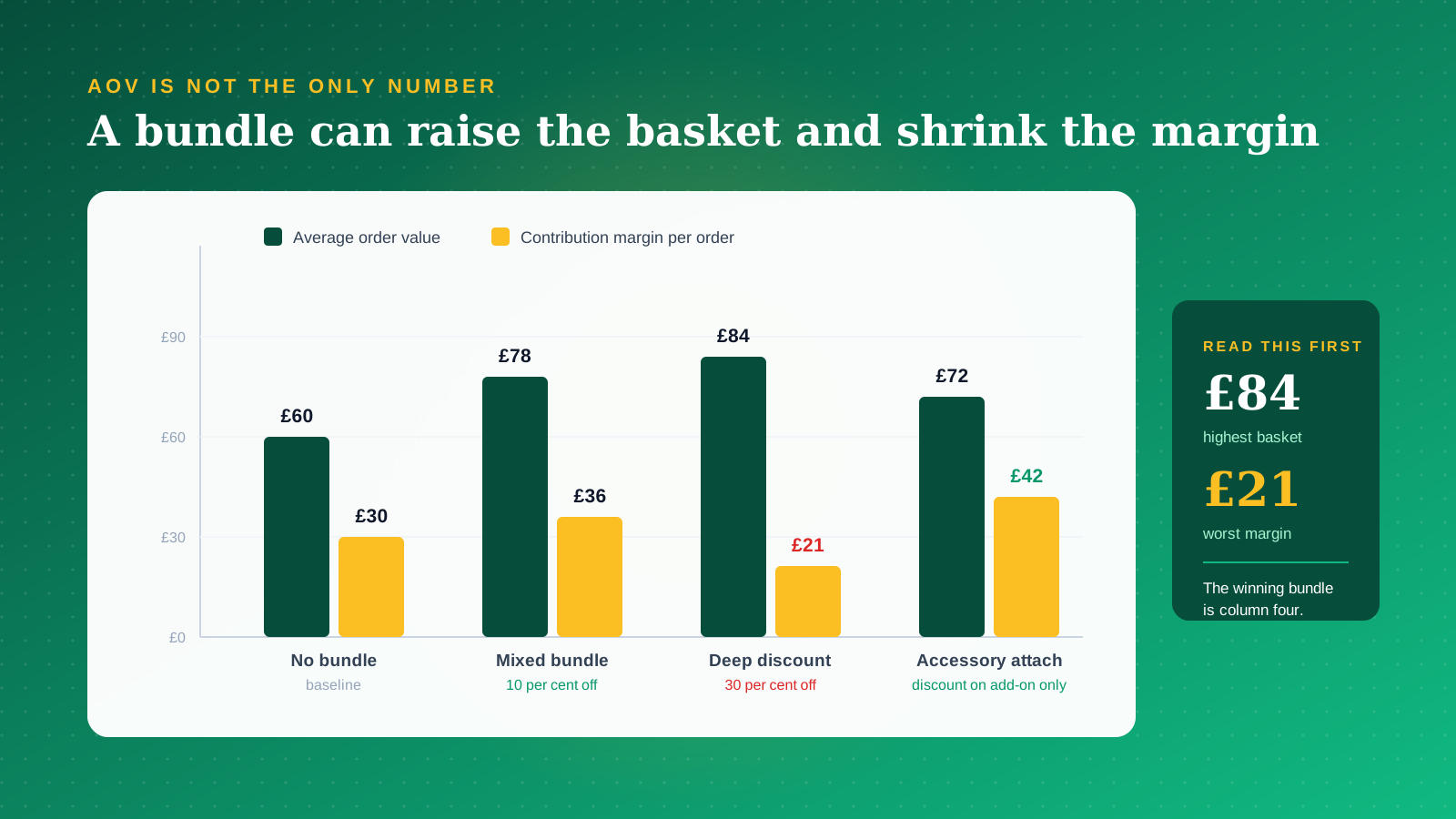
Across all fourteen product bundling examples, one pattern repeats. The bundles that hold their margins pair something customers would not have bought with something they were already buying. The bundles that leak margin discount products that were already in the basket. That single test is worth applying to every bundle idea before it reaches a product page.
What the Evidence Says About Bundling
Product bundling has a stronger research base than most merchandising tactics, and the findings are more specific than the usual claim that bundles raise sales.
The most useful study comes from Vineet Kumar at Harvard Business School, who examined how Nintendo sold consoles and games. When Nintendo used mixed bundling, giving customers the option of the package or the individual products, console sales rose by around 100,000 units and game sales rose by more than a million. When the same products were sold as a pure bundle only, sales fell by roughly 20 per cent across both consoles and games. The structure changed the outcome more than the price did.
Amazon attributed about 35 per cent of its revenue to cross-selling as far back as 2006, and has not published an update since. The figure is old, but the shape of it holds: a large share of ecommerce revenue comes from the complementary items customers add after they have decided to buy the first product.
The practical reading of both is that flexibility usually beats force. Unless your components genuinely make no sense alone, mixed bundling gives you the AOV lift without the sales you lose when customers cannot buy the one item they came for.
How Product Bundles Actually Work on Shopify
This is the part almost every guide to product bundling examples leaves out, and it is where most bundle projects run into trouble. Shopify supports two fundamentally different kinds of product bundles, and choosing the wrong one costs weeks. The tools you pick decide which of the seven types you can actually sell, so work out the structure first and the tools second.
Fixed bundles and the free Bundles app
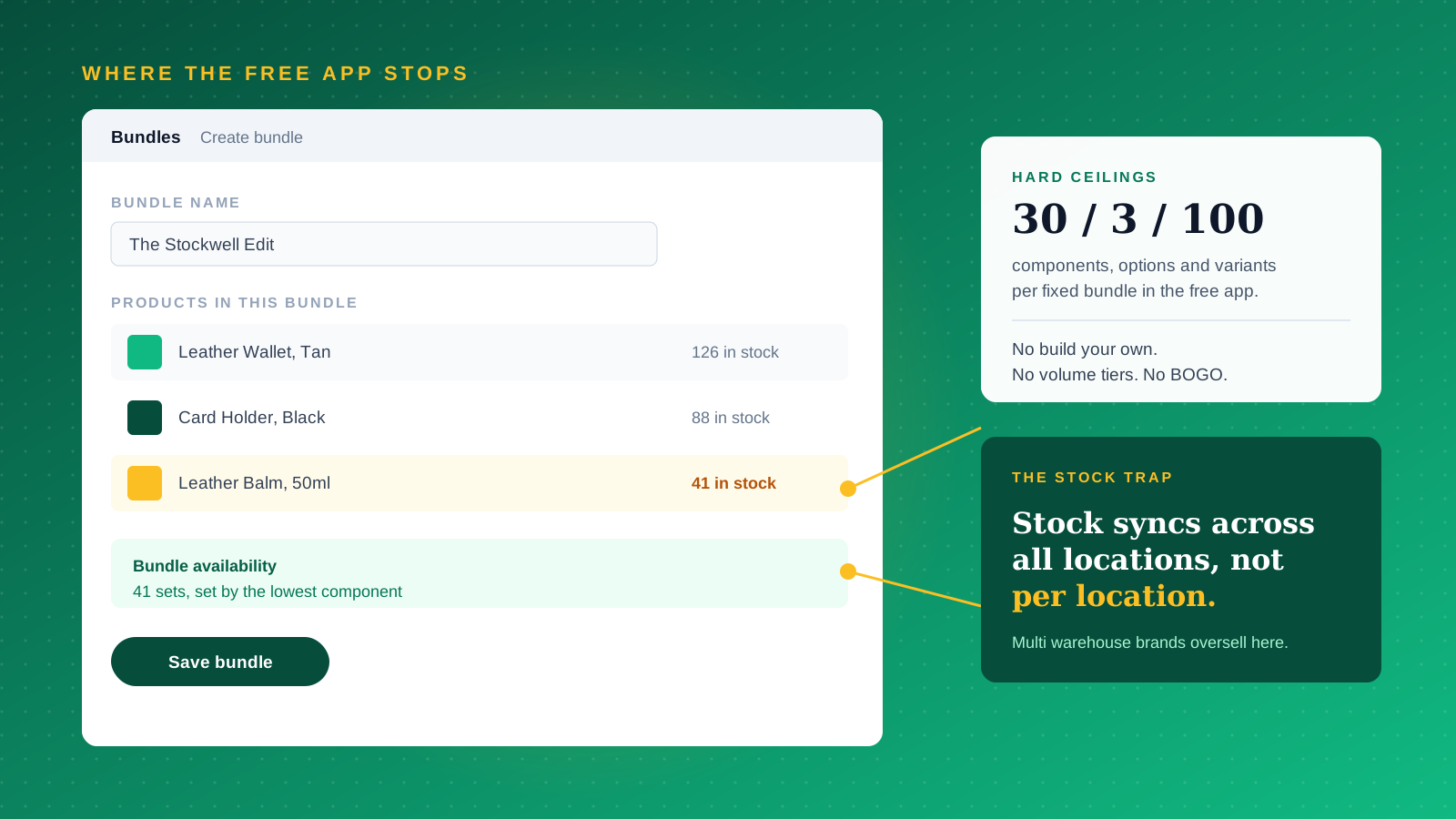
Shopify's own Bundles app handles fixed bundles and multipacks. You choose the components, set a price, and the app deducts inventory from each component in real time when a bundle sells. Bundle availability is set by whichever component has the lowest inventory, which is sensible behaviour and catches a lot of brands out the first time a minor accessory sells through.
The app has hard ceilings. A fixed bundle is capped at 30 components, three options and 100 variants. It does not support build your own bundles, it has no native volume tiers, and Shopify's separate buy X get Y discount does not operate inside the bundle flow. For a brand selling a handful of curated kits, none of that matters. For a brand running mix and match, it is a wall, and the third-party bundling tools are worth the subscription for the features the native app leaves out: volume tiers, mix and match, subscription bundles and reporting on bundle-level sales data.
Customised bundles and Shopify Functions
Anything more flexible needs a customised bundle built on Shopify Functions, using the Cart Transform API. That function merges several cart lines into one line that represents the bundle, adjusts the price, and carries the component data through to the order. If the parent bundle cannot be bought without its components, it has to be marked with the requiresComponents attribute so the storefront and checkout behave correctly.
The technical detail matters commercially because it decides where the bundle exists. A fixed bundle is a product, so it can be merchandised, searched, filtered and indexed like any other product. A cart-transform bundle is assembled in the basket, so it is invisible to search and to your product feeds. If you want the bundle to rank, or to appear in Google Shopping, it needs to be a real product with its own page. That is a decision to make before development starts, not after.
Where bundles collide with discounts
Bundle pricing and discount codes are separate systems in Shopify, and they interact in ways that surprise people. A bundle already priced below its component total, combined with a sitewide code during a promotion, can sell at a level nobody signed off. Set your combination rules deliberately before peak trading rather than discovering them during it, and read our ecommerce Black Friday guide for how the same problem shows up across a full promotional calendar.
If you want the step-by-step build, our guide to how to sell bundles on Shopify covers the setup in detail, and our roundup of the best Shopify apps to increase sales covers the third-party options when the native app runs out of road.
Bundle Pricing Without Giving Away Margin
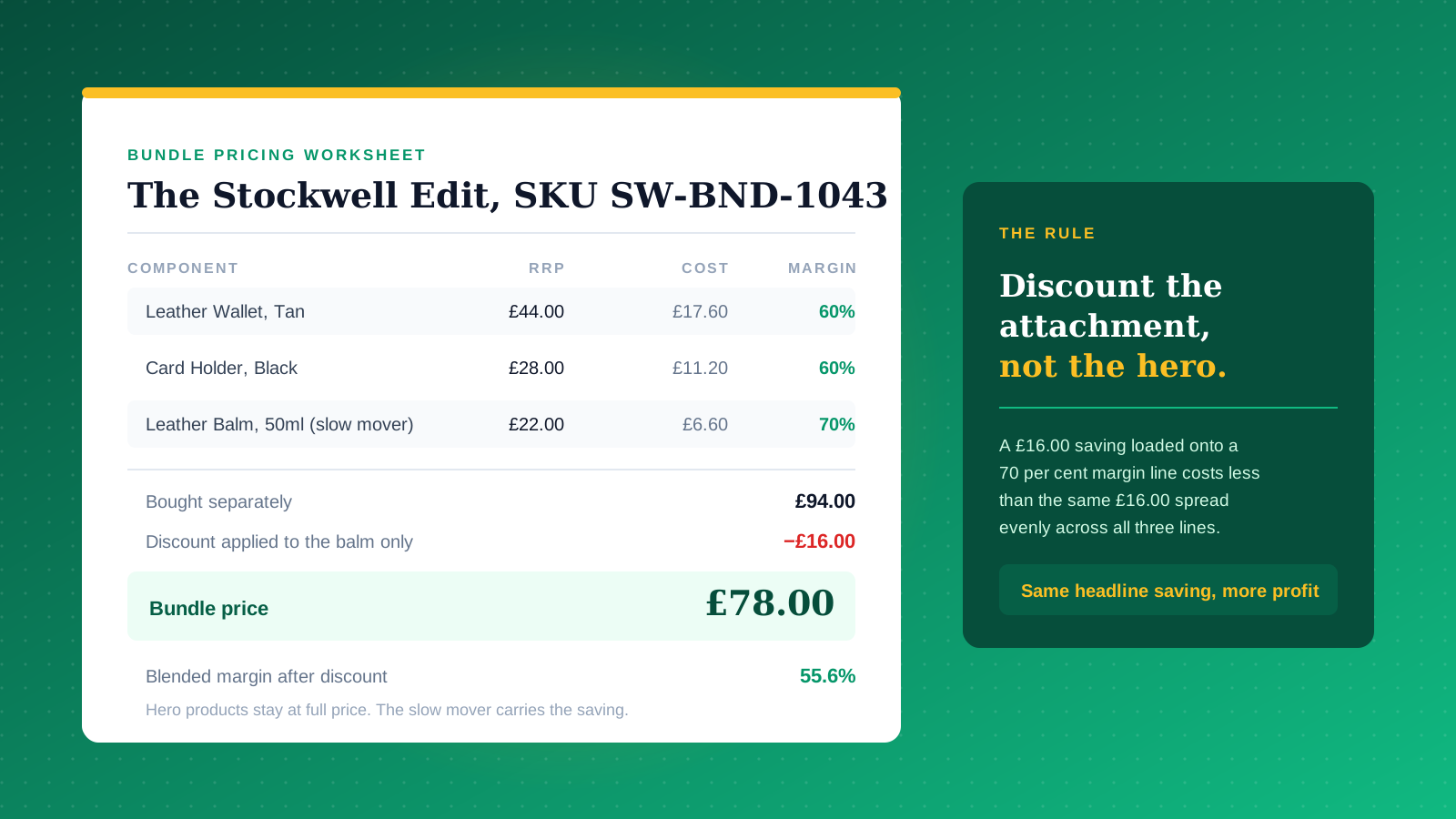
The most common bundle pricing mistake is spreading the discount evenly across every component. It feels fair and it is expensive. Pricing is where most product bundling strategies quietly stop working, because the offer keeps selling while the margin disappears.
A better approach is to load the savings onto the component with the healthiest margins or the slowest sell-through, and hold the hero product at full price. The shopper sees the same headline saving. You keep considerably more of it. In the worked example below, a £16.00 saving placed entirely on a 70 per cent margin accessory leaves a blended bundle margin above 55 per cent, where the same saving spread across all three lines would take a much larger bite out of the two hero products.
Three pricing rules are worth holding to.
- Not every bundle needs a discount. Convenience, compatibility and completeness are real customer benefits and reasons to buy. A gift set that saves the shopper an hour does not also need to save them twenty per cent.
- Show the savings in cash and per cent. Customers respond to whichever framing looks larger, and stating both removes the mental arithmetic that kills conversion.
- Model the worst case before launch. Run the numbers on high uptake as well as low. A bundle that is marginal at ten per cent attach and loss-making at forty per cent is a bundle that punishes you for succeeding.
Returns deserve a line here too. A bundle that is returned usually comes back whole, so the cost of a return on a £78.00 bundle is not the cost of a return on a £22.00 accessory. Factor that into the margin model rather than treating bundle returns at the same rate as single-item returns.
The Inventory Side of Bundling
Half of the pages ranking for product bundling are written by inventory software companies, and there is a reason for that. Bundles are as much a stock decision as a merchandising one.
Every bundle you launch creates an inventory dependency. The bundle can only sell while all of its components are in stock, so a single slow-arriving component takes the whole offer offline. That is manageable with three components and painful with ten, which is a good argument for keeping the assortment inside each bundle small.
Bundling is also the cleanest way to deal with goods that are not moving. Pairing a slow line with a strong seller clears the inventory at a far better recovery rate than a clearance sale, because the shopper is buying the bestseller and receiving the slow line as part of a better deal. It protects the price integrity of the slow product too, which matters if you intend to sell it at full price again next season. Our guide to the best Shopify inventory management apps covers the tooling side.
One trap is worth calling out. The native Bundles app syncs component stock across all locations rather than per location. Brands running multiple warehouses, or a store alongside a warehouse, can show a bundle as available when the inventory is split in a way that makes it unfulfillable, and the first sign is usually a shipping exception rather than an inventory alert. Check this before you turn bundles on if you hold stock in more than one place.
The upside is that bundles make forecasting easier. Components inside a popular bundle deplete together and hit their reorder points together, which makes purchasing and inventory management more predictable than a catalogue where every line moves at its own pace.
How to Tell Whether a Bundle Is Actually Working
A bundle that sells is not the same as a bundle that works. The question is whether it created spend that would not otherwise have happened, and your sales data will answer it if you ask the right five questions.
Five numbers answer that.
- Attach rate. The share of customer orders containing the bundle. This tells you whether the offer is visible and understood, and it is the first thing to fix if the number is low.
- Average order value, split by bundle and non-bundle orders. Blended AOV hides everything. Compare the two populations, and look at units per order alongside it so you can see whether basket size moved or only the price did.
- Contribution margin per order. The number that decides whether the bundle deserves to exist. A bundle can raise AOV and lower profit per order at the same time.
- Cannibalisation. Track sales of each component before and after launch. If component sales fall by roughly the volume the bundle gained, you have discounted your existing demand rather than creating new demand.
- Return rate on bundle orders. Bundles that customers bought for one item and kept for none show up here first.
Cannibalisation is the one most brands skip, and it is the one that separates a real AOV gain from an accounting one. The cleanest way to measure it is to run the bundle as a split test rather than switching it on for everyone, so you have a control group that never saw the offer.
Look at repeat behaviour as well. Bundles that introduce a shopper to a product they would not have tried tend to raise customer lifetime value well beyond the first order, and that value never shows up in a report that only looks at the transaction.
Bundling Mistakes That Cost Money
Most failed product bundles fail for one of five reasons, and none of them are about the products themselves.
Bundling for your convenience instead of the customer's
Pairing two slow lines together does not create demand, it creates a slower bundle and ties up inventory in both. The bestseller has to be in the box.
Offering too many bundles
Bundles are supposed to reduce decision fatigue. Ten of them reintroduce it. Three or four clear options outperform a wall of combinations almost every time, whatever the size of your assortment.
Hiding the offer
A bundle that only appears in the basket reaches shoppers who have already chosen. Put it on the product page, in the collection, and in the basket, so it can influence the decision rather than decorate it. Customers who never see the offer cannot take it.
Leaving the saving implicit
If the shopper has to work out what they are saving, most of them will not. State the individual total, the bundle price and the savings between them.
Never retiring anything
Bundles have a shelf life. Seasonal kits outlive their season, and permanent bundles quietly become the default price of the products inside them. Review the set quarterly and take the tired ones down.
Bundling is one of the few levers that improves the customer experience and the commercial result at the same time, but only when the offer is built around a real customer need rather than an inventory problem. If you want help designing and testing bundles on your store, our Shopify Plus team works on exactly this. Get in touch to talk it through.