 Nic Dunn, CEO, Charle Agency
What a Good Ecommerce Copywriter Actually Does
Ask most people what an ecommerce copywriter does and they'll say "writes product descriptions." That's part of it, but it's a small part. Ecommerce copy is the entire run of words that carries a shopper from the moment they first hear about a brand to the moment they check out, and often well beyond it.
On a typical Shopify store, that means product pages, collection and category pages, the homepage, landing pages for campaigns, the cart and checkout, email marketing flows, social media and paid ads, and the blog content that pulls in organic traffic. Each of those digital channels has a different job. A collection page has to orient and filter. A product page has to answer questions and remove doubt. A welcome email has to make a promise the store can keep. A social media caption has to earn a tap. A good ecommerce copywriter understands how these pieces fit together, keeps the messaging consistent for the target audience, and makes sure the voice stays steady and the story builds rather than repeats.
The skill, then, is not just writing. It's understanding commerce and strategy. You need to know what a shopper is thinking at each stage, what's holding them back, and which single sentence will move them forward. That blend of writing craft and commercial sense is what separates a good ecommerce copywriter from someone who simply strings adjectives together.
The Two Jobs Every Piece of Copy Has to Do
Strip ecommerce copywriting back to its foundations and every sentence is trying to do one of two things: build trust, or convince the reader that this product is right for them. Get both right and the sale largely takes care of itself.
Trust is harder to earn than it used to be. Shoppers are more sceptical, the market is more crowded, and a new brand starts from zero credibility. Copy builds trust in small, cumulative ways: being specific instead of vague, being honest about what a product is and isn't, answering the awkward questions rather than hiding them, and backing claims with proof. Baymard Institute research found that when a site fails to give shoppers the information they need, some conclude the store simply "isn't legit". Thin copy doesn't just fail to persuade. It actively erodes confidence.
The second job, convincing the reader the product fits, is where you connect a real need to a real solution. This is the persuasive heart of copywriting, and it drives sales when it's done well. The classic pattern still works: name a problem the customer has, show that you understand it, then present the product as the answer. Whether the problem is a wardrobe with nothing to wear on Monday morning or a kitchen gadget that keeps breaking, your copy has to meet the reader where they are and make the next step feel obvious.
Features Tell, Benefits Sell
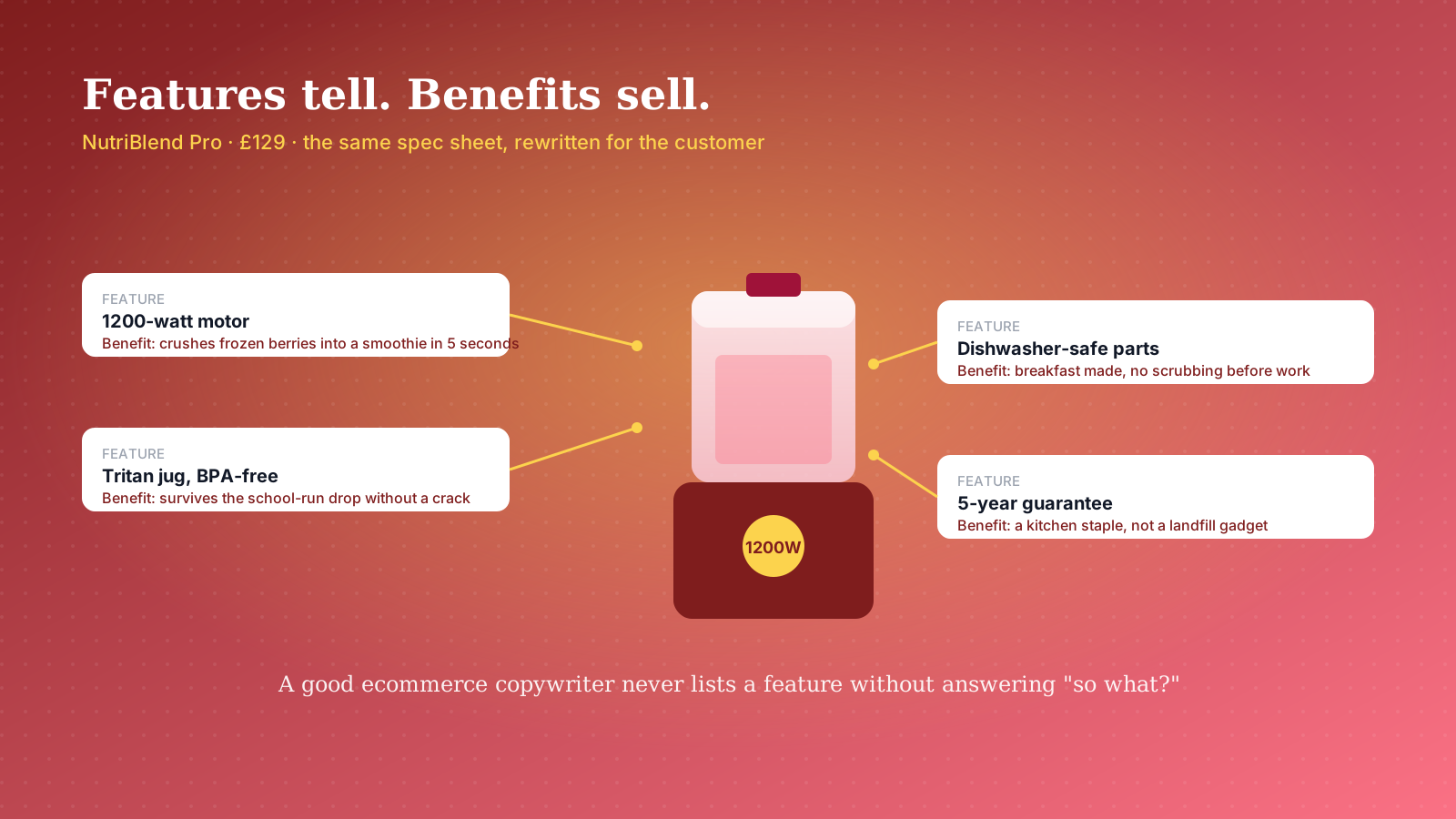
If there's one habit that marks out a good ecommerce copywriter, it's the reflex to turn every feature into a benefit. A feature is what a product has. A benefit is what that does for the person buying it. Customers care about the second one.
Take a blender with a 1200-watt motor. "1200-watt motor" is a feature, and on its own it means nothing to most shoppers. "Crushes frozen berries into a smoothie in five seconds" is the benefit, and it's the sentence that sells. The specification still matters, particularly for research-minded buyers and for search engines, so you keep it. You just make sure it never sits on the page without answering the shopper's silent question: so what?
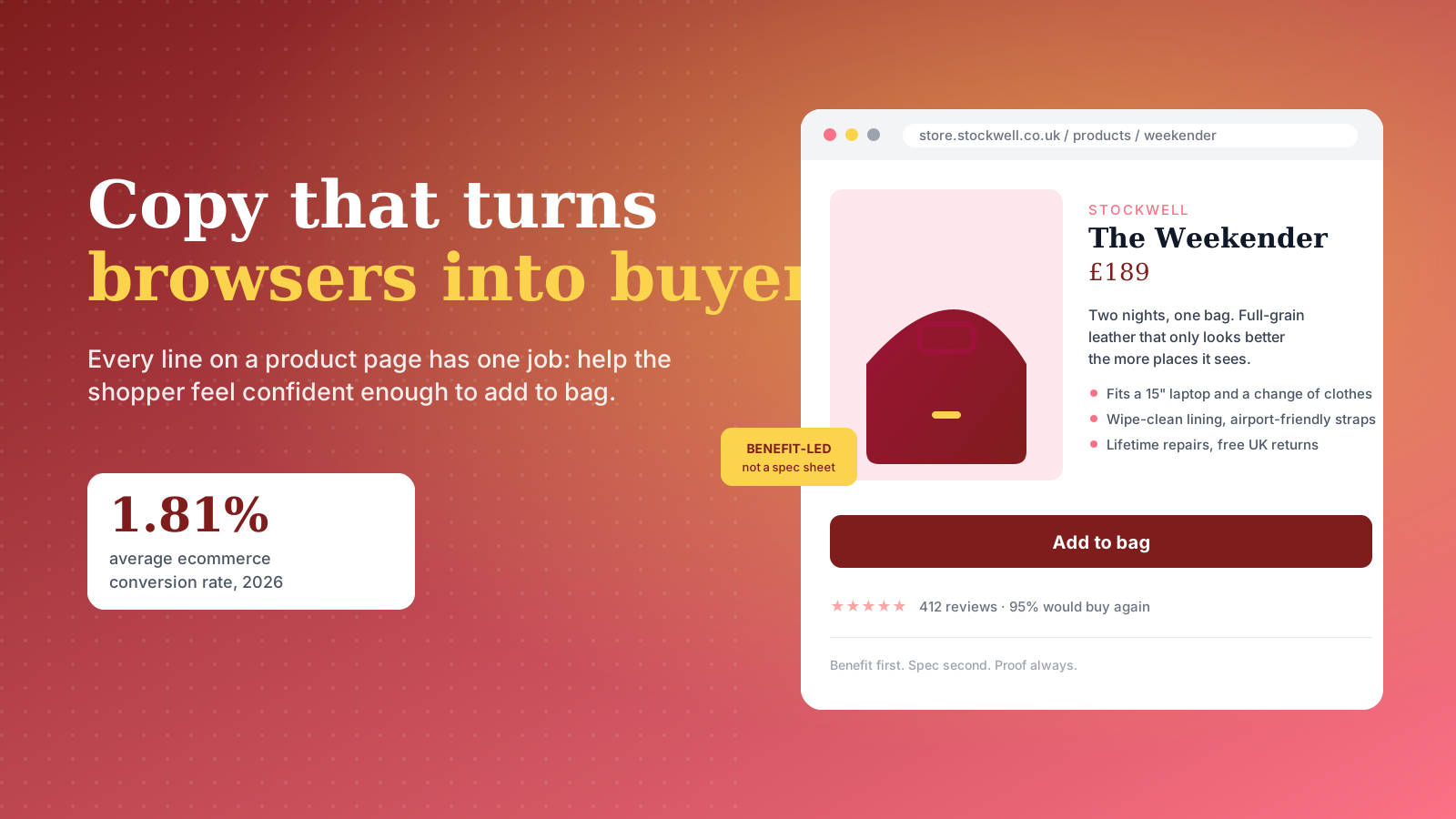
The strongest product copy usually does both, in order. Lead with the benefit that hooks the reader, then support it with the specification that proves it. "Two nights, one bag" tells the shopper what the product is for. "Full-grain leather, fits a 15-inch laptop" gives them the detail to justify the decision. Benefit first, spec second, proof always.
Write the Way Customers Actually Read
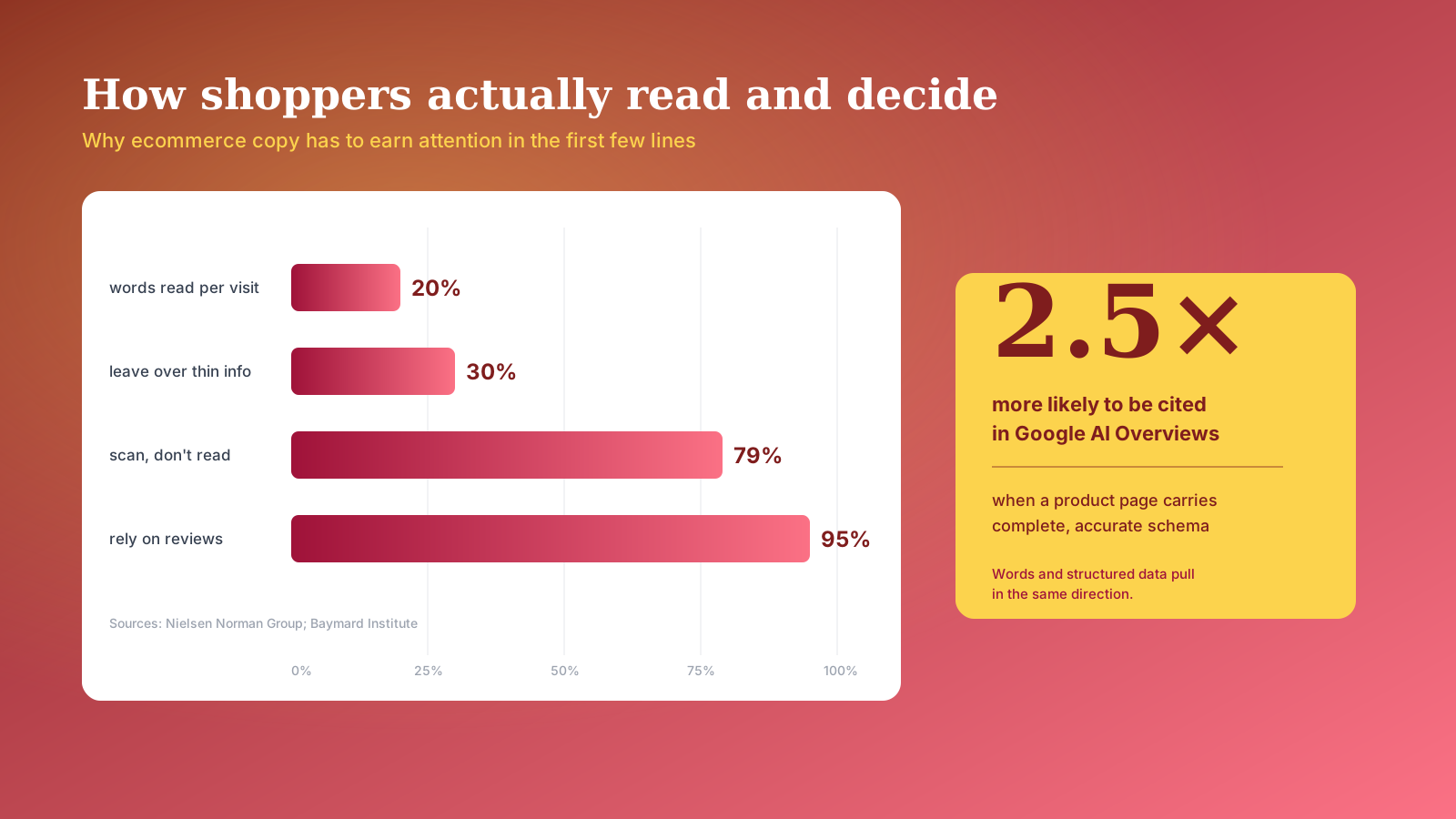
Here's an uncomfortable truth for anyone who loves words: shoppers barely read them. Nielsen Norman Group's long-running research found that visitors read at most around 28% of the words on a page, and 20% is the more realistic figure. Roughly 79% of people scan rather than read line by line, moving through the page in an F-shaped pattern that favours the top and the left.
Good ecommerce copywriting is built for that behaviour rather than fighting it. That means front-loading the most important information, so the benefit lands before the shopper's eye drifts. It means short sentences and short paragraphs, an active voice, and formatting that gives the scanner somewhere to land: clear subheadings, bullet points for feature lists, and bold text on the phrases that matter most.
It also means writing for mobile first. The majority of ecommerce traffic now comes from phones, where a wall of text is even more punishing. If your key benefit isn't visible without scrolling and tapping "read more", most people will never see it. Say the important thing early, say it plainly, and let the detail follow for the minority who want it.
The one line that should never be buried is the call to action. A clear, direct CTA tells the shopper exactly what to do next, whether that's "Add to bag" or "Build my routine". Good ecommerce copywriters also anticipate the doubts that stall a purchase and answer them in the copy itself. Handling objections directly, on delivery, sizing, returns or fit, removes friction, and a gentle sense of urgency ("only a few left") can tip a hesitant browser into buying without resorting to pressure.
Voice and Tone: Sounding Like the Brand
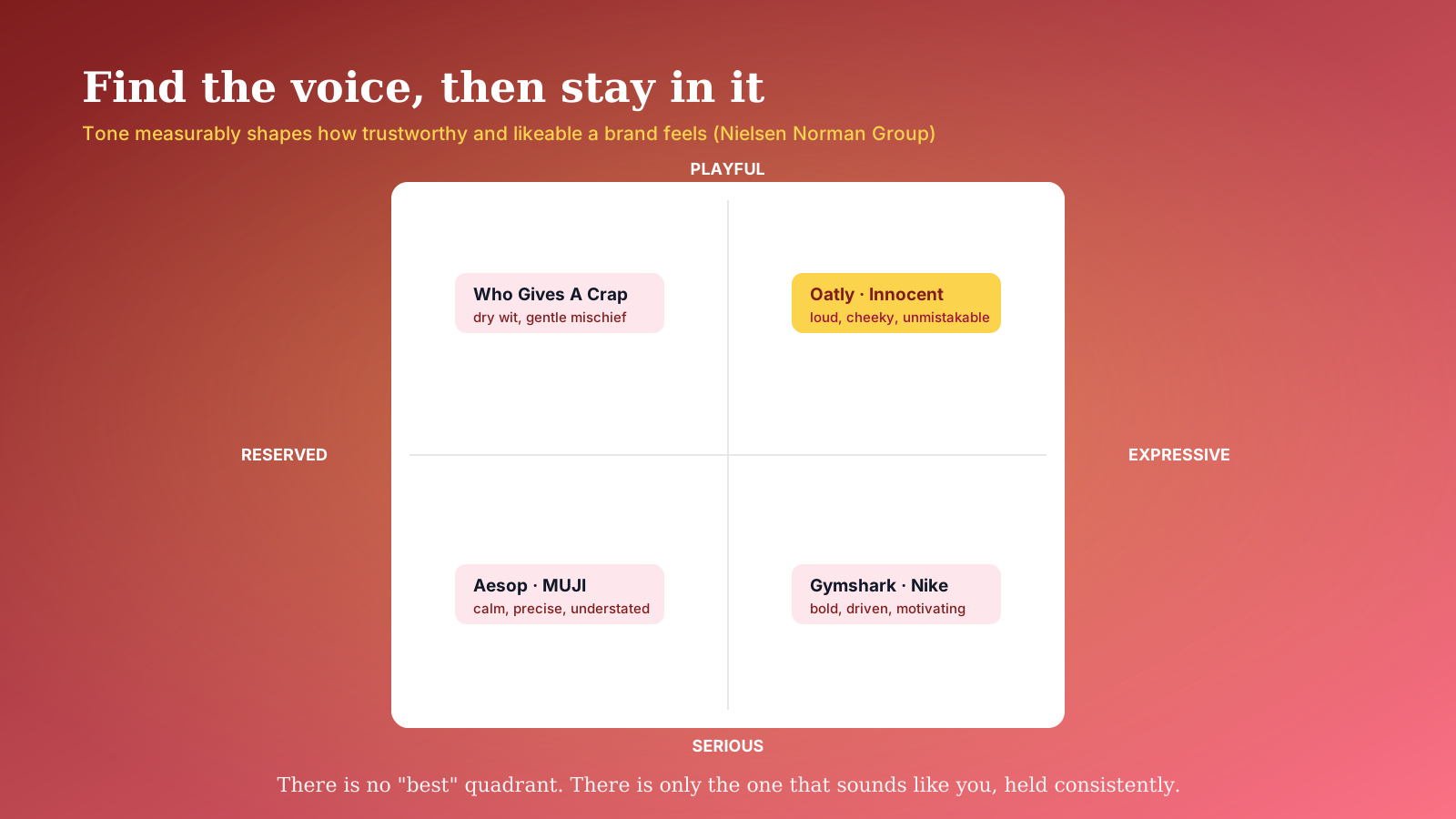
Two stores can sell the same product and describe it in completely different words. The difference is voice, and it's one of the most valuable things a copywriter protects. Nielsen Norman Group's tone-of-voice studies show that the way a brand speaks measurably changes how friendly, trustworthy and desirable it feels. Tone is not decoration. It's part of the product experience.
A good ecommerce copywriter starts by defining that voice and brand personality deliberately rather than defaulting to a generic, upbeat "brand" tone. Is the brand playful or serious? Reserved or expressive? Oatly and Innocent lean loud and cheeky. Aesop and MUJI stay calm and precise. Gymshark and Nike are bold and driven. None of these is the "correct" voice. The correct voice is the one that fits the brand and its customers, and the discipline is holding it consistently across every product page, email and ad.
Consistency is where most brands slip. The homepage sounds confident and characterful, then the product descriptions read like a spec sheet and the transactional emails sound like they came from a different company entirely. Part of the copywriter's job is to close those gaps, often by building a short tone-of-voice guide that anyone writing for the store can follow.
Copy That Ranks: SEO and AI Search
Great copy that nobody finds is a wasted asset. A good ecommerce copywriter writes for people first, then makes sure search engines and AI answer engines can understand and surface the work. In 2026 those are increasingly the same skill.
The foundations of search-friendly copy haven't changed much: understand what your target audience actually types, use those phrases naturally in titles, headings and the opening lines, and cover a topic with genuine depth rather than thin, repeated boilerplate. Long-tail, specific phrases like "waterproof trainers for wide feet" carry real buying intent and are far easier to rank for than broad head terms. This overlap between copy and conversion rate optimisation is where an evidence-led approach pays off, and our guide to optimising product descriptions for SEO goes deeper on it.
What has changed is the rise of AI Overviews and answer engines. These systems tend to extract the opening lines of a page, so if the material, size or defining benefit is buried under a paragraph of brand throat-clearing, it may never get picked up. The fix is to lead with the fact, not the feeling: state clearly what the product is, who it's for and its standout quality, then let the persuasive copy follow. Well-structured FAQ sections written as complete, standalone answers are one of the fastest routes to being cited, and pages with complete, accurate product schema are around 2.5 times more likely to appear in AI Overviews. Words and structured data pull in the same direction. A copywriter who understands both writes content that ranks in traditional search and gets quoted by the AI layer sitting on top of it.
The Ecommerce Copywriter's Process
Good ecommerce copy rarely comes from sitting down and writing. It comes from a process, and the writing is the last, quickest part of it.
It starts with research. Before writing a product page, a good copywriter learns the product properly, reads the existing customer reviews to hear how real buyers describe it, and studies how competitors frame the same category. Reviews are a goldmine here, both as raw material and as proof. Baymard found that up to 95% of shoppers rely on reviews to evaluate a product, so weaving genuine customer language and social proof into copy does double duty: it persuades, and it reflects the words your audience already uses.
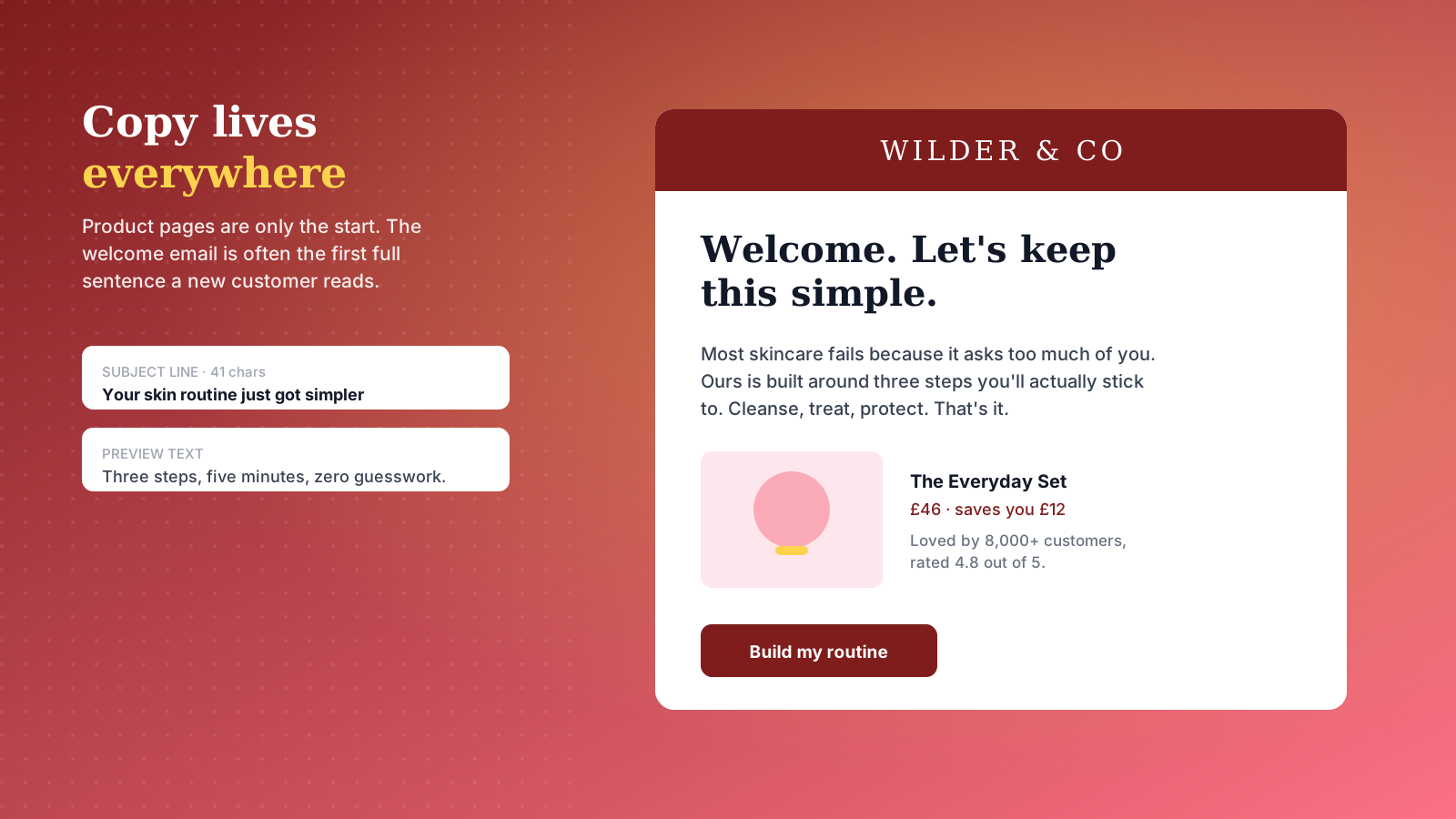
From there, the copywriter maps the message to the customer journey. The words in a paid ad, on the landing page it points to, in the product description, and in the follow-up email all need to connect. A welcome email is often the first full paragraph a new customer reads, so it carries real weight. It should make a clear promise and set the tone for everything that follows.
Then comes the writing, followed by the part amateurs skip: editing and testing. The first draft is almost never the version that converts best. A good ecommerce copywriter cuts hard, tightens every sentence, and treats headlines, product descriptions and calls to action as things to test rather than settle. Small changes to a headline or a call to action can move conversion in ways that are hard to predict, which is why the best teams A/B test their copy and lean on analytics to settle the argument. Measuring the impact of a rewrite, rather than assuming it, is what turns copywriting from a creative flourish into a growth strategy. It also improves the customer experience, because clearer copy is easier copy to buy from.
Mistakes Good Copywriters Avoid
Knowing what to avoid is as useful as knowing what to do. A few mistakes show up again and again on stores that struggle to convert.
The first is thin, incomplete copy. Baymard found that a meaningful share of large ecommerce sites still fail to give consistently detailed product information, and around 30% of shoppers have abandoned a purchase because the information they needed wasn't there. Missing detail doesn't just cost that sale, it can drive avoidable returns when buyers guess and get it wrong.
The second is manufacturer copy. Pasting in the same description dozens of other retailers are using creates duplicate content, adds nothing distinctive, and quietly signals that the brand couldn't be bothered. The third is keyword stuffing, which reads badly to humans and no longer fools search engines. The fourth is the feature dump: a bulleted spec list with no benefit attached, leaving the shopper to work out for themselves why any of it matters. And the fifth is vague, unprovable claims. "Premium quality" and "the best on the market" are empty. "Rated 4.8 out of 5 by 8,000 customers" is not.
How to Become a Better Ecommerce Copywriter
Whether you're writing copy in-house, freelancing, or briefing someone who writes for your brand, the same principles make the work better.
Learn the fundamentals of persuasion, then learn the specifics of ecommerce. Classic direct-response writing teaches you how to hold attention and move a reader to act. Ecommerce adds its own layers: product pages, collection pages, email campaigns, social media, and the platform mechanics of a store like Shopify. The best work pairs creativity with commercial discipline, using storytelling to make a product memorable without losing sight of the sale. Study strong examples, read the reviews on products you write about, and pay attention to the copy that makes you personally want to buy something.
Practice on real products and build a portfolio that shows range across product descriptions, emails and landing pages. Get comfortable with data, because the copywriters who command the most trust are the ones who can point to conversion lifts, not just clever lines. And if you're the one hiring or briefing a copywriter, give them the raw material they need: the product, the customer, the reviews, and a clear sense of the brand voice. The best copy is a collaboration between someone who knows the writing craft and someone who knows the business.
If you'd like expert help turning your store's copy into a genuine growth lever, Charle's Shopify Plus agency and ecommerce SEO teams do exactly this. Get in touch to talk through your product pages, email flows and search visibility.