 Nic Dunn, CEO, Charle Agency
Why Ecommerce Video Ads Work in 2026
To create an ecommerce video ad that converts, start with a short hook in the first three seconds, show the product solving a real problem, and end with a single clear call to action. That is the shape of almost every video ad that sells. The rest of this guide explains how to get each part right for your store and your audience.
Video earns attention that static images cannot. Around 89% of businesses now use video as a marketing tool, according to Wyzowl's 2024 video marketing report, and the reason is simple: video ads carry more information and more emotion per second than any other format. Landing pages that include video have been shown to lift conversions by up to 80%, and viewers retain around 95% of a message they watch compared with 10% of a message they read.
For ecommerce specifically, video ads close the gap between seeing a product and trusting it. A shopper can watch how a jacket moves, how a gadget works, or how a serum is applied, then make a confident decision. That confidence is what gives customers the reassurance to buy and turns a video view into a sale. Video also keeps customers on your store for longer, and longer sessions feed both engagement signals and revenue.
What Makes a Good Ecommerce Video Ad
Before you film anything, it helps to know what separates a video ad that sells from one that gets scrolled past. A few principles hold true across every product and platform.
It grabs attention in seconds. The average shopper is shown hundreds of ads a day, so your video has to earn the next three seconds of attention before it earns the sale. Open with motion, a bold visual, a question, or the product already in use. A weak intro loses viewers before your message lands.
It leads with the benefit. Features tell people what a product has. Benefits show them why that matters. A good video ad demonstrates the product solving a problem, not just spinning on a turntable. Show the result the customer wants, then let the product earn the credit.
It is built for mobile and sound off. Around 85% of mobile video is watched without sound, so your ad has to make sense on mute. Shoot vertically, lead with strong visuals, and add captions so the message survives a silent feed. Most of your audience is watching on a phone, often on TikTok or Instagram, so design for that screen first.
It has one job. Every effective video ad has a single goal and a single call to action. Trying to drive awareness, sales and sign-ups in one clip dilutes all three. Decide what you want the viewer to do, then make that action obvious.
Types of Ecommerce Video Ads
There is no single right format. The best ecommerce brands run a mix of video ads, each suited to a different stage of the buying journey. Here are the formats that consistently perform.
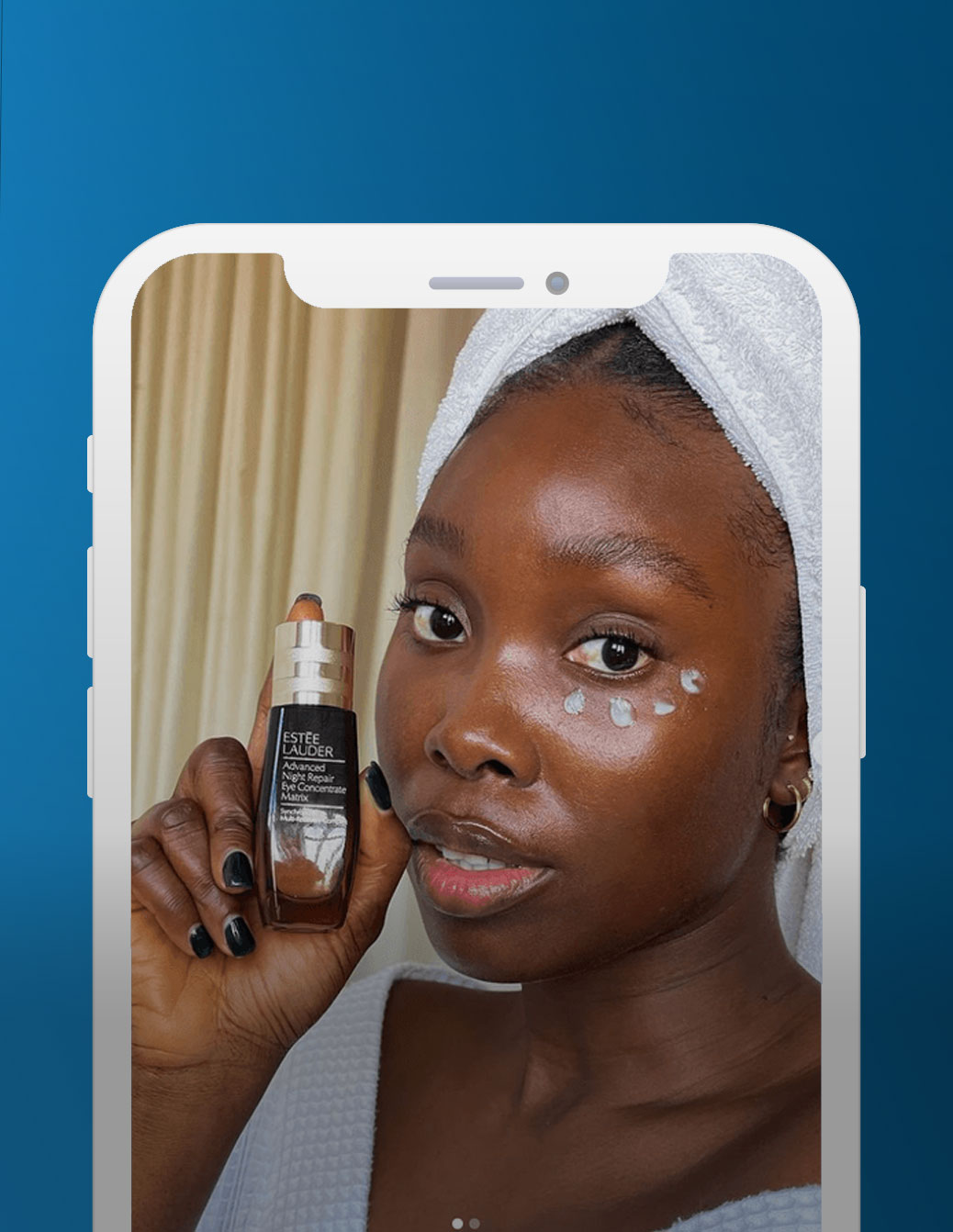
Product demonstration videos. Showing a product in action is still the most direct way to sell it. A skincare brand can show an application routine, a tech brand can show a setup, and a homeware brand can show a product in a real room. Demos answer the practical questions that stop people buying.
Testimonial and UGC videos. Shoppers trust other shoppers more than they trust brands. User generated content, where real customers talk about a product, is some of the most persuasive video you can run. Collect clips from happy customers, feature them on product pages and in paid ads, and let authentic voices do the selling. Shopify Collabs makes it easier to source this content from creators.
How-to and tutorial videos. Educational video ads position your brand as a helpful expert. They work especially well for products that need explaining, and they double as content that ranks on YouTube, the second largest search engine after Google. A good tutorial removes uncertainty and earns trust at the same time.
Unboxing videos. The unboxing moment is a genre of its own. It shows packaging, first impressions and the product reveal in a way that builds anticipation. Unboxing clips perform strongly as both organic content and paid video ads, particularly for gift-led and premium products.
Behind-the-scenes videos. Showing the people, the process and the story behind your products humanises the brand. These videos build the kind of emotional connection that turns one-time buyers into repeat customers.
Seasonal campaign videos. Holidays and key retail moments are ideal for themed video ads. A seasonal campaign creates urgency, taps into gifting intent, and gives a reason to buy now. Plan these around your retail calendar so the creative is ready before demand peaks.

How to Create an Ecommerce Video Ad Step by Step
With the formats in mind, here is the practical process we use to take a video ad from idea to live campaign.
1. Understand your audience. Every successful campaign starts with the customer. Learn what your customers want, what stops them buying, and where they spend their time. Pull insights from your store data, reviews, analytics tools and social comments, then build the ad around a real customer objection or desire.
2. Write a script with a hook. Even a fifteen second ad benefits from a script. Open with a hook that promises value or sparks curiosity, deliver one clear message in the middle, and finish with a call to action. Keep it tight. The best video ads waste no words.
3. Produce for the platform. You do not need a film crew to make great video ads. A modern phone, decent lighting and clean audio are enough to start. What matters more is matching the production style to the platform. Polished works for a hero brand film; raw and authentic works for TikTok. Shoot vertically so the ad fills a mobile screen.
4. Edit for the first three seconds. In the edit, front load the most compelling moment. Add captions, trim anything that does not earn its place, and keep the pace high. Background music and clean cuts lift the perceived quality of even a simple clip.
5. Add subtitles and captions. Because so much video is watched on mute, captions are essential rather than optional. They make your ad accessible, keep silent viewers engaged, and reinforce your message on screen.
6. Include a clear call to action. Tell the viewer exactly what to do next. Whether it is shop now, learn more, or get the offer, the action should be obvious and easy. A strong video ad with no call to action leaves sales on the table.
7. Test, measure and improve. Treat every video ad as an experiment. Run variations of the hook, the format and the call to action, then let the data decide. Small changes to the opening seconds often produce the biggest gains in conversion rates.
Using AI to Create Ecommerce Video Ads
The single biggest change in how brands create video ads is AI. A new wave of AI video tools can now turn product images, descriptions and a short brief into finished video ads in minutes, which has lowered the cost of producing video dramatically.
AI helps at almost every stage. AI scriptwriters draft hooks and captions, AI voiceovers narrate in multiple languages, and AI video generators assemble clips, add motion and produce platform-ready variations from a single master file. For an ecommerce team with a large catalogue, that means you can create product videos at scale rather than one at a time.
The smart way to use AI is as a production accelerator, not a replacement for judgement. Use AI to generate first drafts, test more creative variations, and personalise video for different audiences and stages of the funnel. Then apply human review to protect brand voice and accuracy. The brands winning with video in 2026 are the ones using AI to produce more, test faster, and keep what works.
AI also changes targeting and optimisation. AI driven ad platforms analyse performance data and shift budget toward the creatives and audiences that convert, so the feedback loop between making a video ad and improving it gets shorter every cycle.
Shoppable Video and Where Ads Live on Shopify
A video ad does not only belong on social media. Some of the highest converting placements sit inside your own store, where intent is already high. This is where shoppable video earns its place.
Shoppable video lets viewers tap a product inside the clip and add it to the cart without leaving the video. Interactive and shoppable formats can lift conversion rates by up to 70% because they shorten the path from interest to purchase. On a Shopify store, you can add video to product pages, run it in the hero section, and embed shoppable galleries that turn browsing into buying.
Think about the full journey. A TikTok video ad earns the click, a product page video closes the sale, and a Shop app or social storefront keeps the experience native. Reusing one piece of video across paid ads, product pages and email gets far more value from every clip you produce. For more on lifting store performance, see our guide to improving your ecommerce conversion rate.
If you run on Shopify or Shopify Plus, video belongs in your theme, not bolted on as an afterthought. The brands that treat video as a core part of the product page experience, rather than a marketing add-on, see the strongest results.
Optimising Video Ads for Each Platform
The same video ad rarely performs equally well everywhere. Each platform has its own format, audience and rhythm, so tailor the creative rather than reposting one master clip across all of them.
TikTok. Short, fast and authentic wins on TikTok. Native style content that feels like a creator made it outperforms polished brand ads. Lean into trends, sound and a strong first second. TikTok is where many ecommerce brands now find their highest engagement.
Instagram Reels. Reels reward aesthetic, vertical video with a clear hook. Instagram shoppers respond to visual quality and aspiration, so make the first frame count. Reels also feed Instagram's wider discovery surface, extending your reach.
YouTube and YouTube Shorts. YouTube suits longer demonstrations and tutorials, while Shorts capture quick attention. Because YouTube doubles as a search engine, optimise titles, descriptions and tags so your product videos surface for relevant queries.
Facebook. Facebook remains a workhorse for retargeting and broad reach. Native uploads outperform shared links, and clear captions matter because so many users watch on mute. It is a strong platform for testimonial and offer led video ads.
Across every platform, the constants are the same: vertical format, captions for sound-off viewing, a hook in the first seconds, and a single call to action. Get those right and the platform-specific tweaks become easy.
Measuring Ecommerce Video Ad Performance
Creating a video ad is only half the work. To improve, you need to know what is working, and that means tracking the right metrics for each goal.
For awareness, watch views, reach and engagement. For consideration, watch view-through rate and how far people get into the video before dropping off, since the point where viewers leave tells you where the ad is losing them. For sales, watch click-through rate, conversion rate and return on ad spend, which is the metric that ultimately decides whether a video ad campaign is worth running.
Look at performance per platform rather than in aggregate, because a clip that converts on TikTok may underperform on Facebook and the other way around. Use that data to shift budget toward your best performing creatives and audiences, then feed the lessons back into your next round of video ads.
Most of all, keep testing. The brands that win with video treat every ad as a chance to learn what their customers respond to. Use your analytics tools to track engagement at each stage, and compound those lessons over time.
Our View on Ecommerce Video, After 100+ Shopify Builds
After building and growing more than a hundred Shopify and Shopify Plus stores, here is the lesson that surprises most brands we work with: authentic beats polished, almost every time. The teams that obsess over cinematic production values often get outperformed by a competitor filming honest, slightly rough clips on a phone. Shoppers can smell an ad, and they trust a real person far more than a glossy commercial.
That does not mean quality stops mattering. It means quality should be spent on the things that change a buying decision: showing the product clearly, answering the real objection, and making the first three seconds impossible to scroll past. Spend your budget there, not on a thirty second brand film nobody finishes.
The second thing we would change for most stores is where video lives. Brands pour money into social video ads and then run a product page with a single static image. The video that convinced someone to click should also be the video that convinces them to buy. We think the biggest, cheapest win for most Shopify stores in 2026 is not making more ads, it is putting the video they already have onto the product page where the sale actually happens.
Used together, AI for volume and authenticity for trust are a powerful pairing. Produce more video ads than you used to with AI, keep them human, test relentlessly, and put your best clips where they close sales.