 Nic Dunn, CEO, Charle Agency
What Is Composable Commerce?
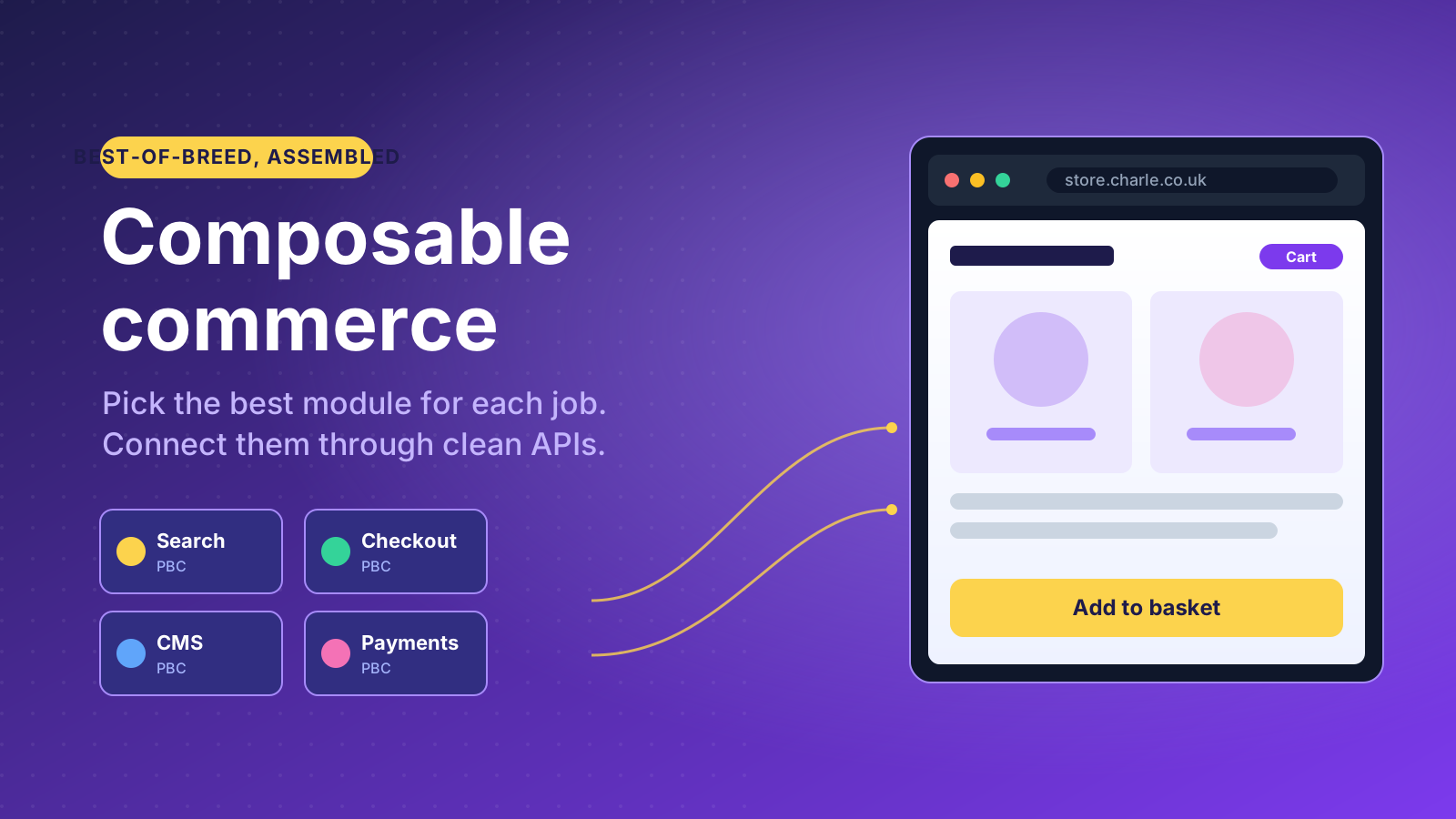
Composable commerce is an approach to building an online store from a collection of independent, best-of-breed components rather than a single all-in-one platform. Instead of accepting one vendor's bundle of search, checkout, content, payments and order management, you select the strongest tool for each job and connect them through APIs into a custom stack. The result is a single solution assembled from the best parts, so businesses can build the customer experiences shoppers expect across every channel. The word "composable" captures the idea: the pieces can be assembled, swapped and reassembled as your business changes.
The term was coined by Gartner, which frames composable commerce around "packaged business capabilities" and recommends application leaders adopt the model to keep digital commerce flexible. Gartner predicted that companies taking a composable approach would outpace competitors by 80% in the speed of implementing new features, which is the headline most vendors quote. The promise is straightforward: modularity buys you speed.
It helps to contrast this with the traditional alternative. A monolithic platform is a single, tightly integrated block of software where the storefront, checkout, CMS and back office all live together. Monoliths are simpler to buy and run, but changing one part often means redeploying and retesting the whole system, which is slow and occasionally risky. Composable commerce trades that simplicity for flexibility, letting you change one capability without disturbing the rest.
For most of the brands reading this, the practical question is not "what is the textbook definition" but "does assembling my own stack beat buying a platform that already works". That tension runs through the rest of this guide.
Composable vs Headless vs MACH vs Monolithic
These four terms get used interchangeably, which is where most of the confusion starts. They describe related but distinct ideas, and untangling them is the fastest way to sound informed in a platform conversation.
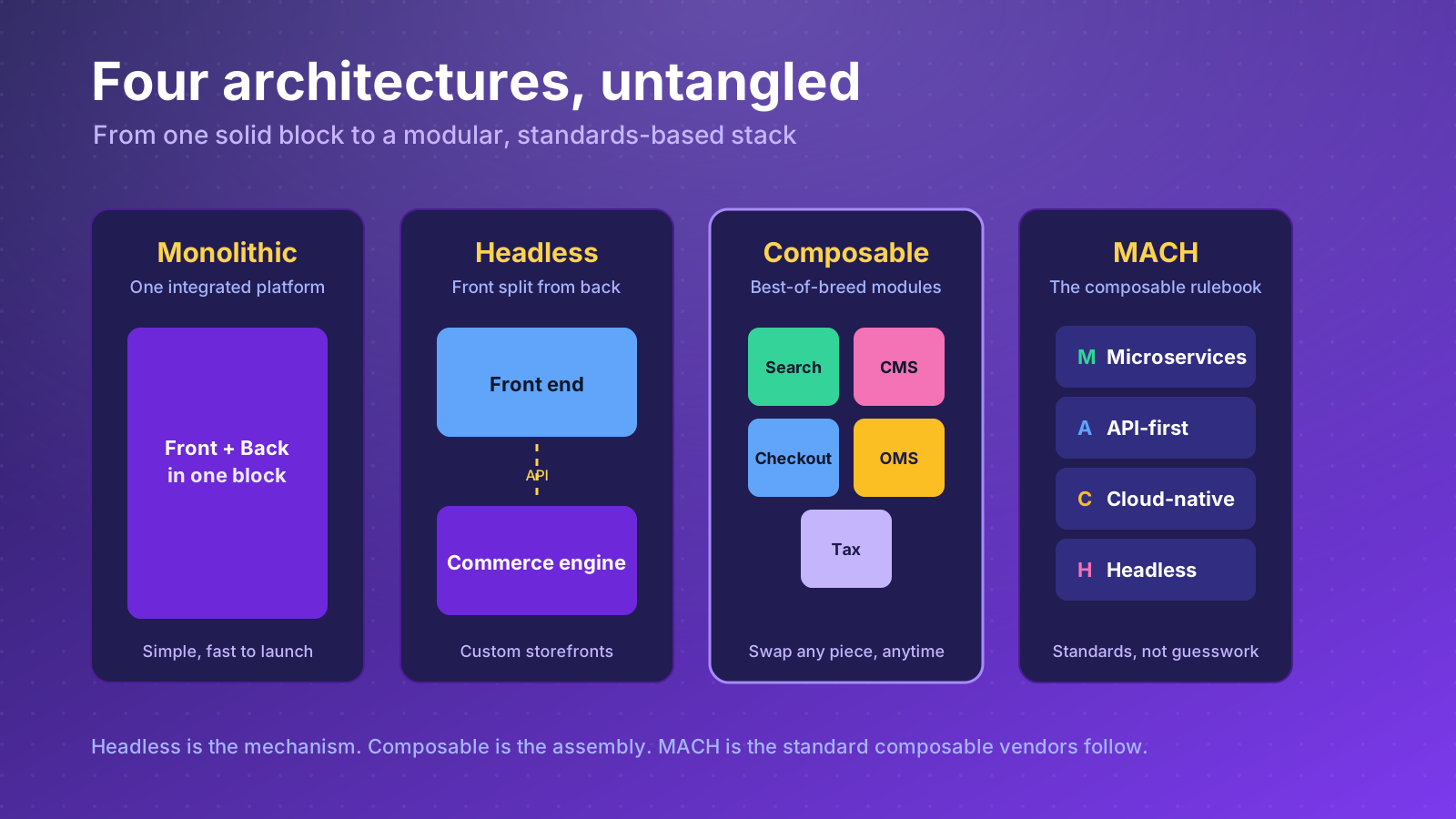
Monolithic means one integrated platform handles everything. Standard Shopify, in its out-of-the-box form, sits closest to this end of the spectrum, and for many brands that is a strength rather than a weakness.
Headless means the front end (what shoppers see) is decoupled from the back end (data and business logic), with the two talking through APIs. Headless is an architectural choice about separation of concerns. It lets you build a custom storefront, a mobile app and other touchpoints on top of the same commerce engine.
Composable is about modularity across the whole stack, not just the front end. A composable system assembles multiple best-of-breed services, your CMS from one vendor, your search from another, your order management from a third. Headless is usually the mechanism that makes composable possible, which is why the two words travel together. You can be headless without being fully composable, and the distinction matters when you scope a project.
MACH is a set of principles defined by the MACH Alliance: Microservices, API-first, Cloud-native SaaS and Headless. MACH is essentially the standards-based, opinionated version of composable architecture. When a vendor says they are MACH-certified, they are signalling that their product follows those four principles and plays nicely in a modular stack.
A simple way to hold it together: monolithic is the all-in-one, headless is the separation of front and back, composable is the best-of-breed assembly, and MACH is the rulebook composable vendors follow. Our guide to headless ecommerce on Shopify goes deeper on the front-end side of this.
The Building Blocks: PBCs and MACH
The unit of a composable stack is the packaged business capability, or PBC. Gartner defines a PBC as a software component that represents a recognisable business function, complete with its own data, APIs and services. In plain terms, a PBC is a self-contained module that does one job well: product search, the basket, payments, tax calculation, content management, or the order management that keeps products, inventory, pricing and promotions in sync.
A typical composable stack assembles several of these. You might pair a headless commerce engine with a dedicated search and merchandising tool, a separate content platform, a tax service such as a specialist calculation provider and a fulfilment or order management system. Each piece is chosen on merit, connected through clean APIs, and can be replaced later without rebuilding everything around it.
This is where the MACH principles do the heavy lifting. Microservices keep each capability small and independently deployable. An API-first design means every function is exposed as a clean interface other systems can call. Cloud-native SaaS removes the burden of hosting and scaling each component yourself. Headless keeps the presentation layer free to evolve on its own. Together these four ideas are what turn a pile of separate tools into a coherent, maintainable system rather than a fragile web of integrations.
The benefit brands chase here is the freedom to upgrade one capability at a time. If your search experience is letting you down, you replace the search PBC and leave the rest untouched. This is why so many retailers and fast-growing businesses are drawn to the model: each technology is chosen on merit, and new technologies can be slotted in as they appear. The cost, which we will come back to, is that someone has to own the orchestration that holds all those modules together.
Why Brands Move to Composable Commerce
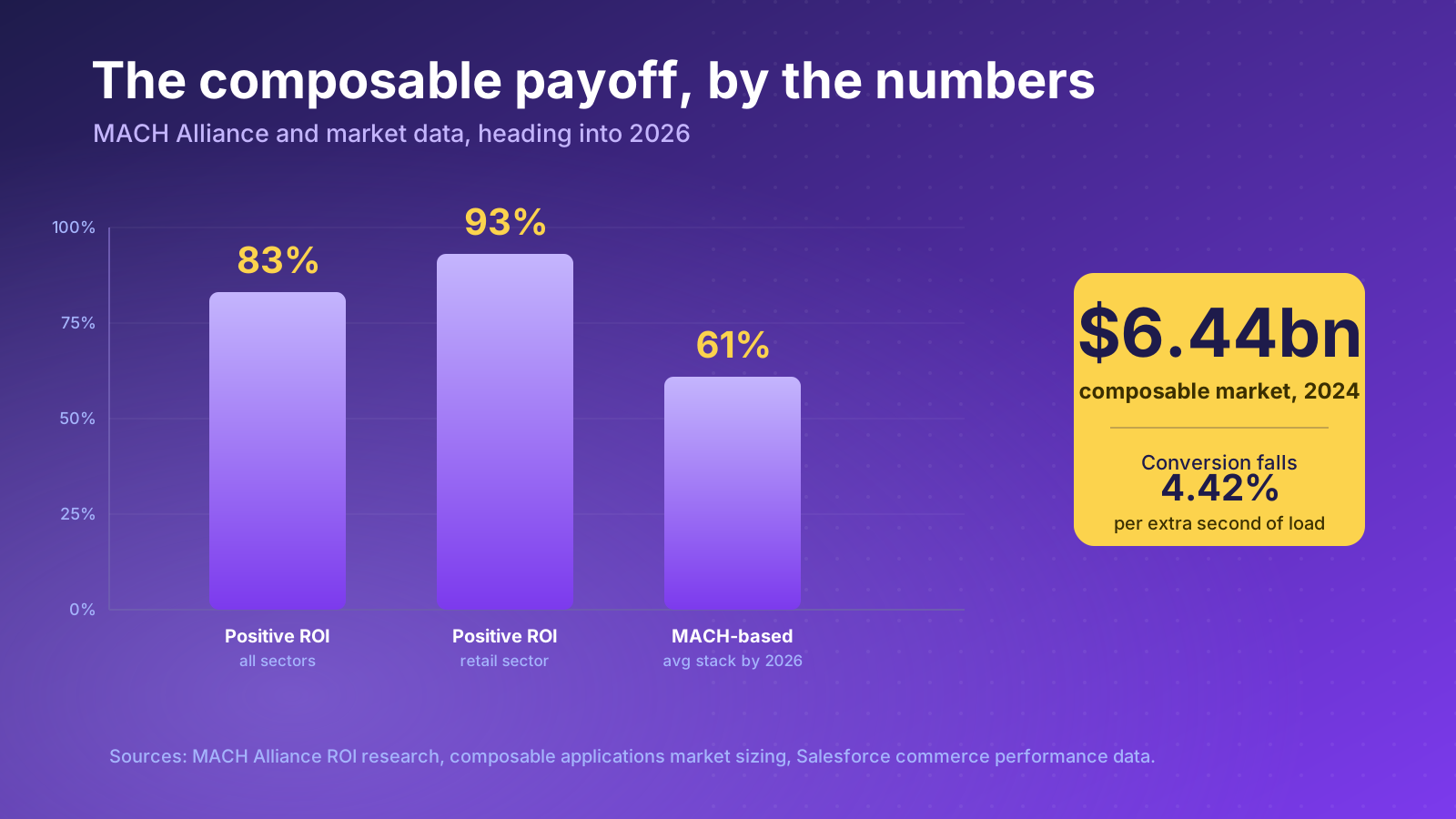
The case for composable commerce is real, and the data behind it has matured. MACH Alliance research found that 83% of organisations adopting MACH-based composable approaches reported positive return on investment, rising to 93% in the retail sector specifically. Nine in ten organisations running some MACH technology said it met or exceeded their ROI expectations, a figure that climbed seven points year on year.
The adoption curve backs this up. By 2026, the MACH Alliance expects the average enterprise tech stack to be around 61% MACH-based, and a similar share of organisations expect to reach a fully composable architecture. The broader composable applications market was valued at roughly 6.44 billion dollars in 2024 and continues to grow steadily. Momentum at the enterprise end is not in doubt.
When you strip away the vendor language, brands move to composable commerce for four practical reasons:
- Speed of change: shipping a new capability does not require redeploying the whole platform, so teams iterate faster
- Best-of-breed quality: you run the strongest search, content and checkout tools rather than settling for one vendor's average of everything
- No vendor lock-in: components can be replaced as needs change, which protects you from a single supplier's roadmap and pricing
- Scalability: cloud-native services scale independently, so a traffic spike on the storefront does not strain unrelated systems
Underneath those four points sits a simpler idea: agility. A modular stack lets teams experiment, adopt new technologies and ship innovation without waiting on a single platform's roadmap, which is exactly what fast-moving retailers and enterprise brands value. The same agility lets a business open new sales channels, enter new markets and scale individual capabilities as demand changes, rather than re-platforming every time the business outgrows its tools.
Performance sits underneath all of this. Site speed is not a vanity metric: Salesforce data shows that the highest ecommerce conversion rates occur on pages that load in one to two seconds, and that conversion rates drop by an average of 4.42% with each additional second of load time. A well-built composable storefront can hit those speeds because the front end is purpose-built rather than inherited.
The Trade-offs Nobody Mentions
Here is the part the platform vendors tend to skip. Composable commerce is not free flexibility. It moves complexity from the platform onto your team, and for a lot of brands that is a poor trade.
The first cost is orchestration. A monolith ships as one tested system. A composable stack is a set of services you, or your agency, are responsible for connecting, monitoring and keeping in sync. Every integration is a seam that can break. When something goes wrong, the question "which of the seven systems caused this" is harder to answer than it is on an all-in-one platform.
The second cost is people. Composable commerce assumes a capable technical team or a strong delivery partner. You need developers who can build and maintain integrations, and the in-house knowledge to make architectural decisions. Brands that go composable without that capability often end up with a stack that is expensive to run and nobody fully understands.
The third cost is total cost of ownership. The combined costs of several best-of-breed solutions, plus hosting, plus the engineering time to hold it together, frequently exceed the price of a strong all-in-one platform. This is where many composable projects come unstuck: the recurring costs are easy to underestimate, and the platforms you stitch together each carry their own licensing. The Gartner feature-velocity number is genuine, but it assumes you have the team to realise it. Without that, the speed advantage never materialises and you are left paying for complexity you cannot use.
This is why we are honest with clients: composable commerce earns its keep at a certain scale and ambition, and below that line a well-configured Shopify store will out-perform a half-built composable stack on every metric that matters, including speed to market and running cost.
Where Shopify Fits in the Composable Picture
This is the question almost every other guide ignores, because almost every other guide is written by a vendor that competes with Shopify. So where does Shopify actually sit?
Out of the box, Shopify looks monolithic, and deliberately so. The platform handles your storefront, checkout, payments, admin and a great deal more as a single, reliable system. That integration is a feature. It is why a brand can launch quickly, stay secure and convert well without assembling anything. For the majority of merchants, that is exactly what they should want.
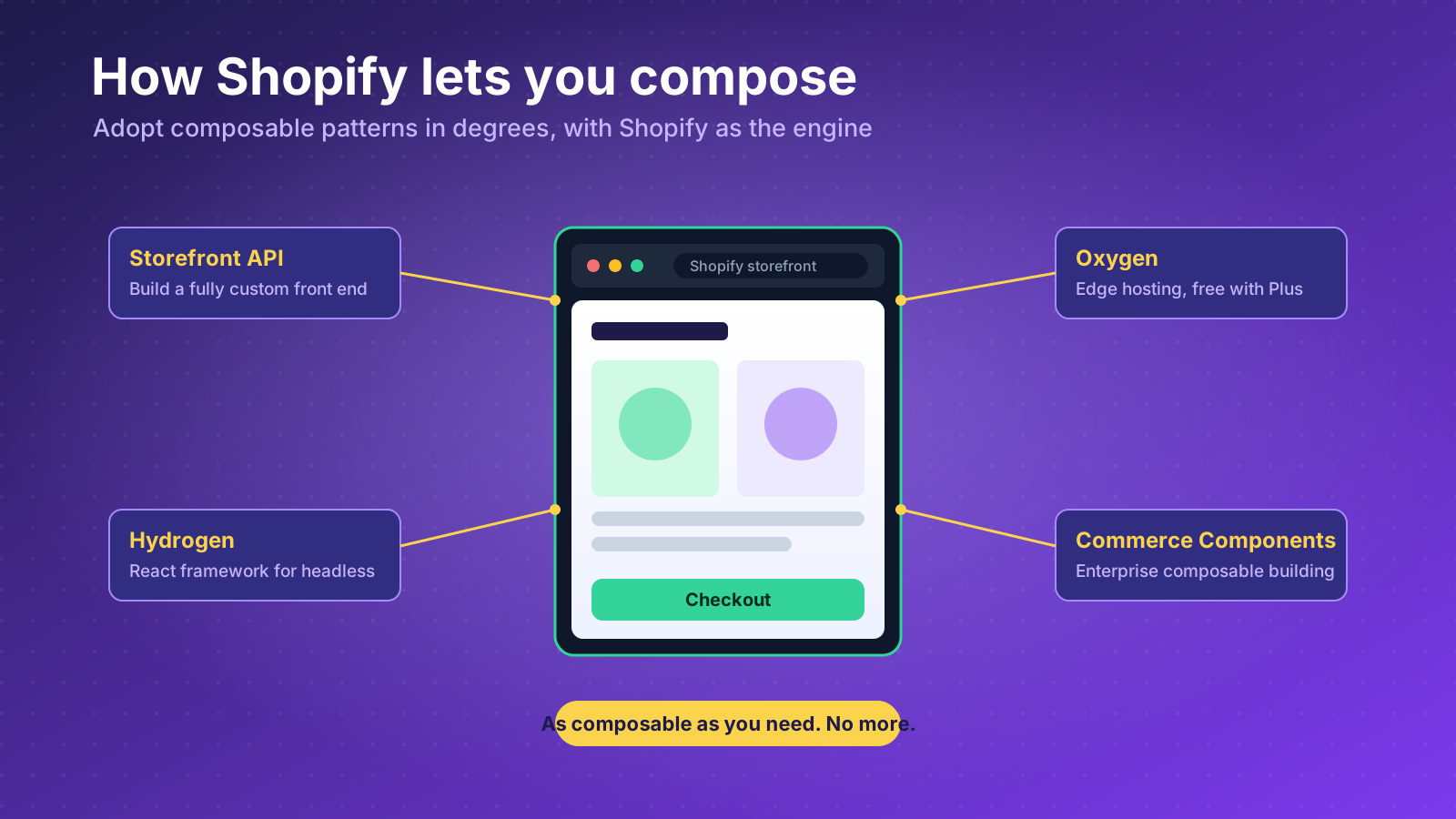
But Shopify is not a closed monolith. It is a large ecosystem with an app marketplace, an open developer platform and, crucially, a set of tools that let you adopt composable patterns gradually. Shopify's Storefront API lets you build a fully custom front end. Hydrogen, Shopify's React framework now built on React Router, gives you a headless storefront toolkit, and Oxygen hosts it at the edge, included with Shopify Plus. Commerce Components opens up Shopify's individual capabilities for enterprise-scale composable builds.
The practical upshot is that Shopify lets you be as composable as you actually need to be, and no more. You can run a standard themed store, go headless on just your highest-value pages, or build a full composable stack with Shopify as the commerce engine at its core. You do not have to choose composable-everything or monolith-everything. Our deeper guide to Shopify Hydrogen and Oxygen covers the headless build path in detail, and the work we have done with headless Shopify brands shows what that looks like in practice.
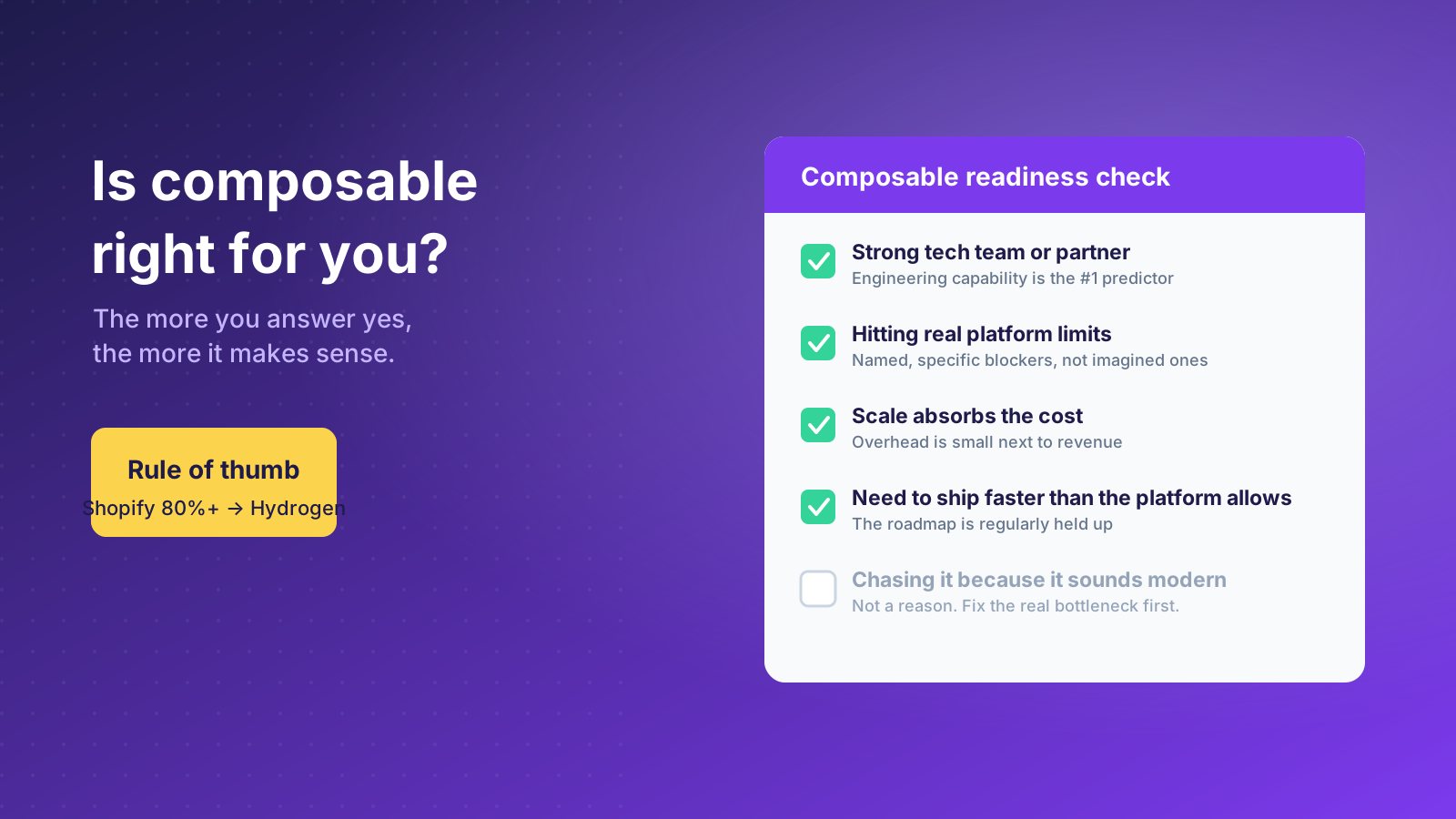
A useful rule of thumb from the field: if Shopify covers 80% or more of your commerce logic, building headless with Hydrogen keeps you fast and close to the platform. If Shopify is less than half of your stack, a framework-agnostic approach with a tool like Next.js may suit better. Either way, you are composing on top of Shopify rather than replacing it.
Is Composable Commerce Right for Your Brand?
Strip out the hype and the decision comes down to a handful of honest questions. The more of these you answer yes to, the more composable commerce starts to make sense.
Do you have, or can you fund, a strong technical team or delivery partner? Composable architecture rewards engineering capability and punishes its absence. This is the single biggest predictor of success.
Are you hitting real limits with your current platform? Not imagined ones. If specific, named requirements such as a bespoke checkout flow, a complex content model or a unique merchandising experience are genuinely blocked by your platform, that is a strong signal. Chasing composable because it sounds modern is not.
Is your scale large enough to absorb the cost? The licensing, hosting and engineering overhead needs to be small relative to your revenue. At enterprise scale that maths works. For an early-stage brand it rarely does.
Do you need to move faster than your platform allows? If your roadmap is regularly held up by what your current system cannot do, the feature-velocity benefit of composable is worth paying for. If your bottleneck is elsewhere, fix that first.
For most growing Shopify brands, the right answer in 2026 is a partial one. Stay on a well-configured platform, then adopt composable patterns selectively where you hit a real ceiling, usually starting with a headless front end on your most important pages. That incremental path captures most of the upside with a fraction of the risk. If you want a second opinion on where your store sits, our team is happy to talk it through.
Composable Commerce and the Agentic AI Shift
One reason composable commerce is back in the conversation for 2026 is agentic AI. As AI agents start to browse, compare and buy on behalf of shoppers, the systems that expose clean, real-time product data through APIs are best placed to serve them. A modular, API-first stack is, by design, easier for an agent to read and act on than a closed monolith.
This is where Shopify has moved quickly. Shopify's Storefront MCP and its adoption of an open commerce protocol mean that every Shopify storefront, whether built with Hydrogen, Liquid or anything else, is now an agent-readable endpoint by default. In other words, you get a major slice of the agentic readiness that composable advocates talk about without having to assemble the whole stack yourself.
The lesson holds with the rest of this guide. The benefits attributed to composable commerce, speed, flexibility and now agentic readiness, are increasingly available on Shopify as platform capabilities rather than as a reason to rebuild from scratch. Composability is becoming something you adopt in degrees, matched to your scale, not an all-or-nothing rebuild. Visibility in AI search follows the same logic, which we cover in our wider Shopify SEO guide.
Composable commerce is a genuinely useful idea, and at the right scale it is transformative. The mistake is treating it as a destination every brand must reach. For the Shopify merchants we work with, the smarter move is to understand the model, recognise where it helps, and adopt it deliberately rather than because a platform vendor told you the future is composable.