 Nic Dunn, CEO, Charle Agency
What Headless Architecture on Shopify Actually Means
A headless Shopify store keeps Shopify running the back end, which covers the cart, checkout, payments, product data, inventory and orders, while the front end that shoppers see is built separately and talks to that back end through the Storefront API. The two halves are decoupled, so a design change never touches order processing and a back-end release never breaks the storefront. That separation is the whole idea. Everything else that gets claimed for headless commerce follows from it.
Shopify supports this in two ways. The Storefront API is the open route: any framework you like, whether that is React, Next.js, Vue.js, Nuxt, Gatsby or Astro, hosted wherever you prefer. Shopify Hydrogen is the opinionated route, a React stack built on Remix with commerce components, hooks and utilities already wired to Shopify's APIs. Hydrogen deploys to Oxygen, Shopify's hosting layer, which renders at the edge from more than 285 points of presence and is included on every plan at no extra cost.
The API layer matters more than most articles admit. GraphQL lets the front end request only the fields a page needs, so a product listing can pull a title, an image and a price rather than every attribute stored against the product. On a mobile device on a poor connection, that difference in payload is the difference between a page that renders and a page that gets abandoned.
What headless does not do is make a site fast by default. Shopify's own guidance is blunt on this: themed stores are quick out of the box, and a headless build can easily be made slower than a theme if the architecture is wrong. According to Shopify's Site Speed report, 93% of brands on Shopify already have a fast storefront and Shopify stores render 1.8x faster on average than stores on other platforms. Speed is available without going headless. What headless buys you is control over how you spend it.
That is the architecture. What follows are 19 examples of brands that have already made the change, grouped by region, with the tech stack behind each build and the published outcome where one exists. Treat them as use cases rather than a shopping list. Each business here sells different products to different customers, and each wanted control over a different part of the digital experience. The common thread is that every one of them could name the specific features a theme could not deliver before the project started.
UK and European Brands Running Headless on Shopify
European retailers dominate the headless case studies for a reason that has nothing to do with innovation for its own sake. Selling across borders means multiple regions, multiple languages, multiple prices and multiple sets of local payment methods, and that is the use case where a decoupled architecture repays the complexity fastest. Every example below runs Shopify for commerce and something else for presentation, and several publish enough detail to see exactly how the tech stack fits together.
1. Chilly's
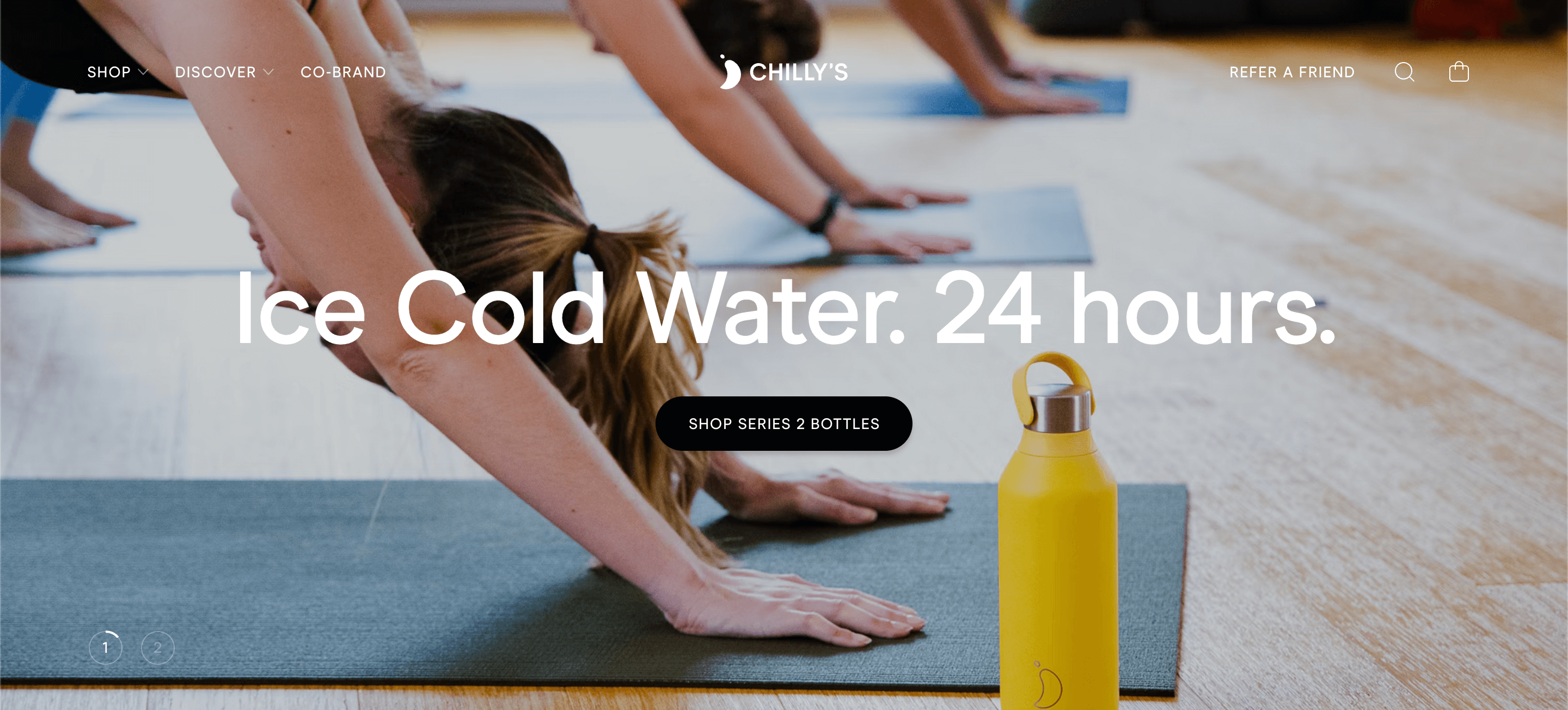
The London reusable bottle brand moved off a standard Shopify setup and rebuilt on Commerce Layer as its commerce layer, which gave it the design freedom for a custom homepage and a product personalisation page that a theme could not deliver. The commercial outcome is the one worth quoting: Chilly's reported saving over £100,000 in operating cost inside six months, while expanding to 36 countries in 10 languages from a single platform. It also switched payment providers from Shop Pay to Braintree to give consumers in each market the options they expect.
2. Victoria Beckham Beauty
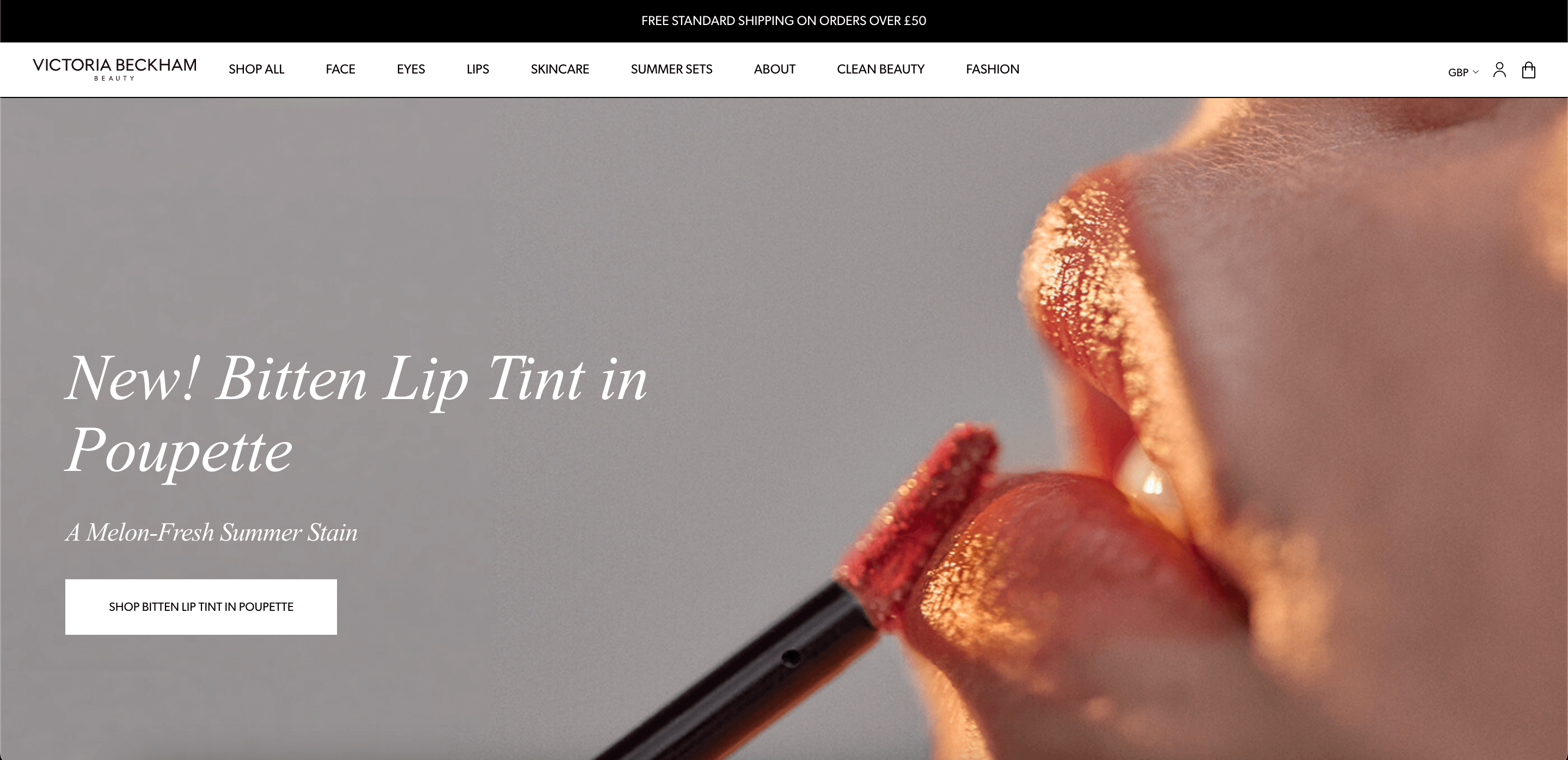
The luxury cosmetics brand pairs Shopify Plus on the back end with Contentful as its headless CMS and Netlify for hosting. The Storefront API handles inventory and product data while Contentful drives the editorial front end, which is what allows the multi-currency and multi-language experience the brand needs. The build reportedly serves over 365,000 visitors a month, and the app-like page transitions with no full reloads are the most visible benefit of the setup.
The approach also gives its customers one set of product pages that adapt prices, currency and language by region rather than a separate build per market.
3. Bamford
The Gloucestershire wellness and lifestyle company migrated off WooCommerce to Shopify Plus with Contentful as its CMS. Bamford's site is not only a shop. It sells loungewear and organic body care alongside spa treatments, workshops, retreats and seasonal events, and those content types change constantly. Decoupling the presentation layer from commerce meant the marketing team could keep the editorial side moving without a development release each time.
4. Seedlip
The London distiller behind the first non-alcoholic distilled spirits was an early adopter. Its headless build leans hard into storytelling, with product pages that read as brand editorial rather than a specification list. Shopify handles inventory and order processing behind the scenes while the decoupled front end carries the animation and lifestyle imagery that a template would have flattened.
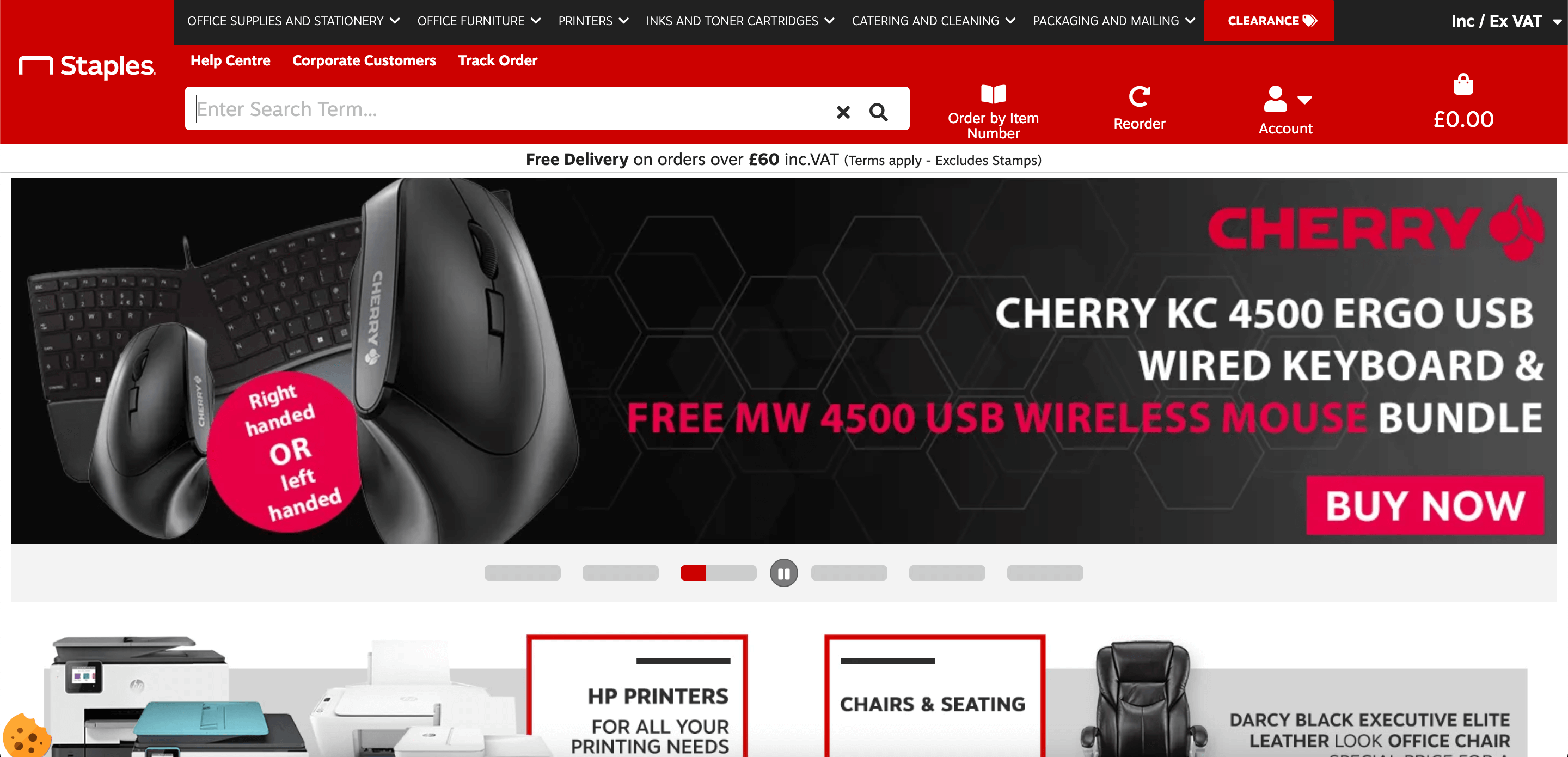
5. Staples
The office supplies retailer went headless for a reason none of the fashion brands share: catalogue scale. Tens of thousands of products across overlapping categories, updated constantly against inventory and promotional plans, is a search and filtering problem before it is a design problem. The headless setup lets Staples optimise each system independently, including account registration and login, ordering by item number and reordering previous baskets. Its customers reorder the same products month after month, so the experiences that matter here are search, filtering and cart speed rather than storytelling.
6. Bols
Founded in Amsterdam in 1575, Bols is the oldest brand on this list and one of the few running both DTC and B2B from the same headless Shopify Plus build. It reported a 50% increase in site speed after the move, along with the flexibility to sell cocktails, event tickets and mixology courses from one storefront. Traffic sits near 483,000 monthly visits, helped by tight integrations between the site and the brand's social channels.
7. Paul Valentine
The Mannheim jewellery and watch company had 12 local stores and a content management process that had stopped scaling. It rebuilt on the Storefront API with Nuxt and Vue.js, backed by Contentful. The result is the most efficient multi-region setup in this article: more than 24 regional storefronts served from just two Shopify stores, with consistent content across all of them.
8. Sennheiser
The German audio manufacturer replatformed to Shopify with a headless architecture specifically to shorten the time it takes to open a new market. It now runs 25 headless stores and reported a 4.5% lift in conversion rate, with the decoupled setup also feeding global marketplaces and social channels from the same commerce data.
North American Brands Running Headless on Shopify
The North American builds skew towards design ambition and catalogue personalisation rather than cross-border trade. Several of them are also the most technically documented, because their engineering teams have written the projects up publicly. Between them they carry the clearest customer stories in the category, with named engineers describing what actually changed.
9. Allbirds
The San Francisco footwear company is the most useful case study here because it did not rebuild everything at once. Allbirds decoupled incrementally, starting with a single feature, the store locator, then converting the wider site to Hydrogen over time. Contentful handles content and Gladly handles customer service. That staged approach is the model most brands should copy and almost none do.
10. Kotn
The Toronto apparel brand used the Storefront API with Next.js to merge two separate Shopify stores into one, add a new CMS and rebuild product pages and the checkout flow. Co-founder Benjamin Sehl framed the decision well: Shopify covers roughly 80% of what the business needs, and headless is where the remaining 20% gets built. Consolidating removed a stack of custom apps the team had been maintaining purely to work around template limits.
11. Rothy's
The recycled-material footwear brand went headless to expand internationally without duplicating its back end. Rothy's reuses one commerce platform, one product catalogue and one set of systems while running separate front ends per region, each with its own language and pricing. It is the cleanest example of headless as an internationalisation tool rather than a design tool.
12. FIGS
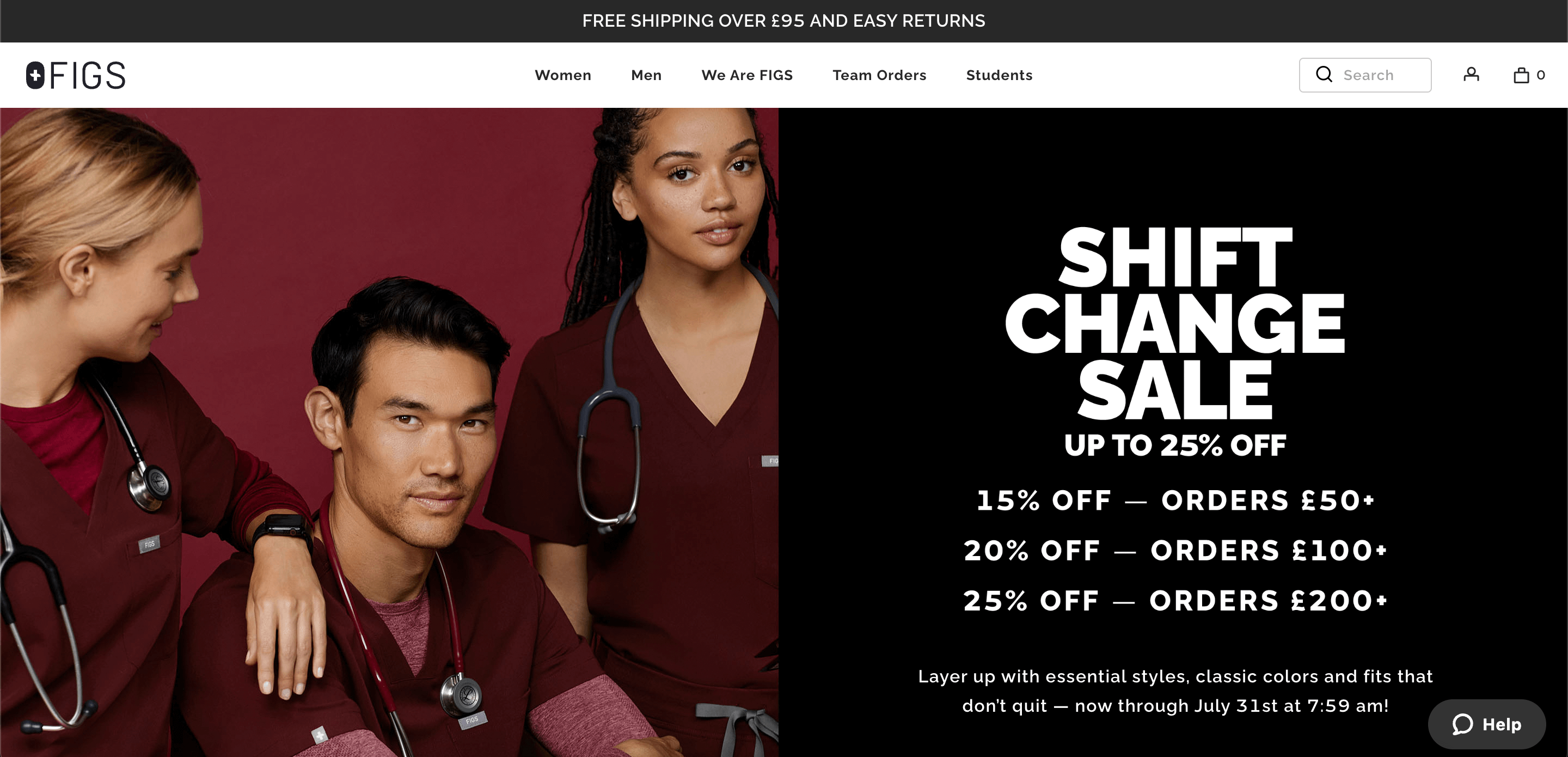
The Santa Monica medical apparel company keeps Shopify Plus for products, orders, payments and shipping, and runs the front end on Next.js with Unbounce for custom landing pages. Each landing page links directly to a Shopify product page, so the marketing team can ship campaign pages continuously without waiting on a back-end release. The result is two teams working at different speeds against one commerce platform, which is the operating model most brands are really buying when they ask about headless.
13. ILIA
The clean beauty brand runs Shopify Plus with Contentful and reports the most specific site performance numbers of any brand here: mobile page load time down 48%, desktop down 46% and deployment performance up 20%. Its Find My Shade tool, which matches a customer to the right foundation shade, was difficult to build on a theme and became straightforward once the front end was decoupled.
14. Ruggable
The washable rug company rebuilt its digital infrastructure on Shopify with a headless front end and cites improvements to site speed, stability, SEO and overall user experience. It expanded to eight international markets and held 100% uptime through Black Friday. Its product director noted that Google now sees the site as much faster and is sending significantly more traffic.
15. Recess
The wellness drinks brand runs Shopify on the back end with a Vue front end and Sanity.io as its CMS. Recess sells on a subscription model, so the site has to handle recurring orders alongside one-off purchases, and the decoupled setup lets it distribute content across the web while keeping the scroll-linked animations that carry the brand personality. Subscription products introduce their own complexity, since a customer can hold an active plan, a paused plan and a one-off order at the same time.
16. Verishop
As a multi-brand retailer, Verishop needed a URL structure that a standard storefront could not provide. Its headless build gives every brand its own URL path, which helps both SEO and the tailored experiences it offers per label. Sending only the data a page requires, rather than loading unnecessary components, keeps category pages responsive even with very large product counts.
Brands That Went Headless for a Single Launch
Not every headless project replaces a main storefront. Three of the most instructive builds were scoped to one launch, which is a far lower-risk way to test whether the architecture suits your team.
17. Nour Hammour
The premium outerwear label rebuilt on Hydrogen and deployed with Oxygen, with product data synchronised between Shopify and Sanity CMS. Its senior developer, Tom Mittlener, said prebuilt components for cart, pagination and search, plus ready-made data fetching and automatic SEO schema generation, saved months of custom development. The brand reported a 63% year-on-year increase in conversion rate and a 128% year-on-year increase in sales. Its editorial lookbook lets a customer add to bag without leaving the story.
18. Patta x Tommy
The collaboration between Patta and Tommy Hilfiger needed a site that could carry animation, HD video and high-fidelity images without the load times that usually come with them. The team built the entire store functionality on Hydrogen in two weeks using prebuilt UI components, then spent the remaining time on the front-end experience. At peak the site handled over 15,000 concurrent visitors with no downtime and the collection sold out within hours.
19. Shogun
Shogun's software helps other retailers build fast custom storefronts, so its own store had to demonstrate the point. Shogun General runs headless to sell branded merchandise while doubling as a showcase for the company's own headless tooling. It is a reminder that for some companies the storefront is a marketing asset as much as a sales channel.
What These 19 Builds Have in Common
Reading all nineteen examples together, four patterns repeat and one common assumption turns out to be wrong.
Multi-region is the strongest predictor. Chilly's, Rothy's, Paul Valentine, Sennheiser, Bols and Ruggable all went headless to serve more markets, not to redesign a homepage. Where a brand runs one storefront in one region, the case weakens sharply.
The CMS decision matters as much as the framework. Contentful appears in five of these builds, Sanity in two, Commerce Layer in one. The front-end framework gets all the attention, but the content model is what the marketing team lives in every day, and getting it wrong is the more expensive mistake.
One distinctive feature usually justifies the project. ILIA had Find My Shade. Nour Hammour had the shoppable lookbook. Inkbox uses AI to curate tattoo designs per visitor and lets customers upload their own. Blume runs a build-a-box quiz. Bonlook runs virtual try-on. In each case a single piece of functionality that a theme could not support paid for the architecture.
The successful migrations were staged. Allbirds started with a store locator. Patta x Tommy started with one campaign. The brands that treated headless as a series of stages rather than one large project had the least painful implementation.
The assumption that turns out to be wrong
Flexibility is the word every one of them reaches for. Read the case studies back to back and the same claim recurs: flexibility over the front end, control over the customer experience, freedom to add features without waiting for a platform release. Those experiences are real. They are also the benefit rather than the business case, and the business case is always a named constraint the current setup could not solve.
The assumption that turns out to be wrong is that these are all enterprise ecommerce operations with unlimited resources. Seedlip, Recess, Blume and Plenaire were small when they went headless. What they had was a clear reason and a development partner who had done it before. Scale helps, but a specific problem helps more.
One practical note on how to use these examples. The strongest signal in the list is not which framework a brand picked but how narrowly it defined the problem first. The examples that went well started from a named constraint: 24 storefronts to maintain, a shade-matching tool that would not build, a catalogue too large for template filtering. The examples that stalled started from a wish for more control and more flexibility in the abstract. Write down the digital experiences you cannot deliver today, the features your customers keep asking for, and the products or regions the current architecture makes awkward. Do that and the approach that suits you usually becomes obvious.
What a Headless Shopify Build Actually Costs
Almost nobody publishes this, which is why so many brands start a headless project without a realistic budget. The numbers that are in the public domain break into two bands. A smaller brand building a single custom storefront should expect somewhere between $30,000 and $100,000 or more depending on how much bespoke functionality is involved. Enterprise projects run from several hundred thousand into the millions, driven by the number of storefronts, the integrations required and the depth of customisation.
Those are build costs. Total cost of ownership includes things that are easy to leave out of a first estimate: annual maintenance, agency retainer fees, CMS licensing, cloud hosting where you are not on Oxygen, and the internal development team you now need to keep two systems in step rather than one. Ongoing complexity is a real line item, not a footnote. Scalability cuts both ways here. A decoupled front end scales to new channels and devices cheaply once it exists, but the tools, monitoring and release process needed to keep it healthy scale with it.
Shopify publishes a qualification matrix that is more useful than any cost estimate. A traditional theme build suits a brand with online revenue below roughly $20m to $50m, a budget under $1m, a timeline shorter than six months and an external agency doing the development. A headless build suits a brand with online revenue above $50m to $100m, a budget of $1m or more, a timeline of six months or longer and established internal technology and product teams. Miss two or more of those thresholds and the honest answer is that a theme build will serve you better this year.
There is a middle path worth naming. Industry data suggests 29% of companies still run full-stack commerce platforms, 91% of those are moving to a blended approach, and 74% of the blended group are heading fully headless. Blended means keeping the theme for most pages and decoupling only the parts that need it, which is exactly what Allbirds did.
When Headless Is the Wrong Answer
Most of these builds were commissioned between 2019 and 2022. The platform has changed a great deal since, and several of the original reasons to decouple have quietly disappeared.
Online Store 2.0 brought sections on every page, app blocks, metafields without an API and custom Liquid, which closed a large part of the design gap that pushed brands headless in the first place. Shopify Editions has since added checkout extensibility, expanded markets tooling and native B2B, and Shopify Commerce Components lets enterprise retailers take individual pieces of Shopify without adopting the whole platform. A brand looking at Salesforce Commerce Cloud or a similar enterprise platform in 2022 had a genuine architectural problem. In 2026 that problem is smaller. Ecommerce platform trends move quickly, and an architecture chosen against the 2022 feature set is being judged today against a very different one.
Headless is the wrong answer if you do not have engineers. It is the wrong answer if you run one storefront in one region. It is the wrong answer if the thing you actually want is a faster site, because a well-built theme on Shopify's infrastructure is already fast and the money is better spent on conversion rate optimisation. It is also the wrong answer if nobody in the business owns the front end, because a decoupled architecture without clear ownership fragments quickly. Digital experiences that nobody owns drift, and decoupled experiences drift faster than templated ones.
Ask a simpler question before the architecture question. Name the single feature you cannot build today. If you can name it, and it is worth the budget above, headless is a reasonable route. If you cannot, you are buying complexity rather than capability. Our guide to choosing headless ecommerce on Shopify works through that decision in more detail, and the benefits of Shopify Plus are worth understanding first, since several of them remove the need to decouple at all.
What We'd Tell a Brand Asking About Headless in 2026
Most requests for a headless build that reach us are not really about architecture. They are about a design the current theme cannot render, a page speed score somebody screenshotted, or a competitor's site that feels better. Two of those three have cheaper fixes.
Our position is straightforward. Storefront count across regions is the honest qualifier, not ambition. If you run one storefront in one market, we think a theme build plus a serious CRO programme beats a headless rebuild on return, and we would rather tell you that before you spend the budget than after. If you run five or more regional storefronts with different languages, prices and payment methods, the Paul Valentine model of many front ends over a small number of Shopify stores is genuinely difficult to beat, and at that point the maintenance argument flips in favour of decoupling.
The thing that surprises brands most is how much of the cost sits after launch. A headless site is two codebases, two deployment pipelines and two sets of dependencies. Every Shopify feature that ships natively, whether that is a new checkout capability or a new markets tool, arrives in your theme automatically and has to be rebuilt by hand in a custom front end. That gap widens every year, and it is the single biggest reason a headless build that made sense at launch stops making sense three years later.
If you are set on it, do what Allbirds did. Decouple one route, prove the pipeline, keep the theme serving everything else, and expand only once your team has run it in production for a quarter. Staged beats heroic, every time.
One last thing worth saying plainly, because nobody selling a headless project will say it. The best commerce architecture is the one your team can still ship changes to in three years. Judge any proposal on that, not on the demo.