 Nic Dunn, CEO, Charle Agency
Quick Verdict: Spring '26 Everywhere in Three Lines
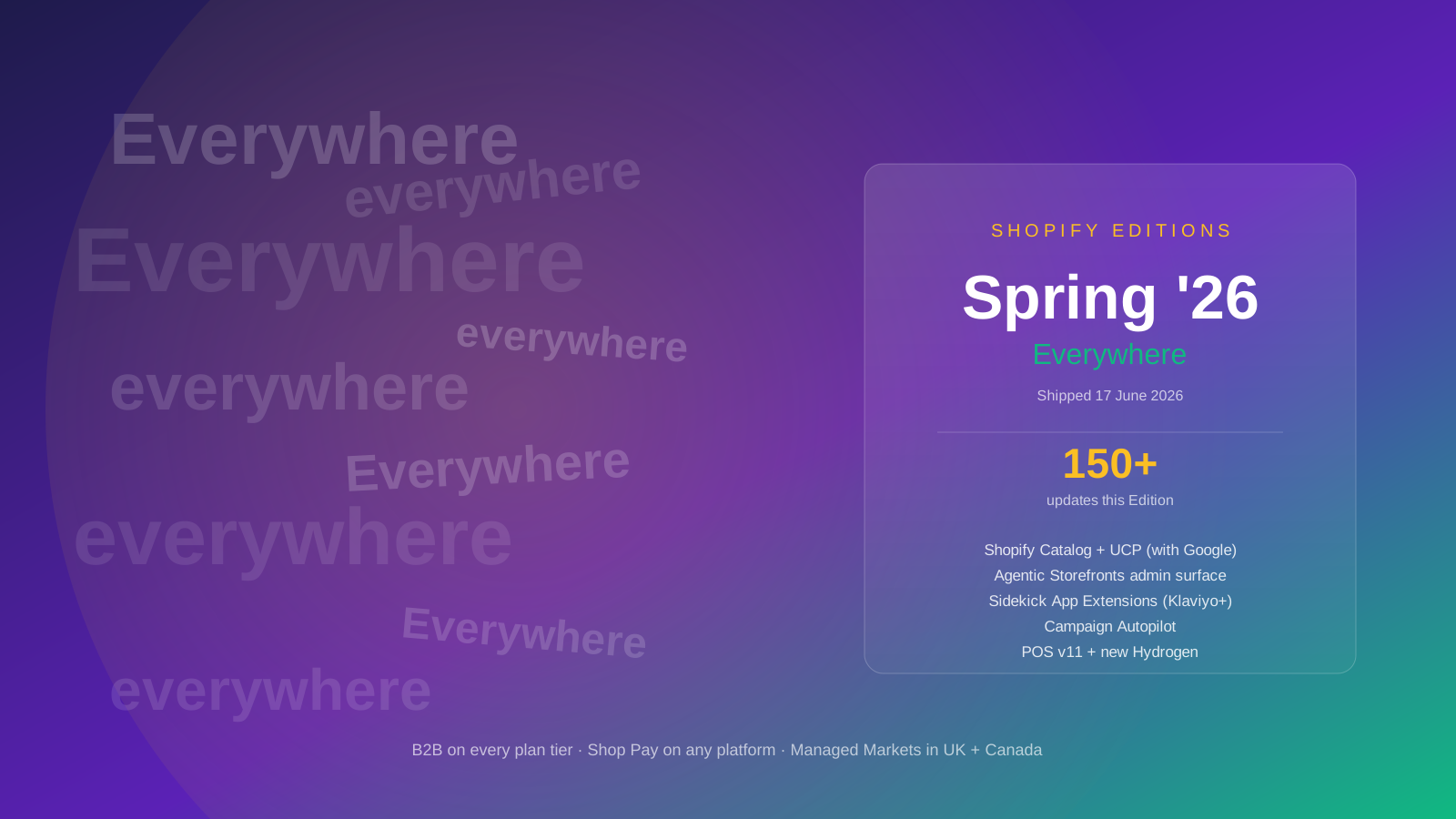
Spring '26 Everywhere is the most strategically important Shopify Edition in two years. It contains 150+ updates but the headline is structural: Shopify is positioning itself as the default commerce infrastructure for the agentic AI era, with Shopify Catalog and the Universal Commerce Protocol (UCP, co-developed with Google) becoming the open layer that AI agents use to discover, understand and transact against your products. Every eligible Shopify merchant is UCP-enabled by default.
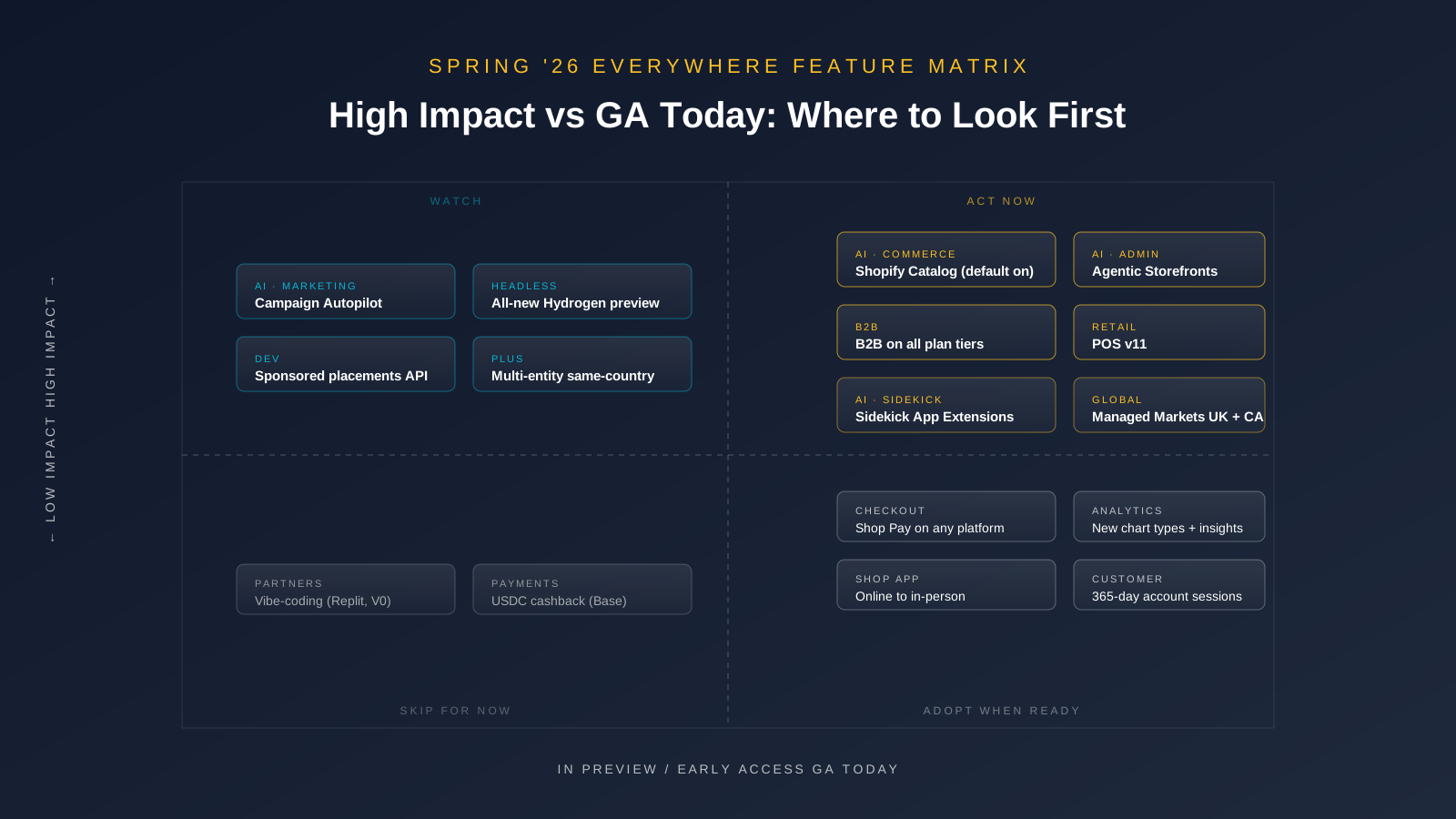
The four headlines that change planning conversations for UK Plus brands: Shopify Catalog automatically syndicates your product data to ChatGPT, Microsoft Copilot, AI Mode in Google Search, Gemini and the Shop app, with reported 2x conversion over scraped data; Agentic Storefronts becomes a dedicated admin surface showing exactly which AI searches your products appear in and what to fix; Sidekick App Extensions connect Sidekick to Klaviyo, Loop, Smile, Judge.me and 11 other top partners so the AI assistant can act across your whole stack; and POS v11 ships as the fastest Shopify POS ever with a cart that stays on screen through the whole transaction.
Underneath: Campaign Autopilot for AI-driven marketing across Meta, Google, Shop and email; Shop Pay available to brands on any platform (not just Shopify); B2B features on Basic, Grow and Advanced plans at no extra cost (huge democratisation from Plus-only); Multi-entity selling within the same country (Plus); Managed Markets in the UK and Canada; an all-new Hydrogen rebuilt from the ground up for any framework and runtime; and a redesigned admin home with Sidekick Pulse cards greeting you. Real customer evidence: Omnilux saw AI channels drive 3.2% of total revenue in March, and Cozy Earth reported AI channel revenue up 20x year on year.
What Is Shopify Editions?
Shopify Editions is the twice-yearly product release event where Shopify packages every meaningful update from the previous six months into one announcement, with a codename and a curated narrative. There is a Winter Edition (typically January or February) and a Spring or Summer Edition (typically June). Each Edition contains roughly 100 to 150+ updates spanning checkout, themes, payments, B2B, POS, analytics, developer tools and AI.
The Shopify Changelog publishes individual feature releases continuously throughout the year; the Editions surface is where Shopify tells the merchant base what to focus on. The codename frames the strategic direction. Spring '26 is Everywhere, and the framing is deliberate: if you are on Shopify, your products now show up automatically across AI channels, the Shop app, retail surfaces, partner platforms and developer-built agentic experiences, without you doing anything.
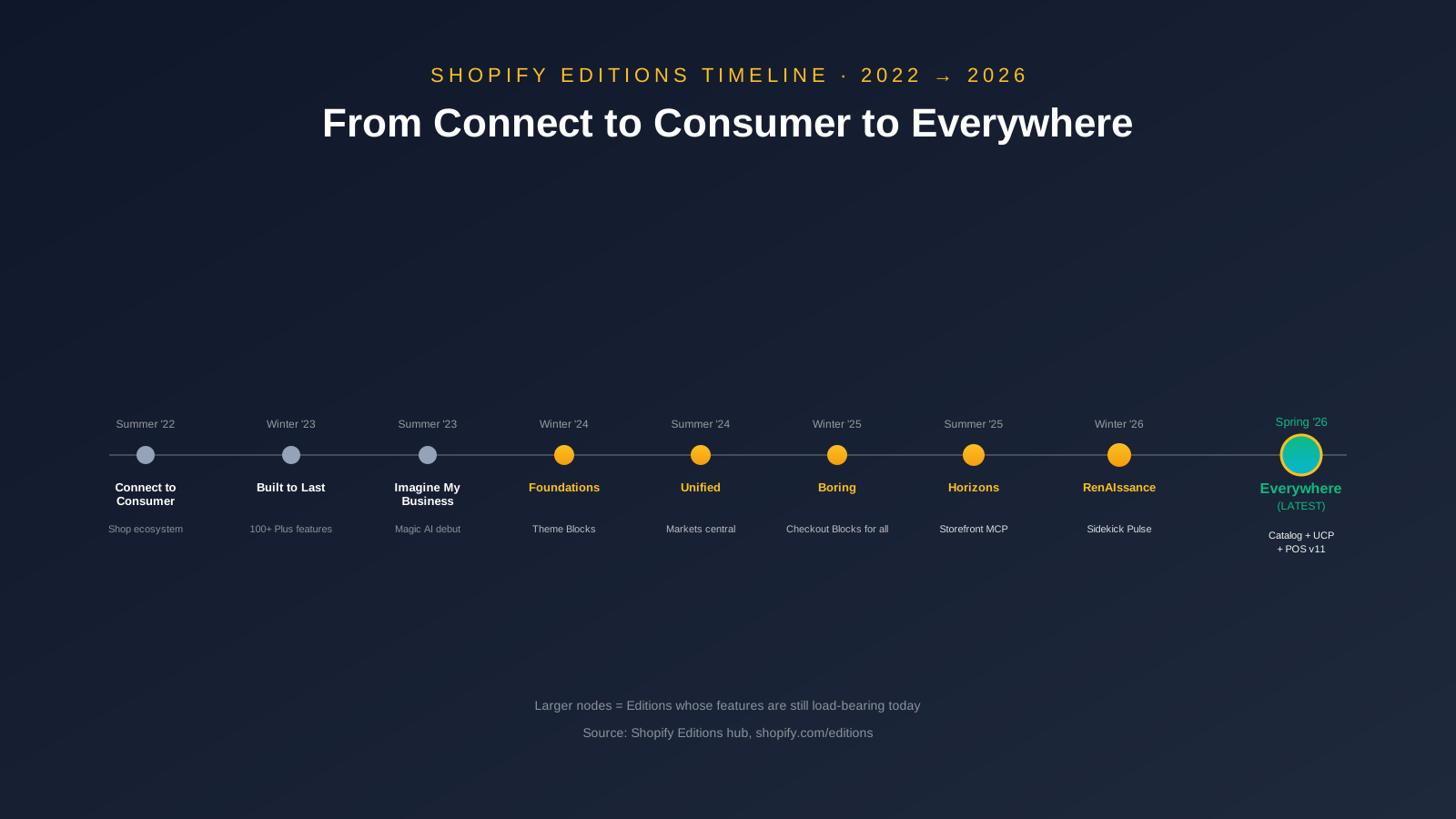
Earlier Editions in the recent rolling list: Connect to Consumer (Summer 2022), Built to Last (Winter 2023), Imagine My Business (Summer 2023), Foundations (Winter 2024), Unified (Summer 2024), Boring (Winter 2025), Horizons (Summer 2025), RenAIssance (Winter 2026), and now Everywhere (Spring 2026). Reading the codenames in sequence tells the story of where the platform is heading.
Shopify Catalog and the Universal Commerce Protocol
This is the single most important release in Spring '26, and it is genuinely a strategic shift rather than another feature drop. Shopify Catalog is a global, structured dataset of products from every eligible Shopify merchant. The Universal Commerce Protocol (UCP), co-developed with Google, is the open standard for how AI agents interact with that catalog across discovery, cart and checkout.
What Catalog does automatically
Shopify Catalog standardises and enriches your product data, then syndicates it to AI channels including ChatGPT, Microsoft Copilot, AI Mode in Google Search, Gemini and the Shop app. No extra app, no manual feed, no separate integration per channel. For eligible products, this is on by default. Shopify reports that AI searches powered by Catalog convert at twice the rate of searches using scraped product data, which is the kind of number that justifies the catalog hygiene work even if you currently see no AI channel traffic.
What UCP gives the wider ecosystem
UCP is the open protocol that lets any AI surface read your catalog, build a cart and complete checkout using your Shopify-native rules. Shop Pay is now live inside Microsoft Copilot via UCP. Meta ads support is coming next. The Shop app, ChatGPT and a growing list of agent partners all read UCP. For developers, the Catalog MCP, Cart MCP and Checkout MCP are the building blocks for any agentic shopping experience. Developers can now earn revenue when their UCP-powered experiences drive sales, with the new sponsored placements via Catalog API in developer preview.
What's new in Spring '26 specifically
Catalog API supports Sign in with Shop, so signed-in shoppers see personalised search results across agentic experiences. Catalog API image search lets agents pass images directly and get visually similar products back. Catalog API product lookup returns real-time pricing and availability for up to 50 products in a single request. Richer product data including media, variants, availability and multi-seller offers is exposed to agents. Shopify also released five demo apps (All Set, Sourced, Starred, Showroom, Pippin) that show what UCP-powered shopping experiences look like in production.
What this means for Plus brands
Catalog hygiene is now urgent. Clean product titles, accurate categories, complete attributes, well-structured size and colour variants, complete descriptions and good imagery directly affect how AI agents discover, understand and recommend your products. Brands feeding messy data into Catalog get back what they put in. The work that used to live in your "SEO and merchandising" backlog is now your AI commerce backlog. There is no separate AI marketing budget to fund this: the work is product data, and your team already owns it.
Agentic Storefronts in the Admin: Your AI Commerce Control Centre
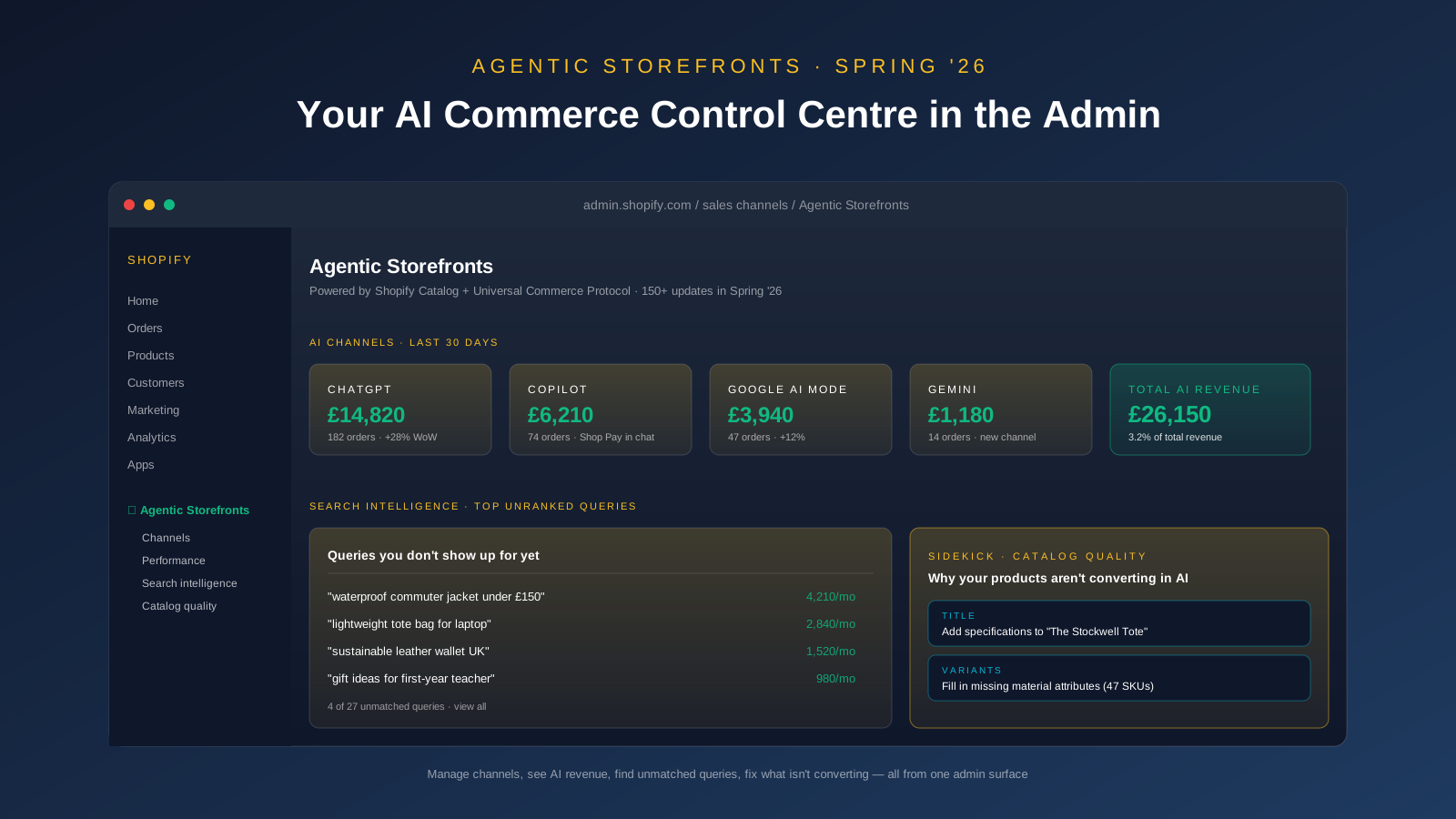
Catalog runs in the background; Agentic Storefronts is the surface that lets you see it working. Spring '26 introduces a dedicated Agentic Storefronts area in the Shopify admin with four jobs:
Manage your AI channels
One view shows every active AI channel (ChatGPT, Copilot, Gemini, AI Mode in Google Search, Shop). For each one, you decide whether to enable product discovery via Catalog and whether to enable direct checkout. This is the kill switch and the launch switch for each AI surface, in one place.
See how you are performing
Orders, sales and conversions from each AI channel are reported together. You can finally answer the question "how much of our revenue is coming from AI channels?" with a number rather than a guess. The Omnilux example Shopify shared: 3.2% of total revenue from AI channels in March. The Cozy Earth example: 20x year-on-year growth in AI channel revenue. These are not theoretical numbers any more.
Find the searches you do not rank for
Search intelligence in the Agentic Storefronts surface shows the top AI queries in your category, which ones you currently rank for and where you are absent. This is the equivalent of Google Search Console's "queries" report for the AI era. The strategic value: it tells you what AI shoppers in your category are actually asking, so your catalog and content roadmap matches real intent rather than guesses.
Fix what is not converting
When your products surface in AI conversations but fail to convert, Sidekick tells you specifically what to change: add specifications to product titles, improve descriptions, fill in missing attributes. The remediation loop is now closed inside the admin. This is the part that makes the work actually happen, because you are not chasing a guess; you are working off Sidekick's specific recommendations on specific products.
Sidekick App Extensions and Sidekick Everywhere
Sidekick was already the Shopify admin AI assistant. Spring '26 extends it materially in three directions: third-party app integration, multi-device availability and proactive workflow guidance.
Sidekick App Extensions: ask Sidekick about your Klaviyo data
Sidekick App Extensions connect Sidekick to 15+ top partner apps including Klaviyo, Loop, Smile and Judge.me. The practical effect: you can ask Sidekick "how did our latest Klaviyo flow perform this week?" or "which Smile loyalty tier converts best on repeat purchase?" and get answers without leaving the Shopify admin. Anne Prins, VP of Product Partnerships at Klaviyo, put it directly: "Merchants can now ask Sidekick real questions about their Klaviyo campaigns, flows, and revenue performance right inside the Shopify Admin." For Plus stores running 8 to 15 apps, this collapses a lot of context-switching.
Sidekick Pulse on the redesigned admin home
The Shopify admin home is redesigned around Sidekick Pulse. When you open the admin you see a card with the most relevant action Sidekick has surfaced from your store's own sales, traffic, inventory and customer data. Pulse first arrived in Winter '26 RenAIssance; in Spring '26 it becomes the default starting point rather than a sidebar widget.
Sidekick everywhere on the Shopify app
Sidekick is now on every screen in the Shopify mobile app, accessible by typing or voice, without a full-screen takeover. You can ask Sidekick to make changes to your online store from your phone. The Apple Watch integration shows store metrics on your wrist; ask Sidekick for a quick sales check while you are out.
Sidekick gets more capable
Smaller but useful updates: Sidekick presents multiple-choice follow-up questions when it needs clarification (faster than free-form back-and-forth). Sidekick keeps working in the background when you start a new task or close the window. The Sidekick-generated apps editor adds code editing, mobile preview and version history. Sidekick can now fill in customer creation forms from plain-language descriptions and generate Shopify Flow test events.
Campaign Autopilot and AI Marketing
Shopify's framing is direct: marketing is the top business challenge merchants name year after year. Spring '26 brings a set of tools that use Shopify's commerce intelligence to do more of the marketing work automatically, with guardrails the merchant sets.
Campaign Autopilot (early access)
Campaign Autopilot runs AI-powered marketing campaigns automatically across Facebook, Instagram, Shop and email. You set the guardrails (target ROAS, region, monthly budget, brand permissions); Shopify's commerce intelligence optimises within them and tracks results over time. Microsoft Advertising, ChatGPT Ads and Snapchat support is coming next. In early access; UK merchants can find Campaign Autopilot under Growth in the Shopify admin.
AI sales associate from Shopify Inbox
An AI assistant from Shopify Inbox now lives on your online store. It answers buyer questions, suggests products, handles order inquiries and uses your catalog, inventory and policies as its context. For buyers signed in with Shop, it personalises recommendations based on their history. You control the tone and when to escalate to a human.
Shop Campaigns on more channels
Shop Campaigns now reaches ChatGPT, Microsoft Monetize and Pinterest, alongside the existing Meta, Google, X, Bing and Snap targeting. One campaign, multiple channels, custom bids for segments like new or lapsed customers. You only pay when the customer converts. Standardised billing in your Shopify invoice with centralised reporting.
WhatsApp marketing arrives
WhatsApp is now a marketing channel in Shopify Messaging, with consent management in each customer profile alongside email and SMS consent. SMS now supports marketing automations inside Shopify Messaging. Smart email delivery intelligently prioritises which messages to send and which to hold back to optimise for conversion.
Marketing data in analytics
Marketing reports in the Shopify analytics suite now include spend, ROAS, impressions and sessions alongside sales. Discount links can be attributed to specific campaigns. Fixed bundles can be published to Google Shopping, YouTube, Facebook and Instagram. Marketing opt-ins can be collected on the customer sign-in page.
POS v11 and Retail
The retail story in Spring '26 is dominated by POS v11, described by Shopify as the fastest-ever Shopify POS. Specifics:
The cart that stays on screen
The biggest UX shift: the cart remains visible through the entire transaction. Discounts, customer lookups, address edits, payment splits all open in a side panel without the cart disappearing. Shopify reports staff save over a minute on complex checkouts. For high-volume retail (queue management at peak) that minute compounds across every transaction in the shift.
Returns, exchanges and new sales in one cart
Process refunds, exchanges and new sales in the same cart with smart grid actions and modular workflows. The customer who returns one item and buys two more is now a single transaction rather than two separate ones.
New hardware: Verifone Victa Mobile
A new handheld POS device that scans barcodes, takes card payments and doubles as a countertop terminal when docked to a tablet. Pre-order available for US and Canada.
Scannable QR discounts in POS
Generate QR discount codes in the admin, share them with customers, and scan in store at checkout. Particularly useful for online-to-store campaigns and member-exclusive offers.
Pickup, transfers and offline
In-person pickup orders (POS Pro): create an order for collection at any retail location and notify the customer. Receive and fulfil inventory transfers from POS (POS Pro). Manual enable of offline checkout per device for when connectivity drops. Permission settings for customer data so you can control which staff see names, emails and addresses.
Multi-entity for Plus retail
Shopify Plus brands can operate multiple retail locations within a single country from different legal entities, all managed from one Shopify store. Tap to Pay works across multi-entity setups for iPhone and Android. Offline payments work across multi-entity. Cash visibility and control across registers (POS Pro). For Plus brands managing brand portfolios with separate legal entities, this is a meaningful operational win.
Shop App and Shop Pay Everywhere
The Shop app and Shop Pay both become more portable in Spring '26. Shop Pay arguably moves from a Shopify checkout feature to a universal commerce primitive.
Shop Pay on any platform
Brands not on Shopify can now offer Shop Pay at checkout. The pitch: 250M+ Shop shoppers and one-click conversion improvement. Simplified onboarding has launched. For Shopify merchants nothing changes on the surface, but the strategic effect is significant: Shop Pay is becoming a checkout layer the wider ecommerce world adopts, which makes the entire Shop ecosystem more valuable for Shopify brands.
Shop Search reimagined
Shop's AI-powered conversational search lets buyers ask "I need a waterproof jacket for a weekend hiking trip" and get tailored results based on their shopping history. Recommendations get smarter over time as Shop learns the buyer's tastes.
Online-to-in-person in Shop
Your retail locations now surface in the Shop app. Product pages show local inventory for in-store pickup. Returns started in Shop finish at your counter with a QR code. The strategic effect: digital browsing turns into foot traffic, and a return becomes a reason to come back into the store.
Sign in with Shop, everywhere
Shop sign-in works across more customer accounts surfaces. A buyer's profile, history and saved details follow them across surfaces. Builders can drop the same trusted sign-in into anything they make, including UCP-powered agentic apps.
Shop Minis and Shop skill
Shop Minis surface in the home feed, top navigation and product pages, so more of your products show up in new contexts. Shop skill for personal AI agents means shoppers using OpenClaw, Hermes and other agent platforms can discover Shopify products and approve purchases via Shop.
Operations, Analytics, Markets and B2B
Spring '26 ships meaningful operational improvements across analytics, inventory, shipping, international and B2B. The headline categories:
Analytics: new visualisations and daily insights
The Shopify analytics suite adds new chart types: scatter plots, radars, bubble charts and sunbursts, alongside the existing line and bar charts. Daily insights surface the most important trends automatically on the analytics overview dashboard. Annotations on charts explain why metrics changed at specific points. Metric targets let you set goals and visually track progress. Multi-metric visualisations plot multiple metrics together. Analytics can now be filtered and grouped by your custom metafields. ShopifyQL and more Admin API fields are accessible in Shopify Flow automations without writing code.
B2B on every plan tier
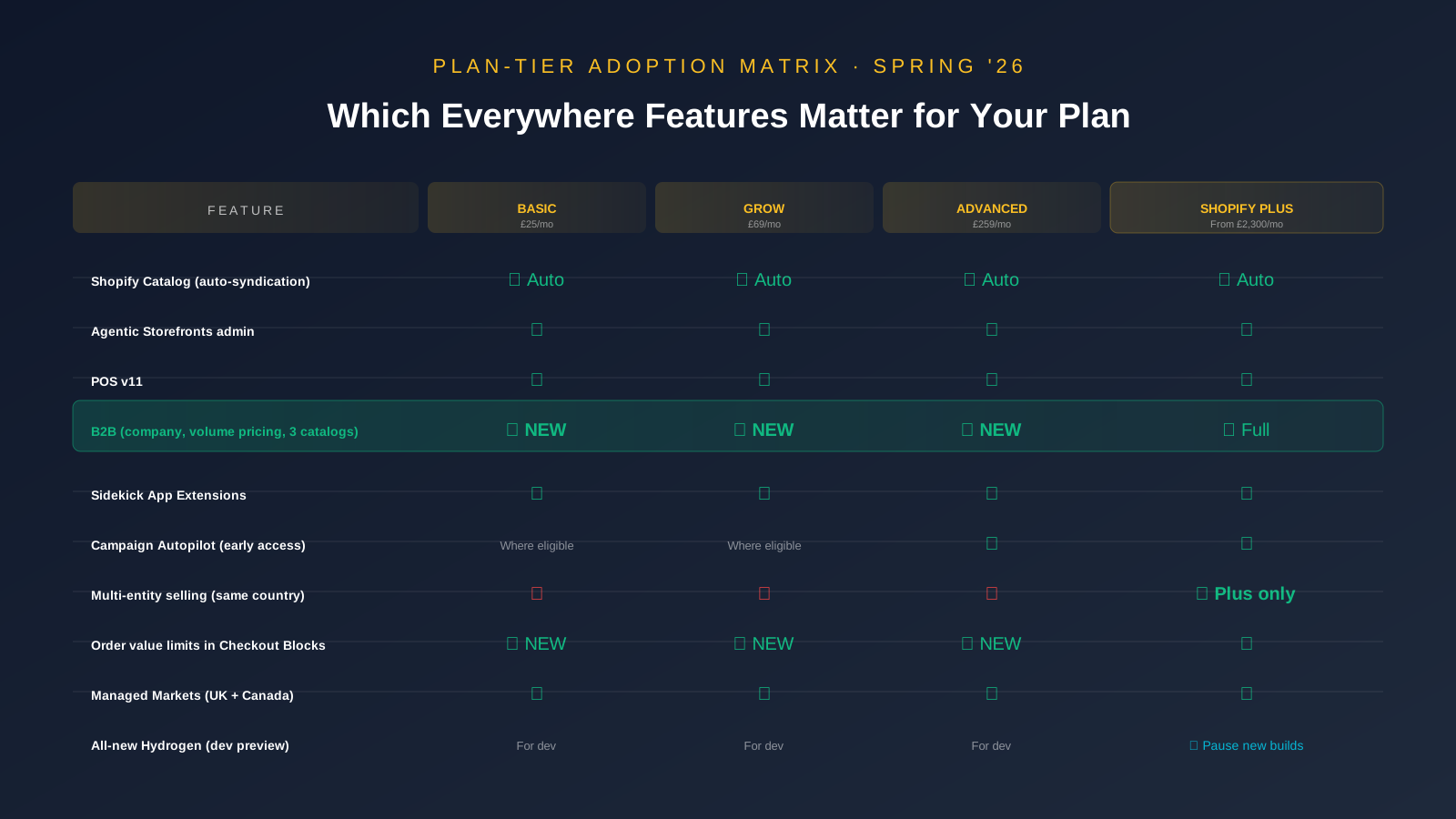
The democratisation of B2B is one of the biggest commercial shifts in Spring '26. Company profiles, volume pricing and up to three B2B catalogs are now available from the admin on Basic, Grow and Advanced plans at no extra cost. Previously these were Shopify Plus exclusives. For brands serving both consumer and wholesale audiences, the migration calculus completely changes. QuickBooks and Mailchimp now natively support B2B segments and PO numbers.
Managed Markets in UK and Canada
Businesses based in the UK and Canada can now sell globally with native support for duties, taxes, compliance and the Managed Markets pricing strategy. Dynamically localised pricing including duties, taxes and fees. FedEx International Connect Plus is supported. For UK Plus brands expanding internationally, this is a material reduction in cross-border setup time.
Inventory and shipping
SKU sharing across locations is now required, so the same variant stocks at multiple locations without duplicate inventory items. Faster inventory syncing for back-in-stock events during high traffic. Pickup orders can fulfil from in-store stock and transferred inventory simultaneously. Shipment-level barcode receiving (GS1-128) speeds up inventory transfer in the admin. Smarter purchase order workflows with Sidekick generating orders that automatically create transfers. Batch fulfilment workflow groups orders into customisable pick, pack, scan and ship batches.
Shopify Collective expands
Shopify Collective product sourcing insights now show empty search results, audience trends and milestones for retailers. Tax-inclusive pricing for B2B in Collective. Improved product discovery with category pills and more filtering. Suppliers can view shipping performance and earn a Verified Tracking badge. Shopify Collective is now available in Australia.
Order management and admin
Order cancellation requests: customers can request cancellation before fulfilment or return after fulfilment from the order status page. Category-specific return reasons match what customers actually bought. Discounts on the refund page maintain accurate sales and tax financials. Code editor in Shopify Flow with syntax highlighting and autocomplete. Version history and workflow notes for Flow automations. Visibility for app activity tracks what apps do, where extensions run and what data they access.
Developer, Apps and the All-New Hydrogen
The developer story in Spring '26 is dominated by the new Hydrogen, alongside a wider push to make AI agents the new primary developer interface for Shopify.
The all-new Hydrogen
Shopify shipped a rebuilt Hydrogen in Spring '26, described as agent-first and rebuilt from the ground up. The new framework works with any framework and runtime, rather than the previous Hydrogen's Remix-then-React-Router-v7 progression. This is a materially different architecture. Existing Hydrogen storefronts continue to work, but anyone scoping a new headless build today should evaluate the new Hydrogen first. The developer preview is live now.
Build Shopify from your favourite AI agent
The Shopify AI Toolkit, plus connectors for Claude Code, Codex, Cursor and Hermes, mean developers can manage stores, themes and apps from inside their AI agent of choice. Add products, create collections, manage orders from a chat in Claude or ChatGPT. The Shop sign-in skill works across personal AI agents like OpenClaw and Hermes.
Vibe-coding partners and Shop Minis
Manus, Replit, V0 and Lovable are now vibe-coding partners; describe your business and spin up a Shopify store. Shop Minis surface in more parts of the Shop app, so apps built as Shop Minis get more shopper touchpoints. The new Shopify App Pricing primitive lets you configure usage-based, recurring or hybrid billing in your app submission, with Shopify handling plan selection, charge approval and invoicing.
Developer experience improvements
More control over webhook events (fire only on specific field changes). GraphQL and bulk operations from the Shopify CLI with built-in auth and status tracking. All partner stores (dev, client transfer, collaborator) now live in the Dev Dashboard, which is the new home for building. Localised Dev Dashboard in multiple languages. Revamped Polaris docs. Metafields supported in ShopifyQL as dimensions and filters. Auto-upgrades and semantic versioning in the Shopify CLI. Safer app deployments with CI/CD that does not accidentally delete existing extensions. Streamlined Metafields and Metaobjects API. No backend required for lightweight admin apps. POS UI extensions get camera access, work without network, support localisation and have activation status queryable.
Payments, Finance and global
Shopify Payments expands to UAE for Shopify Plus brands. Multi-currency payouts in US, Hong Kong and Singapore (France coming). MobilePay, TWINT, BLIK and Przelewy24 in more countries. USDC accepted on Ethereum, Base and other chains with automatic bridging; cashback for paying with USDC on Base. Enhanced fraud prevention with improved ML models for card testing. Chargeback health monitoring. VAT ID validation at checkout (EU and UK). Faster, more accurate address suggestions. Customised branding across checkout, customer accounts and sign-in. Order value limits in Checkout Blocks now available on all plans. Cashback on ad spend from Shopify Balance for ACH or wire transfer payments to Meta and Google ads (US only). Shopify Tax in Canada. Shopify Capital in France.
Which Spring '26 Features Matter for Which Plan
The democratisation of B2B to all plan tiers is the standout shift in Spring '26. Spring '26 features map to plan tiers roughly as follows:
Basic and Grow plans
Major win: B2B features (company profiles, volume pricing, up to three B2B catalogs) at no extra cost. POS v11 is the upgrade to take immediately if you have any retail presence. Shopify Catalog enabled by default, with the Agentic Storefronts surface visible in the admin. Sidekick App Extensions for whichever of Klaviyo, Loop, Smile and Judge.me you already run. Campaign Autopilot in early access for AI marketing. Refreshed customer accounts with 365-day sessions. New analytics visualisations and daily insights. Shop Pay if you adopt it (and a meaningful conversion lift if your buyers recognise the brand).
Advanced plan
All of the above, plus more analytics depth: multi-metric visualisations, ShopifyQL in Flow automations, metafield-filtered reports. Managed Markets if selling internationally. The deeper Sidekick integration matters more as your tool stack grows.
Shopify Plus
The strategic moves are at Plus: multi-entity selling within the same country from one Shopify store, multi-entity Tap to Pay across retail locations, multi-entity offline payments. Order value limits in Checkout Blocks (now also on all plans). Shopify Payments in UAE. The Agentic Storefronts dashboard becomes more useful at Plus scale where AI channels move enough revenue to be worth optimising actively. Catalog hygiene as a strategic priority, because Plus brands have catalog complexity that benefits most from clean structured data. The all-new Hydrogen developer preview is interesting if you are scoping a headless build.
Prior Editions: Short Recap
If you are coming to this article fresh and want context on what shipped before Spring '26 Everywhere, here is the short version. Each previous Edition is one paragraph; for any of them in depth, see the Shopify Editions hub or the Shopify Changelog.
Winter '26 RenAIssance (December 2025)
The AI-led Edition that set up Spring '26 Everywhere. Sidekick Pulse arrived as the proactive AI advisor in the admin. Custom app generation by prompt and theme editing via natural language opened up the no-code path. Agentic Storefronts launched as the concept (Spring '26 turned them into a proper admin surface). SimGym arrived in AI Research Preview for AI shopper simulations. Rollouts brought native A/B testing for themes. POS Hub shipped as the wired retail hardware. Shopify Product Network for catalog expansion without inventory. Tinker as the mobile design app. Variant ceiling lifted to 2,048 per product. Market-specific checkout and account pages.
Summer '25 Horizons (June 2025)
The Horizon theme system as Shopify's new flagship theme framework with nested theme blocks and AI-assisted editing. Sidekick became agentic for the first time, working in 20 languages. The Storefront MCP server arrived, exposing live store data to AI agents (foundational work for what UCP became in Spring '26). Shop Login, Shop Campaigns and Shop Pay updates extended the Shop ecosystem.
Winter '25 Boring (January 2025)
Checkout Blocks became available to every Shopify plan (previously Plus only). Cart, checkout and admin loads got their first significant speed lift. Search and Discovery got AI tools and category-filter sorting. Customer account extensions opened up to 40 partner apps. Foundation work that made the subsequent AI-heavy Editions possible.
Summer '24 Unified (June 2024)
The Markets-centric Edition. Shopify positioned Markets as the central control panel for multi-region, multi-brand and B2B configurations from a single admin. Thank-you and order status pages opened to app customisation. The Hydrogen Visual Editor (powered by Utopia) launched. Real-time analytics started here, finally completing in Spring '26.
Older editions
Winter '24 Foundations introduced Theme Blocks and the original 2,000 variant lift. Summer '23 Imagine My Business was the first AI-heavy Edition with Shopify Magic. Built to Last (Winter '23) and Connect to Consumer (Summer '22) were the foundational releases that defined the Editions format as a marketing surface.
Charle's View: What We're Telling Plus Clients to Adopt from Spring '26
Spring '26 ships 150+ features, but most stores adopt 5 to 10 of any Edition's features in the first six months. Our read on which Spring '26 features make the Plus client roadmap this quarter:
Three things on the roadmap immediately
Catalog hygiene audit on every Plus client. This is the single most important call we are making this quarter. Catalog is on by default, and the quality of what AI agents see depends entirely on the cleanliness of your product data. We are running a structured audit on every Plus client this month: product title patterns, category taxonomy, attribute completeness, variant structure, description quality, image alt text and metafield coverage. The Agentic Storefronts admin surface gives us a feedback loop we did not have before.
Activate the Agentic Storefronts admin surface. Even if you do not believe AI channel revenue matters yet, the search intelligence inside the surface tells you what AI shoppers in your category are asking. That intent data informs everything from catalog work to merchandising to content strategy. Free input data, available now, just for opening the section.
Sidekick App Extensions for Klaviyo and Judge.me. If you already run either, the Sidekick integration removes meaningful context-switching from daily admin work. Quick install, no migration risk, no decision cost. Just turn on.
Three things we are watching, not yet recommending
Campaign Autopilot. Early access, no track record yet. We will let other agencies report on the first 30 to 60 days of results before recommending to Plus clients with mature paid stacks. For brands with no existing paid stack, the cost of trying it is genuinely low.
The all-new Hydrogen. Developer preview, no production case studies yet, no clear migration path from the existing Hydrogen. If you are mid-build or scoping a new headless project, pause and evaluate before committing. If you have a working Hydrogen storefront in production, no urgency to migrate.
Shop Pay on any platform. Strategic move that makes Shop a more valuable ecosystem for Shopify merchants long-term. For non-Shopify brands evaluating Shop Pay as a checkout, the conversion lift evidence will need a few months to mature.
One thing we are not adopting yet
The vibe-coding partner integrations (Manus, Replit, V0, Lovable). Useful for prototyping; not the right tool for production Shopify Plus stores where reliability, agency handover and accountability matter. Watch the category but do not put real merchandising decisions on tools that are still finding their feet.
The one strategic call we are making
If we had to compress Spring '26 into one sentence for a Plus client: your product data quality is now the most important growth asset in your store. Storefront design still matters. Email marketing still matters. Loyalty still matters. But the new top-of-funnel surface is AI channels, and the quality of what AI sees about your products determines how often, how accurately and how confidently you get recommended. Spend the time on catalog hygiene this quarter. Everything downstream compounds against a better baseline.
Frequently Asked Questions
What is Shopify Editions Spring '26?
Spring '26 (codename Everywhere) is the Shopify Edition that shipped on 17 June 2026 with 150+ updates. The headline theme is selling everywhere: Shopify Catalog automatically structures and syndicates your product data to AI channels like ChatGPT, Microsoft Copilot, Gemini and the Shop app, and the Universal Commerce Protocol (co-developed with Google) is the open standard for how AI agents interact with commerce. Underneath: Agentic Storefronts as a new admin surface, Sidekick App Extensions for 15+ third-party apps including Klaviyo and Judge.me, Campaign Autopilot for AI-driven marketing, POS v11 as the fastest Shopify POS yet, Shop Pay available to any brand on any platform, B2B features on every plan tier, and an all-new Hydrogen rebuilt for any framework and runtime.
What does Shopify Catalog actually do?
Shopify Catalog is the global structured product dataset that Shopify maintains for every eligible merchant. It standardises and enriches your product data automatically, then syndicates it to AI channels like ChatGPT, Microsoft Copilot, AI Mode in Google Search, Gemini and the Shop app. Shopify states that AI searches powered by Catalog convert at 2x the rate of those using scraped product data. For Shopify merchants with eligible products, Catalog is enabled by default; no extra app or manual feed is required. The strategic effect: your product data is becoming a more important growth asset than your storefront design, because it determines how AI agents discover, understand and recommend your products.
What is the Universal Commerce Protocol?
The Universal Commerce Protocol (UCP) is an open standard for agentic commerce, co-developed by Shopify and Google. It gives AI agents one shared language to interact with commerce data, covering catalog discovery, cart management and checkout. Shopify merchants are UCP-enabled by default, which means any AI surface or developer that builds with UCP automatically respects each merchant's specific checkout rules, discounts and customisations. The practical effect: Shop Pay now works inside Microsoft Copilot conversations, with Meta ads support coming next. Any developer can build agentic shopping experiences on UCP using the Catalog, Cart and Checkout MCPs, and earn revenue through the new sponsored placements when their experiences drive sales.
Which Spring '26 features matter for which Shopify plan?
Basic, Grow and Advanced plan merchants get the biggest democratisation win: B2B features (company profiles, volume pricing, up to three B2B catalogs) are now available on every plan at no extra cost. All plans benefit from the new POS v11, Shopify Catalog being enabled by default, Sidekick App Extensions with their existing apps, Campaign Autopilot in early access, refreshed customer accounts with 365-day sessions and the improved storefront search. Shopify Plus merchants are the primary beneficiaries of multi-entity selling within the same country (separate Shopify Payments accounts under one store), multi-entity Tap to Pay across retail locations, Order value limits in Checkout Blocks for all plans (formerly Plus-only), Shopify Payments expansion to UAE, and the deeper analytics customisations.
What is Shopify POS v11?
POS v11 is the rebuilt Shopify POS that ships with Spring '26 Everywhere, replacing the v10 redesign that came with Winter '26. The headline improvement is speed: Shopify states staff save over a minute when creating customers, adding products, and checking out, in a cart that stays on screen through the entire transaction. Discounts, customer lookups and edits open in a side panel so the cart never disappears. Other v11 specifics include scannable QR discount codes, the new Verifone Victa Mobile handheld terminal (US and Canada pre-order), in-person pickup orders (POS Pro), gift card cashout, returns and exchanges and new sales in one cart, and multi-entity selling across retail locations for Shopify Plus.
Is the new Hydrogen actually different from the old one?
Yes. The Spring '26 Hydrogen release is described as agent-first and rebuilt from the ground up, designed to work with any framework and runtime rather than the Remix-then-React-Router-v7 progression of the older Hydrogen. This is a meaningful architectural change. If you are mid-build or scoping a Hydrogen project, pause the decision and re-evaluate against the developer preview. Existing Hydrogen storefronts continue to work on the previous stack and Shopify has not announced a forced migration path, but anyone scoping a new headless build today should be looking at the new Hydrogen rather than the previous version.
Do I need to do anything about Shopify Catalog?
Yes. Catalog is enabled by default for eligible products, but the quality of what it syndicates depends entirely on the cleanliness of your product data. Clean product titles, accurate categories, complete attributes, structured size and colour variants, well-written descriptions and good imagery all directly affect how AI agents understand, surface and recommend your products. Brands feeding messy data into Catalog get back what they put in. The Agentic Storefronts admin surface in Spring '26 tells you exactly which AI searches your products show up for, which they do not, and what Sidekick suggests fixing to convert better, so the feedback loop is now visible inside the admin.
When is the next Shopify Edition?
Shopify ships Editions twice a year. The next Edition after Spring '26 Everywhere will be Winter '27, expected in January 2027 based on the established cadence. Between Editions, individual features ship continuously on the Shopify Changelog, often weeks or months before they get their official Edition announcement. We refresh this article each Edition cycle, so the current edition deep dive is always Spring '26 until the next one lands.
What is the difference between Shopify Editions and the Shopify Changelog?
The Shopify Changelog publishes individual release notes continuously, often weekly. Editions package those updates into a twice-yearly marketing moment with a codename, a hero showcase and a curated narrative. The Changelog is the source of truth for what shipped when. Editions is the source of truth for what Shopify wants merchants to focus on. Spring '26 carries the Everywhere codename because Shopify is making the strategic case that selling on Shopify now means selling on every surface: storefront, AI channels, Shop app, in-store, B2B and developer-built agentic experiences.