 Nic Dunn, CEO, Charle Agency
What Is PIM? Product Information Management in Plain English
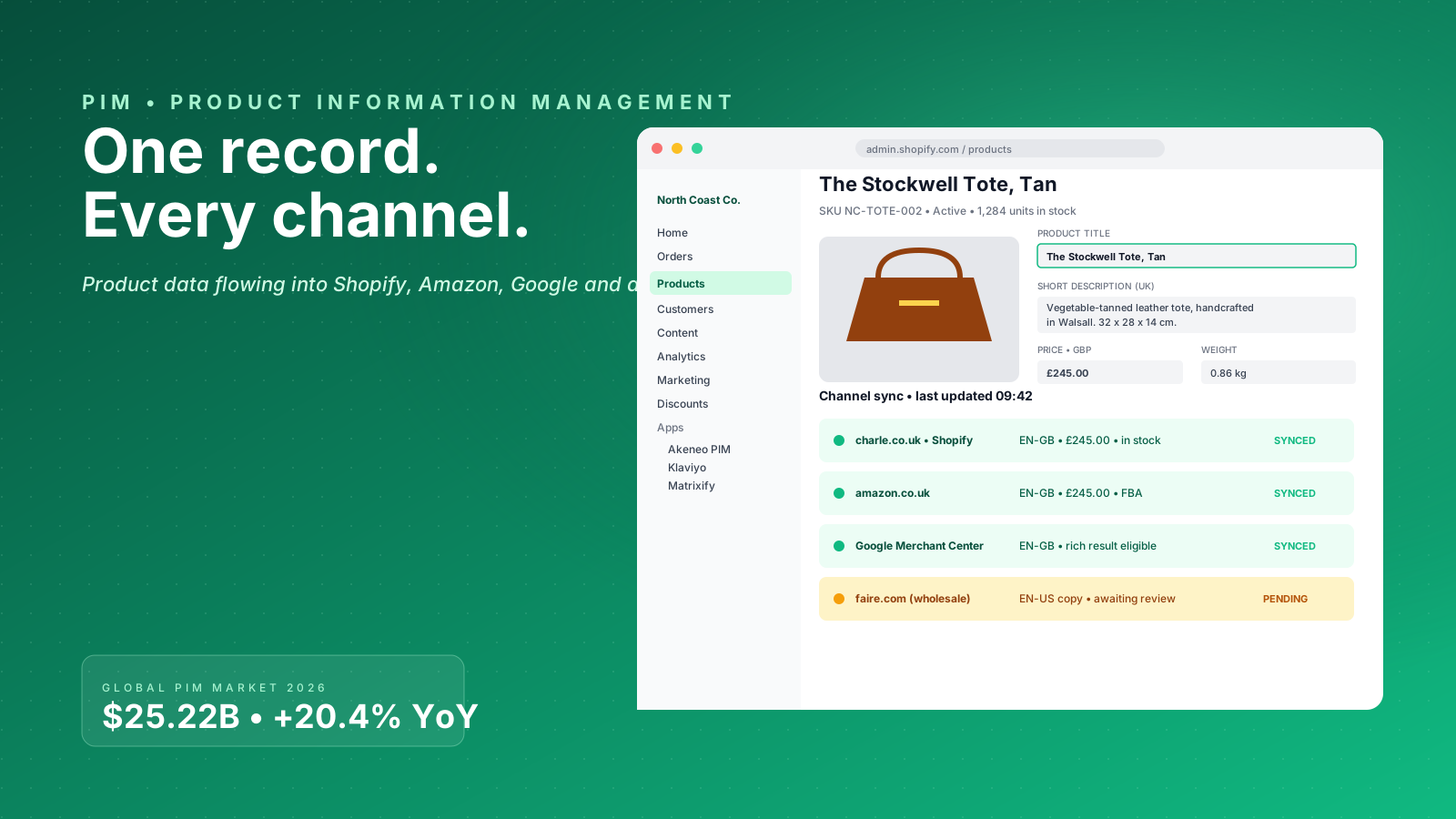
PIM stands for Product Information Management. A PIM system is a piece of software that acts as the single source of truth for every fact about every product you sell. Names, descriptions, prices, SKUs, technical specifications, product photography, video, warranty information, certifications, translations, channel-specific copy, regulatory data: all of it lives in one database, gets reviewed and approved once, and then gets pushed out to wherever customers actually see your catalogue.
The shorthand definition used by the Pimcore documentation, borrowed from Wikipedia, is "managing the information required to market and sell products through distribution channels." That is accurate but academic. The plainer version: a PIM is the system that means your product team does not maintain product data in a Shopify admin, a Google Sheet, an Amazon Seller Central tab, a wholesale PDF and a translation agency's CSV at the same time. They maintain it once, in the PIM, and the PIM keeps every channel in step.
The category emerged in the mid-2000s when retailers realised that ERP systems were a terrible place to store rich marketing data like lifestyle photography, regional product descriptions and SEO metadata. ERPs were built for transactional data: stock levels, orders, invoices. PIMs were built for the storytelling data that sits around each product. Two decades on, the gap between the two has only widened.
What Data Does a PIM System Manage?
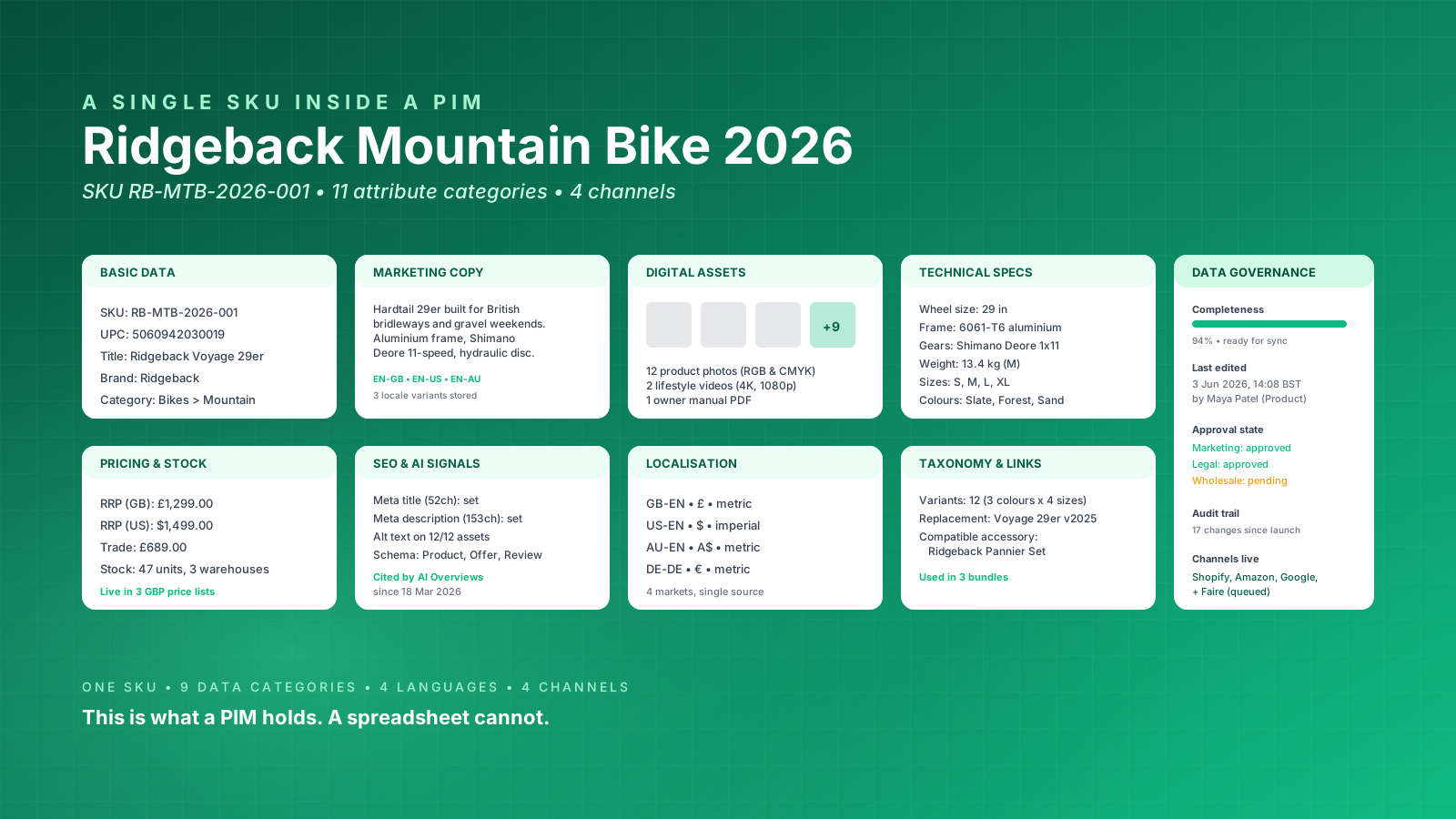
A useful way to picture a PIM is to take a single SKU and list every fact a Shopify brand currently keeps somewhere about that product. A vegetable-tanned leather tote will typically carry around 60 to 90 distinct attributes once you account for variants, languages and channel-specific copy. A PIM stores them all against one record and handles the synchronisation back out to selling channels automatically. That dual role of centralisation plus synchronisation is what separates a PIM from a spreadsheet or a shared drive: the data lives in one place, but the place is connected to everywhere customers see it.
The categories that nearly every PIM handles are:
- Basic data: SKU, UPC or EAN, GTIN, manufacturer part number, product title, brand, category, tags, taxonomy.
- Marketing copy: short description, long description, bullet features, headline, A+ content for Amazon, channel-specific copy variants.
- Digital assets: product photography (front, side, in-use, swatch), lifestyle video, packaging shots, owner manuals, care guides, 3D models, CAD files.
- Technical specifications: dimensions, weight, materials, capacity, performance metrics, compatibility, country of origin.
- Pricing and stock: RRP, trade price, wholesale price, region-specific pricing, current stock by warehouse, minimum order quantities.
- SEO and AI signals: meta titles, meta descriptions, alt text, schema markup, primary keyword targeting, citation-ready answers for AI search.
- Localisation: translated copy, regional units (kg or lb), regional currencies, market-specific certifications, regulatory disclosures.
- Relationships: variants, replacement products, accessories, bundles, cross-sell groupings, compatibility links.
- Governance metadata: who edited the record, when, the audit trail, approval status, completeness score, channels currently in sync.
The Adobe definition of PIM adds a useful category most articles skip: emotional content. The lifestyle imagery, brand-aligned language and persona-specific descriptions that turn a product page from a spec sheet into a thing people want. A good PIM holds those alongside the dry data, because in 2026 the line between catalogue and content has effectively disappeared.
How PIM Compares to ERP, MDM, DAM and PXM
The acronym soup around PIM is genuinely confusing, and almost every competitor article gets at least one of the comparisons wrong. Here is the version that holds up across an honest implementation.
PIM vs ERP. An ERP (Enterprise Resource Planning) system runs the back office: orders, finance, stock levels, purchase orders, warranties. It is transactional. A PIM is editorial: it holds the rich marketing and search data that customers actually see. Most healthy implementations have both. The ERP feeds basic product data into the PIM (SKU, cost, stock); the PIM adds everything else and pushes the enriched record out to selling channels.
PIM vs MDM. MDM (Master Data Management) is a broader category. An MDM system manages master data across an entire business: customer records, supplier records, employee records, accounting codes, product records. A PIM is essentially a specialised MDM focused on the product domain. Smaller brands almost never need a full MDM platform; mid-market brands often start with PIM and add MDM later if they have a serious customer-data problem.
PIM vs DAM. A DAM (Digital Asset Management) system organises rich media files: photographs, videos, raw files, packaging artwork, brand templates. Most modern PIMs include a lightweight DAM, which is enough for a Shopify brand that does its own product photography. Brands with serious creative output, agency workflows or a 50-plus-strong creative team usually keep a dedicated DAM (Bynder, Brandfolder, Frontify) alongside the PIM, with assets referenced from one to the other.
PIM vs PXM. PXM stands for Product Experience Management and is the term Akeneo, Aleysian and a handful of consultancies have been pushing for the past three years. A PXM is a PIM with explicit features for adapting product content to specific buyer personas and channels. In practice, every PIM bought in 2026 has PXM features whether the vendor calls it that or not. Do not let the terminology distract you.
PIM vs PLM. PLM (Product Lifecycle Management) sits further upstream, in product development. It manages design files, bills of materials, prototype revisions and supplier specifications. PLM data flows into PIM once a product is ready to go to market.
PIM vs Privileged Identity Management: Clearing the Acronym Confusion
Quick aside, because at least one in three people who Google "what is PIM" are looking for a different product entirely. The Product Information Management category covered everywhere else in this guide is one PIM. Microsoft Entra Privileged Identity Management is the other PIM, and it lives inside Azure as part of Microsoft's identity and access management stack.
Microsoft Entra PIM controls how users, organizations and security groups gain temporary, just-in-time access to sensitive resources. The service handles role activation, role assignments, multi-factor authentication (MFA) prompts, time-bound activation windows, and the justification workflow that requires an administrator (or any other actor requesting privileges) to explain in writing why they need a particular privileged role. Privileged role administrators set the policies, configure the duration of each activation, and review the activity history afterwards. As a working example, a SaaS engineer might request a one-hour activation of a Global Administrator role, complete an MFA challenge, log a justification, and the entire history of that assignment lands in the audit databases automatically.
Identities flow through Microsoft Entra ID; managed devices flow through Intune; permissions, credentials and authentication policies sit together in the same SaaS environments. The whole product is built on the principle of least privilege: assignments are temporary by default, admins keep their day-to-day accounts free of standing privileges, and access reviews close the loop on who currently holds what. None of that has anything to do with product information. The two PIMs share an acronym and nothing else.
If you came here looking for a way to control identities and reduce security risks across your Azure admins, the documentation you want is at learn.microsoft.com/entra/id-governance/privileged-identity-management. If you came here for the system that pushes your Shopify product data to Amazon and Faire, keep reading. Everything from this point onward is about Product Information Management again, where users are the marketers and merchandisers working in the platform rather than the security identities Microsoft is concerned with.
Why Shopify Brands Use a PIM
The reasons a Shopify brand reaches for a PIM are not the same as the reasons a B2B manufacturer or a multinational retailer does. Most of the existing PIM articles online are written by Adobe, Informatica, Akeneo or generic consultancies, and they oversell the enterprise use case while ignoring the DTC operator. Here is what actually drives Shopify brands to buy.
Multi-channel selling. The first real signal you need a PIM is when you have more than one sales channel. A brand selling on Shopify alone can lean on Shopify's metafields and metaobjects, which we will cover in the next section. Add Amazon, Faire, Etsy, eBay, a Mirakl marketplace or a B2B portal and the workload of keeping product data consistent rises sharply. A PIM holds one record and syncs the appropriate version to each channel.
Multi-market selling. Shopify Markets is excellent at the storefront layer, handling currency, language, tax and routing. It is less helpful when you need different product descriptions, different units of measure, different compliance copy, different regulatory disclosures or different SKUs by region. That is PIM territory. A bicycle brand selling in the UK, the US, Germany and Australia will hold four versions of every product description and three different units of measure inside a PIM, with one workflow approving the lot.
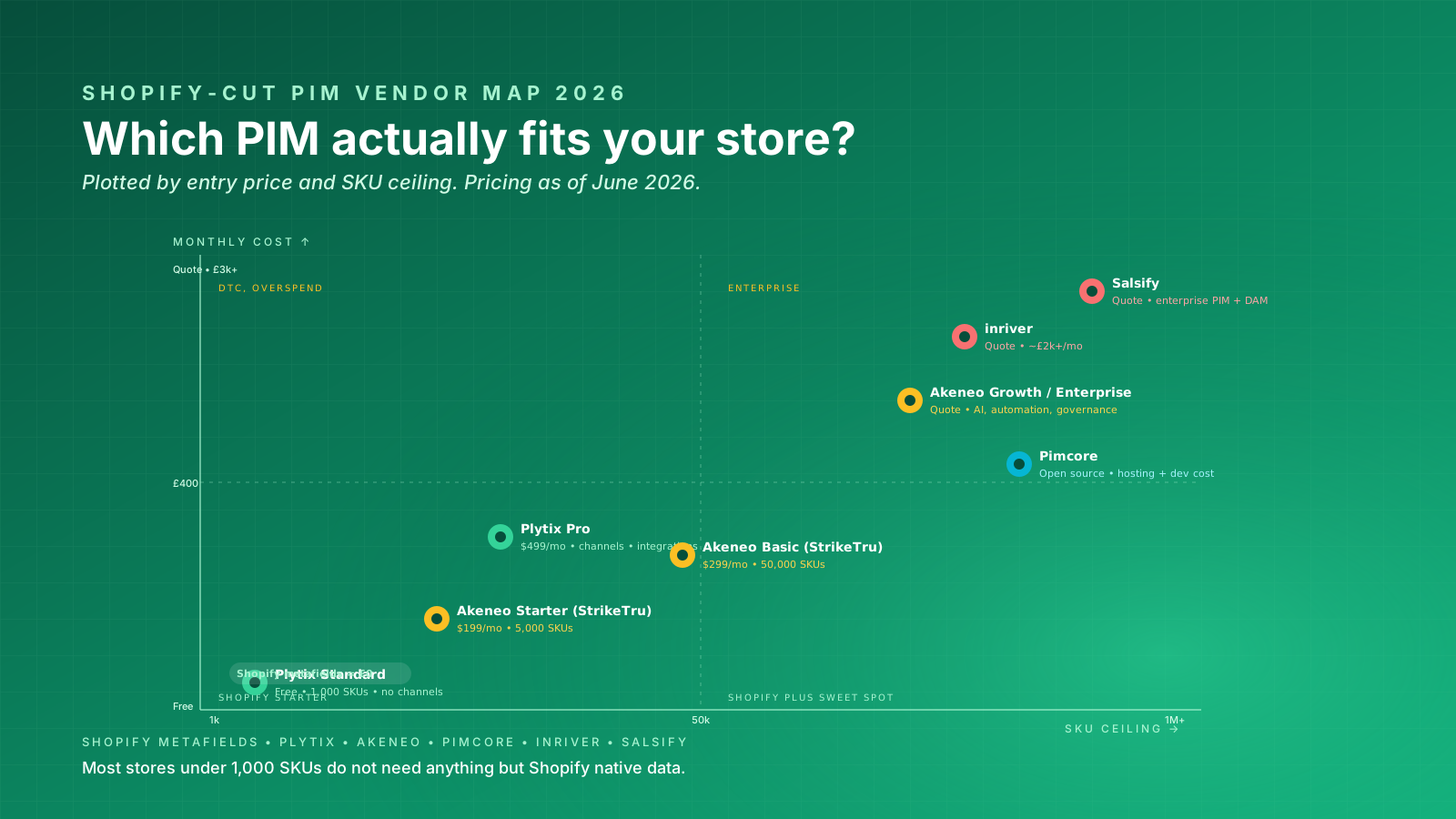
Catalogue size. Below 500 SKUs, Shopify's native data structures will hold everything you need, and a spreadsheet can carry the overflow. Between 500 and 2,000 SKUs, the workload gets uncomfortable but is still survivable. Above 2,000 SKUs, the maths shifts: a $199 to $499 monthly PIM subscription will pay back in operations time within a quarter.
Time-to-market and efficiency. The single most repeated benefit across the competitor articles, and the one that holds up in practice. A well-implemented PIM cuts the time-to-market for a new product from weeks to days, lifts data accuracy across every channel, and removes most of the manual data-entry tasks that plague brands juggling Shopify, Amazon and a wholesale portal at once. Each repetitive task (uploading the same image to three storefronts, copy-pasting a description into five product pages, updating a price across four catalogues) becomes a one-click write from the PIM. The downstream effect is operational efficiency: marketing teams stop firefighting product information requests, every PIM user from the product manager to the merchandiser gains the same level of control over the catalogue, customer service stops apologising for incorrect specifications, and the warehouse team can rely on the information they see on the shelf matching what is live online.
Customer experience and conversion. Complete, consistent product data is what makes a product page feel trustworthy to consumers. PIM systems help brands deliver a richer customer experience by making sure every channel carries the same high-quality descriptions, photography, technical specifications and pricing. The result is fewer returns from mismatched expectations, better personalisation in recommendations, and steadier improvements in conversion as product information stays fresh.
Scalability and supplier collaboration. PIM systems are built to scale: holding 50,000 SKUs across 12 markets feels the same as holding 500 SKUs across one. PIM platforms also handle the messier supply chain reality where dozens of suppliers ship CSV files in slightly different formats. A PIM ingests, validates and enriches that supplier data once, then keeps it in sync with every internal team and external partner. The productivity gain across product, marketing, merchandising and operations is meaningful for fast-growing brands.
Wholesale and B2B alongside DTC. Probably the clearest PIM trigger of all. A wholesale catalogue needs different prices, MOQs, terms and copy from the DTC site, and the data flow into Faire, Joor or a Shopify B2B portal is genuinely painful without a PIM holding both versions. For more context on the broader B2B picture, see our guide on Shopify B2B ecommerce.
SEO and AI search readiness. Search engines and AI engines both reward consistent, structured, fact-rich product data. A PIM is the cleanest way to keep schema markup, alt text, meta descriptions and primary keywords aligned across every product page at scale. For the wider picture on Shopify search, our Shopify SEO guide covers the storefront-level optimisation that sits on top.
When You Should NOT Buy a PIM (Shopify Metafields Often Win)
This is the section every other PIM article skips, because most of them are written by a PIM vendor or a partner agency. The honest answer is that a meaningful share of Shopify brands do not need PIM systems, will not need one for years, and would burn six months and $30,000 of tools and consulting on a workflow that adds no value to their consumers. The principle is simple: someone has to maintain the PIM, someone has to integrate it, and someone has to justify the cost when the workload could be handled by a single Shopify operator with a clean metafield strategy and a Matrixify CSV. A 600-SKU brand with one product manager is the textbook example of when PIM solutions are an answer to a problem the team does not yet have.
The reason most DTC stores can avoid a PIM is that Shopify itself has quietly become a competent product data platform. As of the 2026-04 API version, Shopify metafields support up to 64KB per field for standard types and 128KB for JSON fields, with the metaobject entry ceiling lifted to 1,000,000 records per definition. That is more headroom than almost any DTC brand will use. Lists support up to 128 items per field, and metaobject references go up to 256. For most Shopify stores, that is a fully workable product data layer with no monthly subscription attached.
Practical signals that you do not need a PIM yet:
- You sell under 500 SKUs and run a single Shopify storefront.
- Your catalogue changes slowly: a couple of dozen new products a quarter, not weekly drops.
- You sell in one or two markets where Shopify Markets covers the localisation.
- You publish to no third-party marketplaces, or only to one (Amazon via Shopify's native channel).
- Your team is two to ten people and product data lives mainly with one person.
If most of those apply, the right answer is to invest the time in a clean Shopify metafield and metaobject structure, layer in Matrixify for bulk edits and channel exports, and revisit the PIM question in twelve months. Buying a PIM to manage 300 SKUs and a single channel is using a forklift to move a box of books.
Signals that it is time to start the PIM conversation:
- You are about to launch a wholesale catalogue alongside DTC and the price lists differ.
- You have crossed 2,000 SKUs and product data ownership is spreading across three or four people.
- You have three or more sales channels and your team is firefighting inconsistencies weekly.
- You are expanding into a third or fourth market with different regulatory or copy requirements.
- You are bringing in agentic AI workflows to enrich product copy at scale and need a single record to write back to.
The Best PIM Software for Shopify in 2026
Six PIM platforms appear repeatedly in Shopify implementations. None of them is a universal best choice. Each fits a different operating mode.
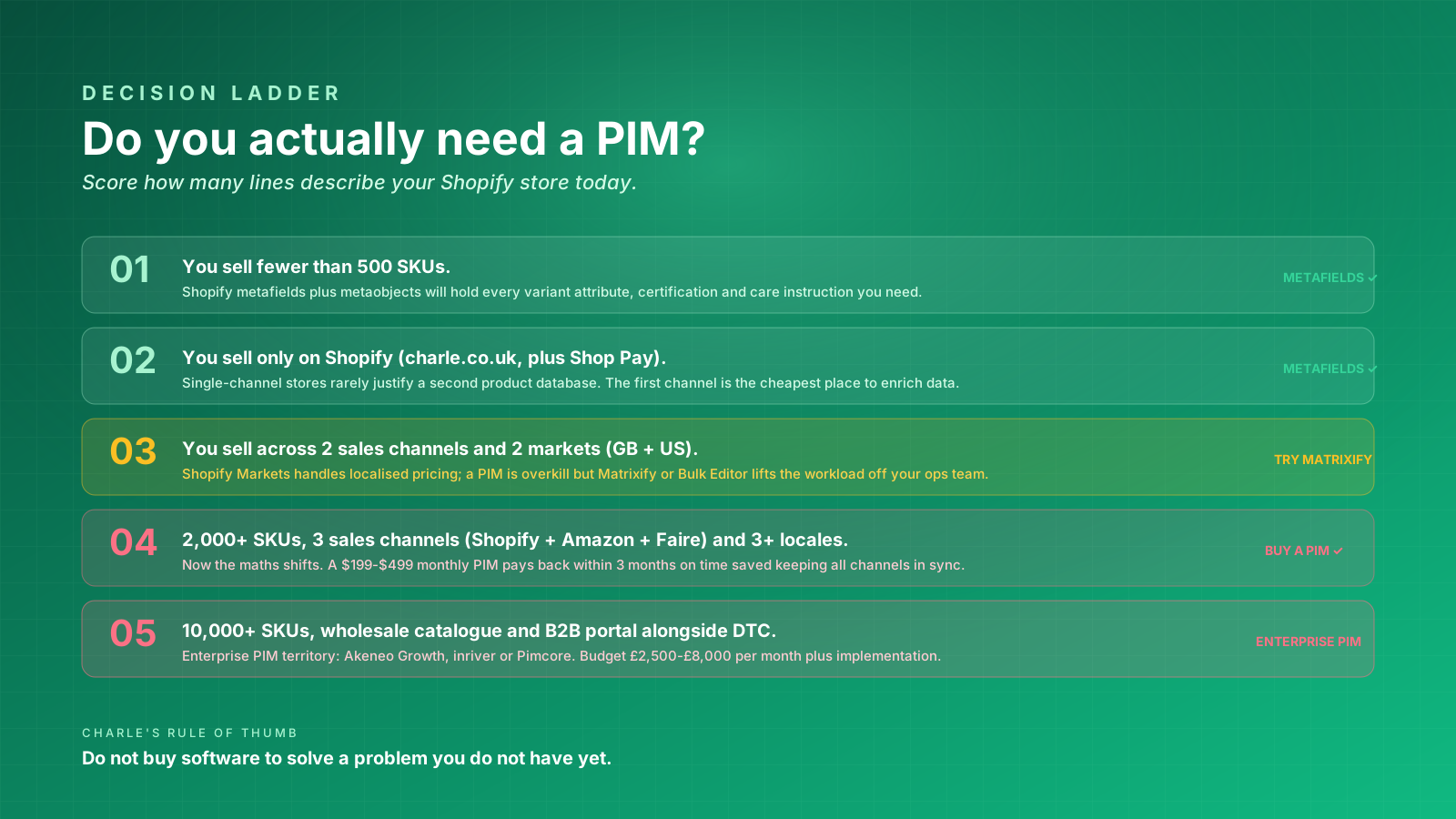
Plytix. The most Shopify-friendly entry point. Plytix offers a Standard plan that is free for up to 1,000 SKUs (without channel syndication) and a Pro plan at $499 per month that adds Shopify channel syndication, Amazon integration and bulk operations. The Shopify connector ships as a native Plytix Multistore app on the Shopify App Store. Strong fit for DTC brands graduating out of spreadsheets, weak fit for complex B2B or manufacturer use cases.
Akeneo via the StrikeTru Shopify connector. Akeneo is the open-source PIM that dominates the mid-market. The StrikeTru Akeneo PIM Connector for Shopify starts at $199 per month for 5,000 SKUs (Starter) and $299 per month for 50,000 SKUs (Basic), with quote-based pricing above. Akeneo itself comes in three tiers: free Community Edition for self-hosters, Growth Edition starting around $25,000 per year, and quote-priced Enterprise Edition. Strong fit for fast-scaling Shopify Plus brands with serious channel ambitions, weak fit for sub-500-SKU stores or teams without a technical owner.
Pimcore. The other major open-source player, with deeper PXM and DAM capabilities baked into the core platform. No licence fee, but you pay for hosting, implementation and ongoing maintenance, which typically means working with a Pimcore partner. Strong fit for brands that already have a development capability and want to own the stack; weak fit for brands that want a quick monthly-subscription experience.
inriver. A cloud PIM aimed at manufacturers and large multi-channel retailers, with pricing typically starting around $2,000 per month and rising into five figures for enterprise plans. Strong fit for brands selling through complex retailer networks; usually overkill for pure DTC.
Salsify. The enterprise option that combines PIM, DAM, syndication and digital shelf analytics. Strong fit for CPG brands listing on dozens of marketplaces; almost never the right choice for a DTC Shopify brand.
Shopify-native (metafields, metaobjects, Matrixify). Not a PIM in the formal sense, but worth listing because it is the right answer for a meaningful share of Shopify brands. Free with your Shopify plan, with Matrixify adding bulk import/export and channel sync at around $20 per month. For brands that fit, this is genuinely the best ROI of any option here.
The global PIM market is growing fast: Precedence Research estimates it will rise from $25.22 billion in 2026 to roughly $121.48 billion by 2035 at a 19.22% compound annual rate, with cloud-deployed PIMs already taking 63.5% of revenue in 2025. The vendor landscape will keep consolidating, so prioritise platforms with a healthy Shopify-specific roadmap rather than backing the cheapest tool today.
PIM in the AI Era: What's Changed in 2026
The PIM category looks different in 2026 than it did even a year ago. Three shifts matter for Shopify brands considering a purchase now.
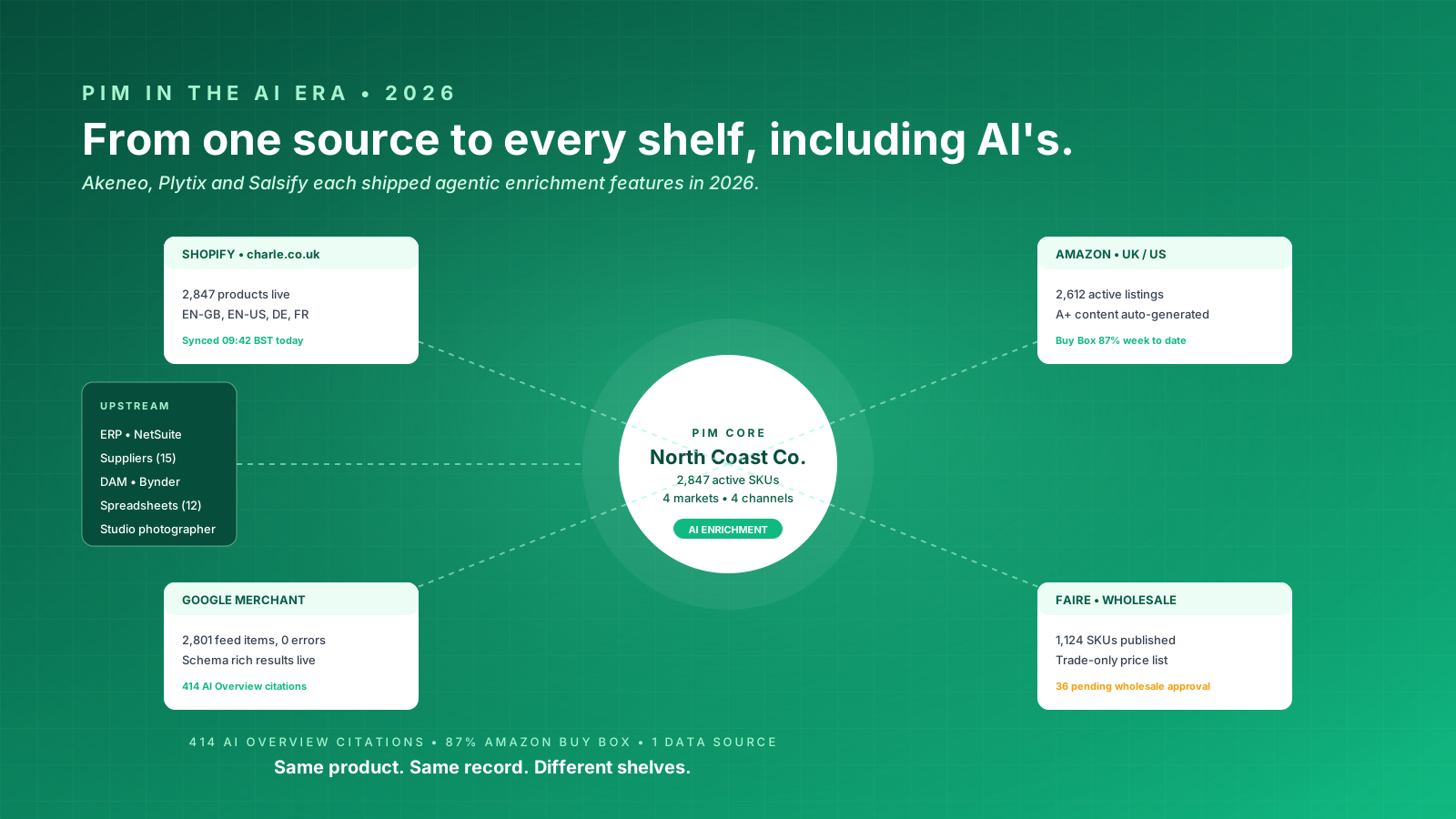
Agentic enrichment is becoming standard. Akeneo, Plytix and Salsify have each shipped agentic AI features that auto-generate channel-specific copy, translate descriptions, write SEO metadata and surface data-quality gaps. The bar has moved: in 2024, a PIM that simply held data was acceptable; in 2026, the platforms that lack AI-driven automation and personalisation are the ones to question. The best implementations use AI to draft, then route through human review, then write back to the PIM as the system of record. Teams that get this right turn product enrichment from a bottleneck into a near-zero-touch workflow that scales with the catalogue.
AI search rewards structured product data. Google AI Overviews and Perplexity both pull product facts from pages with rich schema markup and consistent product attributes. A PIM is the simplest way to keep that data clean across thousands of products at once. Pages with complete, consistent Product, Offer and Review schema are over-represented in AI citation results, and a PIM is what makes that consistency cheap to maintain. For the wider picture on AI-era search optimisation, our generative engine optimisation guide goes deeper.
The PIM-CMS line is blurring. Pimcore explicitly positions itself as a combined PIM and CMS; Akeneo's PXM features overlap heavily with traditional CMS territory. For Shopify brands the line is mostly academic since Shopify is the CMS, but the trend means newer PIMs are better at owning storytelling content alongside product facts.
How to Choose a PIM for Your Shopify Store
Once you have decided that a PIM is the right call, the selection process tends to go wrong in predictable ways. Brands either over-engineer the requirements list, buy on price alone, or pick whatever vendor their head of operations is most familiar with. A better approach has five checks.
Shopify integration depth. Not all Shopify connectors are equal. Ask whether the connector handles metafields, metaobjects, variants, inventory at multiple locations, Shopify Markets pricing and Shopify B2B price lists out of the box. A surprising number of mid-tier PIMs handle products and skip everything around them.
Channel breadth and roadmap. List every channel you sell on today plus every channel you expect to add in the next two years. Confirm the PIM ships native connectors for them or commits to building them. Custom connectors via Zapier, Make or Alumio are a workable interim step but add maintenance overhead. Scalability matters here too: a connector that handles 1,000 SKUs cleanly can still fall over at 10,000, so ask vendors for reference customers operating at your projected ceiling, not your current size.
Collaboration model. A PIM is a team tool. Look at how the platform handles roles, approval workflows and the audit trail across product, marketing, merchandising and operations. Strong collaboration features cut the friction between teams; weak ones turn the PIM into another inbox.
Implementation realism. A Plytix Pro or StrikeTru Akeneo Starter rollout for a 2,000-SKU DTC brand typically takes four to eight weeks. An Akeneo Growth implementation for a 30,000-SKU multi-channel brand is closer to four to six months. Salsify and inriver enterprise rollouts run six to nine months. Map your launch ambitions to those windows before signing.
Total cost of ownership. Headline subscription is the small number. Implementation, hosting (for open-source), training, ongoing channel integration work and the cost of dedicating an internal owner add up. Budget at least 2x the headline licence fee in year one. Open-source platforms shift cost from licence to implementation but rarely save money overall.
Data ownership and exit terms. Read the export clauses. PIM solutions that hold your enriched product data hostage are the single worst situation when brands try to migrate. The good vendors expose clean CSV, JSON and API exports from their underlying databases as standard. The risky ones make you ask for them, and a few will only release the data once a contract dispute escalates. Treat ease of exit as a first-class buying criterion, not an afterthought.
If you would like a second pair of eyes on a PIM decision or a Shopify Plus implementation, our Shopify Plus agency team works on this kind of architecture weekly. Get in touch for an honest read on whether a PIM is right for your stage, and which platform is the realistic fit.